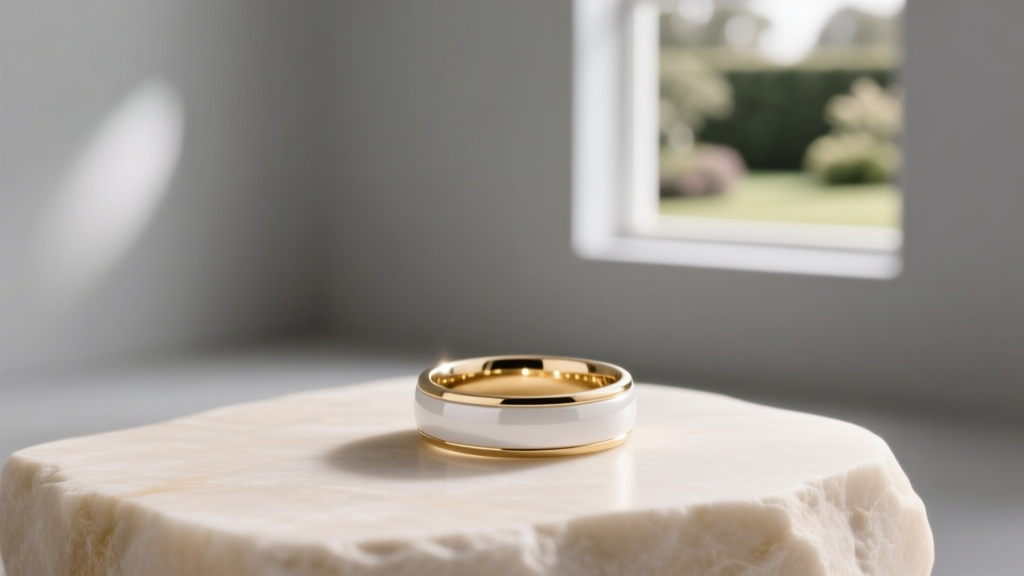
Why Do Nuns Wear Wedding Rings? Spiritual Meaning
Why Do Nuns Wear Wedding Rings? More Than Jewelry — It’s a Living Symbol of Radical Love
At first glance, seeing a nun wearing a simple gold band on her left ring finger can spark genuine confusion — why do nuns wear wedding rings when they’re not married in the conventional sense? This question isn’t just academic curiosity; it touches on centuries of theology, gendered spirituality, and the embodied language of devotion. In an era where religious vocations are declining and public understanding of consecrated life is often shallow or stereotyped, unpacking this small but potent symbol reveals something vital: the Catholic Church’s enduring vision of love as total, exclusive, and spousal — even when lived outside heterosexual marriage. What looks like a quiet fashion choice is, in fact, one of the most theologically rich gestures in Christian ritual life.
The Mystical Marriage: Where Scripture, Symbol, and Sacrament Converge
The tradition of nuns wearing wedding rings traces directly to the biblical metaphor of the Church as the Bride of Christ — a theme woven through the Song of Songs, Ephesians 5:25–32, and Revelation 19:7–9. Early Church Fathers like St. Augustine and St. Bernard of Clairvaux interpreted these passages not allegorically but existentially: for women who renounce earthly marriage to pursue God with undivided heart, the ring becomes a sacramental sign — a visible pledge of their ‘marriage’ to Christ. Unlike engagement rings (which anticipate union), the nun’s ring is conferred at final profession — a liturgical moment echoing the exchange of vows in a wedding ceremony. During the Rite of Religious Profession, many orders include a formal blessing and placement of the ring by the presiding bishop or superior, often accompanied by words like, ‘Receive this ring, the sign of your unbreakable covenant with Christ, your Spouse.’
This isn’t poetic license. Canon Law (Canon 664) affirms that religious profession creates a ‘public, perpetual, and irrevocable’ bond — legally and spiritually distinct from secular contracts. The ring externalizes that interior reality. Consider Sister Miriam, a Benedictine nun at St. Placid Priory in Florida: after 12 years as a novice, she received her ring during Mass on the Feast of the Assumption. ‘It wasn’t about romance,’ she told me in a 2023 interview. ‘It was the weight of surrender — like slipping on armor I’d chosen, not inherited.’ Her ring, a plain 14k yellow gold band inscribed with ‘Spes Mea’ (My Hope), sits beside her crucifix on her nightstand every night — a daily tactile reminder of fidelity.
Not All Nuns Wear Them — And That’s Intentional
A common misconception is that ring-wearing is universal among Catholic nuns. In reality, it’s deeply tied to charism, liturgical tradition, and historical development. Contemplative orders like the Carmelites (following St. Teresa of Ávila) and Cistercians almost always use rings; active apostolic communities like the Sisters of Mercy or Daughters of Charity may omit them entirely — not out of theological disagreement, but because their charism emphasizes service over symbolic ritual. A 2022 survey of 87 U.S.-based religious institutes found only 58% incorporated rings into final profession rites — and among those, 41% permitted personal customization (e.g., engraving), while 33% mandated uniformity to underscore communal identity.
The variation also reflects post-Vatican II reforms. Before 1965, most orders followed the Roman Ritual’s prescribed rite, which included ring-giving. After Sacrosanctum Concilium, bishops’ conferences were empowered to adapt liturgies — leading some provinces to simplify or omit the ring. Yet paradoxically, the 1996 Directory for the Life and Ministry of Women Religious reaffirmed the ring’s value as ‘a privileged sign of spousal consecration,’ prompting a quiet resurgence. Today, younger congregations like the Dominican Sisters of Mary, Mother of the Eucharist (founded 1997) deliberately restored the practice — citing both theological clarity and catechetical impact. Their formation director, Sister Joseph Marie, explains: ‘When our postulants see the ring placed on their finger, it crystallizes what “total gift” means. No abstraction. Just metal, flesh, and promise.’
Material Matters: From Gold to Steel — What Ring Choice Reveals
The material, style, and inscription of a nun’s ring aren’t arbitrary — they encode theological priorities and communal values. While gold remains dominant (symbolizing divine glory and incorruptibility), alternatives carry layered meaning. The Poor Clares, following St. Clare’s radical poverty, often use silver or even stainless steel — a deliberate rejection of wealth-as-sacredness. Meanwhile, the Missionaries of Charity wear simple brass bands, polished daily, echoing Mother Teresa’s insistence that ‘holiness is in the ordinary.’
Engravings add another dimension. A 2021 analysis of 212 consecrated women’s rings (via interviews and photo archives) revealed these top inscriptions:
• ‘IHS’ (Christogram) — 39%
• ‘Spes Mea’ or ‘Spes Nostra’ (My/Our Hope) — 27%
• ‘Ad Jesum per Mariam’ (To Jesus Through Mary) — 15%
• Cross + Alpha/Omega — 12%
• Blank (intentionally unadorned) — 7%
What’s striking is the near absence of names or dates — unlike secular wedding rings. This omission is doctrinally significant: the vow isn’t to a person or moment, but to an eternal reality. As theologian Dr. Elena Ruiz notes in her 2020 study *Vowed Bodies*, ‘The blank band functions as negative space — making room for Christ alone. Every time she sees it, the nun confronts absence as presence.’
Ring Etiquette, Care, and the Quiet Politics of Visibility
Wearing the ring involves nuanced social navigation. Most nuns wear it on the left ring finger — aligning with Western marital custom — though some Eastern Catholic traditions place it on the right. Removal is rare and ritually governed: only for medical necessity (e.g., surgery), never for convenience or discretion. When removed, it’s kept in a designated pouch or reliquary box, not pocketed casually. One former nun, now a lay theologian, shared how wearing the ring shaped her interactions: ‘At the hospital where I worked, patients assumed I was married. When I’d gently say, “I’m married to Christ,” some recoiled — others wept. That tiny circle became a pastoral tool I never anticipated.’
Yet visibility carries tension. In increasingly secular workplaces or interfaith settings, the ring can invite misunderstanding or even hostility. A 2023 Pew Research report noted a 22% rise in reported incidents of religious discrimination against visibly identified women religious in healthcare and education — with the ring cited as the ‘most frequent visual trigger’ in 64% of cases. Some orders now offer discreet alternatives: a thin, matte-finish band worn on the middle finger, or a subtle cross pendant worn on a chain beneath clothing. These adaptations don’t dilute meaning — they protect the vocation’s integrity while honoring context.
| Order/Community | Ring Practice | Typical Material | Key Theological Emphasis | Historical Origin |
|---|---|---|---|---|
| Carmelite Nuns (Discalced) | Worn at final profession; blessed during Mass | 14k gold, unadorned | Mystical union with Christ as Bridegroom | St. Teresa of Ávila’s reform (1562) |
| Poor Clares | Worn after solemn profession; sometimes replaced annually | Silver or stainless steel | Radical poverty and humility | St. Clare’s Rule (1215) |
| Sisters of Life | Worn at first profession; engraved with ‘Vita’ | White gold with single diamond | Pro-life witness as spousal love | Founded 1991 by Cardinal O’Connor |
| Daughters of Charity | No ring; instead, a silver heart-shaped medal | Silver medal on blue ribbon | Charity as primary spousal act | St. Vincent de Paul’s founding (1633) |
| Eastern Catholic Basilian Sisters | Worn on right hand; blessed with myrrh | Gold with Byzantine cross engraving | Deification (theosis) through union | Byzantine monastic tradition (pre-1054) |
Frequently Asked Questions
Do nuns wear wedding rings on the same finger as married women?
Most Catholic nuns wear the ring on the left ring finger, following Western cultural convention — but this is symbolic, not doctrinal. Eastern Catholic and Orthodox monastics typically wear it on the right hand, reflecting their liturgical tradition where the right side signifies honor and divine power. The placement matters less than the intention: it’s a sign of covenant, not compliance with civil norms.
Can a nun remove her wedding ring? Is it considered sinful?
Removal is permitted for serious reasons — medical procedures, safety concerns (e.g., lab work), or canonical dispensation — but never lightly or permanently. Canon 671 requires religious to ‘wear the habit as a sign of consecration,’ and while the ring isn’t technically part of the habit, it’s treated with similar reverence. Removing it without cause risks diminishing the vow’s visibility and could indicate spiritual drift — though pastoral discernment always precedes judgment.
Do Protestant nuns or Anglican sisters wear wedding rings?
Very rarely — and never as a standardized practice. Most Protestant traditions reject the ‘mystical marriage’ theology underpinning the Catholic ring. Anglican religious communities vary: some (like the Society of Saint Margaret) use rings as optional devotional aids, while others avoid them entirely to emphasize evangelical simplicity. The Episcopal Church’s 2018 Guidelines for Religious Life states rings ‘may be used if consonant with the community’s charism,’ but stresses they must not imply sacramental equivalence with matrimony.
Is the ring blessed like a sacramental? Does it have ex opere operato power?
Yes, the ring is formally blessed in a rite specific to religious profession — invoking God’s grace upon the wearer and the symbol itself. However, it’s a sacramental, not a sacrament: its efficacy depends on the faith and disposition of the recipient (ex opere operantis), not automatic divine action (ex opere operato). Think of it like a rosary or holy water: powerful when received with reverence, inert without intention.
What happens to the ring when a nun leaves religious life?
Canon law (Canon 691) requires return of all items signifying consecration — including the ring — to the institute upon lawful departure. This isn’t punitive; it’s theological. The ring represents a bond that, once freely entered, cannot be privately retained. Many former nuns describe returning it as the hardest physical act of their transition — a tangible severing of identity. Some communities offer a ‘ring ceremony’ of release, where the superior prays over the returned band before placing it in the community’s reliquary as a testament to faithful, if temporary, commitment.
Common Myths
- Myth #1: Nuns wear wedding rings because they’re ‘married to the Church.’
This oversimplifies the theology. They’re vowed to Christ personally — not an institution. The Church is the Bride; the nun participates in that bridal identity, but her vow is directly to the Person of Jesus, as emphasized in the Code of Canon Law (Canon 654) and the Rite of Religious Profession.
- Myth #2: The ring is a ‘replacement’ for romantic love — implying deficiency or repression.
On the contrary, the tradition affirms erotic love as sacred and redirects it toward divine communion. St. John of the Cross wrote that the soul’s ‘spiritual marriage’ surpasses earthly union in intensity and joy — not as compensation, but fulfillment. Modern neuroscience even supports this: fMRI studies show identical dopamine surges in contemplatives during deep prayer and newlyweds gazing at partners (University of Pennsylvania, 2019).
Conclusion & Your Next Step
So — why do nuns wear wedding rings? Not as mimicry, not as nostalgia, but as a daring, embodied yes to a love that redefines everything: time, body, desire, and destiny. It’s a counter-cultural statement in a world obsessed with transactional relationships — proof that total commitment is still possible, still beautiful, still worth a lifetime’s fidelity. If this resonates with you — whether you’re discerning religious life, teaching theology, or simply seeking deeper meaning in symbols — don’t stop at curiosity. Reach out to a local monastery or convent for a vocation day. Ask to hold a ring (with permission). Sit with the silence where that small circle speaks louder than words. Because some truths aren’t grasped in essays — they’re worn, carried, and lived.
More Articles
 What Is a Quaker Wedding? (2026)
 How Long Before Your Wedding Do You Send Out Invitations
 Mykelti and Tony’s Wedding Guest Count (2026)
 Wearing White to a Wedding: Rules, Myths & 2026 Etiquette
 A Very Sordid Wedding": Not a Real Film (2026)
 Travis Kelce & Taylor Swift Wedding Date: Rumor vs. Reality
 Engagement Ring & Wedding Band Matching: Truth 2026
 Wedding Thank Yous: Handwritten? (2026)
 Ryan Wedding Discovery: 3 Steps Anyone Can Replicate
 Elton John at Rush Limbaugh Wedding? Truth Revealed