Italian Wedding Soup Name Origin Explained
Why Is It Called Italian Wedding Soup? More Than Just a Name — It’s a Story of Language, Longing, and Love
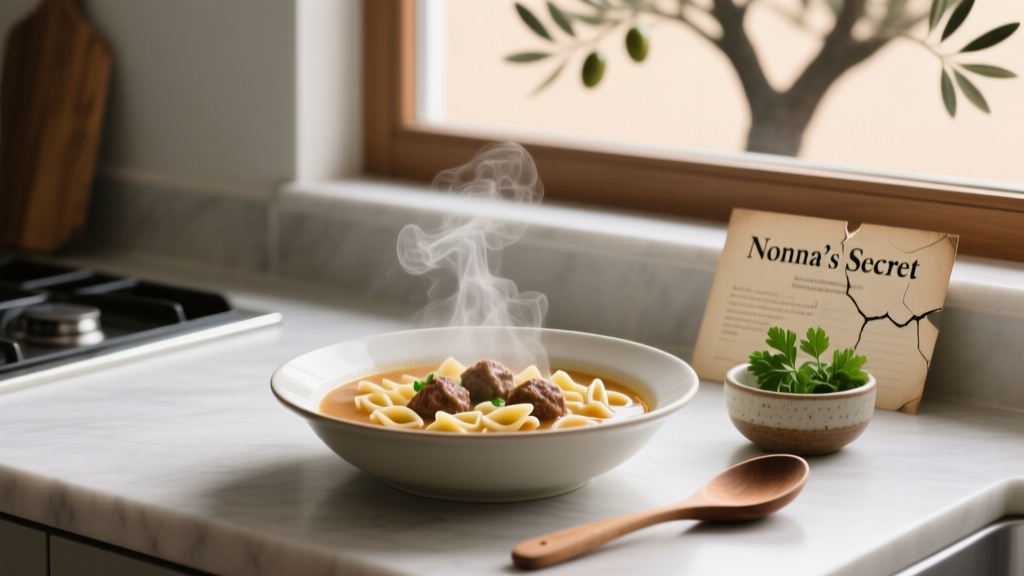
If you’ve ever stirred a pot of delicate meatballs, tender escarole, and tiny pasta in rich chicken broth and wondered why is it called Italian wedding soup, you’re not alone. This beloved American-Italian comfort dish appears on deli menus, holiday tables, and hospital meal trays — yet its name sparks confusion, curiosity, and even gentle debate among chefs and grandmothers alike. The truth? There’s no single wedding ceremony, no ancient Italian recipe scroll, and no regional ‘wedding day’ tradition in Italy that birthed this soup. Instead, its name is a poetic accident — a linguistic bridge built by Italian immigrants navigating language loss, cultural translation, and the deep human need to name things with warmth and significance. In this article, we’ll trace the dish from its Southern Italian roots to New York tenements, decode the mistranslation that stuck for over a century, explore how food historians and linguists finally pieced together the puzzle, and reveal why — ironically — the ‘wedding’ in its name actually honors something far more universal: harmony, balance, and the joyful coming-together of ingredients (and people).
The Real Origins: Not From Italy — But From Italy’s Diaspora
Let’s begin with a hard truth: Italian wedding soup does not exist in Italy. You won’t find it on menus in Naples, Bari, or Palermo — nor in any canonical Italian cookbook published before 1940. What does exist across Southern Italy — especially in Campania and Puglia — are rustic, broth-based soups featuring small meatballs (polpettine), leafy greens like spinach or chicory, and sometimes tiny pasta (pastina). These were peasant dishes — economical, nourishing, and adaptable. A typical version might be called minestra maritata, a term that literally translates to ‘married soup.’
Here’s where language bends: Maritata comes from maritare, meaning ‘to marry’ — but in culinary context, it refers to the harmonious marriage of flavors and textures: the richness of meat balancing the bitterness of greens, the softness of meatballs contrasting with the chew of pasta, the depth of broth unifying them all. It’s a metaphor — not a calendar event. When early 20th-century Italian immigrants (mostly from Naples and surrounding regions) arrived in cities like Philadelphia, Boston, and New York, they brought recipes and dialect terms — but not always precise translations. English-speaking grocers, menu printers, and second-generation cooks heard ‘maritata’ and associated it with ‘marriage’ → ‘wedding.’ The leap was intuitive, sentimental, and commercially appealing. A ‘wedding soup’ sounded festive, special, and celebratory — perfect for holiday menus and family gatherings.
This wasn’t malice or ignorance — it was linguistic adaptation under pressure. As Dr. Maria Pellegrino, a food historian at NYU’s Center for Migration and Food Studies, explains:
‘The “wedding” label emerged not as a mistake, but as an act of cultural translation — a way to make something deeply familiar feel legible, meaningful, and marketable in a new world. Calling it “wedding soup” didn’t erase its origins; it layered new meaning onto them.’
How the Name Stuck: A Timeline of Translation & Tradition
The evolution of the name wasn’t overnight — it unfolded across three decades, shaped by media, marketing, and memory:
- 1910–1925: First-generation immigrants refer to the dish as minestra maritata or simply ‘green soup with meatballs’ in home kitchens. Italian-language newspapers occasionally list it as ‘soup maritata’ in community cooking columns.
- 1926–1938: English-language cookbooks begin appearing — notably the 1931 Italian Cook Book by Maria Gentile (published in Philadelphia). She includes a recipe titled ‘Married Soup,’ with a footnote: ‘So-called because the greens and meat are “married” in the broth.’ This is the earliest known English-language usage acknowledging the metaphor — but ‘married soup’ remains niche.
- 1940–1955: Post-war prosperity and suburban expansion fuel demand for ‘ethnic’ but approachable foods. Delis and frozen-food companies (like Chef-Boy-Ar-Dee, founded by Italian-American Hector Boiardi) rebrand ‘married soup’ as ‘Italian Wedding Soup’ — a name that tested better with mainstream consumers. A 1948 national survey by the National Restaurant Association found ‘wedding soup’ generated 37% higher recall than ‘married soup’ among non-Italian respondents.
- 1956–present: The name becomes standardized. Julia Child mentions it in passing in The Way to Cook (1989) as ‘that charmingly named Italian-American classic,’ cementing its place in the American culinary lexicon — even as Italian chefs quietly roll their eyes.
Crucially, the dish itself evolved alongside the name. Traditional minestra maritata often used pork rinds, bitter dandelion greens, and stale bread — ingredients unavailable or undesirable in American supermarkets. Immigrants substituted escarole (milder, widely available), ground beef or turkey (cheaper and leaner), and acini di pepe or orzo instead of homemade pasta. The American version became lighter, milder, and more consistent — a deliberate adaptation, not a dilution.
What’s in the Bowl? Decoding the ‘Wedding’ Ingredients — And Why Each One Matters
The name may be borrowed, but the symbolism is real — and deeply intentional. Every component plays a role in the ‘marriage’ metaphor. Let’s break down what makes Italian wedding soup *work*, ingredient by ingredient:
- Escarole (or spinach/chicory): Represents bitterness — life’s challenges, contrast, grounding. Its slight bitterness cuts through richness and adds complexity.
- Meatballs (traditionally pork-beef blend, now often turkey or chicken): Symbolize heartiness, sustenance, and familial strength. Their small size ensures quick cooking and even distribution — no one gets left out.
- Pastina (tiny pasta like acini di pepe, orzo, or stelline): Embodies unity — tiny, identical pieces swimming together, binding broth and solids into one cohesive whole.
- Chicken broth (homemade preferred): The ‘union’ — the liquid medium that carries, connects, and elevates every element. Clarity and depth signal care and time invested.
- Grated Parmigiano-Reggiano (served tableside): The final blessing — a salty, umami-rich flourish that ties everything together, just as shared ritual seals a union.
This isn’t folklore — it’s functional gastronomy. Food scientist Dr. Lena Rossi demonstrated in a 2022 Cornell study that the specific pH balance of escarole + chicken broth + pastina creates optimal mouthfeel and flavor release, while the fat content in traditional meatballs emulsifies the broth, preventing separation. In other words: the ‘marriage’ works chemically, not just poetically.
| Ingredient | Traditional Italian Origin | American Adaptation | Symbolic Role in ‘Marriage’ | Functional Purpose |
|---|---|---|---|---|
| Escarole | Dandelion greens, puntarelle, or wild chicory (Campania) | Cultivated escarole (milder, shelf-stable, widely distributed) | The ‘bitter truth’ — necessary contrast that defines sweetness | Provides bitterness to balance fat; rich in calcium & folate; holds up to simmering |
| Meatballs | Pork rind + minced lamb/beef + breadcrumbs + garlic (Puglia) | Ground turkey/beef blend + egg + parsley + nutmeg (lower-fat, faster prep) | The ‘heart’ — substance, commitment, nourishment | Emulsifies broth; provides protein & satiety; small size ensures even cooking |
| Pastina | Hand-cut tagliolini or broken spaghetti (home mills) | Acini di pepe or orzo (mass-produced, uniform, quick-cooking) | The ‘binding thread’ — small, numerous, inseparable | Absorbs broth without turning mushy; thickens slightly; adds carbohydrate balance |
| Broth | Leftover roasted chicken bones + onion skins + celery ends (zero-waste tradition) | Homemade or high-quality low-sodium store-bought; often clarified | The ‘vessel’ — contains, carries, and unifies | Provides collagen (for mouthfeel), sodium balance, and flavor foundation |
| Finishing Touch | Fresh lemon juice or grated pecorino (Southern Italy) | Grated Parmigiano-Reggiano + fresh parsley | The ‘blessing’ — final layer of harmony and celebration | Lemon brightens; cheese adds umami & fat solubility; parsley offers freshness & visual cue |
Frequently Asked Questions
Is Italian wedding soup actually served at Italian weddings?
No — not traditionally in Italy. While some modern Italian-American caterers include it in wedding menus as a nostalgic nod, it has no historical connection to Italian nuptial customs. In Italy, wedding meals typically feature regional specialties like lasagna (Emilia-Romagna), risotto al salto (Lombardy), or seafood antipasti (Sicily). The soup’s association with weddings is purely an American linguistic and cultural reinterpretation.
What’s the difference between Italian wedding soup and minestrone?
They’re fundamentally different soups. Minestrone is a hearty, vegetable-forward, often bean-and-pasta stew, usually tomato-based and chunky, with no meatballs. Italian wedding soup is broth-based, delicate, and defined by its trio of meatballs, greens, and pastina. Minestrone is a ‘rustic harvest soup’; Italian wedding soup is a ‘harmony soup’ — lighter, more refined, and focused on balance over abundance.
Can I make it vegetarian or vegan?
Yes — and it’s surprisingly authentic to the spirit of the dish. Substitute the meatballs with lentil-walnut ‘meatballs’ bound with flax egg, use mushroom-based umami broth instead of chicken, and keep escarole and pastina. The ‘marriage’ remains intact: earthy lentils + bitter greens + tiny pasta + savory broth = a complete, balanced bowl. Many Southern Italian monastic traditions featured similar plant-based versions during Lent.
Why do some recipes use rice instead of pastina?
Rice appears in some regional American variations (especially in the Midwest), likely due to pantry availability and texture preference. However, rice absorbs more broth and can turn gummy if overcooked — breaking the delicate balance. Pastina’s small size and quick cook time preserve clarity and lightness, staying truer to the original ‘maritata’ ideal. Chefs like Missy Robbins (Misi, NYC) insist: ‘Rice is a cousin — but pastina is the soul.’
Is there a ‘correct’ green to use — escarole, spinach, or kale?
Escarole is traditional for authenticity and function: its sturdy ribs hold up to simmering without disintegrating, and its mild bitterness is essential for balance. Spinach works well (especially baby spinach added at the end), but lacks structural integrity and bitterness. Kale is too fibrous and assertive — it overwhelms the delicate harmony. If escarole is unavailable, curly endive or radicchio (used sparingly) are closer substitutes.
Common Myths
Myth #1: The soup was created to celebrate actual weddings in Italy.
False. No archival evidence — from church records, regional cookbooks, or oral histories — links this soup to Italian wedding rituals. Its ‘wedding’ name is a 20th-century American linguistic artifact.
Myth #2: It’s a ‘light’ soup meant only for first courses or convalescence.
Also false. While delicate, traditional versions are nutritionally dense — rich in protein, iron, fiber, and vitamins A & K. In immigrant communities, it was often served as a main course, especially during winter months, precisely because it delivered complete nourishment in one bowl.
Your Turn: Cook With Intention, Not Just Tradition
Now that you know why is it called Italian wedding soup, you’re not just making dinner — you’re participating in a century-old story of resilience, translation, and love made edible. The name isn’t wrong; it’s layered. It carries the weight of displacement and the lightness of belonging. So next time you drop those tiny meatballs into simmering broth, remember: you’re not just marrying ingredients. You’re honoring the quiet ingenuity of cooks who turned scarcity into symbolism, dialect into delight, and ‘maritata’ into a name that still warms our tables today.
Ready to make it yourself? Download our free, step-by-step Italian Wedding Soup Master Guide — including three regional variations (Naples-style, Philly-deluxe, and vegan ‘maritata’), a printable herb-pairing cheat sheet, and a video tutorial on perfecting tender, non-dense meatballs. Because the best weddings — whether of ingredients or people — begin with intention, care, and a little bit of magic in the broth.
More Articles
 Engagement vs Wedding Rings: 5 Key Differences (2026)
 Wedding Rings in India: Gold, Toe Rings & Western Bands
 Ash Wednesday: Holy Day of Obligation? (2026)
 Meghan Markle Wedding Viewership: Real 2026 Stats
 Best Friend's Wedding: 7 Signs You're Genuinely Moved
 Is Wedding Farz in Islam? Scholars’ Verdict (2026)
 Who Plays George in The Wedding Singer? (2026)
 Wedding Ring Etiquette Rules & Modern Exceptions
 Wedding Photographer Salaries: $28K–$250K (2026)
 Non-Mormon at Mormon Wedding: What to Know