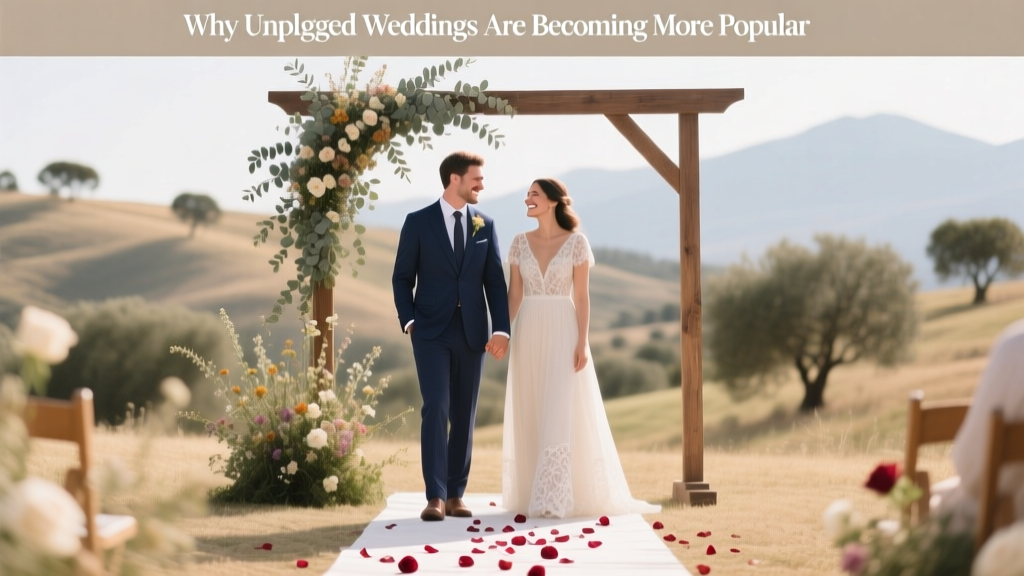
Why Unplugged Weddings Are Becoming More Popular
Why Unplugged Weddings Are Becoming More Popular
If you’ve been to a wedding recently, you’ve probably seen it: a sign at the ceremony entrance asking guests to put phones away, a gentle announcement from the officiant, or a note on the invitation that reads, “We’re having an unplugged ceremony.” For some couples, it sounds dreamy—more present, more emotional, more “us.” For others, it sparks immediate questions: Will guests be annoyed? What about Grandma who can’t travel and wants photos? What if someone ignores the request?
You’re not alone for wondering. Unplugged weddings are a growing wedding trend because they solve a handful of modern problems at once—while helping couples protect the feeling of their day.
So, why are unplugged weddings getting more popular?
Unplugged weddings are becoming more popular because couples want guests to be fully present, protect the professional photos and video, avoid social media spoilers, and create a more intimate, respectful ceremony experience. As phones have become constant companions, many couples are choosing boundaries that keep attention on the moment—especially during the ceremony.
Q: What does “unplugged wedding” actually mean?
A: Most of the time, “unplugged” means no phones or cameras during the ceremony. Some couples extend it to cocktail hour or the whole reception, but that’s less common.
Wedding planner Danielle R. (fictional), who coordinates events across the Northeast, puts it simply: “An unplugged ceremony is the easiest way to keep the aisle clear, the photos clean, and the energy focused. You’d be surprised how much calmer a ceremony feels when the crowd isn’t holding up screens.”
Q: What’s driving the trend right now?
A: A few current wedding trends are nudging couples toward unplugged celebrations:
- Content overload. Guests often record everything. Couples are realizing they don’t want a sea of phones in their ceremony photos.
- Higher expectations for wedding photography and videography. With cinematic wedding films and editorial-style photos trending, couples want a clean visual environment.
- Social media posting in real time. Some couples don’t want their first kiss or first look shared before they’ve even walked back up the aisle.
- Micro weddings and more intimate celebrations. Smaller guest lists often mean more intentional experiences—and “be here now” fits that vibe.
- Guest experience is a priority. Many couples are curating the day like a hosted experience, not just a schedule. An unplugged moment feels meaningful and set apart.
One bride, Maya (fictional), told us: “We didn’t ban phones all night. We just wanted the ceremony to feel sacred. When I looked out and saw people’s faces instead of screens, I was so relieved.”
Q: Is it rude to ask guests not to take photos?
A: Not if you ask kindly and clearly. Modern wedding etiquette supports couples setting respectful boundaries—especially when you’re providing professional photography. The key is tone: you’re inviting guests to be present, not scolding them.
A helpful framing is: “We’ve hired a photographer, and we’d love for you to relax and enjoy.” Guests generally understand, and many are quietly grateful not to feel pressure to document everything.
Q: What are the biggest benefits of an unplugged ceremony?
A: Couples choose unplugged ceremonies for practical and emotional reasons:
- Better professional photos. No phones blocking the aisle. No glowing screens in the background. No guests leaning out to get the shot.
- Fewer distractions. Notifications, buzzing phones, and camera clicks pull attention away from the vows.
- More connection. Guests tend to laugh, cry, and respond more naturally when they’re not recording.
- More privacy. Especially for couples with public-facing jobs, blended families, or personal reasons for keeping the day off social media.
- No “spoilers.” Your first look, dress reveal, or ceremony details stay yours until you decide to share.
Wedding photographer Chris L. (fictional) shares a real-world example: “I’ve had guests step into the aisle with an iPad right as the bride entered. When couples go unplugged and communicate it well, that problem disappears, and the images look timeless.”
Q: What if we want a modern approach—some phone use, but not all?
A: You can absolutely customize it. Unplugged doesn’t have to mean strict. Here are common scenarios:
Scenario 1: Traditional and fully unplugged (ceremony + parts of reception)
Best for couples who want a very classic, formal feel, or who strongly value privacy. You might ask guests to keep phones away until after dinner or until open dancing begins.
Scenario 2: Modern “ceremony-only” unplugged
The most popular option. Guests are asked to put phones away for 20–30 minutes, then they can take photos at cocktail hour and reception.
Scenario 3: “Unplugged moments” (select times)
You might request: no phones during the processional, vows, first kiss, and first dance—then free rein. This can work well if you know your crowd loves photos.
Scenario 4: “We’re fine with it—just be respectful”
If you truly don’t mind, consider a gentle guideline: no flash, stay seated, don’t step into the aisle. This is a good fit for casual weddings, backyard weddings, or elopement celebrations with a relaxed vibe.
Q: How do we tell guests without making it awkward?
A: Use a few friendly touchpoints so guests aren’t surprised. Here’s an approach that works well:
- On your wedding website: Add a short FAQ entry: “Are you having an unplugged ceremony?” and explain why.
- On invitations or details cards (optional): A single line is enough: “Kindly join us for an unplugged ceremony.”
- Signage at the ceremony entrance: Keep it warm: “We invite you to be fully present with us. Please silence and put away phones and cameras until after the ceremony.”
- Officiant announcement: This is the most effective. People listen in the moment.
Planner Danielle R. adds: “When the officiant says it with a smile—‘The couple can’t wait to see your faces, not your phones’—guests respond really well.”
Q: What if guests ignore the unplugged request?
A: It happens occasionally, but you can reduce it. Practical tips:
- Ask your officiant to pause briefly. A gentle reminder before the processional is often enough.
- Have ushers or a coordinator at the front. They can quietly cue someone to put the phone down.
- Tell your photographer/videographer your preference. Pros can reposition and anticipate “phone moments.”
- Designate a “photo moment” after the ceremony. For example: “After we walk back up the aisle, we’ll pause for 30 seconds so you can take a quick picture.” Guests love having permission at a specific time.
Real couple experience from Jordan and Elena (fictional): “We did a 10-second ‘take your photo now’ moment right after the kiss. Everyone got it out of their system, and the rest of the ceremony stayed phone-free.”
Related questions couples often ask
Q: What about guests who can’t attend and want updates?
A: Consider a compromise: have one trusted person share a couple of curated photos later, or set up a private album after the wedding. If you’re livestreaming, you can still keep the in-person ceremony unplugged.
Q: Is an unplugged wedding a problem for older relatives?
A: Usually not—especially if you explain that photos will be shared afterward. For older guests, the biggest issue is simply clarity. A sign plus a quick announcement helps everyone feel included, not corrected.
Q: Can we allow phones but ask guests not to post on social media?
A: Yes. That’s often called an “unplugged-ish” wedding or a “no social media until we post” request. You can say: “We’d love to share our wedding ourselves—please hold off on posting until tomorrow.” It’s a modern etiquette request many guests respect.
Q: What if we actually want guest photos?
A: You can still do unplugged for the ceremony and encourage photos later. Another option is to create a shared album or wedding hashtag for reception pics (just be prepared for a range of photo quality and plenty of duplicates).
Conclusion: The real reason unplugged weddings feel so good
Unplugged weddings are becoming more popular because they protect something couples can’t re-create later: the feeling in the room when everyone is fully present. Whether you go fully unplugged or choose a ceremony-only approach, the goal isn’t to control guests—it’s to make space for a more intimate, connected wedding day.
If you’re leaning unplugged, you’re not being picky. You’re setting a tone: “We’re here, together, right now.” And that’s a wedding trend worth keeping.
More Articles
 Wedding Gifts for Couples: Do You Really Need Them? (2026)
 Wedding Ring on Left Hand? Tradition, Exceptions & Mistakes
 Wedding Cake Sims 4: Step-by-Step Baking Guide (2026)
 How to Wish a Wedding Couple (7 Powerful Ways)
 Who Was Bree on the Phone With at Her Wedding?
 Megan Moroney Wedding Dress Rumor Debunked (2026)
 My Big Fat Greek Wedding on Netflix (2026)
 Wedding Ring Costs: Real 2026 Spending Data
 Wedding Annulment Steps: 7 Must-Take Actions (2026)
 When Is Taylor Swift's Wedding? What We Actually Know