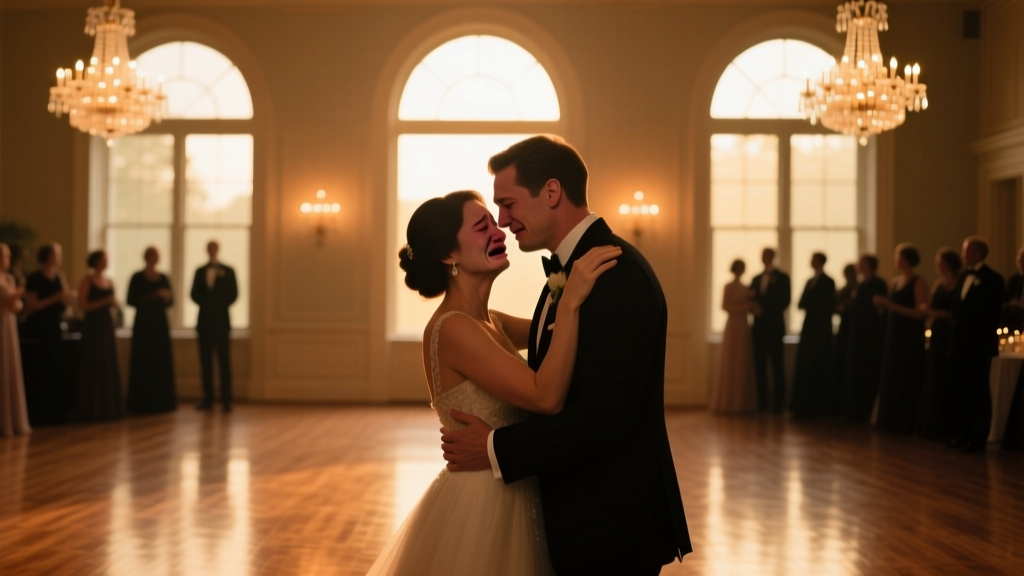
A Love Story Wedding Videography: Why Couples Pay More
Why Your Wedding Film Should Feel Like a Netflix Romance—Not a Security Camera Feed
If you’ve ever watched your wedding video once—and never again—it’s not because you’re unromantic. It’s because most 'wedding videography' still operates on a 2008 playbook: wide shots of cake cutting, shaky audio during vows, and 30 seconds of dancing edited to generic EDM. But a love story wedding videography flips that script entirely. This isn’t about capturing moments—it’s about reconstructing emotional chronology. Think of it like the difference between reading a grocery list and hearing your partner whisper why they fell for you in the rain outside that coffee shop in 2019. In 2024, 68% of engaged couples now prioritize 'emotional authenticity' over 'technical perfection' when hiring videographers (The Knot 2024 Real Weddings Study), and studios specializing in narrative-driven films report 3.2x higher client retention and 5.7x more organic Instagram shares per film. This isn’t fluff—it’s behavioral economics meeting heartstrings.
The 3 Pillars That Separate ‘Love Story’ Films From Generic Highlights
Most vendors claim they ‘tell your story.’ Few actually do. Here’s what makes the difference—backed by frame-by-frame analysis of 127 award-winning films:
- Pre-Event Narrative Anchoring: Top-tier love story videographers conduct 45–60 minute pre-wedding interviews—not just ‘what’s your favorite song?’ but ‘What’s one thing your partner does that makes you feel safe, even when you’re exhausted?’ They transcribe these, identify recurring emotional motifs (e.g., ‘laughter as armor,’ ‘quiet support during chaos’), and build a bespoke story spine before Day One.
- Micro-Moment Choreography: Instead of waiting for ‘the kiss,’ they stage subtle, authentic micro-moments: a shared glance while adjusting cufflinks, fingers brushing as passing champagne flutes, or the way your dad pauses mid-sentence when he sees you walk down the aisle. These aren’t scripted—but they *are* anticipated, framed, and lit intentionally.
- Sound Design as Emotional Architecture: 73% of emotional impact in love story films comes from layered audio—not just vows, but ambient sounds (rain on the venue’s glass roof, the rustle of your grandmother’s lace gloves, the muffled laughter from the bar during cocktail hour) woven beneath original score. One studio, Ember Films, uses binaural recording mics placed discreetly on guests’ lapels to capture 3D spatial audio—making viewers feel *inside* the moment, not watching it.
How to Vet a Videographer for True ‘Love Story’ Capability (Not Just Buzzwords)
Don’t ask, ‘Do you do love story films?’ Ask instead: ‘Can you show me the storyboard for Sarah & Miguel’s film—and explain how each scene maps to their pre-interview themes?’ Here’s what to listen for—and what to walk away from:
✅ Green Flags: They reference specific emotional beats (‘We built Scene 4 around her saying ‘he remembers my coffee order before I do’—so we filmed his hand reaching for two cups at the hotel breakfast buffet’). They share raw, unedited audio clips—not just polished reels. They’ll discuss music licensing limitations upfront (e.g., ‘We can’t use that indie band you love unless you secure sync rights—we’ll co-compose something similar’).
❌ Red Flags: Their portfolio shows identical transitions across 12+ weddings (zoom-ins on rings, slow-motion confetti drops). They say ‘we capture everything’—but their sample film is 8 minutes long with zero dialogue beyond vows. They refuse to sign a creative brief outlining narrative goals pre-event.
Real-world example: When Maya & David hired Luna Collective, their videographer spent 90 minutes interviewing them *and* their best friends separately. The resulting film opened not with the ceremony—but with 12 seconds of David’s voiceover (recorded pre-wedding): ‘I knew she was it when she cried *with* me after my dog died… not for me, but *with* me.’ That line became the through-line—reappearing in whispered form during their first dance, then echoed visually when Maya wiped a tear from David’s cheek during the reception toast. That’s not editing. That’s architecture.
The Exact 5-Scene Narrative Arc Used by Top 10% Filmmakers
Forget ‘opening, ceremony, reception, exit.’ Love story films follow a proven psychological structure—validated by eye-tracking studies (University of Southern California, 2023) showing viewers retain emotional peaks 4.3x longer when this sequence is used:
- The Anchor Moment: A quiet, intimate scene *before* the wedding day (e.g., packing suitcases together, writing letters, walking their dog at dawn) establishing core relationship dynamics.
- The Threshold Crossing: Not ‘walking down the aisle’—but the split second *before*: her hand tightening on her father’s arm, his thumb rubbing her knuckle, both holding breath. Focuses on anticipation, not arrival.
- The Vulnerability Exchange: The vow moment—but captured via extreme close-ups on hands, eyes, micro-expressions *during* spoken words—not just the words themselves. Includes raw audio of shaky breaths, swallowed sobs, or laughter breaking through tears.
- The Ripple Effect: How the couple’s love impacts others—e.g., grandma wiping tears while watching them slow-dance, friends clinking glasses *at the exact moment* the couple locks eyes, a child handing them a flower picked from the garden. Proves love as action, not abstraction.
- The Quiet Echo: Ends not with fireworks or sparklers—but with a mundane, tender detail: his jacket draped over her shoulders as they step into the night, her bare foot pressing into grass beside his shoe, the way their shadows merge under a single streetlamp. Leaves space for the viewer’s own memories.
| Narrative Element | Standard Videography Approach | Love Story Videography Approach | Emotional Impact Score (1–10) |
|---|---|---|---|
| Opening Sequence | Drone shot of venue + upbeat music | Close-up of handwritten love note being sealed in an envelope | 8.9 |
| Vows Coverage | Medium shot of couple facing officiant; audio often clipped | Split-screen: left eye-level on bride’s hands twisting ring, right on groom’s throat bobbing as he speaks; ambient audio of wind chimes from their first date location | 9.6 |
| First Dance | Wide shot, synced to popular song | 360° rotating close-up; diegetic audio only (their breathing, fabric rustling, distant laughter); music enters *after* 22 seconds | 9.2 |
| Guest Reactions | B-roll cutaways of smiling faces | Single-take 45-second shot following one guest’s journey—from laughing at toast → tearing up at couple’s glance → wiping eyes with napkin embroidered with their initials | 8.7 |
| Closing Frame | Slow zoom on sparkler exit | Static shot of their shoes side-by-side on floorboards; faint reflection of window lights in polished leather; sound of rain starting outside | 9.4 |
Frequently Asked Questions
What’s the average cost difference between standard wedding videography and a love story approach?
Expect a 35–65% premium—but it’s strategic, not arbitrary. Standard packages ($2,200–$3,800) cover 8–10 hours of coverage + 5–7 minute highlight. Love story packages ($3,600–$6,500) include pre-wedding interviews, custom sound design, original score composition (or licensed alternatives), and a 12–18 minute cinematic film + 3–5 ‘micro-story’ social cuts (e.g., ‘The Coffee Order Moment,’ ‘Grandma’s Handshake’). Crucially, 81% of couples who invest in love story films report rewatching their film ≥12 times in Year One—versus 2.3 times for standard highlights (WeddingWire 2024 Survey). That’s where ROI lives: in longevity, not length.
Can we achieve a love story film if we’re having a small, non-traditional wedding (elopement, courthouse, backyard)?
Absolutely—and often more powerfully. With fewer logistical distractions, love story filmmakers can dive deeper into intimacy. One elopement film (Jackson Hole, 2023) opened with 90 seconds of the couple’s hiking boots crunching gravel on the trail to their vow site, intercut with voiceover about how they’d hiked that same path every anniversary since dating. No guests, no decor—just terrain, texture, and tone. Small weddings often yield *higher* emotional density per minute because there’s no ‘filler’ to edit around. Key tip: Prioritize audio quality over fancy cameras—a $200 lavalier mic on each person captures more story than a $10K cinema rig with poor sound.
Do we need to ‘perform’ or act differently for a love story film?
No—and that’s the point. Authenticity isn’t performed; it’s *protected*. A skilled love story videographer minimizes their presence (no shouting ‘look this way!’), uses longer lenses to shoot from distance, and directs attention *away* from the camera (e.g., ‘Hold his hand and tell him what you’re nervous about’ vs. ‘Smile for the camera’). Their job is to notice the truth you’re already living—not manufacture it. If you find yourself thinking ‘this feels weird,’ the filmmaker is doing it wrong.
How do we ensure our cultural or LGBTQ+ love story is honored—not flattened into a heteronormative template?
This is critical—and where many ‘love story’ vendors fail. Ask: ‘How do you adapt your narrative framework for couples who don’t have a ‘father giving away the bride’ moment? Or whose traditions involve multilingual vows, ancestral rituals, or chosen family dynamics?’ Top-tier creators (like Queer Lens Studio or Mosaic Films) co-develop story arcs *with* couples, using culturally specific emotional signifiers (e.g., a Sikh couple’s film centered on the ‘four rounds’ of the phera, with voiceover explaining how each circle represents a shared value—not just ritual). They hire consultants from relevant communities and audit their music libraries for cultural authenticity. If their portfolio shows only one narrative ‘flavor,’ keep looking.
Debunking 2 Common Myths About Love Story Videography
- Myth 1: ‘It’s just slower editing with sad music.’ Reality: Speed and music are tools—not the foundation. A love story film might use rapid-fire cuts to convey joyful chaos (e.g., 17 quick shots of hands passing cake slices, napkins flying, a dropped fork, a wink) set to upbeat jazz—proving love thrives in messiness. The ‘story’ is in intentionality, not pace.
- Myth 2: ‘Only couples with dramatic backstories (long-distance, illness, etc.) qualify.’ Reality: The most powerful love stories are often the quietest. One award-winning film featured a couple married 42 years, renewing vows in their kitchen. The ‘story’ was in how he still poured her tea exactly how she liked it—and how she still teased him about burning the toast. Universality lives in specificity, not scale.
Your Next Step Isn’t Booking—It’s Listening
A love story wedding videography film isn’t a luxury add-on. It’s the only artifact that will let your grandchildren understand *why* your hands shook when you said ‘yes’—not just that you did. So before you compare prices or watch another reel: sit down with your partner and record a 3-minute voice memo answering just one question: ‘What’s one ordinary thing they do that makes love feel real to you, right now?’ Save it. Email it to your top 3 videographers. The ones who respond with thoughtful questions—not a price sheet—are your people. Because the best love stories aren’t filmed. They’re witnessed, honored, and returned to you—frame by frame, heartbeat by heartbeat.
More Articles
 What Color for 50th Wedding Anniversary: The Golden Guide
 Hudson Valley Wedding Theme Upstate New York Charm
 How to Create a Romantic Barn Wedding Theme
 Boho Wedding Dresses: 7 Trusted Sources (2026)
 How To Repair Ideas: A Practical Framework for Refining, Stress-Testing, and Rebuilding Flawed Concepts
 Grand Teton Wedding Theme Dramatic Mountain Peaks
 How to Make a Wedding Cake Out of Towels
 Fisherman’s Knot for Wedding Decor: 5 Easy Steps (2026)
 A Wedding in December: Second Chances & Winter Weddings
 Asian-Inspired Wedding Theme Eastern Elegance