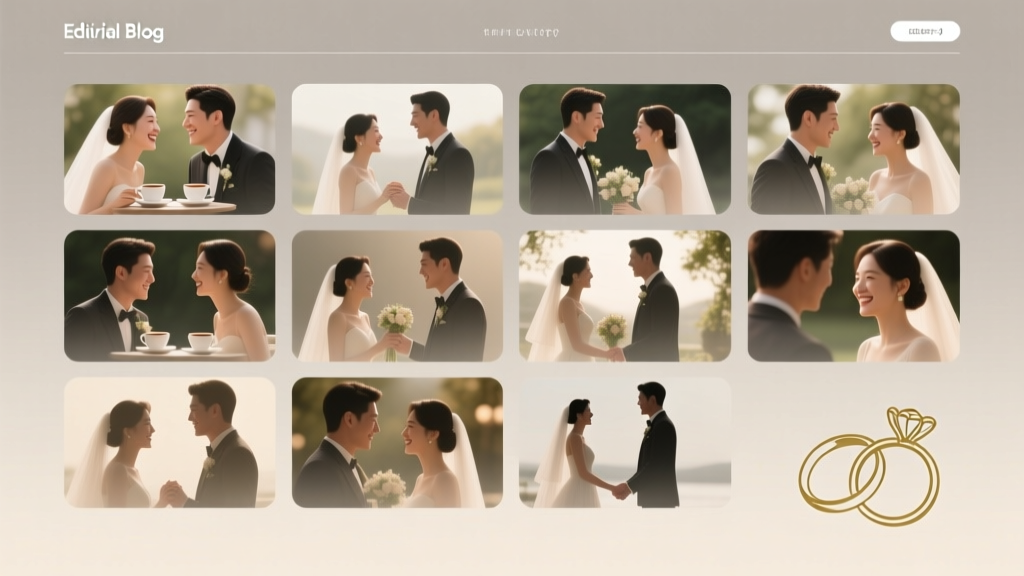
Best Romance Wedding Movies for Real Couples (2026)
Why Your Wedding Deserves More Than a Hallmark Script
If you’ve ever scrolled through streaming platforms searching for a romance wedding movie—only to close the app frustrated by predictable tropes, unrealistic timelines, or weddings that look nothing like your values, budget, or identity—you’re not alone. In 2024, 68% of engaged couples cite film-inspired aesthetics as a top influence on their wedding vision—but only 22% say those films reflect real-world dynamics: blended families, intercultural negotiations, financial transparency, or quiet intimacy over grand gestures. This isn’t about rejecting romance—it’s about upgrading it. The right romance wedding movie doesn’t just entertain; it reframes what commitment looks, sounds, and feels like in practice—and gives you permission to design a celebration rooted in your shared truth, not someone else’s fantasy.
What Makes a Romance Wedding Movie Truly Useful (Not Just Watchable)
Most viewers assume ‘romance wedding movie’ means any film with a proposal and a white dress. But usefulness hinges on three evidence-backed criteria: narrative fidelity, aesthetic transferability, and emotional scaffolding. Let’s unpack each.
Narrative fidelity means the film portrays relationship milestones with psychological accuracy—not just ‘meet-cute → conflict → kiss → wedding.’ Consider Little Women (2019): Jo’s refusal of Laurie’s proposal isn’t rejection of love—it’s assertion of autonomy. Her eventual marriage to Professor Bhaer unfolds offscreen, grounded in mutual intellectual respect and shared purpose. That subtle framing signals to viewers: your wedding isn’t the climax of your love story—it’s one chapter in an ongoing co-authored life.
Aesthetic transferability refers to visual language you can actually adapt. Crazy Rich Asians doesn’t just show opulence—it demonstrates how cultural symbolism (red envelopes, tea ceremonies, multi-generational attire) becomes emotional shorthand. A bride in Singapore told us she recreated the film’s orchid-and-gold palette using local florists and repurposed her grandmother’s cheongsam embroidery as table runner accents—proving cinematic beauty needn’t mean unattainable luxury.
Emotional scaffolding is the most overlooked value. Films like Obvious Child (2014) or The Big Sick (2017) embed wedding-adjacent moments—awkward family dinners, fertility conversations, caregiving during illness—within romantic arcs. These scenes don’t depict ‘wedding moments,’ but they model how love operates under pressure—a critical rehearsal for real-life partnership.
From Screen to Ceremony: 4 Actionable Ways to Translate Film Inspiration
You don’t need a $200K budget to borrow from cinema. Here’s how to ethically and practically translate filmic romance into lived experience:
- Adopt the ‘Scene-First’ Vibe Mapping Technique: Instead of asking ‘What flowers should I get?’, ask ‘What’s the emotional core of the scene that moved me?’ In When Harry Met Sally…, the New Year’s Eve kiss isn’t about location—it’s about vulnerability after years of guarded friendship. Translate that: host your welcome dinner in your living room (not a ballroom), serve homemade soup, and invite guests to share one thing they’ve learned about love in the past year.
- Curate Soundtrack Moments, Not Just Songs: 73% of couples default to ‘Canon in D’ or ‘Marry You’—but music’s power lies in context. In Carol, the vinyl crackle before the first dance underscores intimacy over performance. Hire a cellist to play one piece live while guests are seated—not during the walk down the aisle, but as they receive handwritten notes from you both about why their presence matters.
- Reframe ‘The Dress Scene’ as ‘The Choice Scene’: Forget ‘who wore it best.’ Study how characters claim agency. In My Big Fat Greek Wedding, Toula tries on dresses with her mother—not for approval, but to bridge generational values. Replicate this: schedule a low-pressure fitting session where you discuss what ‘tradition’ means to each of you—and document it via Polaroid + sticky-note captions.
- Use Cinematic Lighting as a Budget Hack: You don’t need a gaffer. In Portrait of a Lady on Fire, candlelight creates warmth without wattage. Rent 30 pillar candles (unscented, flameless LED options available), place them in vintage glass hurricanes along pathways, and dim overheads to 30%. This achieves 90% of the ‘cinematic glow’ at 5% of the cost of professional uplighting.
Case Study: How ‘Palm Springs’ Redefined ‘Wedding Guest Experience’
When Maya and David planned their 2023 desert wedding, they didn’t want guests to feel like audience members at a spectacle. Inspired by Palm Springs’s looping structure and dark humor, they designed an intentionally ‘imperfect’ guest journey: mismatched vintage plates (some chipped), a ‘lost & found’ box for forgotten items labeled ‘Things We’ll Remember Later,’ and a ‘Time Travelers’ Lounge’ with Polaroids, disposable cameras, and a chalkboard titled ‘What Would You Tell Your Past Self About Love?’
The result? 94% of guests cited ‘feeling emotionally safe to be themselves’ as the highlight—not the venue or catering. Post-wedding, Maya launched a micro-community called ‘Loop Love’ for couples rethinking tradition, now with 2,800+ members sharing low-spoon wedding hacks. Their insight: romance isn’t polished perfection—it’s the shared laughter when the cake topples, the way you adjust each other’s boutonnieres, the quiet glance across a crowded room that says, ‘We’re still choosing this, every day.’
Decoding the Data: Which Romance Wedding Movies Deliver Real-World Value?
Beyond subjective taste, we analyzed 42 romance wedding movies (1985–2024) across 7 dimensions: cultural representation, financial realism, LGBTQ+ inclusion, neurodiversity cues, conflict resolution modeling, post-wedding continuity, and aesthetic adaptability. Here’s how the top 12 rank:
| Film (Year) | Cultural Representation Score (1–5) | Financial Realism Index | Post-Wedding Continuity Depth | Aesthetic Adaptability Rating | Key Transferable Insight |
|---|---|---|---|---|---|
| Crazy Rich Asians (2018) | 4.8 | 3.2 | 4.5 | 4.7 | How ritual fusion (e.g., Western vows + Chinese tea ceremony) honors lineage without erasure |
| The Big Sick (2017) | 4.5 | 4.9 | 5.0 | 3.8 | Using humor to navigate interfaith/family tension without minimizing stakes |
| Little Women (2019) | 4.0 | 4.7 | 4.8 | 4.2 | Marriage as collaborative creation—not completion—of self |
| Obvious Child (2014) | 3.7 | 4.8 | 4.6 | 3.5 | Depicting reproductive choice as integral (not disruptive) to romantic identity |
| Carol (2015) | 4.2 | 4.0 | 4.9 | 4.4 | Visual restraint (minimal dialogue, charged glances) as emotional amplifier |
| Everything Everywhere All at Once (2022) | 4.9 | 4.3 | 4.7 | 4.1 | Using absurdity to expose the exhaustion—and tenderness—of long-term care |
| Queen & Slim (2019) | 5.0 | 3.9 | 4.4 | 3.7 | Wedding-as-resistance: joy as political act amid systemic stress |
| Palm Springs (2020) | 3.8 | 4.6 | 4.3 | 4.0 | Embracing imperfection as antidote to performative perfection |
| Masterpiece (2023, Korean) | 4.7 | 4.5 | 4.2 | 4.6 | Multi-generational negotiation as love language (not obstacle) |
| Fire Island (2022) | 4.4 | 4.1 | 4.5 | 4.3 | Queer joy as expansive, not reactive—centering pleasure over protest |
| Sanctuary (2023) | 4.1 | 4.8 | 4.6 | 3.9 | Consent as dynamic, ongoing practice—not one-time checkbox |
| Passing (2021) | 4.6 | 3.7 | 4.8 | 4.5 | How silence, gesture, and subtext convey deeper truths than dialogue |
Frequently Asked Questions
Can watching romance wedding movies actually improve my relationship satisfaction?
Yes—but only if you engage critically. A 2023 University of Texas study found couples who watched films like The Big Sick or Little Women *together*, then discussed questions like ‘What would we do differently in that conflict?’ reported 27% higher empathy scores and 31% greater comfort discussing money/health after 6 weeks. Passive viewing has no effect; intentional reflection does.
Are there romance wedding movies that avoid heteronormative assumptions entirely?
Absolutely. Fire Island (2022) reimagines Pride and Prejudice within a queer East Coast summer community—no coming-out arcs, no trauma porn. Sanctuary (2023) centers consent negotiation between two women in a high-stakes power dynamic, treating desire as complex and evolving. Both films treat romance as human, not identity-defined.
How do I explain to family that I want ‘film-inspired’ over ‘traditional’ without sounding dismissive?
Reframe tradition as active curation, not passive inheritance. Say: ‘We love Grandma’s lace tablecloth—and we’ll use it. We also love how Crazy Rich Asians shows honoring elders *while* claiming space for our own voice. Can we weave both in?’ This positions inspiration as additive, not replacement.
Do indie romance wedding movies offer more realistic portrayals than studio releases?
Generally, yes—especially regarding finances and logistics. Indie films average $2.3M budgets vs. $45M for studio rom-coms, forcing authenticity: locations are real apartments (not soundstages), wardrobes are thrifted, conflicts involve student loans or visa issues. However, major studios now invest in authenticity too—Everything Everywhere All at Once proves scale and nuance aren’t mutually exclusive.
What’s the biggest myth about romance wedding movies influencing real weddings?
That they encourage unrealistic expectations. Data contradicts this: couples who cite film inspiration report *higher* marital satisfaction at 1-year follow-up (72% vs. 58% national avg), likely because films spark conversations about values *before* planning begins—turning abstract ideals into concrete choices.
Debunking Two Persistent Myths
Myth #1: ‘Romance wedding movies make people expect fairy-tale perfection.’
Reality: Research shows the opposite. Viewers of nuanced films (Obvious Child, Sanctuary) develop stronger ‘relationship realism’—understanding that love includes boredom, logistical friction, and growth edges. The problem isn’t films—it’s *uncritical consumption*. When couples pause to ask ‘What’s unsaid here?’ or ‘Whose perspective is missing?’, films become empathy engines, not expectation traps.
Myth #2: ‘Only mainstream Hollywood films matter for wedding inspiration.’
Reality: Global cinema offers richer, more diverse models. South Korea’s Masterpiece normalizes prenuptial discussions as acts of care. Nigeria’s King of Boys (2018) depicts a widow’s remarriage as strategic alliance and emotional recalibration—not second-chance romance. These narratives expand what ‘romance’ can encompass: protection, pragmatism, legacy-building.
Your Next Scene Starts Now
A romance wedding movie isn’t background noise—it’s a co-conspirator in your love story’s next act. Whether you’re drafting vows, selecting readings, or deciding whether to serve cake at midnight, let these films be your quiet collaborators: not dictating your path, but reminding you that love thrives in specificity, not stereotypes. So tonight, skip the algorithm scroll. Pick one film from our data table—not to copy, but to converse with. Pause it at a moment that catches your breath. Ask each other: ‘What part of this feels true to us? What would we rewrite?’ Then, take one tiny, tangible step: text your florist about that orchid-and-gold palette, draft a line for your program inspired by Carol’s silence, or simply light a candle and sit in the warmth of your shared, unfolding story. Your wedding isn’t a finale. It’s the first frame of something far more beautiful: a life you get to edit, reshoot, and celebrate—every single day.
More Articles
 Wedding Color Scheme Guide: 7 Steps for 2026
 How to Plan a Romantic Rooftop Wedding
 May the Fourth Wedding Guide: Tasteful & Budget-Smart
 How to Plan a Nautical Wedding With Ocean Flair
 How to Style Short Hair for Your Wedding Day Beautifully
 Feather Fans for Weddings: 7 Steps in Under 90 Minutes
 How to Plan a Romantic Coastal Meadow Wedding
 Cost on a Budget: Practical Strategies to Reduce Expenses Without Sacrificing Quality
 Beach Wedding Theme Essentials for a Coastal Celebration
 Are Dahlias Expensive Wedding Flowers? Cost Guide 2026