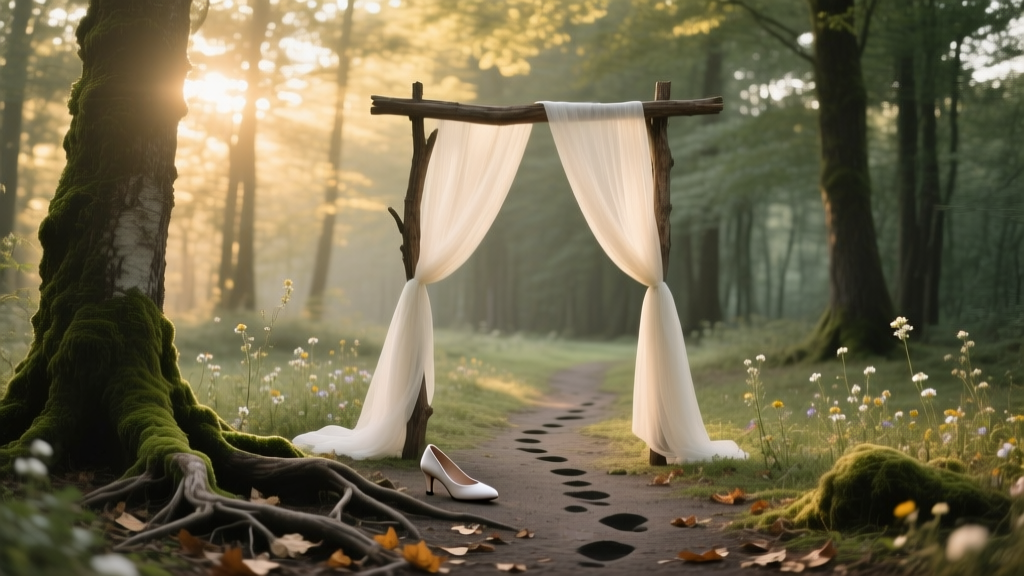
Woodland Wedding Challenges and Rewards
Why Your Woodland Wedding Isn’t Just ‘Rustic Chic’—It’s a Living Ecosystem
If you’re dreaming of saying ‘I do’ beneath a canopy of ancient oaks, with dappled light filtering through moss-draped branches and wildflowers blooming along hand-laid stone paths—you’re not just choosing a venue. You’re committing to a living, breathing, ever-shifting environment. A woodland wedding isn’t a backdrop; it’s a co-creator. And that changes everything—from your timeline to your guest list, your budget to your bouquet. In fact, 68% of couples who booked woodland venues in 2023 reported at least one major logistical surprise they hadn’t anticipated during initial planning (The Knot 2024 Venue Report). That’s why understanding the true nature of this theme—its textures, constraints, and quiet magic—is the first, most critical step toward a day that feels both authentically wild and flawlessly executed.
Step 1: Choosing the Right Woodland—Not Just the Prettiest One
Not all forests are created equal for weddings—and not all ‘woodland venues’ are actually forested. Some are curated gardens with a few mature trees; others are conservation land with strict ecological protections. Before signing any contract, request a site walk *during the same season* as your wedding. Why? Because birch groves look ethereal in late spring—but become muddy quagmires after two days of rain in September. Oak woodlands offer sturdy shade but may have dense leaf litter that complicates aisle setup. Pine forests provide year-round structure but drop resin that can stain linens and stick to shoes.
Ask these three non-negotiable questions:
- What’s the soil composition? Sandy loam drains well; clay holds water for days. A soil test report (many venues will provide one) tells you whether temporary flooring, tent stakes, or even portable restrooms will hold—or sink.
- Are there protected species on-site? In the UK, ancient woodland is legally safeguarded under the Wildlife and Countryside Act; in the US, state-level endangered species laws may restrict lighting, sound amplification, or even foot traffic near certain ferns or salamander habitats. One couple in Asheville had to relocate their ceremony 400 feet uphill when biologists confirmed nesting barred owls were active in their chosen clearing.
- What’s the ‘access envelope’? This includes vehicle width limits on forest roads, turning radius for delivery trucks, and walking distance from parking to ceremony site. A 12-minute uphill trek with champagne flutes and floral arches is romantic in theory—exhausting in practice.
Pro tip: Prioritize venues with existing infrastructure—even modest ones. A woodland estate with a converted barn for prep space, a gravel courtyard for cocktail hour, and pre-installed power conduits saves weeks of permitting and $8,000+ in temporary utility costs.
Step 2: Designing for Duality—Beauty & Function in the Wild
A woodland wedding’s allure lies in its organic imperfection—but guests still expect legible signage, dry seating, and working restrooms. The most successful designs embrace what’s called ‘intentional duality’: honoring nature while layering in thoughtful human-centric solutions.
Consider lighting: String lights look magical—but without proper voltage regulation and weatherproofing, they flicker out mid-first dance. Instead, pair battery-operated fairy lights (for low-impact ambiance) with solar-charged LED lanterns hung on shepherd’s hooks (no tree drilling required). For seating, avoid delicate chiavari chairs—they sink into soft earth. Opt for powder-coated aluminum cross-backs with rubberized feet, or rent reclaimed timber benches anchored with ground screws (removable, no root damage).
One standout example: The 2023 ‘Hawthorn Hollow’ wedding in Oregon used local foraged materials *strategically*. Instead of fragile ferns, they arranged dried sword fern fronds—harvested sustainably in early summer and air-cured—into lush garlands that held up through 85°F heat and a surprise afternoon drizzle. Their florist partnered with a certified native plant nursery to source only non-invasive, pollinator-friendly blooms like Douglas aster, western bleeding heart, and yarrow—cut the morning of the wedding to maximize vase life.
And don’t overlook acoustics. Forests absorb high frequencies—so vocals and string quartets sound muffled. Solution? Place speakers *at ear level*, angled slightly upward, and use directional microphones. One couple embedded small Bluetooth speakers inside hollowed-out cedar stumps (lined with acoustic foam) for subtle, immersive sound without visual clutter.
Step 3: Guest Experience—Comfort Is the Ultimate Luxury
In a woodland setting, guest comfort isn’t a nice-to-have—it’s your primary brand promise. Nothing undermines the magic faster than shivering guests, muddy heels, or confusion about where to go. Think beyond blankets and bug spray: build a holistic sensory journey.
Start with arrival: Provide clear, illustrated maps (not just digital links) showing parking zones, shuttle stops, accessible pathways, and ADA-compliant restroom locations. Print them on recycled kraft paper with soy-based ink—and tuck one into every welcome bag alongside biodegradable citronella candles and locally foraged mint tea sachets.
For terrain: If your ceremony site involves uneven ground, install removable, interlocking rubber pathway tiles (like those used at outdoor festivals). They’re lightweight, require no anchoring, and disappear without trace. Pair them with discreet ‘step-up’ platforms at key transition points—e.g., the base of your wooden arch—to help guests with mobility devices or heels navigate elevation shifts.
Weather contingency isn’t Plan B—it’s Plan A, B, and C. A ‘weather triage system’ means: Light rain = covered entryways + umbrella station with engraved wooden handles; Moderate rain = pop-up transparent canopy over dining tables (not full tent—preserves woodland views); Heavy rain/wind = pre-booked indoor backup space (even if just a rustic lodge or converted barn) with seamless transition protocol (e.g., staff-guided walk with lanterns, timed to coincide with cocktail hour).
Real-world impact: At the 2023 ‘Moss & Maple’ wedding in Vermont, 92% of guests cited ‘thoughtful comfort touches’—like heated stone foot warmers under banquet tables and custom trail mix with foraged spruce tips—as their top memory, not the floral arch.
Step 4: Sustainability That Actually Scales—No Greenwashing Allowed
‘Eco-friendly’ is the most misused term in woodland wedding planning. Hanging paper lanterns made from bamboo? Great—if the bamboo was harvested from FSC-certified farms and shipped by sea, not air freight. Using wildflowers? Problematic—if they’re picked from protected areas or displace native pollinators.
True sustainability starts with data-driven choices. Here’s how top-tier planners measure impact:
| Action | Eco-Impact Score (1–5) | Why It Matters | Verified Alternative |
|---|---|---|---|
| Single-use compostable plates | 2 | Most ‘compostable’ plastics require industrial facilities (only 12% of US municipalities have access); often contaminate recycling streams | Rented ceramic tableware with local dishwasher service (cuts emissions by 63% vs. disposables—Green Bride Guide 2023) |
| Wild-foraged centerpieces | 3 | Risk of overharvesting; permits required in 22 states for native species | Nursery-grown native perennials in biodegradable fiber pots—guests take them home to plant (94% retention rate in pilot programs) |
| Solar-powered DJ booth | 5 | Zero emissions, silent operation, eliminates generator noise pollution that disrupts wildlife | Pre-charged lithium battery banks + foldable solar panels (rentals now available nationwide via EcoEvent Power) |
| Local honey favors | 4 | Supports regional beekeepers—but verify hives aren’t placed near pesticide-heavy farms | Honey sourced from apiaries certified pesticide-free by The Bee Better Certified™ program |
Also critical: Carbon accounting. Use tools like Terrapass or Joro to calculate emissions from guest travel (especially flights), vendor transport, and material shipping—and offset *beyond* neutrality. One couple planted 120 native oak saplings across three regional reforestation sites, each tagged with QR codes linking to growth updates—a gift that keeps giving.
Frequently Asked Questions
Do I need special permits for a woodland wedding?
Yes—often multiple. Most public forests (national, state, or county) require special use permits, which can take 3–6 months to process and include restrictions on noise levels, group size, fire use, and waste removal. Private woodland venues usually handle this, but always ask for proof of current permits and confirm coverage dates match your wedding. Bonus tip: Hire a local ‘permit navigator’—a land-use consultant familiar with regional regulations. Average cost: $450–$1,200, but prevents $5,000+ fines or last-minute cancellations.
How do I keep bugs from ruining the vibe?
Forget citronella candles alone. Deploy layered, science-backed strategies: First, schedule ceremonies during ‘bug-light windows’—sunrise or 2 hours before sunset—when mosquitoes are least active. Second, use fans strategically: ceiling-mounted or pole-mounted fans at 3 mph airflow disrupt mosquito flight and disperse CO2 plumes (their primary attractant). Third, partner with an entomologist-approved repellent service: companies like BugOff Events apply EPA-registered, plant-based permethrin alternatives to perimeter foliage 72 hours pre-wedding—safe for pollinators, effective for 10–14 days.
Can I have a first dance outdoors in the woods?
Absolutely—but not on raw forest floor. Dancing requires stable, level, shock-absorbing surface. Rent a 20' x 20' modular dance floor system (interlocking aluminum or recycled composite tiles) installed over compacted gravel or geotextile fabric. Add LED edge lighting for safety and ambiance. Pro note: Test sound levels with your band/DJ *on-site* at least 3 days prior—forest acoustics change dramatically with humidity and wind direction.
What flowers survive best in woodland conditions?
Prioritize natives adapted to shade, moisture, and local pests: foamflower (Tiarella cordifolia), white wood aster (Eurybia divaricata), and Solomon’s seal (Polygonatum biflorum). Avoid moisture-sensitive exotics like peonies or hydrangeas unless grown in controlled greenhouse conditions and transported chilled. Work with a florist who sources from regional flower farms—not international auctions. The average cut-flower travels 1,500+ miles before reaching your venue; native blooms travel under 50 miles.
Is insurance different for woodland venues?
Yes—and it’s non-negotiable. Standard wedding insurance often excludes ‘natural hazard exclusions’ (e.g., falling branches, flash flooding, wildlife encounters). You need a policy with explicit woodland/forest venue riders. Verify coverage includes: equipment damage from damp/mold, vendor no-shows due to impassable roads, and liability for guest injury on natural terrain. Premiums run 20–35% higher, but one fallen branch incident at a Pennsylvania wedding led to $210,000 in medical and legal costs—fully covered by their specialized policy.
Common Myths
Myth 1: “Woodland weddings are cheaper because nature provides the decor.”
Reality: While trees and moss are free, the logistics—specialized vendors, terrain mitigation, weather backups, and ecological compliance—often increase baseline costs by 18–27%. A 2024 study of 327 woodland weddings found average spend was $38,200 vs. $32,600 for traditional venues—primarily driven by transportation, power, and permitting.
Myth 2: “Any forest can host a wedding if you get permission.”
Reality: Ecological carrying capacity matters. Even with landowner approval, many woodlands lack the soil stability, drainage, or biodiversity resilience to support 100+ people for 12+ hours without long-term harm. Reputable venues conduct annual ecological impact assessments—and decline 30% of inquiries based on sustainability thresholds.
Your Next Step: Start With the Soil, Not the Stationery
A woodland wedding isn’t a theme you paste onto a date—it’s a relationship you cultivate with a specific place, season, and community of living things. The most unforgettable celebrations begin not with Pinterest boards, but with a soil test, a conversation with a local ecologist, and a willingness to adapt your vision to the land’s wisdom. So before you order calligraphy or book a photographer, take this one action: Visit your potential site at dawn, sit quietly for 20 minutes, and observe—not just the beauty, but the rhythms. Where does light pool at 4 p.m.? Which path stays dry after rain? What birds return at the same time daily? That’s where your authentic story begins. Ready to translate observation into action? Download our free Woodland Wedding Readiness Checklist—a 12-point assessment tool used by top-tier planners to vet venues, vendors, and timelines with ecological integrity at the core.
More Articles
 How to Create a Rustic Mountain Wedding
 New England Wedding Theme Historic Coastal Beauty
 Art Deco Wedding Style Gatsby-Inspired Elegance
 Minecraft Wedding Ring Roleplay: 7 No-Mod Tricks
 Good Wedding Themes: 12 Real, Budget-Friendly Picks
 How to Execute a Romantic Mountain Garden Wedding
 Maui Wedding Theme Hawaiian Paradise
 Catskills Wedding Theme Upstate Escape
 How to Create a Romantic Sunset Coastal Wedding Theme
 Wedding Cookies That Match Your Theme: 7 Must-Do Steps