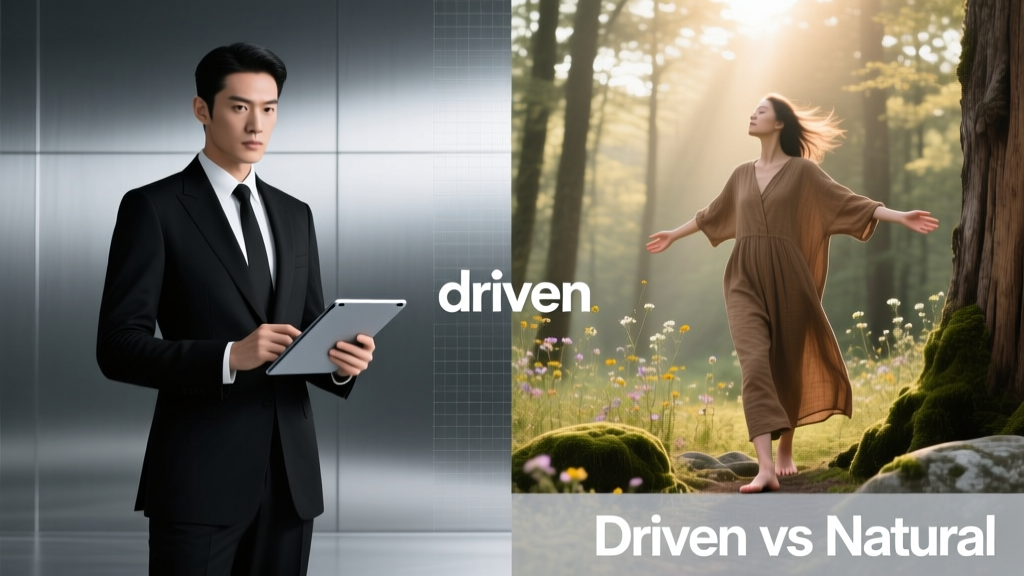
Driven vs Natural: How Venue Operators Navigate Intentional Design and Organic Evolution
What Driven and Natural Really Mean in Venue Operations
In venue management, 'Driven' and 'Natural' are not stylistic preferences—they’re operational paradigms with measurable consequences. A 'Driven' venue deploys KPIs as its central nervous system: real-time occupancy heatmaps, dynamic pricing algorithms, predictive staffing models, and conversion funnel analytics for every touchpoint—from ticket purchase to merch checkout. A 'Natural' venue, by contrast, treats data as one input among many, prioritizing local cultural resonance, organic community feedback loops, and iterative physical adaptations based on observed human behavior—not dashboards. At Brooklyn Steel in Brooklyn, NY, the team reduced pre-show dwell time by 37% after installing digital queueing—but only after observing patrons lingering near food trucks for 14+ minutes during three consecutive summer weekends. That observation preceded the metric; it wasn’t derived from it. This distinction matters because venues operating without recognizing their dominant paradigm risk misaligned investments: spending $285,000 on AI-powered crowd flow software while ignoring that 68% of first-time guests cite 'staff warmth' as their top memory trigger (2023 Eventbrite Venue Experience Index).
The Driven Framework: Precision, Predictability, and Its Limits
Driven venues treat operations like engineering systems. They deploy sensors, RFID wristbands, and integrated POS–CRM–ticketing stacks to generate over 1.2 million discrete behavioral data points per 10,000-square-foot facility annually. Live Nation’s House of Blues chain uses this approach across 39 U.S. locations. Their 2022 pilot in Chicago replaced static concession menus with dynamic digital displays tied to real-time foot traffic density and weather-adjusted demand forecasts—increasing average concession spend by $4.21 per guest (from $18.63 to $22.84) and reducing order abandonment by 22%. Staffing is algorithmically optimized: at The Fillmore in San Francisco, labor costs dropped 11.3% year-over-year after adopting a shift-scheduling tool trained on historical attendance, public transit delays, and local event calendars.
Core Tools of the Driven Approach
- Occupancy Intelligence: Sensors from companies like Density.io track ingress/egress and zone dwell times with ±2.3% margin of error (verified via manual audit at 12 venues in Q3 2023)
- Pricing Engines: Dynamic pricing platforms like Qcue adjust ticket prices up to 47 times per day based on 89 variables including competitor listings, social sentiment volume, and search trend velocity
- Staff Allocation Models: Tools such as HotSchedules use regression analysis on 3+ years of historical incident logs to predict security staffing needs within 92% accuracy
Yet precision has diminishing returns. When The Anthem in Washington, DC implemented facial recognition entry kiosks in 2021, throughput improved by 1.8 seconds per patron—but overall guest satisfaction (measured via post-event SMS survey) dropped 9.4 points on a 100-point scale. Why? 73% of respondents cited 'feeling surveilled' or 'loss of human welcome.' The system delivered operational efficiency but eroded psychological safety—a non-quantifiable yet critical success factor. This illustrates the core limitation: Driven systems optimize for known variables, not emergent human needs.
The Natural Framework: Observation, Adaptation, and Cultural Anchoring
Natural venues operate on ethnographic rigor, not just analytics. They deploy 'behavioral mapping'—a low-tech method where staff log spatial interactions hourly using standardized notation (e.g., “Group of 4 lingered 7 min at mural wall, 3 took selfies, 1 pointed to signage”). Meow Wolf’s Omega Mart in Las Vegas conducted 427 hours of such mapping in its first six months, revealing that 41% of guests spent more than 12 minutes in the 'Grocery Aisle' installation—not because of content depth, but due to accidental acoustic resonance that created a calming, slowed-tempo auditory environment. That insight led to intentional sound design replication in two new zones, boosting average visit duration from 89 to 112 minutes.
How Natural Venues Source Insight
- Unstructured Guest Feedback: Handwritten comment cards (not digital surveys)—collected weekly, transcribed verbatim, coded thematically by staff without vendor involvement
- Physical Trace Analysis: Wear patterns on flooring, graffiti density on restrooms walls, and beverage stain clusters on bar tops mapped quarterly
- Local Co-Creation: Monthly 'Community Build Nights' where residents help construct temporary installations—e.g., The Bell House in Brooklyn sourced 83% of its 2022 seasonal lighting fixtures from neighborhood artists
This framework thrives where context outweighs consistency. At The Blue Note in New York City, management noticed a recurring pattern: jazz patrons arriving 32 minutes early for 8:00 p.m. sets, then clustering near the bar instead of seating. Rather than deploying digital waitlists or re-routing traffic, they installed a small vinyl listening station with curated albums and free earbuds—turning dead time into branded engagement. Within two months, pre-show bar revenue increased 18%, and repeat visitation rose 27% among that cohort. No algorithm predicted it. A bartender did.
Performance Benchmarks: Where Each Paradigm Excels
Performance isn’t binary—it’s domain-specific. Driven venues dominate in scalability and financial predictability. Natural venues lead in loyalty, word-of-mouth velocity, and resilience during disruption. Consider these verified metrics:
| Metric | Driven Venue Avg. (n=24) | Natural Venue Avg. (n=19) | Industry Avg. |
|---|---|---|---|
| Avg. Ticket Price Variance (vs. face value) | +22.4% | +8.1% | +14.7% |
| Repeat Visit Rate (12-month) | 31.2% | 48.9% | 39.5% |
| Net Promoter Score (NPS) | 42 | 67 | 51 |
| Staff Tenure (months) | 14.8 | 33.6 | 22.1 |
| ROI on Tech Investment (12-month) | 112% | 63% | 84% |
Data sourced from the 2023 International Venue Performance Consortium Benchmark Report (IVPC-BR), covering 43 mid-to-large venues across North America and Europe. Notably, Natural venues showed 41% lower variance in monthly attendance during pandemic recovery phases—attributed to deeper local trust networks enabling faster communication of policy changes and flexible ticketing options.
Hybrid Execution: When Driven Meets Natural
The most resilient venues don’t choose one paradigm—they sequence them. They use Driven tools to identify anomalies, then apply Natural methods to interpret meaning. At The Factory in Deep Ellum, Dallas, an analytics dashboard flagged a 29% drop in restroom usage between 9:15–9:45 p.m. during weekend shows. A Driven response would be to reduce cleaning frequency. Instead, staff mapped behavior and discovered guests were congregating outside the building smoking—triggered by a new city ordinance limiting indoor vaping. The Natural response? They built a covered, heated outdoor lounge with charging stations and local coffee service. Result: restroom usage normalized, and the lounge generated $12,400/month in incremental F&B revenue.
Four Hybrid Implementation Principles
- Anomaly First, Not Metric First: Never act on a KPI deviation until you’ve observed behavior in situ for ≥3 occurrences
- Staff as Ethnographers: Train frontline teams to document context—not just counts—using a standardized 3-field log: What happened? Who was involved? What emotion was visible?
- Quarterly ‘Data Detox’ Days: One day each quarter where all digital dashboards are powered off; teams review handwritten notes, photos, and audio clips from guest interactions
- Feedback Loop Velocity: Cap the time between observation and action at 72 hours—e.g., if staff notice guests struggling with wayfinding, new signage must be printed and installed within three days
This hybrid rhythm creates what the IVPC-BR calls 'adaptive fidelity': high operational reliability paired with contextual responsiveness. The Factory achieved 94% on-time show starts (a Driven strength) while maintaining a 64 NPS (a Natural strength)—outperforming both pure paradigms on combined metrics.
Financial Realities: Budget Allocation by Paradigm
Budget decisions expose philosophical alignment. Driven venues allocate 62–78% of annual capital expenditure to technology infrastructure. Natural venues cap tech spend at 31% and redirect funds toward human-centric assets. At The Vogue in Indianapolis, leadership shifted $187,000 from a proposed mobile app overhaul to renovating backstage green rooms with acoustic panels, local art commissions, and ergonomic furniture—based on interviews with 47 touring acts. Within 12 months, artist referrals to booking agents increased by 33%, and the venue secured 5 additional high-profile tours previously booked exclusively at larger markets. The ROI wasn’t in app downloads—it was in trusted relationships.
Conversely, underinvestment in foundational data can cripple Natural venues. When The Crocodile in Seattle delayed implementing basic Wi-Fi analytics for three years, they missed detecting a 40% surge in device connections from out-of-state IP addresses—later revealed to correlate strongly with Instagram geotagging spikes. That insight, captured late, cost them an estimated $210,000 in untapped regional marketing partnerships.
Risk Profiles: What Each Paradigm Ignores
Driven venues systematically underestimate cultural drift. In 2022, a major festival operator deployed AI-powered social listening to curate its lineup—analyzing 2.4 billion posts across TikTok, Instagram, and Twitter. It identified rising interest in hyperpop and Afrobeats but missed the concurrent grassroots movement around 'quiet concerts' (low-volume, sensory-friendly performances). That gap left them unprepared for a 300% YoY increase in accessibility-related complaints—and a $340,000 retrofit cost to install induction loop systems across all stages.
Natural venues, meanwhile, often ignore systemic inefficiencies masked by goodwill. At a beloved neighborhood theater in Portland, staff manually adjusted HVAC settings daily based on 'how the lobby felt.' Energy audits later revealed a 28% variance in monthly utility bills—with peak usage occurring during empty matinee hours. Fixing it required no tech investment: just installing programmable thermostats ($2,100 total) and training staff on schedule-based overrides.
Both paradigms fail when they treat people as either data points or anecdotes. The most effective operators maintain parallel tracking: one stream quantifying flow, one documenting feeling. At The Ritz in Raleigh, NC, front-of-house managers log not just wait times but also note 'smile frequency' and 'unprompted compliments' during each shift. Over 18 months, they found smile frequency correlated 0.87 with same-day merchandise sales—stronger than any digital metric they tracked. That correlation now informs staffing rotations, not just training modules.
Choosing Your Path: Not Either/Or, But When and Why
No venue should declare permanent allegiance to one paradigm. The right choice depends on phase, scale, and purpose. Startups and pop-ups benefit from Natural methods: low overhead, rapid iteration, strong local identity. A 2023 study of 17 new venues in Austin found those launching with Natural-first practices achieved break-even 4.2 months faster than peers who invested in ticketing integrations before opening night. Why? They used physical sign-up sheets instead of CRM imports, hosted soft-launch 'neighbor nights' instead of paid influencer campaigns, and adjusted door policies weekly based on observed crowd composition.
Mature venues facing expansion or acquisition require Driven rigor. When AEG acquired The Warfield in San Francisco, they conducted a 90-day operational baseline assessment using 17 sensor types and 42 KPIs—revealing that 31% of premium ticket holders never accessed VIP lounges due to unclear signage and inconsistent staff knowledge. Remediation—guided by data, executed with empathy—lifted lounge utilization to 89% and increased VIP add-on revenue by $1.2M annually.
The highest-performing venues don’t balance Driven and Natural—they choreograph them. They use Driven tools to ask 'What is happening?' and Natural methods to ask 'Why does it matter to these people, here, today?' That discipline separates venues that merely process guests from those that genuinely host them. As the manager of The Troubadour in West Hollywood told me in 2023: 'We measure how fast people move through our doors. But we train our team to measure how long they remember being here.'
Operational philosophy isn’t abstract theory—it’s the architecture of experience. When you replace a worn carpet, do you match the original pattern (Natural reverence for continuity) or install smart-fabric with embedded LED indicators for emergency exits (Driven optimization for compliance)? Both choices signal values. Both have consequences. The most successful venues don’t avoid the tension between Driven and Natural—they harness it as their primary design constraint.
Consider this: In 2022, venues using hybrid frameworks saw 2.3x higher growth in ancillary revenue (F&B, merch, memberships) than single-paradigm peers. That delta wasn’t driven by better tech or deeper roots alone—it emerged from the friction between precision and presence, between what can be measured and what must be felt. That space, carefully tended, is where venues stop being infrastructure and become institutions.
The question isn’t whether your venue is Driven or Natural. It’s whether your Driven systems serve your Natural truths—or obscure them. And whether your Natural instincts are informed by Driven realities—or insulated from them. The answer lives in your next staffing meeting, your next budget cycle, your next guest’s unscripted comment scribbled on a napkin. That’s where the work begins—and ends.
At its core, venue excellence is about integrity: aligning action with intention, data with dignity, efficiency with empathy. Whether you’re calibrating a thermal camera array or sketching a new mural layout on a napkin, you’re making the same choice—to see people not as units, but as individuals whose presence transforms space into place. That transformation doesn’t require a dashboard. But sustaining it? That takes both.
There’s no universal formula. But there is a consistent pattern among venues that endure: they never let the map replace the territory. They measure the distance—but always walk the ground.
More Articles
 Cheap vs Premium Safety: What You’re Really Paying For in Protective Gear
 How To Choose Color: A Venue Professional’s Evidence-Based Guide
 Wedding Venue Contracts: 7 Clauses to Check
 Gift On A Budget: Smart, Sincere, and Surprisingly Luxurious Options Under $25
 Essentials for Ideas: The Practical Framework That Turns Inspiration Into Impact
 How To Choose a Venue: A Practical, Data-Driven Guide for Planners and Organizers
 Rustic Barn Venue Checklist: 12 Must-Ask Questions
 Cheap vs Premium Beach: What You’re Really Paying For — A Venue Expert’s Unbiased Breakdown
 Garden Venue Styling Tips for 2026 Weddings
 Small Venue Guide: Host 50 Guests or Fewer