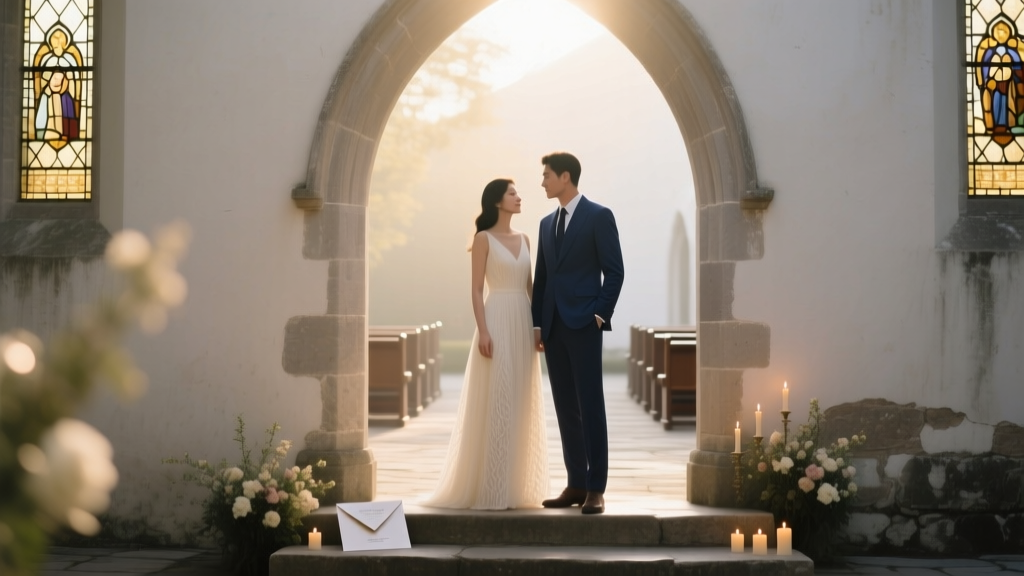
How to Book a Church Wedding: 7 Steps Most Couples Miss
# How to Book a Church Wedding: 7 Steps Most Couples Miss
Booking a church wedding sounds simple — until you discover the waiting lists, premarital requirements, and denomination-specific rules that catch most couples off guard. The good news? Once you know the process, it's entirely manageable. Here's exactly how to secure your church ceremony without the stress.
## Start Earlier Than You Think
Popular churches book 12 to 18 months in advance, and some cathedral venues fill up two years out. If you have a specific date in mind — especially a Saturday in June or September — contact the church office the moment you get engaged.
When you reach out, ask three questions immediately:
- Is your preferred date available?
- Are you required to be a member or regular attendee?
- What is the fee structure for members versus non-members?
Many couples assume any church will host any wedding. In reality, most Catholic, Episcopal, and Lutheran churches require at least one partner to be a baptized member of that faith. Non-denominational and some Methodist churches tend to be more flexible. Knowing this upfront saves weeks of back-and-forth.
## Understand the Requirements Before You Commit
Every church has a checklist. Meeting it is non-negotiable. Common requirements include:
**Premarital counseling** — Most Catholic churches require a Pre-Cana program (typically 6–8 sessions over several months). Protestant churches often require 2–4 sessions with the officiant. Budget 3 to 6 months for this process.
**Baptism and confirmation certificates** — Catholic and many mainline Protestant churches will ask for official documents. Order certified copies from the church where you were baptized; this can take 2–4 weeks.
**Meeting with the pastor or priest** — This is usually a required step before any booking is confirmed. Use this meeting to discuss your vision, ask about music restrictions, and clarify photography rules (some churches prohibit flash photography or restrict where photographers can stand).
**Fees** — Church wedding fees range from $200 for a simple ceremony at a small congregation to $3,000+ at a historic cathedral. The fee typically covers the officiant, facility use, and a coordinator. Organist or choir fees are usually separate, running $150–$400.
## Navigate the Booking Process Step by Step
Once you've confirmed eligibility and availability, here's the sequence that works:
1. **Schedule an initial meeting** with the church office or pastor — don't try to book via email alone.
2. **Confirm your date in writing** and ask what deposit is required to hold it (typically $200–$500).
3. **Enroll in premarital counseling** immediately — this is often the longest lead-time item.
4. **Submit required documents** (baptism certificates, proof of membership) as soon as possible.
5. **Book your vendors within the church's guidelines** — confirm which florists, musicians, and photographers have worked there before, as some churches maintain preferred vendor lists.
6. **Schedule a rehearsal** — most churches offer a one-hour rehearsal the evening before; confirm this is included in your fee.
7. **Review the ceremony program** with your officiant at least 4 weeks before the wedding.
Keep a dedicated folder — physical or digital — with every signed agreement, receipt, and correspondence. Church offices are often staffed by volunteers, and having documentation protects you if details get miscommunicated.
## Two Misconceptions That Derail Church Weddings
**Misconception 1: "We can personalize the ceremony however we want."**
Church ceremonies follow liturgical guidelines. You can often choose readings, hymns, and certain vows, but you cannot replace a religious ceremony with a fully secular script. If you want complete creative control over your vows and program, a church may not be the right venue — or you'll need to work closely with a flexible officiant to find the middle ground.
**Misconception 2: "The church fee covers everything."**
The base fee rarely includes the organist, soloist, sound system technician, or altar flowers. At a mid-size church, these add-ons can total $800–$1,500. Always ask for an itemized breakdown and request a written quote for every service you want included.
## Make It Official
Booking a church wedding is a process, not a single phone call — but couples who start early, meet requirements proactively, and communicate clearly with their church coordinator consistently report a smooth experience.
Your next step: identify two or three churches that match your faith background and aesthetic vision, then contact each one this week to check availability and eligibility. The earlier you start the conversation, the more options you'll have.
Once your church is booked, every other vendor falls into place around it. Lock in your venue first, and the rest of your planning becomes significantly easier. How to Throw a Beach Wedding Without Letting Sand Ruin Your Big Day
 How to Start a Wedding Venue Business: 7 Steps to Profitable Success
 How Long Are Church Weddings? What Most Couples Don't Expect
 How to Design a Wedding Reception Without Losing Your Mind
 How Far in Advance Should You Book a Wedding Venue? The Truth Revealed
 What Is a Wedding Venue? Everything Couples Need to Know Before Booking
 How to Start a Wedding Venue Business and Profit Fast
 How Long Is a Catholic Wedding Ceremony With Mass Really
 How Long Is an Orthodox Wedding Ceremony: What to Expect
 Can You Have a Wedding Ceremony Without a Marriage License? The Truth