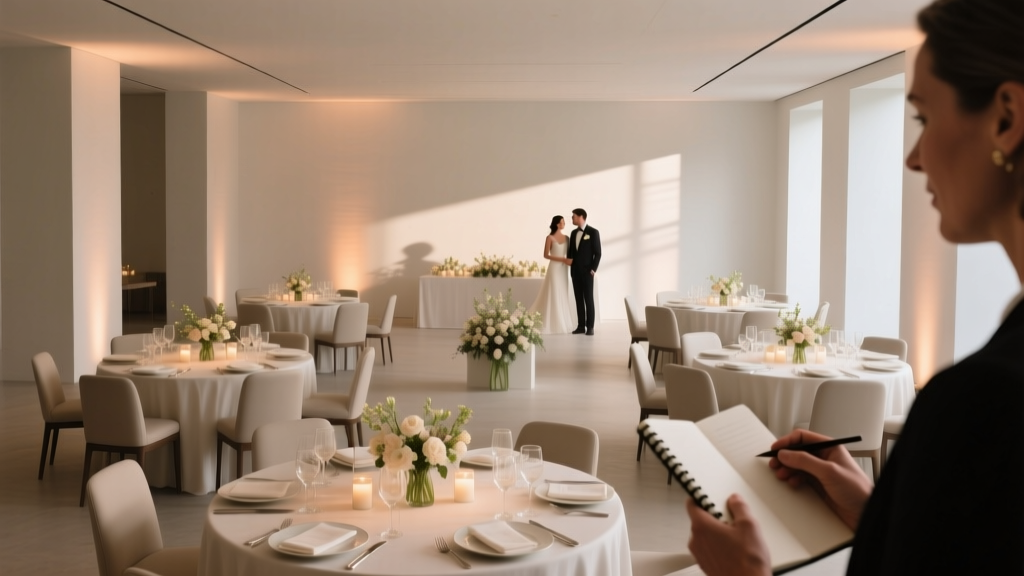
How to Design a Wedding Reception Without Losing Your Mind
## You Have One Night to Get This Right
Your wedding reception is the part guests will talk about for years. The ceremony lasts 30 minutes; the reception lasts 5 hours. Yet most couples spend 80% of their planning energy on the ceremony. If you want a night that feels effortless and unforgettable, the design of your reception deserves the same attention. Here's how to do it well.
---
## 1. Start With Flow, Not Aesthetics
Before you pick centerpieces or a color palette, map out how guests will move through the space. A poorly designed flow creates bottlenecks, awkward silences, and a bar line that never ends.
**Key flow checkpoints:**
- **Cocktail hour zone**: Keep it separate from the main reception room so guests don't wander in early and disrupt setup.
- **Entrance path**: Guests should naturally move from the entrance toward the bar or welcome table — not stand confused at the door.
- **Dance floor placement**: Center it, or offset it toward the band/DJ. Never tuck it in a corner; empty dance floors look worse when they're hidden.
- **Seating distance from the action**: Head table or sweetheart table should have sightlines to the dance floor and the room entrance.
Walk the venue yourself before finalizing any layout. A floor plan on paper lies — columns, low ceilings, and awkward exits only reveal themselves in person.
---
## 2. Design the Timeline Before You Design the Room
Your reception design should serve your timeline, not fight it. A common mistake is choosing a venue or layout that makes your planned sequence of events physically impossible.
**A proven wedding reception timeline structure:**
| Time | Event |
|------|-------|
| 0:00 | Guests seated, couple introduced |
| 0:10 | First dance |
| 0:20 | Welcome toasts |
| 0:40 | Dinner service begins |
| 1:30 | Parent dances |
| 1:50 | Cake cutting |
| 2:00 | Open dancing begins |
| 3:30 | Bouquet/garter (optional) |
| 4:30 | Last song, send-off |
Share this timeline with your venue coordinator, caterer, DJ, and photographer **at least 4 weeks before the wedding**. Misalignment between vendors is the single biggest cause of reception chaos.
---
## 3. Use Lighting to Do the Heavy Lifting
Lighting is the most underrated element in wedding reception design. It transforms an ordinary banquet hall into something cinematic — and it costs far less than floral arrangements.
**Three lighting layers that work:**
1. **Ambient uplighting**: Wash the walls in your wedding color. Rental cost: $300–$600 for a full room. Impact: enormous.
2. **String lights or bistro lights**: Hung overhead, they lower the perceived ceiling height and create intimacy in large spaces.
3. **Pin spotting**: Narrow beams aimed at centerpieces make them look twice as expensive. Ask your lighting vendor specifically for this.
Avoid harsh overhead fluorescents at all costs. If your venue has them and no dimmer, negotiate a lighting package into your contract or bring in a rental company.
---
## 4. Build Moments Into the Design
The best-designed receptions aren't just beautiful — they're structured to create emotional peaks. Guests remember *moments*, not décor.
**Designed moments to plan deliberately:**
- **The grand entrance**: Coordinate with your DJ on the exact song and cue. Rehearse it.
- **The first look at the room**: If guests enter during cocktail hour, consider a "reveal" moment where the main room opens all at once.
- **The send-off**: Sparklers, flower petals, or a bubble exit — whatever fits your style, design it so guests know where to stand and what to do. Brief your coordinator.
- **A late-night surprise**: A food truck, a dessert table that appears at 9pm, or a signature shot passed on a tray. Small surprises generate outsized memories.
---
## Common Myths About Wedding Reception Design
**Myth 1: "More décor means a better reception."**
Wrong. Overcrowded tables with tall centerpieces block conversation and make guests feel claustrophobic. Restraint reads as elegance. One strong focal point — a floral arch, a dramatic backdrop, a statement chandelier — beats ten competing elements every time.
**Myth 2: "The venue handles the layout, so I don't need to think about it."**
Venues provide a default layout optimized for their operational convenience, not your guest experience. Always request a blank floor plan and design your own layout, then present it to the coordinator. You are the client — the room should serve your vision, not their standard setup.
---
## Your Next Step
Designing a wedding reception comes down to four priorities: **flow, timeline, lighting, and intentional moments**. Nail these and the rest — the flowers, the favors, the font on the menus — becomes detail, not foundation.
Start today by sketching a rough floor plan of your venue and mapping your guest journey from arrival to send-off. Share it with your partner and your venue coordinator this week. That single conversation will surface more problems — and solutions — than months of Pinterest browsing.
The reception you design is the one your guests will remember. Make it deliberate. How Long Is an Orthodox Wedding Ceremony: What to Expect
 How to Throw a Beach Wedding Without Letting Sand Ruin Your Big Day
 How Far in Advance Should You Book a Wedding Venue? The Truth Revealed
 What Is a Wedding Venue? Everything Couples Need to Know Before Booking
 How to Start a Wedding Venue Business and Profit Fast
 How Long Do Weddings and Receptions Usually Last: Full Timeline
 Can You Have a Wedding Ceremony Without a Marriage License? The Truth
 How to Book a Church Wedding: 7 Steps Most Couples Miss
 What Is a Wedding Venue and Why Your Choice Changes Everything
 How to Start a Wedding Venue Business: 7 Steps to Profitable Success