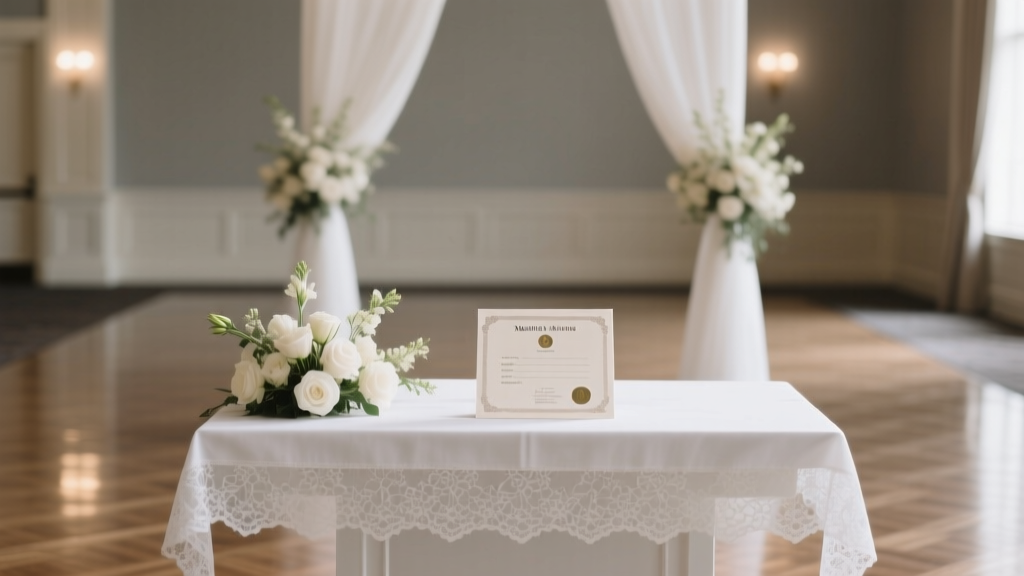
Can You Have a Wedding Ceremony Without a Marriage License? The Truth
# Can You Have a Wedding Ceremony Without a Marriage License? The Truth
You've found the venue, chosen the flowers, and drafted your vows — but the paperwork feels overwhelming. Can you actually hold a wedding ceremony without a marriage license? The short answer is yes, but with important caveats. Understanding the difference between a legal marriage and a wedding ceremony is the key to making the right choice for your situation.
## The Difference Between a Wedding Ceremony and a Legal Marriage
A wedding ceremony is a celebration — a ritual, a declaration of love, a gathering of your people. A marriage license is a government-issued legal document that makes your union officially recognized by the state.
These two things are entirely separate. You can absolutely hold a beautiful, meaningful wedding ceremony without ever filing a marriage license. Couples do this for many reasons:
- **Symbolic ceremonies**: Some couples want the celebration without the legal entanglement, especially if they're already legally married from a courthouse wedding.
- **Destination weddings**: Couples who marry legally at home sometimes hold a symbolic ceremony abroad to avoid complex foreign legal requirements.
- **Commitment ceremonies**: LGBTQ+ couples, interfaith couples, or those in non-traditional relationships may choose a ceremony that reflects their values outside the legal system.
- **Vow renewals**: Already married couples celebrating an anniversary with a full ceremony.
None of these require a marriage license. Your officiant can perform the ceremony, you can exchange rings and vows, and your guests will witness a genuine celebration — all without a single government form.
## What Happens Legally If You Skip the License
Here's what you need to understand clearly: **without a marriage license, you are not legally married**, regardless of how elaborate or witnessed your ceremony is.
This has real consequences:
- You cannot file taxes jointly as a married couple
- You have no automatic inheritance rights
- Medical decision-making rights for your partner are not guaranteed
- Immigration benefits tied to marriage do not apply
- Social Security spousal benefits are unavailable
If legal recognition matters to you — for financial, immigration, healthcare, or estate planning reasons — you need the license. Many couples solve this elegantly by having a quick civil ceremony at the courthouse first, then holding their dream wedding celebration separately. The legal marriage happens privately; the celebration happens publicly.
## How to Have a Ceremony Without a License (And Do It Right)
If you've decided a symbolic ceremony is right for you, here's how to make it meaningful and avoid confusion:
**Be transparent with guests.** You don't need to announce it loudly, but close family should understand the nature of the ceremony. Surprises here can cause hurt feelings later.
**Work with a willing officiant.** Most officiants are happy to perform symbolic ceremonies. Be upfront that no license will be signed. Some religious officiants may decline — find someone aligned with your vision.
**Write your own vows.** Without legal language requirements, you have complete freedom. This is actually one of the biggest advantages of a symbolic ceremony.
**Consider a legal backup.** Even if your ceremony is symbolic, consult an attorney about other legal protections — domestic partnership agreements, healthcare proxies, and wills can provide many of the same protections as marriage.
## Common Misconceptions About Marriage Licenses and Ceremonies
**Misconception #1: "A ceremony performed by an ordained minister is automatically legal."**
False. Ordination gives someone the authority to *solemnize* a marriage, but the marriage license is what makes it legal. Without a signed and filed license, even a ceremony performed by a fully ordained minister has no legal standing. The officiant's credentials and the government paperwork are two separate requirements.
**Misconception #2: "Common law marriage means a long relationship counts as legal marriage."**
Only a handful of U.S. states still recognize common law marriage (including Texas, Colorado, and Iowa), and even in those states, specific requirements must be met — it's not automatic after living together for a certain number of years. In most states, no amount of cohabitation or ceremony creates a legal marriage without a license.
## Conclusion: Know What You Want Before You Plan
A wedding ceremony without a marriage license is completely valid — as a celebration, as a commitment, as a meaningful life event. What it is not is a legal marriage. That distinction matters enormously depending on your circumstances.
If you want the legal protections and recognition that come with marriage, get the license. If you want the celebration without the legal framework, a symbolic ceremony is a beautiful and legitimate choice. Many couples do both — courthouse first, dream wedding second — and find it gives them the best of everything.
**Ready to plan your ceremony?** Start by deciding what legal status you want, then build your celebration around that decision. Talk to your partner, consult a family law attorney if needed, and then focus on what really matters: the vows, the people, and the day you'll remember forever. How to Start a Wedding Venue Business and Profit Fast
 How to Book a Church Wedding: 7 Steps Most Couples Miss
 How Long Do Weddings and Receptions Usually Last: Full Timeline
 How to Throw a Beach Wedding Without Letting Sand Ruin Your Big Day
 How Long Is a Catholic Wedding Ceremony With Mass Really
 How Far in Advance Should You Book a Wedding Venue? The Truth Revealed
 How Long Are Church Weddings? What Most Couples Don't Expect
 How to Start a Wedding Venue Business: 7 Steps to Profitable Success
 How Long Is an Orthodox Wedding Ceremony: What to Expect
 What Is a Wedding Venue and Why Your Choice Changes Everything