## Why Did Mr Darcy Pay for Lydia's Wedding: The Hidden Truth
If you've ever finished *Pride and Prejudice* and wondered why a proud, wealthy gentleman would quietly bankroll the scandalous elopement of a girl he barely knew — you're not alone. Mr Darcy's decision to pay for Lydia's wedding is one of the most pivotal moments in Jane Austen's novel, and understanding it unlocks the entire emotional arc of the story.
---
## 1. He Did It for Elizabeth — Not Lydia
The most direct answer to *why did Mr Darcy pay for Lydia's wedding* is simple: he did it for Elizabeth Bennet.
After Elizabeth rejected his first proposal, Darcy was forced to confront his own arrogance. Her words — that he had behaved in an "ungentleman-like manner" — cut deeply. When Lydia eloped with Wickham, Darcy recognized that he alone possessed the knowledge and resources to fix the situation.
**Key motivations:**
- He knew Wickham's true character (Wickham had previously tried to elope with Darcy's own sister, Georgiana, to seize her fortune)
- He understood that Lydia's disgrace would ruin the entire Bennet family's reputation — and Elizabeth's marriage prospects
- He wanted to prove, through action rather than words, that he was worthy of Elizabeth's respect
Darcy tracked down Wickham in London, paid off his considerable gambling debts, and provided an additional sum to make the marriage financially viable. He did all of this anonymously, never intending for Elizabeth to find out.
---
## 2. The Financial Reality of Lydia's Elopement
To fully appreciate Darcy's sacrifice, it helps to understand what was at stake financially and socially.
Wickham had no intention of marrying Lydia. He was a man of charm and no money, fleeing creditors. For him to agree to marry her, someone had to make it worth his while.
**What Darcy paid:**
- Wickham's debts (estimated at over £1,000 — roughly £100,000+ in today's money)
- A commission purchase so Wickham could continue as an officer
- An additional settlement to secure the marriage
Mrs Gardiner later reveals to Elizabeth that the total sum was far beyond what Mr Bennet could have managed. Without Darcy's intervention, Lydia would have been a ruined woman, and by association, all five Bennet sisters would have been unmarriageable.
---
## 3. Pride, Redemption, and Genuine Character Growth
Austen uses Darcy's secret intervention as the clearest proof of his transformation. Earlier in the novel, Darcy's pride prevented him from acting beneath his social station. By the time of Lydia's crisis, that pride has been replaced by something more admirable: integrity.
He doesn't act to gain credit. He explicitly asks Mrs Gardiner to keep his role secret. This selflessness is the opposite of the man who once declared he could not "commend" the Bennet family's connections.
**What this reveals about Darcy's character arc:**
- He accepts responsibility for not exposing Wickham's character publicly earlier
- He acts without expectation of reward or recognition
- He demonstrates that his love for Elizabeth is genuine, not possessive
This is why Elizabeth's feelings shift so decisively. When she learns the truth, she realizes Darcy has done "for *her* family" what her own father could not.
---
## 4. The Broader Social Stakes in Regency England
Modern readers sometimes underestimate how catastrophic Lydia's elopement would have been in Regency-era England.
An unmarried woman who ran off with a man — and was not quickly married — was considered permanently disgraced. That disgrace extended to her entire family. Respectable men would avoid associating with, let alone marrying, sisters of a ruined woman.
For Jane Bennet, on the verge of happiness with Bingley, and for Elizabeth herself, Lydia's scandal could have ended all hope of good marriages. Darcy understood this calculus perfectly. By securing the wedding, he didn't just save Lydia — he preserved the futures of every woman in the Bennet household.
---
## Common Myths About Darcy Paying for Lydia's Wedding
**Myth 1: Darcy paid out of obligation or social duty.**
False. There was no social obligation requiring Darcy to intervene. Lydia was not his relation, and Wickham was his enemy. He acted purely out of love for Elizabeth and guilt over his past silence about Wickham's character.
**Myth 2: Elizabeth would have found out anyway, so it wasn't truly selfless.**
Austen is clear that Darcy intended the act to remain secret. It was only Mrs Gardiner's letter — written without Darcy's knowledge — that revealed the truth to Elizabeth. His selflessness was genuine precisely because he expected no reward.
---
## The Takeaway
Mr Darcy paid for Lydia's wedding because he loved Elizabeth Bennet deeply enough to act without recognition, to swallow his pride, and to rescue a family that society — and his own earlier self — would have dismissed as beneath him.
It is the single most romantic act in the novel, made more powerful by its secrecy.
**Want to explore more of Austen's hidden character moments?** Re-read the Pemberley chapters with this context in mind — Darcy's transformation begins long before Lydia's crisis, and the clues are all there.
 Why Mr. Darcy Paid for Lydia’s Wedding
 How Much to Tip Wedding Vendors: The Complete Honest Guide
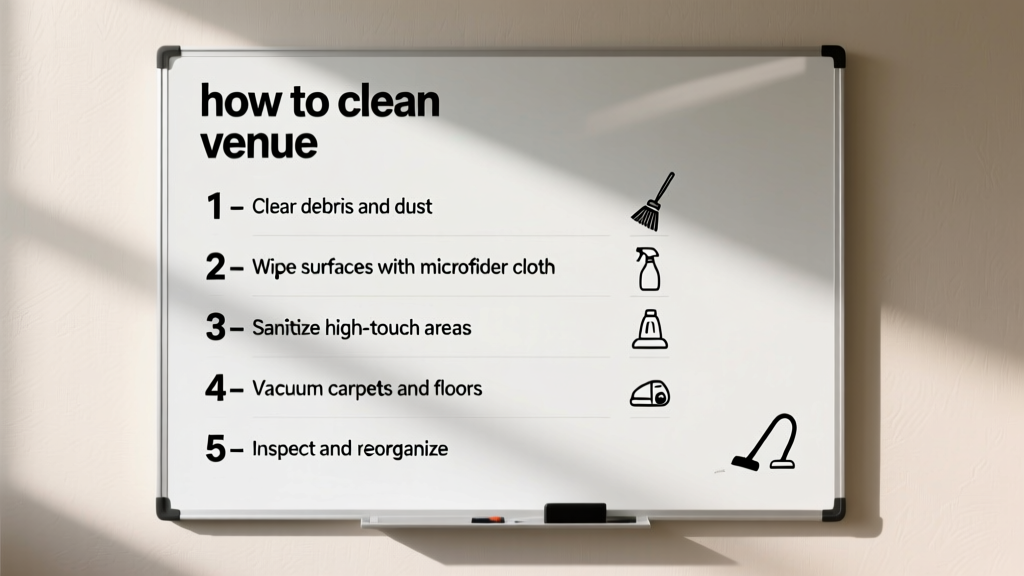 How To Clean a Venue: A Practical, Step-by-Step Protocol for Event Professionals
 How Much Does a DJ Cost for a Wedding? Real Prices Revealed
 Wedding Cash Gifts: How Much to Give (2026)
 How Couples Actually Pay for Weddings
 Wedding Budget Breakdown for 100 Guests: Real Numbers
 Wedding Budget for 100 Guests: Real Numbers Breakdown
 Wedding Dress Codes Decoded: What to Wear
 How to Split Wedding Costs With Parents: A Fair Guide