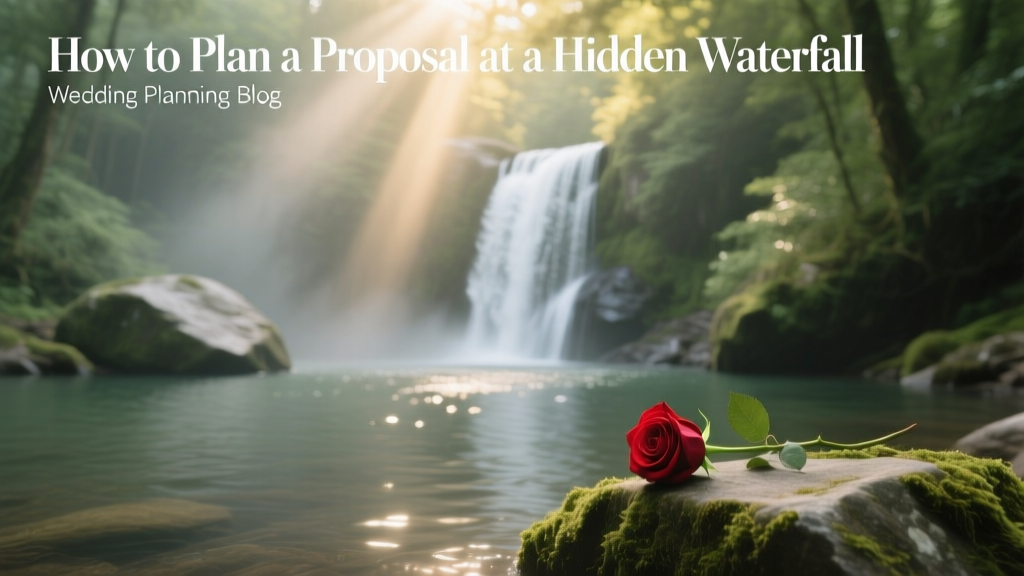
How to Plan a Proposal at a Hidden Waterfall
There’s a particular kind of magic that happens when you’re standing near a waterfall—air cool on your skin, sunlight catching in the mist, the world sounding like a soft roar that makes everything else fade away. It feels private even when you’re outdoors. It feels like a secret. And that’s exactly why a hidden waterfall proposal can be so unforgettable: it turns a question into a moment that belongs only to the two of you.
If you’re picturing a romantic engagement with nature as your witness, you’re in good company. Couples are leaning into proposals that feel like an experience—less “big stage,” more “real story.” A hidden waterfall has that cinematic feeling without needing a crowd. It can be wildly adventurous or sweetly simple, depending on your personalities. The key is planning it with care so it’s not just beautiful, but comfortable, safe, and deeply personal.
Here’s how to plan a proposal at a hidden waterfall that feels effortless in the moment—because you handled the details ahead of time.
Choose the Right Waterfall: “Hidden” Shouldn’t Mean Risky
Find a spot that fits your partner’s comfort level
When people imagine a hidden waterfall, they often picture a long hike, slick rocks, and a big payoff. That’s perfect for some couples—and a nightmare for others. Start by being honest about your partner’s style.
- The adventurous couple: A moderate hike with a river crossing and a secluded cascade can feel like a shared accomplishment before the proposal.
- The comfort-first romantic: Choose a waterfall that’s “hidden” because it’s off the main viewpoint, but still accessible with a short walk and stable footing.
- The dress-up dreamer: Plan a waterfall that’s close to parking and pair it with a styled picnic so they can look and feel their best.
Scout the location (or recruit a scout)
If you can, visit the waterfall once before the proposal—same time of day you plan to propose. Notice:
- Is there a natural “moment spot” (a flat rock, a quiet overlook, a clearing)?
- Is it crowded at peak times?
- Is the trail muddy after rain?
- Do you have cell service?
If you’re proposing while traveling, ask a local guide, a photographer familiar with the area, or even your Airbnb host. A quick recommendation can save you from arriving at a “hidden” waterfall that’s actually a packed photo hotspot.
Pick the Perfect Timing: Light, Privacy, and Weather
Best time of day for a waterfall proposal
For privacy and photos, early morning and golden hour are your best friends. Midday is often the busiest, and harsh sunlight can make faces shadowy in photos. A hidden waterfall proposal around sunset can be breathtaking, but keep daylight in mind for the hike back.
Season matters more than you think
- Spring: Stronger water flow, lush scenery—also more slippery trails.
- Summer: Easier conditions, but crowds and heat can be intense.
- Fall: Fewer people, beautiful color, cooler air—often ideal.
- Winter: Stunning, dramatic, and risky in icy areas. Only do this with safe access and proper gear.
Watch the forecast—and the water
Heavy rain can change everything: trails wash out, water rises, and your peaceful spot becomes unsafe. Check the weather and, if available, local stream conditions. A romantic engagement story is best when it doesn’t involve a rescue call.
Step-by-Step Plan for a Smooth Hidden Waterfall Proposal
Step 1: Decide your proposal style (intimate, adventurous, or styled)
Recent proposal trends lean toward meaningful experiences—private vows, “just us” moments, and travel proposals with thoughtful details. Pick a vibe:
- Intimate: A quiet hike, a simple speech, a ring, and a long hug while the waterfall thunders behind you.
- Adventurous: Turn it into a mini quest—geocache-style clues, a trail “milestone,” then the proposal at the falls.
- Styled: A picnic blanket, candles in lanterns (battery-powered), a bouquet, handwritten letter, and a photographer hidden at a distance.
Step 2: Create a believable reason to go
The best proposals feel natural, not staged. A few authentic setups:
- “I found a trail with an amazing view—want to check it out Saturday?”
- “Let’s do a no-phone hike day and grab dinner after.”
- “We’ve been talking about more adventures—this is our next one.”
Step 3: Pack like someone who’s done this before
A hidden waterfall proposal needs a little practical magic in your backpack:
- Ring in a secure box inside a zipped pocket (avoid loose pants pockets)
- Water, snacks, and a small towel (waterfall mist is real)
- A light layer (it’s cooler near water)
- Bug spray and blister bandages
- A microfiber cloth to wipe the ring if it gets damp
Step 4: Choose your “moment cue”
Some people freeze because they don’t know when to start. Pick a cue ahead of time:
- When you reach the base of the falls
- After you take one photo together
- After you give them a letter to read
Step 5: Propose clearly—then take your time
Waterfalls are loud. Speak slowly, make eye contact, and keep it simple. A heartfelt proposal doesn’t need a perfect speech; it needs truth. Then pause. Let the moment land. Let the “yes” breathe.
Creative, Personal Touches That Make It Yours
Write a note they can keep forever
Bring a small, folded letter in a waterproof sleeve. Start with a memory: the first trip you took together, the night you realized this was different, the way they show up for you. Then end with the question. It becomes a keepsake from your engagement story, not just a prop.
Turn the hike into a timeline of you
If the trail has a few pauses—bridge, lookout, big tree—use them as “chapters.” At each stop, share one sentence: a favorite moment, something you admire, a promise. By the time you reach the hidden waterfall, you’ve already built the emotion naturally.
Add a subtle trend: private vows before the official question
One modern proposal trend that feels timeless is sharing vows quietly—just a few lines—before you ask. It creates depth without turning the moment into a performance.
Plan a post-proposal celebration nearby
Keep it simple and thoughtful: a reserved table at a cozy restaurant, a cabin with string lights, or champagne waiting in a cooler back at the car (check local rules). The best engagement day plans don’t end at the ring—they carry the feeling forward.
Real-World Scenarios (So You Can Picture It)
Scenario 1: The “We’re Just Hiking” Proposal
You tell your partner you want a quiet Saturday outdoors. You reach the waterfall early, when it’s empty. You take one photo together, then you say, “I don’t want this day to be just a day. I want it to be our story.” You hand them a letter, let them read, then you kneel. No crowd, no rush—just you two, mist in the air, and a clear, confident question.
Scenario 2: The Photographer “Accident”
You book a photographer who knows the trail. Your partner thinks it’s a couples shoot for fun—another popular engagement trend that gives you beautiful proposal photos without the obvious setup. The photographer “spots a great angle,” you walk to the planned rock ledge, and the proposal happens naturally with photos that look like a movie scene, not a staged production.
Scenario 3: The Double Surprise
You propose at the waterfall, then reveal a small engraved compass or bracelet with the date inside. It’s not flashy—it’s sentimental. Later, you meet close friends for dinner, keeping the proposal intimate but letting the celebration expand afterward.
Things to Consider: Safety, Comfort, and Backup Plans
- Footwear: Encourage hiking shoes without giving away the surprise. “The trail might be muddy—wear something comfy.”
- Privacy plan: If someone is at your exact spot, don’t force it. Take a short walk, wait, or use your backup location.
- Weather backup: Have a Plan B that still feels romantic: a scenic overlook you can drive to, a cozy cabin proposal, or even a “rain plan” picnic under a covered pavilion with the letter and ring.
- Ring security: Consider a silicone band for the hike and keep the engagement ring packed until the moment.
- Leave no trace: Avoid confetti, glitter, or anything that harms the environment. Battery candles, flowers you carry out, and reusable decor are beautiful and respectful.
Common Mistakes to Avoid (During the Proposal and Early Engagement)
- Overcomplicating the moment: A hidden waterfall is already dramatic. Don’t add so many moving parts that you’re stressed and distracted.
- Ignoring comfort: If your partner is cold, hungry, or soaked, the romance fades fast. Pack well and pace the hike.
- Forgetting to say the actual question: Nerves are real. Make sure you clearly ask, “Will you marry me?”
- No plan for after: Have a next step: a toast, a call to family, a reservation, or a quiet place to sit together and take it in.
- Announcing before you’ve had your moment: Early engagement can feel like a whirlwind of texts and posts. Give yourselves a little time first—ten minutes, an hour, a full evening—before the world joins in.
Conclusion: A Hidden Waterfall, a Clear Yes, and a Story You’ll Tell Forever
A hidden waterfall proposal is romantic because it feels like discovery—like you found something beautiful and kept walking toward it. With a little planning, your engagement moment can feel spontaneous while still being smooth, safe, and personal. Focus on what your partner loves, choose a location that supports your story, and let nature do what it does best: make everything feel bigger, brighter, and more alive.
When you’re ready for more proposal ideas, engagement planning tips, and heartfelt ways to celebrate this chapter, explore more engagement content on weddingsift.com—your next favorite idea might be waiting there.
More Articles
 Proposal During a Starlit Beach Walk Ocean Romance
 Vera Wang Engagement Rings: How They’re Designed
 Proposal During a Golden Hour in a Sunflower Field
 What to Wear When You Propose Style Guide
 Proposal During a Bamboo Forest Walk Serene Beauty
 10 Creative Proposal Ideas for 2026
 Romantic Proposal Songs: 20 Songs That Set the Perfect Mood
 What to Say During Your Proposal Speech Guide
 Best Themes for Sunset
 How to Plan a Proposal at a Beach Bonfire