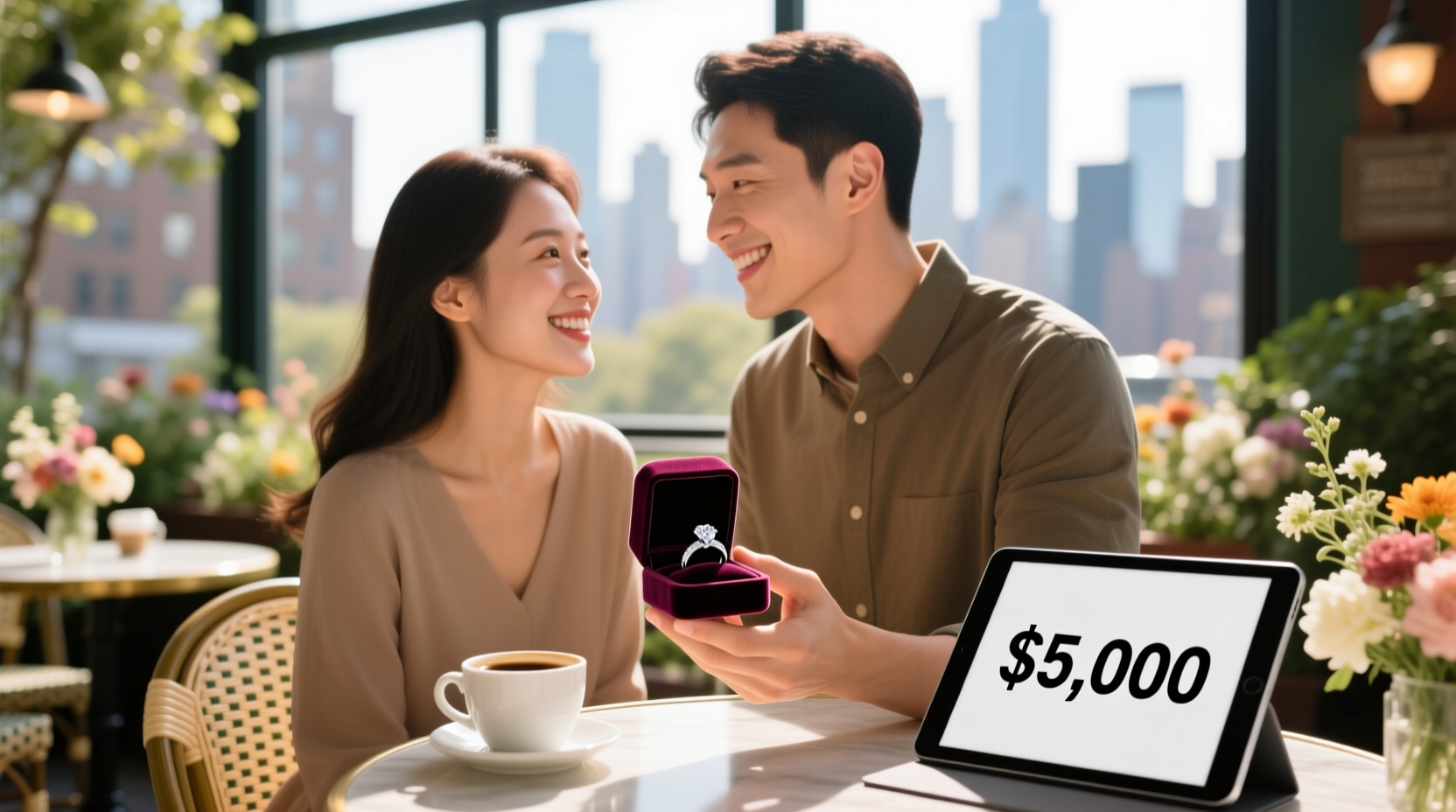
$5,000 Engagement Ring Budget Guide (2026)
Yes, $5,000 is a good budget for an engagement ring—offering excellent flexibility to choose a beautiful, high-quality ring without overspending. With a $5k engagement ring budget, couples can secure a well-cut center stone between 0.75 and 1.25 carats, depending on the diamond’s clarity, color, and cut grade. This price range allows access to premium settings in platinum or 18k gold, as well as ethically sourced or lab-grown diamonds that maximize value. Whether you're exploring classic solitaires, vintage-inspired designs, or three-stone rings, a $5,000 investment strikes a strong balance between elegance, durability, and long-term satisfaction. Understanding how to allocate your budget wisely is key to making the most of this common yet thoughtful spending range.
Understanding the Average Engagement Ring Budget
The idea of how much to spend on an engagement ring has evolved significantly over the years. While outdated rules suggested spending two or three months’ salary, modern couples prioritize financial health and personal values over rigid formulas. According to recent surveys by The Knot and Brides, the average engagement ring cost in the U.S. hovers around $6,000–$7,000, meaning a $5,000 budget sits comfortably within the norm—not below it.
Spending $5,000 positions you in a sweet spot: above entry-level options but below luxury-tier pricing. This means you’re not sacrificing quality for sentiment, nor are you stretching finances unnecessarily. In fact, many jewelers report that $4,000–$6,000 is one of the most popular engagement ring price ranges, offering access to certified diamonds from reputable labs like GIA or IGI, especially when shopping online or with independent designers.
What You Can Get with a $5,000 Engagement Ring Budget
The value you receive at the $5,000 mark depends heavily on your priorities: stone size, metal type, brand name, certification, and design complexity. Here's a breakdown of realistic expectations:
- Diamond Center Stone: A round brilliant-cut diamond between 0.80 and 1.00 carat with G-H color, SI1-SI2 clarity, and excellent cut can be found within this range. For those open to fancy shapes (like oval, pear, or cushion), even larger stones (up to 1.25 carats) may fit the budget due to lower demand and pricing.
- Alternative Stones: Lab-grown diamonds offer identical appearance and physical properties as mined diamonds at 30–40% less cost. With a $5k budget, you could get a 1.5+ carat lab diamond with higher clarity and color grades. Moissanite is another durable, brilliant option that allows for larger stones under $1,000, freeing up funds for intricate settings.
- Setting & Metal: Platinum and 18k white, yellow, or rose gold settings are achievable. Popular styles include solitaire, halo, pavé, split-shank, and vintage-inspired designs. Custom engraving or handcrafted details are also possible with careful planning.
- Certification: Reputable retailers provide grading reports from GIA, AGS, or IGI, ensuring transparency about your stone’s quality. Never skip certification—it protects your investment.
| Feature | Realistic Expectations at $5,000 |
|---|---|
| Center Stone Size | 0.80–1.25 ct (natural diamond); up to 1.5+ ct (lab-grown) |
| Color Grade | G–H (near-colorless) for natural; D–F possible with lab-grown |
| Clarity Grade | SI1–VS2 (eye-clean); VVS or better with lab options |
| Metal Type | Platinum, 18k gold (any color) |
| Setting Style | Solitaire, halo, three-stone, vintage, custom |
| Certification | GIA, AGS, or IGI included |
How to Maximize Value When Spending $5,000
To make the most of your $5,000 engagement ring budget, focus on strategic trade-offs and informed decisions. Consider these expert-backed tips:
- Prioritize Cut Quality Over Carat Weight: A well-cut 0.90-carat diamond will appear brighter and more visually appealing than a poorly cut 1.20-carat stone. Excellent symmetry and proportions enhance sparkle far more than size alone.
- Choose Faintly Included Clarity (SI1–SI2): Many SI1 diamonds are “eye-clean,” meaning inclusions aren’t visible to the naked eye. This lets you save hundreds without compromising beauty.
- Opt for Slightly Lower Color (G–H): On white or platinum settings, G–H diamonds look nearly identical to D–F stones. The savings can go toward a better cut or setting.
- Consider Non-Round Shapes: Fancy cuts like oval, emerald, and pear often cost less per carat than rounds because they retain more rough material during cutting. An elongated shape can also appear larger on the finger.
- Shop Online Retailers: Brands like Blue Nile, James Allen, and Brilliant Earth offer lower overhead and greater selection. Their 360° viewing tools let you inspect every detail before purchase.
- Use the Setting to Enhance Sparkle: Halo settings add perceived size and brilliance. Pavé bands or hidden halos underneath the center stone boost visual impact without increasing carat weight.
- Negotiate or Wait for Sales: Jewelry retailers often run promotions around holidays (Valentine’s Day, Mother’s Day, Black Friday). Some private sellers or local jewelers may offer payment plans or slight discounts for cash payments.
Common Mistakes to Avoid with a $5k Engagement Ring
Even with a solid budget, buyers can fall into traps that reduce value or lead to regret. Watch out for these pitfalls:
- Overemphasizing Carat Size: Choosing a large but dull or included diamond leads to disappointment. Focus on overall appearance, not just numbers.
- Skipping Certification: Uncertified stones may be misrepresented. Always insist on a report from GIA, AGS, or IGI.
- Ignoring Ring Fit and Comfort: A beautiful ring that doesn’t feel comfortable won’t be worn daily. Consider band width, prong height, and ergonomics.
- Buying Without Knowing Her Style: Observe her current jewelry preferences. Does she wear yellow or white metals? Classic or trendy pieces? Borrow a ring for sizing if needed.
- Focusing Only on Brand Names: Luxury brands charge premiums for logos, not necessarily better quality. Independent designers often deliver superior craftsmanship at lower prices.
- Forgetting About Insurance and Maintenance: Factor in the cost of ring insurance (typically 1–2% of value annually) and future cleaning or resizing services.
Lab-Grown vs. Natural Diamonds: Making the Right Choice
One of the biggest factors influencing what you get at $5,000 is whether you choose a natural or lab-grown diamond. Both are chemically identical and graded using the same standards.
Natural Diamonds: Traditionally preferred for their rarity and emotional significance. At $5,000, you’ll likely stay within the 1-carat range unless you compromise on color or clarity.
Lab-Grown Diamonds: Offer the same fire and brilliance at a fraction of the cost. You can get a 1.5-carat+ stone with higher clarity and color for the same price. They’re also eco-friendly and conflict-free, appealing to socially conscious couples.
The choice ultimately comes down to personal values and aesthetics. Neither option is inherently superior—just different paths to a meaningful symbol of commitment.
Custom Design Options Within a $5,000 Budget
If off-the-rack styles don’t reflect your partner’s personality, consider a semi-custom or fully custom engagement ring. Many designers offer customization starting at $5,000. You can select the exact stone, metal, setting style, and even incorporate family heirlooms or symbolic engravings.
Platforms like CustomMade or local artisans on Etsy allow collaboration throughout the design process. While fully bespoke rings sometimes exceed $5k, working with pre-designed mounts or CAD models can keep costs in check. Customization ensures uniqueness and emotional resonance—a ring that truly tells your story.
Where to Buy a $5,000 Engagement Ring
Your purchasing venue impacts both selection and value:
- Online Retailers (e.g., James Allen, Blue Nile): Best for variety, competitive pricing, and detailed imaging. Ideal for tech-savvy shoppers who want control over every specification.
- Eco-Focused Brands (e.g., Brilliant Earth): Emphasize ethical sourcing and sustainability. Great for couples prioritizing social responsibility.
- Local Jewelers: Offer personalized service, immediate fittings, and support for small businesses. May have limited inventory but can order stones.
- Auction Sites & Pre-Owned Markets (e.g., Rare Carat, Worthy): Can yield significant savings on certified pre-owned rings. Ensure authenticity and condition verification.
Regardless of where you buy, always verify return policies, warranties, and resizing options before finalizing.
Final Thoughts: Is $5,000 Enough for a Meaningful Ring?
Absolutely. A $5,000 engagement ring is not only sufficient—it’s a smart, responsible choice for most couples. The emotional weight of the ring comes from thoughtfulness, not price tags. By focusing on cut, choosing ethical sources, and aligning the design with your partner’s taste, you create a lasting symbol of love that fits both your heart and your budget.
Remember, the best engagement ring isn’t the most expensive one—it’s the one that feels right. With $5,000, you have ample room to find or create that perfect match.
Frequently Asked Questions
Can I get a 1-carat diamond for $5,000?
Yes, you can get a 1-carat diamond within a $5,000 budget, especially with G-H color, SI1 clarity, and excellent cut. Lab-grown options offer even better specs at that size.
Is a $5,000 engagement ring considered cheap?
No, $5,000 is near the national average and considered a reasonable, thoughtful investment. It reflects financial awareness, not lack of commitment.
Should I spend more than $5,000 on an engagement ring?
Only if it aligns with your financial goals. There’s no obligation to exceed your comfort level. Prioritize long-term stability over short-term impressiveness.
What’s better: a bigger diamond or higher quality?
Higher quality (especially cut) usually looks better than sheer size. A smaller, well-cut diamond sparkles more and ages more gracefully.
Can I negotiate the price of a $5,000 engagement ring?
Some local jewelers may offer slight discounts or package deals. Online retailers rarely negotiate, but sales events and financing options can reduce effective cost.
More Articles
 How to Plan a Proposal at a Rooftop Wine Cellar
 Proposal at a Hidden Beach Secret Paradise
 Ski Lift Proposal High Altitude Romance
 Engagement Party Planning First Steps After Saying Yes
 Best Average Wear: What Data Reveals About Real-World Garment Longevity and Value
 Proposal at a Historic Train Station Journey Together
 Proposal at the First Date Restaurant Full Circle
 How to Plan a Proposal at a Historic Cathedral Crypt
 Proposal Planning Checklist Everything to Consider
 How to Plan a Proposal at a Cliffside Restaurant