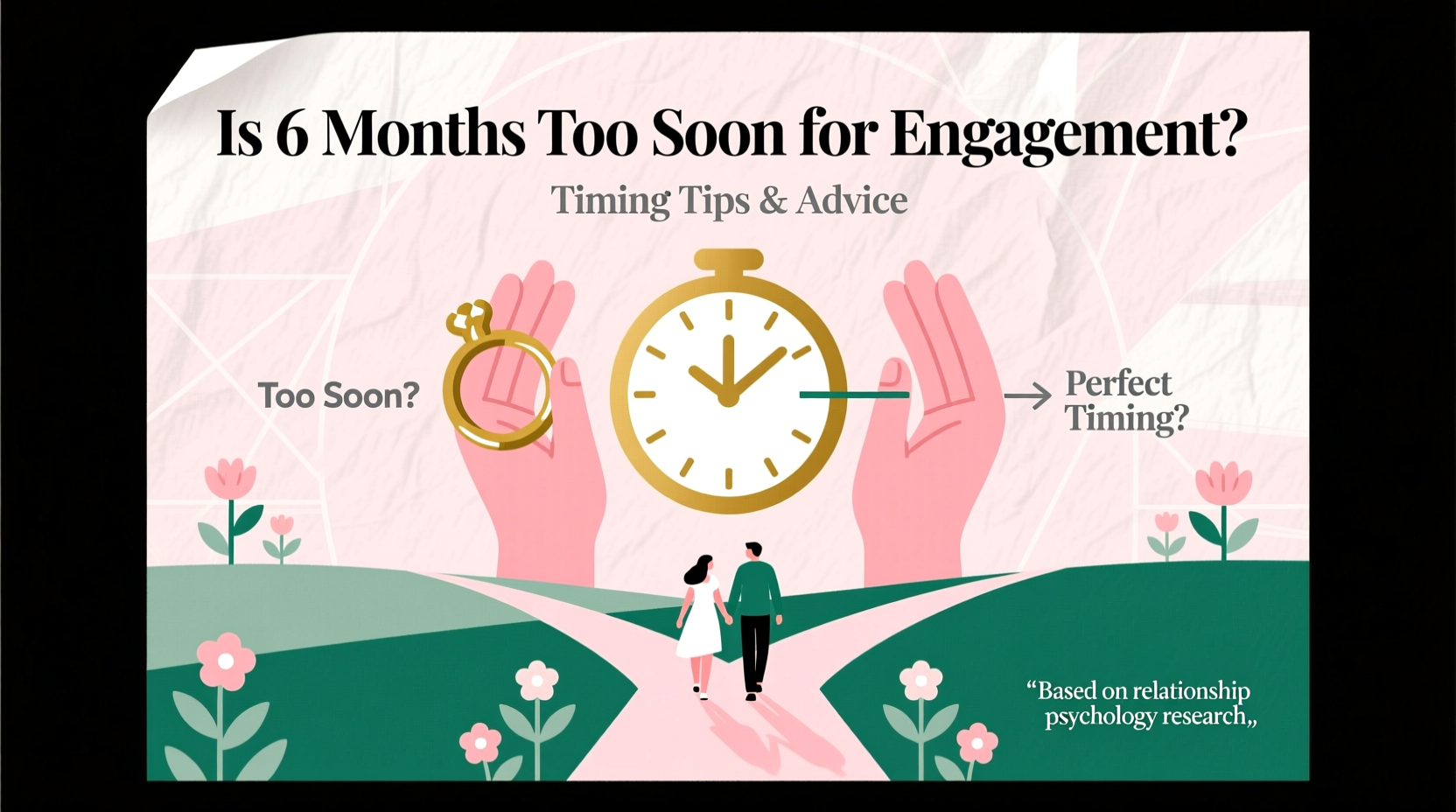
Is a 6-Month Engagement Too Soon? (2026)
Engaging six months before your wedding is not inherently too soon—many couples successfully plan meaningful ceremonies within this timeframe. A 6-month engagement period can be perfectly reasonable depending on your circumstances, financial readiness, emotional preparedness, and the scale of your celebration. While traditional timelines often suggest longer engagements, modern couples are increasingly opting for shorter planning windows due to personal, cultural, or logistical reasons. The key is understanding whether you and your partner are truly ready—not just for the wedding day, but for married life.
Understanding the Average Engagement Length
The average engagement in the United States lasts between 12 and 18 months, according to recent wedding industry surveys. However, this number varies widely based on age, location, cultural background, and individual preferences. Some couples date for years before getting engaged; others decide quickly after a proposal. So, asking “is 6 months too soon for engagement?” isn't about fitting into a societal norm—it's about mutual readiness.
A six-month engagement may feel rushed to some, especially if major decisions like venue booking, guest list finalization, and vendor contracts haven’t begun. Yet, with focused planning, clear priorities, and realistic expectations, many couples pull off beautiful weddings in half a year or less. In fact, shorter engagements can reduce stress by limiting overthinking and decision fatigue.
When a 6-Month Engagement Makes Sense
There are several scenarios where a half-year engagement feels natural and appropriate:
- You’ve been together long-term: If you've dated for several years, living together or even raising children, a short engagement reflects confidence in your commitment rather than impulsiveness.
- Life transitions demand timing: Military deployment, job relocation, visa requirements, or family health issues might make an earlier wedding date more practical.
- Minimalist wedding goals: Couples choosing intimate elopements, courthouse ceremonies, or small backyard weddings don’t need extensive lead times.
- Financial constraints: Waiting longer won’t improve savings significantly, so setting a near-term date motivates focused budgeting.
In these cases, a 6-month engagement isn’t too soon at all—it’s strategic and intentional.
Signs You Might Need More Time
While possible, a short engagement isn’t ideal for everyone. Consider whether any of the following apply:
- Lack of emotional clarity: Are you rushing due to pressure—from family, pregnancy, or social expectations? Marriage is lifelong; ensure it’s driven by mutual desire, not urgency.
- Unresolved relationship conflicts: Ongoing arguments about finances, communication styles, or future goals should be addressed before marriage, ideally through premarital counseling.
- No wedding vision: If you’re unsure about guest count, venue type, or cultural traditions, six months may not allow enough time to explore options thoughtfully.
- Vendor availability: Popular venues and photographers often book 9–12 months out. A tight timeline could limit choices or increase costs due to last-minute premiums.
If multiple red flags arise, extending the engagement—even by a few months—can provide valuable breathing room.
How to Plan a Wedding in 6 Months: A Step-by-Step Guide
If you’ve decided that a 6-month engagement suits your situation, here’s how to organize efficiently without sacrificing meaning:
- Set a clear budget immediately (Week 1): Determine total spending capacity and allocate percentages (e.g., 40% venue/catering, 10% attire). Use digital tools like Zola or The Knot for tracking.
- Choose your date and book key vendors (Weeks 1–4): Prioritize venue, caterer, and photographer. Be flexible with days (e.g., Friday or Sunday instead of Saturday) for better availability.
- Finalize guest list (Month 1): Keep it concise. Smaller lists ease logistics and lower costs. Digital RSVPs speed up responses.
- Select attire (Months 2–3): Order dresses/suits with rush fees if needed. Consider sample sales or off-the-rack options. Schedule fittings early.
- Secure legal requirements (Month 3): Research marriage license rules in your state or country. Some require waiting periods or blood tests.
- Plan ceremony & reception flow (Month 4): Work with your officiant on vows, readings, and structure. Finalize music, décor themes, and seating charts.
- Send invitations (Month 5): Mail save-the-dates digitally if not done already. Send formal invites 6–8 weeks pre-wedding.
- Confirm details (Month 6): Conduct walk-throughs, finalize timelines, and delegate tasks to trusted friends or coordinators.
Using a week-by-week checklist helps maintain momentum without burnout.
Common Mistakes to Avoid During a Short Engagement
Even well-intentioned couples stumble when time is limited. Watch out for these pitfalls:
- Skipping premarital counseling: Regardless of engagement length, discussing values, conflict resolution, and long-term goals strengthens your foundation.
- Overextending financially: It’s tempting to splurge on one big day. But high debt from a wedding can strain early marriage. Stick to your budget.
- Neglecting self-care: Planning fatigue is real. Schedule downtime, exercise, and quality couple time outside wedding talk.
- Letting perfectionism take over: Minor hiccups will happen. Focus on what matters: celebrating your love with people who support you.
- Ignoring legal paperwork: Missing a marriage license deadline or forgetting witness requirements can invalidate your union. Double-check local laws.
Cultural & Religious Considerations
Some cultures and faiths have specific expectations around engagement duration. For example:
- Jewish traditions: Many observe a seven-day post-wedding celebration (Sheva Brachot), but engagement lengths vary. Orthodox couples may follow stricter courtship norms.
- Christian denominations: Catholic parishes often require six months of pre-Cana classes, making a 6-month engagement the minimum viable window.
- Hindu weddings: Extensive rituals and astrological consultations (Muhurta) may necessitate longer planning, though urban couples adapt timelines.
- Muslim marriages: Nikah ceremonies can occur shortly after engagement, provided consent and mahr (dower) are arranged.
If your wedding includes religious elements, consult your spiritual leader early to understand required preparations and waiting periods.
Emotional Readiness vs. Calendar Readiness
One of the most overlooked aspects of how soon is too soon to get engaged is emotional maturity. Just because you *can* plan a wedding in six months doesn’t mean you *should*, especially if:
- You’re avoiding difficult conversations about money, parenting, or career goals.
- One partner feels pressured or uncertain.
- Family disapproval creates ongoing tension.
- You haven’t lived together or managed shared responsibilities.
Marriage is more than a ceremony—it’s a partnership built on trust, compromise, and resilience. Take time to assess compatibility beyond romance. Premarital assessments like Prepare/Enrich or Gottman Seven Principles can offer insights.
Alternatives to a Traditional 6-Month Countdown
If you’re unsure whether a full wedding is feasible, consider alternatives that honor your bond without overwhelming pressure:
- Elopement: A private ceremony with immediate family or just the two of you, followed by a larger celebration later.
- Legal marriage first, party later: Obtain your license and marry legally now, then host a vow renewal or anniversary celebration when ready.
- Pop-up wedding: Book a venue with last-minute availability and invite close loved ones on short notice—authentic and low-stress.
These options preserve flexibility while affirming your commitment.
Real-Life Examples: Successful 6-Month Engagements
Many real couples thrive with shorter timelines:
- Sarah & James (Austin, TX): After dating five years and cohabiting three, they proposed in January and married in June. They used existing savings and hired a day-of coordinator to streamline planning.
- Lena & Amir (Chicago, IL): Due to visa deadlines, they had only four months. They opted for a city hall ceremony with ten guests, followed by a reception at a favorite restaurant.
- Maya & Diego (San Diego, CA): Initially planning a large summer wedding, they pivoted to a beach elopement after venue cancellations. Their six-month engagement allowed them to regroup and focus on intimacy over extravagance.
Each story highlights adaptability, prioritization, and emotional alignment as keys to success.
FAQs About 6-Month Engagements
| Question | Answer |
|---|---|
| Is a 6-month engagement considered normal? | While shorter than average, it’s increasingly common, especially among older or previously committed couples. |
| Can I find wedding vendors in 6 months? | Yes, especially if you’re flexible with dates or open to lesser-known providers. Off-peak seasons improve availability. |
| Should I feel guilty for a short engagement? | No. Your relationship journey is unique. What matters is mutual consent and readiness, not public perception. |
| Do churches allow 6-month engagements? | It depends on denomination. Catholic parishes typically require pre-marriage courses lasting several months, so start immediately. |
| How do I manage stress during a fast wedding prep? | Prioritize tasks, delegate responsibilities, set boundaries with opinionated relatives, and schedule regular breaks with your partner. |
In conclusion, is 6 months too soon for engagement ultimately depends on your unique context. Rather than comparing yourself to others, ask: Are we emotionally aligned? Do we communicate openly? Can we handle stress together? And are we marrying for the right reasons? With honest reflection and organized planning, a six-month engagement can lead to a joyful, lasting marriage—no matter the timeline.
More Articles
 What to Do If She Wants to Choose Her Own Ring
 Is Getting Engaged at 18 Too Young?
 How to Plan a Proposal at a Rooftop Astronomy Deck
 Wedding Fitness: Stepper vs Other Gear
 Compared Alternatives to Ruby: Performance, Ecosystem, and Real-World Adoption in 2024
 How to Plan a Proposal at a Secret Garden
 How to Plan a Destination Proposal Vacation
 How to Plan a Proposal at a Rooftop Zen Garden
 How to Plan a Proposal at a Rooftop Candlelit Dinner
 How to Plan a Bookstore Proposal for Book Lovers