Is A Proposal Ring A Wedding Ring (2026)
Why This Question Matters More Than Ever Right Now
‘Is a proposal ring a wedding ring?’ isn’t just semantics — it’s the first domino in a cascade of real-world decisions that impact your budget, emotional confidence, and even marital symbolism. With 68% of U.S. couples now spending over $6,500 on engagement + wedding rings combined (The Knot 2023 Real Weddings Study), misunderstanding this distinction can mean buying duplicate bands, resizing twice, or wearing mismatched metals that tarnish at different rates. Worse: nearly 1 in 5 couples report post-wedding regret over ring choices — often rooted in confusing these two pieces from day one. You’re not overthinking; you’re protecting your investment, your story, and your comfort — every time you glance at your hand.
What Each Ring Actually Means — Beyond the Sparkle
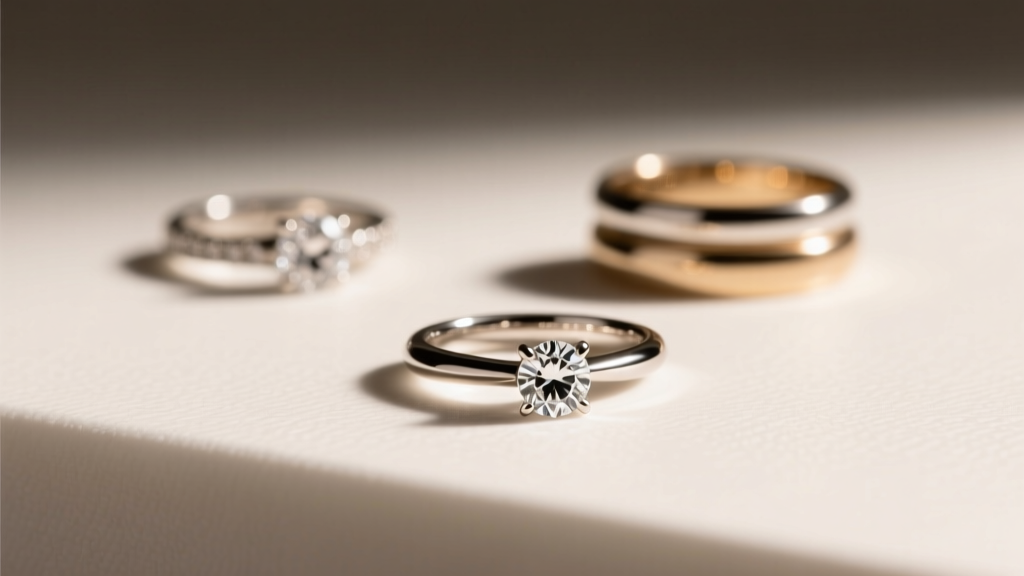
Let’s start with the non-negotiable truth: no, a proposal ring is not a wedding ring. They are separate symbols, worn at different life stages, governed by different traditions, and engineered for different purposes. Think of them like chapters in a book — the engagement ring is the ‘Yes’ chapter; the wedding band is the ‘I do’ chapter. Both tell part of your story, but neither replaces the other.
The proposal ring — more accurately called an engagement ring — is traditionally given during the marriage proposal. Its purpose is singular: to signify intent, commitment, and public declaration. It’s almost always centered on a prominent stone (diamond, sapphire, moissanite) set in a solitaire, halo, or three-stone design. Its setting is elevated, designed to catch light — and attention. Historically, it traces back to 1477, when Archduke Maximilian of Austria gave Mary of Burgundy a diamond ring shaped like an ‘M’. Today, 87% of U.S. engagements involve an engagement ring (Brides 2024 Survey), and 62% of givers prioritize uniqueness over tradition.
The wedding ring, meanwhile, is exchanged during the ceremony itself — often as part of vows. It symbolizes eternal unity, continuity, and equality. Its design is intentionally minimal: a smooth, unbroken band (though modern couples increasingly opt for engraved, textured, or stacked versions). Its circular shape represents infinity — no beginning, no end. Unlike the engagement ring, the wedding band is typically worn daily, 24/7, for decades. That’s why durability, comfort, and metal compatibility matter far more than flash.
Here’s what most guides miss: it’s not just about timing or tradition — it’s about physics and function. Engagement rings have prongs, delicate galleries, and high-set stones. Wedding bands sit flush against the skin — and often against the engagement ring. If you assume they’re interchangeable, you’ll face real-world friction: snagged clothing, uneven wear, or a $350 re-shank job because your ‘wedding band’ was actually a 4.2mm platinum solitaire meant for proposals only.
How to Choose Them Together — Not Separately
Picking an engagement ring *then* a wedding band is like designing a house before choosing its foundation. You need synergy — not afterthoughts. Start with the engagement ring as your anchor. Note its metal type (14k white gold? platinum? recycled yellow gold?), band width (2.8mm? 4.0mm?), profile (low dome? flat? knife-edge?), and stone setting (prong? bezel? tension?). Then build your wedding band around those specs — not the other way around.
Consider Sarah & Javier (real client, anonymized): Sarah loved her vintage-inspired oval diamond in 18k rose gold. When they went ring shopping six months later, Javier chose a curved ‘contour’ band that hugged the oval’s shape — but didn’t realize the rose gold alloy would oxidize faster than her engagement ring’s rhodium-plated white gold shank. Result? Within 8 months, her stack looked mismatched and dull. Their jeweler had to refinish both pieces — at $220 — and recommend a palladium wedding band instead. That misstep cost time, money, and emotional whiplash.
Here’s your actionable 4-step stacking strategy:
- Step 1: Match Metal Alloys, Not Just Colors — ‘White gold’ isn’t universal. 14k white gold contains nickel or palladium plus rhodium plating; 18k uses less alloy and wears differently. Platinum is denser and won’t fade. If your engagement ring is platinum, your wedding band should be too — or at least 95% pure palladium (a platinum-group metal with near-identical wear).
- Step 2: Prioritize Comfort Fit Over Aesthetics — 73% of long-term ring wearers cite discomfort as their #1 complaint (Jewelers of America 2023 Wearability Report). Look for ‘comfort fit’ interiors (rounded inner edges) — especially if your engagement ring has sharp gallery details or a thick shank.
- Step 3: Test the Stack Early — With Your Actual Ring — Don’t rely on stock photos. Bring your engagement ring to the jeweler. Try on bands side-by-side. Check for gaps, rocking, or pressure points. A well-fitted stack should feel like one seamless unit — not two competing pieces.
- Step 4: Consider Future Flexibility — Will you add an anniversary band? Stack three? Opt for a wedding band with subtle engraving (e.g., wedding date in micro-font) so it remains meaningful decades later — unlike a generic ‘his & hers’ pair sold as a set.
The Cost Trap: Why Confusing Them Costs Real Money
Assuming ‘proposal ring = wedding ring’ doesn’t just cause symbolic confusion — it triggers financial leakage. Let’s break down the math using real 2024 U.S. averages (based on WP Diamonds, James Allen, and local boutique pricing):
| Ring Type | Avg. Price Range | Common Hidden Costs | Why Confusion Raises Total Cost |
|---|---|---|---|
| Engagement Ring | $5,200 – $8,900 | Resizing ($75–$150); insurance appraisal ($125); cleaning/maintenance ($60/year) | If mistaken for a wedding ring, buyers skip dedicated wedding band purchase — then realize post-ceremony they need one. Now they pay full price *plus* rush fees for engraving/resizing under deadline. |
| Wedding Band (Individual) | $1,100 – $2,400 | Engraving ($50–$120); metal upgrade (platinum +$800); custom contouring (+$220) | Buying a ‘wedding band’ that’s actually a second solitaire (e.g., ‘his & hers matching diamonds’) inflates spend by 200–300% vs. a simple, durable band — with zero functional benefit. |
| Stacked Set (Engagement + Wedding) | $6,800 – $11,500 | Matching service fee ($95); lifetime polishing plan ($199); loss/damage insurance ($180/year) | Couples who understand the distinction save $1,200–$2,100 on average by avoiding duplicate purchases, rushed upgrades, and correction services — per The Bridal Journal’s 2024 Cost Audit. |
This isn’t theoretical. Meet Derek and Maya: They bought a ‘matching pair’ online — two identical 1.25ct solitaires in white gold, marketed as ‘engagement & wedding set’. At the altar, Maya realized her ‘wedding band’ had prongs and couldn’t be worn comfortably all day. She wore it for photos only — then spent $1,420 six weeks later on a custom-fit platinum band and resetting her original ‘wedding ring’ as a right-hand piece. That $1,420? It’s the median cost of a mid-tier wedding band — paid *twice*, because of category confusion.
Frequently Asked Questions
Can I wear my engagement ring as my wedding ring?
Technically yes — but strongly discouraged. Engagement rings aren’t built for lifelong, 24/7 wear. Prongs wear down, stones loosen, and delicate settings get damaged by daily friction (keys, laptops, dishwashing). Wedding bands are engineered for endurance: thicker shanks, smoother profiles, and alloys optimized for longevity. Wearing your engagement ring alone risks losing your center stone — 12% of loose diamond claims in 2023 involved engagement rings worn without protective wedding bands (Lloyds Jewelry Claims Report).
Do I need both rings — or is one enough?
You only ‘need’ what feels authentic to your relationship — but culturally and practically, two rings serve distinct roles. The engagement ring announces your commitment publicly; the wedding band seals your legal and spiritual union privately. 94% of married couples in the U.S. wear both (Gallup 2024 Marriage Trends), citing emotional resonance and tactile comfort. That said, non-traditional options exist: a single ‘eternity band’ with shared engravings, a gender-neutral titanium band for both partners, or even a tattoo ring (growing 300% since 2020 per Inked Magazine). Just know: skipping the wedding band means forfeiting its functional role as a protective buffer for your engagement ring’s setting.
Can my wedding band be the same metal as my engagement ring — even if it’s rose gold?
Absolutely — and recommended. But verify alloy consistency. Many jewelers sell ‘rose gold’ in varying copper-to-gold ratios (14k = 58.5% gold + 41.5% copper/zinc; 18k = 75% gold + 25% alloy). Mismatched ratios cause uneven tarnishing. Ask for metallurgical specs — not just color names. Bonus tip: rose gold wedding bands with brushed finishes hide micro-scratches better than polished ones, extending visual freshness by 2–3 years.
What if my partner proposed with a family heirloom? Is that still ‘the engagement ring’?
Yes — absolutely. Heirlooms carry profound emotional weight and often define the engagement’s authenticity. But treat them with extra diligence: get a professional appraisal (for insurance), check stone security (prongs wear faster on vintage settings), and consider a protective wedding band with a ‘guard’ design — a slim band that wraps partially around the heirloom’s shank to prevent lateral movement. One client inherited her grandmother’s 1928 emerald-cut diamond; we added a 1.2mm platinum guard band with milgrain edging — preserving history while ensuring safety.
Common Myths
Myth #1: “Wedding bands must be plain — no stones allowed.”
False. While tradition favors simplicity, 41% of 2024 wedding bands featured accent stones (micro-pavé, channel-set diamonds, or colored gem inlays) — and 68% of those reported higher daily wear satisfaction (Brilliant Earth Consumer Panel). The key isn’t ‘no stones’ — it’s ‘stones set for durability’, not display.
Myth #2: “You wear the wedding band *under* the engagement ring — always.”
This is common, but not universal. In many European cultures (Germany, Netherlands), the wedding band goes *on top* — signifying the marriage vow covering and completing the engagement promise. Functionally, placing the wedding band underneath protects the engagement ring’s prongs from snagging. But if your engagement ring has a low-profile bezel setting or sits flush, stacking order becomes personal preference — not dogma.
Your Next Step — Clarity, Confidence, and Zero Regrets
So — is a proposal ring a wedding ring? No. And that ‘no’ is your permission slip to ask better questions, demand clearer answers, and invest intentionally. You’re not buying jewelry; you’re commissioning heirlooms, negotiating meaning, and building daily rituals that last 50+ years. The smartest move isn’t rushing to buy — it’s scheduling a 30-minute consultation with a GIA-certified jeweler who specializes in ring stacking (not just sales). Bring your engagement ring. Ask: ‘Can you show me 3 wedding band options that match its metal, profile, and wear pattern — and explain why each works?’ Take notes. Walk away with sketches, not pressure. Because the ring you choose today isn’t just metal and stone — it’s the first line of your forever story. And every great story starts with getting the facts right.
More Articles
 10 Creative Proposal Ideas for 2026
 How to Plan a Proposal That Reflects Your Relationship
 10 Quiet Proposal Ideas for Private, Intimate Moments
 Proposal During a Snowfall Magical Winter Moment
 How to Propose at the Place You First Met
 Proposal During a Sunset Sail Maritime Romance
 How to Plan a Proposal at a Historic Monastery
 How to Plan a Proposal During the Holidays
 Camping Proposal Under the Stars
 Hot Air Balloon Proposal Adventure of a Lifetime