## The Wedding Ring Finger: Everything You Need to Know
You're engaged — congratulations. But as you start planning, a surprisingly common question surfaces: *what finger does a wedding ring go on?* It sounds simple, but the answer involves centuries of tradition, cultural variation, and personal choice. Getting it right matters, because this ring stays on your hand for life.
---
## The Traditional Answer: Left Hand, Fourth Finger
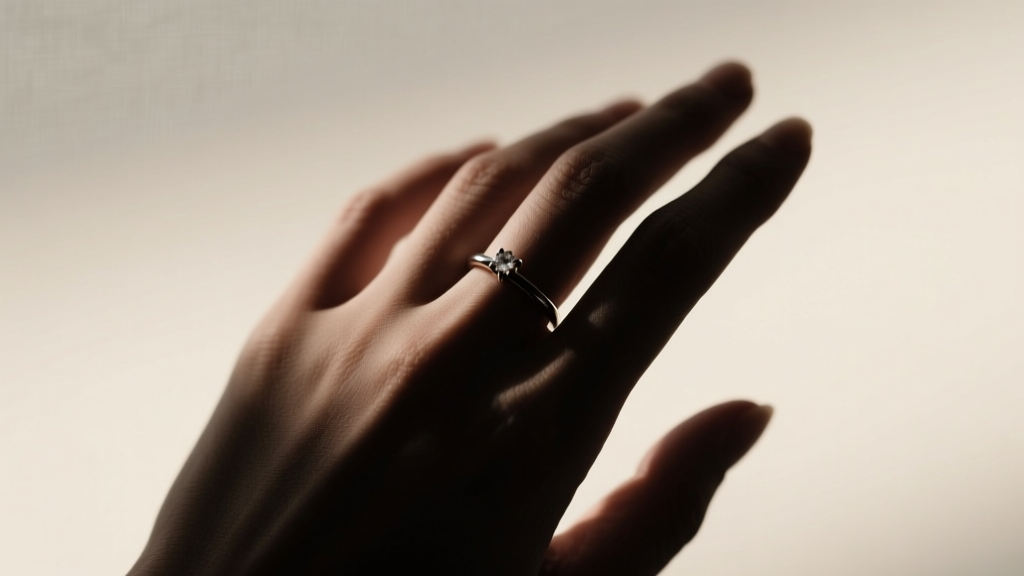
In the United States, Canada, the UK, and Australia, the wedding ring is worn on the **fourth finger of the left hand** — commonly called the "ring finger." This tradition dates back to ancient Rome and the belief in the *Vena Amoris*, or "Vein of Love" — a vein thought to run directly from that finger to the heart.
Modern anatomy has debunked the vein myth, but the tradition stuck. Today, the left ring finger remains the near-universal standard in Western cultures.
**Practical tip:** If you're buying a ring, measure the left ring finger specifically — it's often a slightly different size than the right.
---
## Right Hand Traditions Around the World
Not everyone wears a wedding ring on the left hand. In many countries, the **right hand, fourth finger** is the correct placement:
- **Germany, Austria, Norway, Russia, India, Greece, Spain, and Colombia** all traditionally use the right hand.
- In **Jewish ceremonies**, the ring is placed on the right index finger during the ceremony, then often moved afterward.
- In **Eastern Orthodox Christian** traditions, the right hand is standard.
If you or your partner have cultural roots in these traditions, wearing the ring on the right hand is not only acceptable — it's the proper choice.
**Long-tail keyword note:** Searches like *"wedding ring right hand vs left hand"* and *"which hand wedding ring by country"* reflect how common this confusion is globally.
---
## Engagement Ring vs. Wedding Ring: Which Finger and What Order?
This trips up a lot of couples. Here's the standard Western approach:
1. **Engagement ring** goes on the left ring finger when given.
2. On the wedding day, the engagement ring is temporarily moved to the **right hand** so the wedding band can be placed on the left ring finger first (closest to the heart).
3. After the ceremony, the engagement ring is moved back on top of the wedding band.
Some people choose to **solder the two rings together** for convenience. Others wear the engagement ring on the right hand permanently. There's no rule — only preference.
**Actionable step:** Decide before the wedding day which arrangement you want, and practice the ring swap so it goes smoothly at the altar.
---
## Same-Sex Couples, Non-Binary Individuals, and Personal Choice
There is no universal law governing which finger a wedding ring goes on. Same-sex couples, non-binary individuals, and anyone who simply prefers a different finger are free to wear their ring wherever it feels meaningful.
Common alternatives include:
- Right ring finger (mirrors the traditional left-hand placement)
- Middle finger (for those who find the ring finger too loose or too tight)
- Necklace pendant (for people who work with their hands)
The only thing that matters is that the ring holds meaning for you and your partner.
---
## Common Myths Corrected
**Myth 1: The "Vein of Love" is a real anatomical feature.**
The *Vena Amoris* is a romantic legend, not medical fact. All fingers have similar vascular connections. The left ring finger tradition persists because of cultural continuity, not biology.
**Myth 2: Wearing your wedding ring on the right hand means you're not married.**
This is a Western-centric assumption. As outlined above, millions of married people worldwide wear their wedding ring on the right hand as part of their cultural or religious tradition. It signals marriage just as clearly.
---
## What to Do Next
The answer to *what finger does a wedding ring go on* is: **the left ring finger in most Western countries, the right ring finger in many European and South American cultures, and wherever feels right for you personally.**
Your one next step: have a quick conversation with your partner about which hand, which finger, and which ring order you both want. Make the decision together before the wedding day — it's one less thing to think about when you're standing at the altar.
 How to Plan a Proposal at a Desert Oasis
 Is Getting Engaged at 18 Too Young?
 How to Plan a Proposal at a Rooftop Piano Lounge
 How to Plan a Proposal at a Rooftop Japanese Garden
 How to Plan a Proposal at a Secret Rooftop
 Vera Wang Engagement Rings: How They’re Designed
 How to Plan a Rooftop Proposal With a City View
 Kim K’s Wedding Ring Carats: Truth vs. Illusion (2026)
 Proposal in the Rain How to Make It Beautiful
 Fall Engagement Photo Outfit Ideas