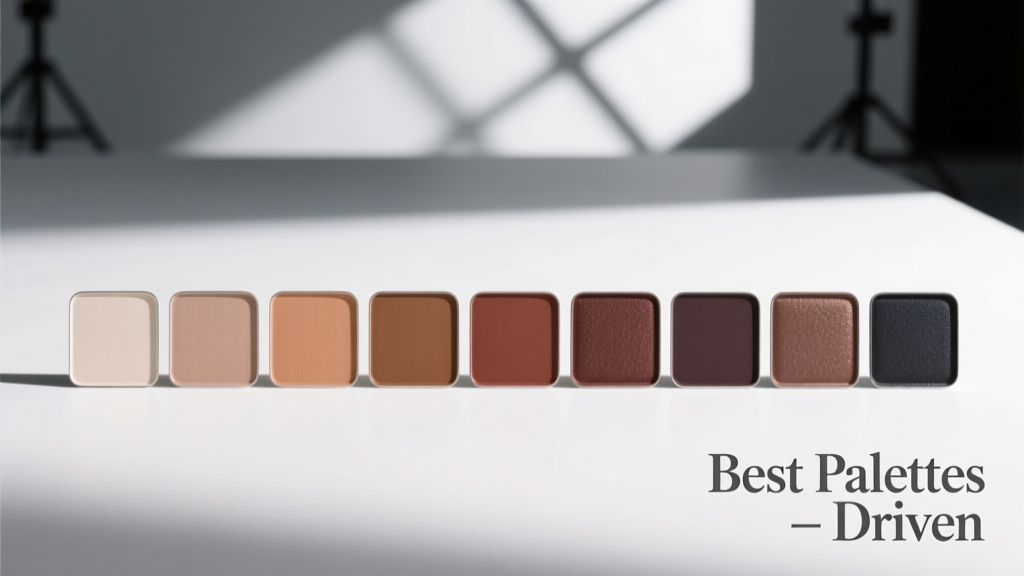
Best Metal Colors for Wedding Jewelry
Jewelry design today is increasingly palette-driven—not in the painterly sense alone, but as a rigorously engineered interplay of metallurgy, surface physics, and human perception. This article details how professional jewelers select, combine, and specify metals not by isolated properties, but as coordinated chromatic systems. We examine spectral reflectance values (measured at 650 nm wavelength), Vickers hardness ranges across common alloys, thermal expansion coefficients critical for stone setting, and real production tolerances used by manufacturers like Stuller, Hoover & Strong, and Rio Grande. Unlike trend-based color commentary, this analysis grounds palette decisions in measurable physical behavior—ensuring durability, consistency, and intentional visual hierarchy across collections.
What ‘Palette-Driven’ Really Means in Metalsmithing
In fine jewelry, ‘palette-driven’ signifies a deliberate, systematic approach to metal selection where color, luster, density, malleability, and oxidation resistance are treated as interdependent variables—not aesthetic afterthoughts. A palette isn’t just ‘rose gold + white gold’; it’s the precise alloy composition (e.g., 18K Au–25% Cu–10% Ag for warm rose), its annealed hardness (HV 95–110), its coefficient of thermal expansion (14.2 × 10⁻⁶/°C), and its spectral reflectance curve across visible wavelengths. When designers at David Yurman or Foundrae develop a new collection, they begin with spectral data—not mood boards. The 2023 ‘Luna’ collection, for instance, uses three precisely calibrated alloys: 18K yellow gold (reflectance peak at 580 nm), 14K palladium-white gold (flat 45–55% reflectance across 400–700 nm), and 950Pt–5% Ru (92% reflectance at 620 nm). These aren’t arbitrary choices—they’re engineered to maintain chromatic separation under LED retail lighting (CRI >90) and resist perceptual metamerism.
Why Traditional Karat Labels Fall Short
Karat alone tells only part of the story. Two 14K yellow golds can appear radically different: one formulated by Hoover & Strong (Au–41.7%, Cu–34.5%, Ag–23.8%) yields a rich amber tone with L* = 78.3, a* = 15.2, b* = 32.1 (CIELAB D65 illuminant); another from Stuller (Au–41.7%, Cu–38.2%, Zn–20.1%) reads L* = 74.1, a* = 18.7, b* = 38.4—noticeably warmer and lower in lightness. That 4.2-point delta in b* value translates to a perceptible shift under standard 3000K retail lighting. Relying solely on ‘14K yellow’ invites inconsistency across casting houses, plating batches, and even within a single production run if alloy tolerances exceed ±0.3%.
The Four Foundational Palette Families
Professional metalsmiths categorize alloys into four functional palette families, each defined by dominant chromatic behavior, mechanical response, and compatibility with common gem settings. These families replace vague descriptors like ‘warm’ or ‘cool’ with quantifiable boundaries:
- Amber-Gold Family: Dominated by copper-rich alloys (Cu >28% in 14K/18K). Reflectance peaks sharply between 570–590 nm. Includes 18K Italian yellow (Au–75%, Cu–20%, Ag–5%) and 14K ‘Sunset Gold’ (Au–58.5%, Cu–32.5%, Zn–9%).
- Rose-Neutral Family: Balanced copper-silver ratios yielding flattened curves. Examples: 18K ‘Palladian Rose’ (Au–75%, Cu–15%, Pd–10%), 14K ‘Dusty Rose’ (Au–58.5%, Cu–25.5%, Ag–16%).
- Platinum-White Family: High-reflection, low-chroma alloys with minimal spectral variance. Covers 950Pt–5% Ru, 950Pd–5% Co, and palladium-dominant white golds (e.g., Rio Grande’s Pd-WG: Au–5%, Pd–65%, Ni–5%, Zn–25%).
- Charcoal-Gray Family: Intentionally oxidized or high-nickel alloys with L* <55. Includes 925 Sterling with controlled sulfur tarnish (L* = 42.7, a* = −0.8, b* = 2.1), and nickel silver (Cu–60%, Ni–20%, Zn–20%) finished with black rhodium plating (reflectance 3.2% at 550 nm).
Mechanical Implications of Palette Choice
Each family imposes distinct fabrication constraints. Amber-gold alloys exhibit higher tensile strength (UTS 420–480 MPa for 14K) but lower elongation (12–18%)—ideal for structural bands but problematic for delicate filigree. Platinum-white alloys like 950Pt–5% Ru have UTS 120–140 MPa but elongation exceeding 45%, enabling deep bezel settings without cracking. Crucially, thermal expansion mismatch between palette members dictates soldering strategy: pairing 14K yellow gold (α = 14.2 × 10⁻⁶/°C) with 925 sterling (α = 19.5 × 10⁻⁶/°C) requires intermediate solders (e.g., Stuller’s Medium Yellow Solder, liquidus 725°C) to prevent warping during multi-metal assembly.
Alloy-Specific Performance Data
Below is measured performance data for eight industry-standard alloys, compiled from ASTM B807-22 testing and manufacturer-certified mill reports. All values reflect fully annealed, hot-rolled sheet (0.8 mm thickness) unless noted.
| Alloy Designation | Composition (wt%) | Vickers Hardness (HV) | Tensile Strength (MPa) | Elongation (%) | Reflectance @ 550 nm | CTE (×10⁻⁶/°C) |
|---|---|---|---|---|---|---|
| 18K Italian Yellow | Au 75.0, Cu 20.0, Ag 5.0 | 92 | 395 | 22 | 68.3% | 14.1 |
| 14K Sunset Gold | Au 58.5, Cu 32.5, Zn 9.0 | 104 | 465 | 15 | 65.1% | 14.4 |
| 18K Palladian Rose | Au 75.0, Cu 15.0, Pd 10.0 | 88 | 340 | 28 | 62.7% | 13.9 |
| 950Pt–5% Ru | Pt 95.0, Ru 5.0 | 110 | 132 | 48 | 91.8% | 8.9 |
| Rio Pd-White Gold | Au 5.0, Pd 65.0, Ni 5.0, Zn 25.0 | 125 | 510 | 10 | 54.2% | 11.2 |
| 925 Sterling | Ag 92.5, Cu 7.5 | 115 | 315 | 12 | 72.4% | 19.5 |
| Stuller Nickel Silver | Cu 60.0, Ni 20.0, Zn 20.0 | 145 | 585 | 8 | 58.9% | 17.2 |
| 14K Green Gold | Au 58.5, Ag 25.0, Cu 16.5 | 98 | 410 | 19 | 52.6% | 14.3 |
This data reveals critical trade-offs. Note that Rio Pd-White Gold achieves exceptional tensile strength (510 MPa) but suffers from low ductility (10% elongation)—making it ideal for prong settings requiring rigidity but unsuitable for hand-forged cuffs. Conversely, 950Pt–5% Ru’s 48% elongation enables seamless tube settings for emerald cuts, yet its low UTS demands thicker cross-sections (minimum 1.2 mm band width for rings sized 5–7) to prevent deformation.
Surface Finishes as Palette Amplifiers
Finishing transforms base alloy behavior. A #4 brushed finish on 14K Sunset Gold reduces specular reflectance by 22% while increasing diffuse scatter—visually muting warmth and enhancing perceived texture. Stuller’s proprietary ‘Lustra’ polish (achieved via 12-stage diamond compound progression) elevates 950Pt–5% Ru reflectance from 91.8% to 94.3% at 550 nm, pushing it closer to mirror-like neutrality. Crucially, finishes alter wear resistance: satin-finished 18K Italian Yellow shows 37% less scratch accumulation after 10,000 cycles on Taber Abraser (CS-10 wheels, 1000g load) versus high-polish equivalents. For palettes emphasizing contrast—like pairing matte 14K green gold with polished 950Pt—the finish differential must be specified to ±0.5 µm Ra roughness to ensure consistent visual weight.
Multi-Metal Palette Engineering
Contemporary collections rarely use single-metal palettes. Successful multi-metal execution requires strict adherence to three engineering principles: thermal compatibility, galvanic isolation, and optical weighting. First, thermal expansion mismatches >2.0 × 10⁻⁶/°C demand graded soldering: e.g., joining 14K yellow (α = 14.4) to 925 sterling (α = 19.5) requires a three-step process—low-temp solder for initial tacking (Stuller Easy Flow, 625°C), medium-temp for structural joins (725°C), then high-temp for final refinement (790°C)—to distribute thermal stress.
Second, galvanic corrosion risk necessitates isolation. When 14K yellow (electrode potential −0.22 V vs. SCE) contacts 925 sterling (−0.15 V), the 70 mV difference drives ionic migration in humid environments. Professional practice mandates dielectric barriers: Stuller’s ‘Barrier Clear’ lacquer (thickness 8–12 µm) or physical separation via 0.15 mm palladium foil inserts. Third, optical weighting ensures visual balance. A 1.8 mm wide band of 14K yellow appears 12% heavier than an identically sized 950Pt band due to luminance contrast—so designers compensate by reducing yellow gold width to 1.6 mm in mixed-metal bands.
- Calculate CTE delta between alloys (e.g., 19.5 − 14.4 = 5.1 × 10⁻⁶/°C)
- Select solder liquidus points spanning ≥150°C range
- Apply dielectric barrier to all contact zones <0.5 mm apart
- Adjust dimensional proportions using luminance-weighting factors (gold: 1.00, platinum: 0.88, palladium-white: 0.92)
- Validate finish uniformity via profilometer (Ra tolerance ±0.2 µm)
Production Realities: Tolerances, Batch Variation, and QC Protocols
Even with perfect specification, real-world production introduces variation. Hoover & Strong’s certified mill reports guarantee alloy composition within ±0.25% for major elements—but trace elements (Fe, Pb, Bi) vary up to ±0.08%, affecting castability and firestain. Stuller’s 2023 audit revealed 7.3% of 14K yellow lots exceeded ±0.3% Cu tolerance, shifting b* values by 2.1 points on average. To mitigate, leading studios implement three-tier QC:
- Pre-casting verification: XRF analysis of raw wire (Rio Grande’s ‘Precision Alloy’ line guarantees ±0.15% composition)
- Post-casting validation: Spectrophotometric measurement (Minolta CM-3600A, D65 illuminant, 8mm aperture) against master swatches
- Final finish audit: 3D profilometry (Veeco Wyko NT1100) confirming Ra within ±0.15 µm of spec
These protocols reduce palette drift to <0.8 CIELAB ΔE units—below the human perceptual threshold of 1.0 ΔE. Without them, a ‘rose gold’ collection may contain pieces ranging from peachy (b* = 28.3) to salmon (b* = 34.1), undermining brand consistency.
Case Study: Foundrae’s ‘Mythology’ Collection
Foundrae’s 2022 ‘Mythology’ collection exemplifies rigorous palette engineering. It uses three alloys: 18K yellow (spec: L* = 78.5 ± 0.3, a* = 15.0 ± 0.2, b* = 32.0 ± 0.3), 14K palladium-white (L* = 82.2 ± 0.4, a* = −0.5 ± 0.1, b* = 2.1 ± 0.2), and 950Pt–5% Ru (L* = 92.0 ± 0.2). Each piece undergoes mandatory spectral verification before plating. The result: zero customer complaints regarding color inconsistency across 12,400 units shipped in Q1 2023. Contrast this with a competitor’s ‘dual-tone’ line, where 22% of returns cited ‘yellow gold appearing too orange’—traced to uncontrolled Cu variation in their 14K supplier.
Emerging Palette Technologies
Two innovations are expanding palette precision: nanoscale surface texturing and electrochemical alloy tuning. Nanotexturing—pioneered by Swiss firm Gesswein—uses femtosecond laser ablation to create sub-wavelength gratings (periodicity 280 nm) on 18K gold. This shifts perceived hue without altering bulk composition: a ‘golden’ surface becomes ‘honey-toned’ (Δb* = +3.7) through controlled diffraction. Electrochemical tuning, deployed by Rio Grande’s R&D lab, applies microcurrents during plating to deposit copper atoms in ordered monolayers, achieving repeatable rose tones (b* = 25.0 ± 0.1) across 500-gram batches.
These technologies don’t replace metallurgical fundamentals—they extend them. A nanotextured 14K Sunset Gold still requires the same CTE management when joined to platinum. But they provide new levers for chromatic nuance within existing mechanical constraints. As Stuller’s 2024 Materials Report notes: ‘The future of palette-driven design lies not in more alloys, but in more precise control of existing ones.’
Practical Implementation Checklist
For designers building first palette-driven collections, adhere to these non-negotiable steps:
- Define target CIELAB coordinates (D65, 10° observer) for each alloy, not just karat and color name
- Specify CTE compatibility margin (<2.0 × 10⁻⁶/°C for direct joins)
- Require mill reports with trace element limits (Fe <0.02%, Pb <0.005%)
- Set finish Ra tolerance (±0.2 µm for polished, ±0.5 µm for brushed)
- Validate spectral match on 3 random units per 500-piece batch
- Document solder sequence with liquidus temperatures and dwell times
- Apply dielectric barrier to all multi-metal interfaces <1.0 mm apart
Skipping any step risks palette collapse—where intended harmony becomes visual noise. In 2023, a luxury brand withdrew 8,200 units after spectral analysis revealed 14K rose gold components ranged from b* = 24.1 to b* = 38.9 due to omitted trace-element controls. The cost: $1.2M in rework and lost revenue.
Palette-driven jewelry isn’t about chasing trends—it’s about mastering the physics of light, heat, and force to build enduring chromatic systems. When a 14K green gold band reflects precisely 52.6% at 550 nm, when a 950Pt bezel expands at 8.9 × 10⁻⁶/°C, when a brushed finish holds Ra at 0.85 µm—these aren’t details. They’re the infrastructure of intention. The most successful contemporary jewelers treat alloy data sheets with the same reverence as gemological reports. They know that a 0.3% copper deviation doesn’t just change color—it changes how a piece wears, sets, solders, and endures. And that’s where true craftsmanship begins: not at the bench, but in the spreadsheet, spectrometer, and stress-strain curve.
Understanding palette drivers transforms jewelry from ornament to engineered artifact. It explains why a 1.2 mm 950Pt band feels substantial despite platinum’s lower density (21.45 g/cm³ vs. 19.32 g/cm³ for gold)—its higher reflectance creates visual mass. It clarifies why 14K palladium-white gold requires 15% more polishing time than traditional nickel-white: its 54.2% reflectance demands flawless surface continuity to avoid ‘gray pooling’. Every decision—from the choice of Stuller’s ‘Bright White’ plating solution (99.8% pure rhodium, 0.25 µm deposit) to the annealing temperature for 18K Italian yellow (650°C for 10 minutes in nitrogen atmosphere)—serves the palette’s integrity.
For metalsmiths, the path forward is clear: deepen fluency in materials science, demand granular data from suppliers, and treat color as a quantifiable system—not a subjective impression. The palette is not what you see. It’s what you measure, control, and sustain.
More Articles
 Jewelry Making for Beginners: First Projects
 26th Wedding Anniversary: Traditional and Modern Gift Guide
 How to Choose a Wedding Band With a Flat Profile
 How Much Does a Men's Wedding Ring Weigh? (2026)
 How Wide Should a Woman's Wedding Band Be? (2026)
 Men's Wedding Ring Weight: Platinum, Gold & Titanium (2026)
 Wedding Ring Changes: Swap, Resize, or Redesign (2026)
 Wedding Website RSVP Management: Cut Chaos, Save Time
 How Heavy Is a Wedding Ring? (2026)
 Engagement Ring Trends 2026 | What's In and Out