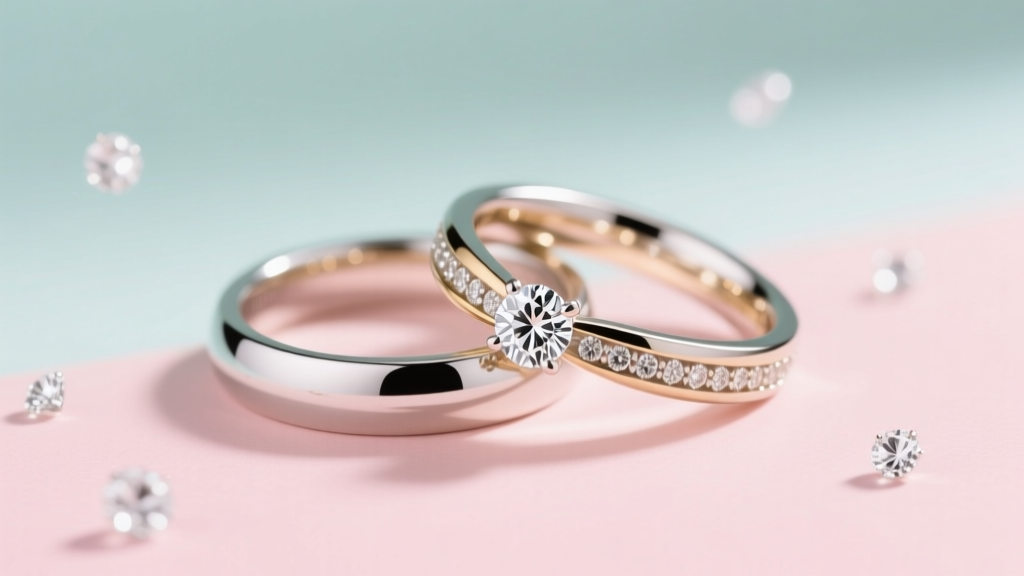
Lab Diamond vs Moissanite: The 2026 Buyer's Complete Guide
Lab diamonds and moissanite look similar to the naked eye, but they're fundamentally different stones. Here's the honest comparison.
What Are They?
Lab diamond: Chemically identical to mined diamond (pure carbon, cubic crystal). Created in a lab via HPHT or CVD methods. Hardness: 10 on Mohs scale.
Moissanite: Silicon carbide crystal. Originally found in meteorites, now lab-created. Hardness: 9.25 on Mohs scale. Discovered by Henri Moissan in 1893.
Brilliance and Fire
Moissanite: More fire (rainbow flashes) than diamond. Refractive index: 2.65 vs diamond's 2.42. Some love the extra sparkle; others find it too rainbow-y.
Lab diamond: Identical optical properties to mined diamond. White sparkle with balanced fire. Indistinguishable from natural diamond to the naked eye.
Durability
Both are excellent for daily wear. Lab diamond: 10/10 Mohs. Moissanite: 9.25/10 Mohs. Both resist scratching, chipping, and heat. Both are safe for ultrasonic cleaners.
Cost Comparison (1 Carat Round)
Lab diamond: $800-$2,500. Moissanite: $300-$600. Natural diamond: $4,000-$12,000. Moissanite saves 60-80% vs lab diamond.
Color Options
Lab diamonds: available in D-Z color range plus fancy colors (pink, blue, yellow). Moissanite: near-colorless (G-H range) standard, also available in gray, green, and blue tints.
Resale Value
Lab diamond: retains 20-40% of purchase price. Moissanite: retains 10-20%. Neither is a good investment — buy for beauty, not value.
Which Should You Choose?
Choose lab diamond if: You want a real diamond, value matters, your partner expects a diamond. Choose moissanite if: Budget is priority, you love extra fire/sparkle, you don't mind it not being a diamond.
More Articles
 Metalsmith Guide for Wedding Ring Making
 Oura Ring as Wedding Band: 7 Truths (2026)
 How to Sell Wedding Band Safely & Profitably (2026)
 Brittany Mahomes’ Wedding Ring: Carat Weight & Cost (2026)
 Solder Wedding Rings Together? (2026 Guide)
 Custom Jewelry Planning: A Metalsmith's Roadmap
 Men's Wedding Ring Fit: The 5-Second Test (2026)
 How to Choose an Engagement Ring With a Unique Band
 Is Palladium Good for Wedding Rings? (2026)
 How to Start a Jewelry-Making Budget: A Practical, Step-by-Step Guide for Beginners