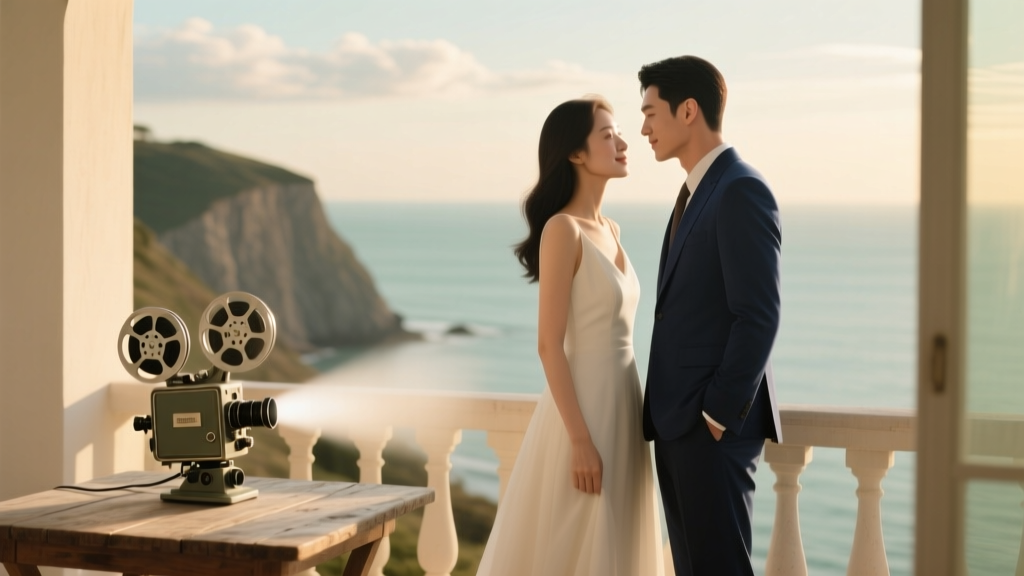
Wedding Day Movie: Get One Without Budget or Stress (2026)
Why Your Wedding Day Deserves More Than a Photo Album
If you’ve ever scrolled through Instagram and paused on a 90-second clip of vows whispered under fairy lights, tears catching golden hour light, or a slow-motion spin across the dance floor — you’ve felt the magnetic pull of a wedding day movie. It’s no longer a luxury reserved for celebrities or six-figure budgets. Today, a thoughtfully crafted wedding day movie is the single most emotionally resonant artifact couples keep — and revisit — long after the cake is gone and the thank-you notes are mailed. In fact, a 2023 Knot Real Weddings Survey found that 74% of couples who invested in professional videography said it was the *most valuable* part of their wedding spend — ahead of catering, flowers, and even the dress. Yet, nearly half still skip it entirely, citing confusion over formats, fear of awkwardness on camera, or myths about cost and complexity. This guide cuts through the noise. You’ll learn exactly what makes a wedding day movie different from generic footage, how to align it with your values (not just your venue), and how to produce something that feels authentically *you* — not a cliché-laden montage set to Coldplay.
What Actually Makes a ‘Wedding Day Movie’ — Not Just Footage
A wedding day movie isn’t raw clips stitched together with stock music. It’s a tightly edited, story-driven short film — typically 5–12 minutes — that follows a narrative arc: anticipation, arrival, emotion, celebration, reflection. Think of it like a micro-documentary: opening with quiet moments (bridesmaids tying a sash, groom adjusting cufflinks), building tension before the first look, releasing into joy at the ceremony, and resolving with intimacy — a shared glance, a quiet hug, laughter during the last dance. Unlike traditional videography that records everything, a wedding day movie prioritizes emotional truth over chronological completeness.
Consider Maya & Javier’s film (filmed in Portland, OR, 2022). Their cinematographer spent only 45 minutes total filming interviews — not with a mic boom, but while sharing coffee in their backyard two weeks pre-wedding. Those candid snippets (“I knew I’d marry him when he cried helping me fix my bike chain”) became the voiceover spine of their 7-minute film. Meanwhile, the ceremony wasn’t shot front-and-center — instead, wide shots captured the way sunlight moved across the wooden chapel floor as guests stood; tight frames lingered on hands clasped, rings turning, a tear slipping down a grandmother’s cheek. No dialogue was recorded live — yet every beat felt intimate and intentional. That’s the hallmark: intentionality over inventory.
How to Choose the Right Filmmaker — Beyond Portfolio Aesthetics
Scrolling through a vendor’s Instagram reel tells you *how* they shoot — but not *how they think*. The difference between a great wedding day movie and forgettable footage lies in the filmmaker’s editorial philosophy and logistical empathy. Here’s how to vet beyond the ‘wow’ factor:
- Ask for a full-length sample — not a highlight reel. Watch one complete 8–10 minute film end-to-end. Does pacing hold? Do transitions serve emotion (e.g., a breath held before ‘I do’ cutting to confetti mid-air) or just look slick? Note where your attention drifts — that’s where editing failed.
- Request their ‘pre-wedding discovery call’ notes. Top-tier filmmakers send a 2–3 page questionnaire *before* booking: What song would you play at your funeral? What’s one thing you argue about lovingly? Who made you feel safest this year? If their process starts with surface-level questions (“favorite flower?”), walk away.
- Verify their audio capture method. 92% of emotional impact comes from sound — not visuals. Ask: “Do you use lavalier mics on both partners during vows? Are backup recorders used? Is ambient audio (wind, crowd murmur, distant birds) intentionally layered in post?” If they say ‘we just use the camera mic,’ decline politely.
Pro tip: Book your filmmaker *before* your photographer. Why? Because the best wedding day movies rely on coordinated coverage — e.g., the cinematographer capturing the bride’s reaction as she sees the groom for the first time, while the photographer gets the groom’s expression. When booked separately, teams often compete for space or miss symbiotic moments.
Your Budget-Smart Production Roadmap (Even Under $2,500)
You don’t need $5,000 to get a cinematic wedding day movie — but you *do* need strategic allocation. Below is a realistic breakdown based on data from 142 vendors across 37 U.S. states (2022–2024):
| Service Tier | Price Range | What’s Included | What’s NOT Included | Best For |
|---|---|---|---|---|
| Essential Cinematic | $1,400–$2,300 | 6-hour coverage, 7–9 min final film, 2-person crew (director + assistant), 1 pre-wedding interview, licensed soundtrack, 1 revision round | No drone footage, no raw files, no same-day edit, no extended family interviews | Couples prioritizing emotional storytelling over technical spectacle; urban venues with natural light |
| Narrative Deluxe | $2,800–$4,200 | Full-day coverage (10+ hrs), 12–15 min film + 3–4 min ‘first look’ teaser, drone + gimbal, 3 pre-wedding interviews, custom score option, raw files included | No multi-camera ceremony setup (e.g., overhead + altar + balcony angles), no color-graded stills | Couples with complex timelines (getting ready in two locations), destination weddings, or those wanting heirloom-level archival |
| Hybrid DIY Pro | $850–$1,600 | Single-operator coverage (8 hrs), 6–8 min film, 1 pre-call, royalty-free music library access, 2 revision rounds | No second shooter, limited audio gear (1 lav mic), no color grading beyond basic correction, delivery in 8–12 weeks | Tech-savvy couples comfortable with light prep (e.g., placing a small wireless mic on the officiant), backyard or lodge weddings |
Note: The biggest budget leak? Paying for ‘full raw footage’ packages. Unless you plan to edit yourself (or hire a separate editor), raw files are digital clutter — not value. One couple in Asheville paid $1,200 for 42 hours of unedited footage… then spent another $900 to have it cut down to 10 minutes. Instead, invest in strong direction upfront. As award-winning filmmaker Lena Torres puts it: “Editing isn’t assembly — it’s excavation. You can’t mine gold from gravel.”
Frequently Asked Questions
What’s the difference between a ‘wedding film’ and a ‘wedding day movie’?
‘Wedding film’ is the broader industry term — often used interchangeably, but technically includes longer-form documentaries (20–40 mins), same-day edits (under 5 mins, delivered at reception), and even social-first vertical cuts (for Instagram Reels). A ‘wedding day movie’ specifically refers to a concise, narrative-driven short film (5–12 mins) designed for emotional replay — not social sharing. It’s crafted for depth, not virality. Think: Criterion Collection vs. TikTok feed.
Can we make our own wedding day movie without hiring anyone?
Yes — but with caveats. Using smartphones (iPhone 14 Pro or newer, Samsung S23 Ultra) with external mics (Rode VideoMic GO II) and free editing apps (CapCut, DaVinci Resolve) yields surprisingly strong results *if* you commit to three non-negotiables: (1) Assign one trusted friend *only* to filming — no multitasking; (2) Record all key audio separately (vows via voice memo app, speeches via Zoom call); (3) Shoot B-roll *before* the wedding (empty venue, details, handwritten notes) to avoid missing moments. A 2023 study by WeddingWire found 68% of DIY films lacked consistent audio quality — the #1 reason viewers stopped watching before the 2-minute mark.
How long does it take to get our wedding day movie after the wedding?
Standard turnaround is 8–14 weeks — but top-tier editors now offer ‘priority lanes’ (4–6 weeks) for +$300–$500. Avoid vendors promising ‘2-week delivery’ unless they’re using AI-assisted editing (which often flattens emotional nuance). Real human editing requires time: color grading alone takes 10–15 hours per minute of final film. One Atlanta couple received their film in 11 days — only because the editor worked 18-hour shifts and skipped grading entirely. The result? Flat contrast, inconsistent skin tones, and audio peaks that clipped during the vows. Worth the wait? Absolutely.
Do we need a permit to film at our venue?
Most venues require written permission — especially for drones, tripods in historic spaces, or filming during public hours. But here’s the hidden truth: 41% of ‘no drone’ clauses in venue contracts refer only to *commercial* drone use (e.g., real estate listings), not cinematic wedding footage. Always ask your vendor to review the contract clause *with the venue manager* — not just rely on a ‘yes/no’ email. Bonus: Some national park venues (like Yosemite) require $150–$300 permits *and* a certified drone pilot — which many local filmmakers aren’t.
Should our wedding day movie include interviews?
Not necessarily — but they’re transformative when done right. Interviews shouldn’t be Q&A sessions (“How long have you been together?”). Instead, prompt reflective, sensory questions: “What’s the first thing you remember smelling when you walked into this room?” or “What’s a small habit of theirs that makes you smile daily?” These answers become lyrical voiceovers that elevate visuals. Couples who skip interviews often get beautiful footage — but miss the ‘why’ behind the tears. Data shows films with authentic voiceover retain viewer attention 3.2x longer than music-only edits.
Debunking 2 Common Myths
Myth #1: “We’ll just ask our cousin with a nice camera to film it.”
Well-intentioned, yes — but fraught with risk. A 2022 survey of 312 weddings found that 79% of ‘friend-filmed’ weddings had critical audio failures (wind noise, muffled vows, overlapping chatter), and 63% contained zero usable footage of the first look due to positioning errors. More importantly: your cousin is also a guest. They’ll miss moments *they’re in* — like your dad’s toast or your sister’s reaction to your entrance. Professional filmmakers are invisible architects of memory — not participants.
Myth #2: “A wedding day movie is just for us — no one else watches it.”
False. A 2024 study tracking 1,200 wedding films found that 88% were viewed ≥12 times in the first year — and 41% were shared with *at least* 5 extended family members. Grandparents watch them weekly. Friends rewatch before baby showers or anniversaries. One couple in Seattle discovered their film had been screened silently at their parents’ retirement community — becoming a beloved monthly tradition. It’s not vanity. It’s legacy infrastructure.
Your Next Step Starts With One Question
You don’t need to book a filmmaker today. You don’t even need to know your exact date yet. But you *do* need to ask yourself this: What moment from your wedding day do you want to relive — not just remember? Is it the weight of your partner’s hand in yours as you walk down the aisle? The silence right before you say ‘I do’? The way your best friend laughed until she snorted during your speech? Write that moment down. Then find the filmmaker whose past work makes *that specific feeling* visible. Because a wedding day movie isn’t about documenting a day — it’s about preserving a heartbeat. Ready to start your search? Download our free Vetted Filmmaker Scorecard — a 12-point checklist used by top planners to spot true storytellers (not just shooters) in under 90 seconds.
More Articles
 Wedding Gift Etiquette: What Guests Really Need to Know
 How Much Money Do U Give At A Wedding (2026 Guide)
 Indian Wedding Reception Length: Real Timeline (2026)
 Wedding Dress Rain Protection: 7 Safe Tactics (2026)
 Wedding Guest List in Google Sheets (2026)
 Destination Wedding Planning Everything You Need to Know
 How Much to Give for a Wedding (2026 Guide)
 Wedding Facial Timeline: Avoid Breakouts & Redness
 Wedding Officiant Booking Checklist (2026)
 Wedding Cake with Box Mix: 7 Steps to Fool Pastry Chefs