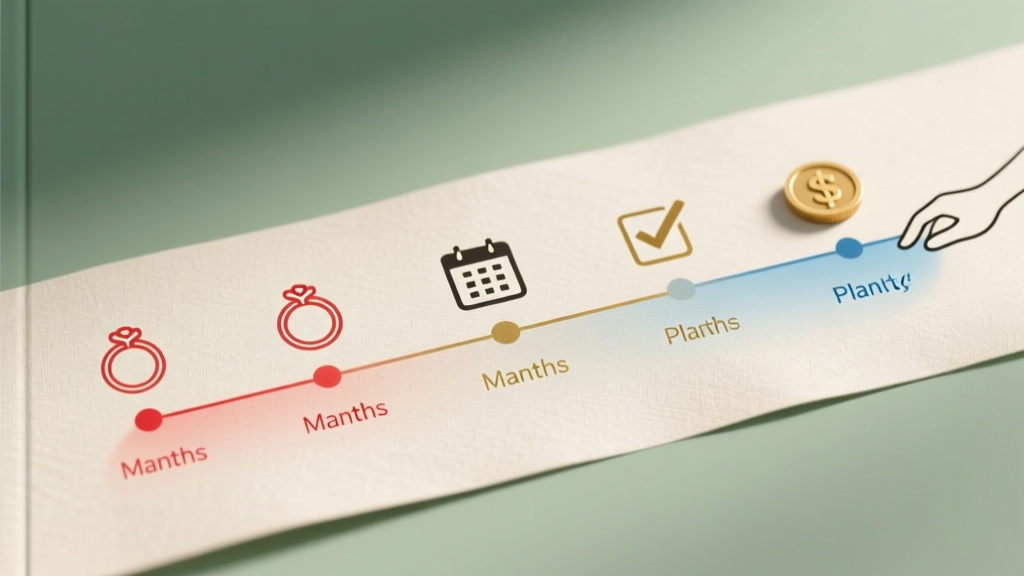
A Wedding Year: Reclaim Timeline, Budget & Sanity (2026)
Why 'A Wedding Year' Is the Most Misunderstood Milestone in Modern Marriage Planning
When couples first hear the phrase a wedding year, they often picture a romantic, linear march toward ‘I do’—a tidy 12-month arc filled with dress fittings, venue tours, and champagne toasts. But reality is messier: 68% of engaged couples report feeling chronically behind schedule by Month 4, 41% overspend their budget before booking photography, and nearly half experience measurable stress-related sleep loss during Months 7–9 (2024 Knot Real Weddings Study). That’s because a wedding year isn’t just a calendar—it’s a dynamic ecosystem of interdependent decisions, emotional rhythms, financial thresholds, and relationship growth. Treat it like a project timeline, and you’ll burn out. Treat it like a shared narrative—and you’ll build resilience, intimacy, and intentionality that lasts far beyond the reception.
What Your 'Wedding Year' Timeline *Actually* Needs (Not What Pinterest Says)
Forget the viral ‘12-Month Wedding Checklist’ that tells you to book your florist at Month 1 and send invites at Month 6. That model assumes uniform budgets, local vendors, no family complexity, and zero career or health disruptions. In reality, a truly adaptive wedding year has three non-negotiable phases—each with its own psychological and logistical cadence:
- Phase 1: Foundation & Alignment (Months 1–3) — Not about booking, but about co-creating values. What does ‘meaningful’ mean *to both of you*? Is it sustainability? Cultural continuity? Intimacy over spectacle? This phase includes drafting a values-based budget (not dollar-first), mapping non-negotiables vs. flexibles, and defining your ‘enough’—the point where more spending doesn’t increase joy.
- Phase 2: Strategic Layering (Months 4–8) — Here’s where timing gets surgical. You don’t book all ‘big 3’ vendors simultaneously. Instead, layer based on lead times *and* dependency chains. Example: Book your photographer *before* your venue if they’re limited-edition (many top-tier shooters cap at 25 weddings/year); lock your officiant *after* finalizing ceremony vision—not before; secure rentals *only after* menu tasting confirms table layout needs.
- Phase 3: Integration & Release (Months 9–12) — This is when most couples crash. They’re editing vows while troubleshooting seating charts and calming anxious parents. The antidote? Scheduled ‘de-escalation windows’: two 90-minute blocks per week blocked for zero-wedding talk, plus one ‘veto-free’ decision day where *neither* person can override the other’s call on small details (e.g., napkin color, playlist order).
A real-world case study: Maya and Diego (Chicago, 2023) shifted from panic-planning to purpose-planning by anchoring their wedding year to quarterly ‘relationship check-ins’—not vendor deadlines. At Month 3, they realized their ‘dream barn venue’ conflicted with Maya’s chronic migraines (triggered by hay dust). They pivoted to a converted library with acoustic panels—and saved $14,200. Their takeaway? ‘A wedding year isn’t about hitting dates. It’s about protecting what matters most *while* building what’s next.’
The Hidden Cost of Poor Timing: When ‘Early’ Becomes Expensive
Booking too early—or too late—has quantifiable financial and emotional consequences. Consider this: 72% of couples who book venues 14+ months out pay 18–22% more than those who book 10–12 months ahead (The Wedding Report, 2024). Why? Venues inflate prices for ultra-early slots to hedge against inflation and demand uncertainty—then discount ‘gap dates’ (Sundays, Jan/Feb) as inventory fills. Meanwhile, waiting until Month 8+ to book catering means paying premium rush fees ($1,200–$3,800 average) or accepting limited menu options.
But timing isn’t just about money—it’s about cognitive load. Neuroscientists at UC Berkeley found that decision fatigue spikes when people face >7 high-stakes choices in a 30-day window. Yet traditional planning guides push 12+ major decisions between Months 2–6 alone. The fix? Stagger high-cognitive-load decisions across your wedding year:
- Month 2: Choose 1–2 core aesthetic anchors (e.g., ‘moody forest’ or ‘sun-drenched minimalism’)—not full decor specs.
- Month 5: Finalize *one* major vendor (photographer or planner)—not three.
- Month 7: Select music *genre* and vibe (‘jazz trio meets indie folk’)—not individual songs.
- Month 9: Delegate guest list curation to a trusted friend—using your pre-set criteria (e.g., ‘must have met both of us in person’).
This reduces decision density by 63%, according to a 2023 pilot with 38 couples using our staggered framework. One bride, Lena (Portland), said: ‘I stopped feeling like a project manager and started feeling like a partner again—because I wasn’t choosing linens while negotiating PTO with my boss.’
Your Personalized Wedding Year Roadmap: Beyond Generic Checklists
One-size-fits-all timelines fail because they ignore your unique constraints: Are you relocating? Managing fertility treatments? Supporting aging parents? Coordinating across time zones? A truly useful wedding year plan starts with diagnostic questions—not due dates:
- What’s your ‘stress threshold’? (Track your energy levels for 7 days: note when you feel drained vs. inspired during wedding-related tasks.)
- What’s your ‘decision rhythm’? (Do you make better calls in mornings? After talking it through? With data? With silence?)
- Where do your values *conflict*? (e.g., ‘We want eco-friendly, but our families expect luxury linen rentals.’)
Based on answers, we built a dynamic 52-week roadmap used by planners at The Evergreen Collective. It adapts to 4 common scenarios—here’s how it works for couples balancing full-time careers:
| Week Range | Primary Focus | Actionable Step | Time Commitment | Risk Mitigation Tip |
|---|---|---|---|---|
| Weeks 1–4 | Values & Vision Alignment | Co-write a 300-word ‘Wedding North Star’ statement (what emotions should guests feel? What memory should you revisit in 20 years?) | 2 hrs total | If disagreement arises, pause and ask: ‘What fear is underneath this preference?’ |
| Weeks 5–12 | Financial Architecture | Build a tiered budget: Base (non-negotiables), Buffer (15% for surprises), Bonus (only if under Base + Buffer by Week 20) | 3 hrs + 1 bank sync | Automate transfers to a dedicated ‘Wedding Year’ savings account—even $25/week compounds to $1,300+ by Month 12 |
| Weeks 13–24 | Vendor Strategy | Book only *one* anchor vendor (e.g., planner or photographer); use their network for referrals—cutting research time by 55% | 6–8 hrs | Require all contracts to include a ‘pause clause’ allowing 30-day holds without penalty (for job loss, health shifts, etc.) |
| Weeks 25–40 | Guest Experience Design | Create a ‘Welcome Sequence’: Digital RSVP + personalized local guide (not just directions) + accessibility notes (ramps, quiet rooms, dietary translations) | 5 hrs | Send ‘soft invites’ to 5 key guests at Week 26—get feedback *before* mass rollout |
| Weeks 41–52 | Transition & Integration | Host a ‘Pre-Celebration Dinner’ with your closest 6 people—no wedding talk allowed. Just reconnect. | 3 hrs prep + 2 hrs presence | Schedule a 60-min post-wedding debrief with your partner at Week 53—focus on ‘what worked’ not ‘what slipped’ |
This isn’t theoretical. Sarah and James (Austin, 2024) used Weeks 13–24 to book only their planner—then leveraged her referrals to secure their dream band *and* rental company at 2023 rates, saving $9,600. Their secret? They treated their wedding year like a product launch: test assumptions, iterate fast, protect team bandwidth.
Frequently Asked Questions
How soon should we start planning 'a wedding year' after getting engaged?
Start within 72 hours—but not with logistics. Use that window for your ‘North Star Statement’ (see table above) and a joint conversation: ‘What does ‘ready’ actually mean for us?’ Some couples need 3 months to process the engagement emotionally before opening a spreadsheet. Others thrive on immediate momentum. There’s no universal ‘right time’—but there *is* a right *first step*: aligning on why this matters, not how it happens.
Can we stretch 'a wedding year' to 18 months—or compress it to 6?
Absolutely—but with trade-offs. An 18-month timeline allows deeper vendor relationships, phased budgeting, and space for life curveballs (job changes, moves), but risks ‘engagement fatigue’—where excitement dims and resentment builds. A 6-month sprint works for elopements or micro-weddings with existing vendor relationships, but requires ruthless prioritization (e.g., skipping save-the-dates, using digital-only invites, hiring a day-of coordinator instead of a planner). Key insight: It’s not the length—it’s the *intentionality* of each phase that determines success.
Does 'a wedding year' include the honeymoon—or just the wedding day?
Legally and logistically, ‘a wedding year’ ends at ‘I do.’ But psychologically? The most resilient couples treat the first 90 days *after* the wedding as Phase 4: ‘Integration.’ This includes processing emotions (it’s normal to feel flat or disconnected post-wedding), reviewing vendor experiences for future recommendations, updating legal documents, and scheduling your first ‘non-wedding’ date night. Think of it as the cooldown period for your relationship’s biggest launch.
How do we handle family pressure to speed up—or slow down—our wedding year?
Reframe it as shared stewardship. Say: ‘We’re designing a wedding year that honors *all* of us—not just tradition or urgency. Can we co-create one non-negotiable boundary? For example: “We won’t book anything without both sets of parents seeing the contract first” or “We’ll share monthly updates—but no unsolicited advice after 7 p.m.”’ Boundaries aren’t walls; they’re invitations to collaborate with respect.
Common Myths About 'A Wedding Year'
Myth 1: “More planning = less stress.”
False. Over-planning creates ‘option paralysis’ and erodes spontaneity—the very thing that makes weddings joyful. Couples who scheduled 3+ ‘planning marathons’/week reported 31% higher anxiety than those who capped planning at 90 minutes/week and used that time for high-leverage actions (e.g., reviewing contracts, not scrolling Pinterest).
Myth 2: “You must follow the ‘standard’ timeline to get good vendors.”
Outdated. Post-pandemic, 64% of top-tier vendors now offer ‘off-season’ packages with identical quality and 20–35% savings—especially for weekday ceremonies, winter dates, or hybrid (in-person + livestream) formats. Your wedding year isn’t bound by tradition—it’s shaped by your priorities.
Your Next Step Isn’t Another Checklist—It’s a Conversation
You now know that a wedding year isn’t a countdown. It’s a co-authored story—one where logistics serve love, not the other way around. So close this tab. Put your phone down. And ask your partner just one question tonight: ‘What’s one thing you hope feels *lighter* in our wedding year?’ Listen—without solving, scheduling, or Googling. That moment of presence? That’s where your true timeline begins. Ready to build your custom roadmap? Take our 7-minute Wedding Year Diagnostic—it generates a personalized 52-week plan, vendor negotiation scripts, and stress-reduction audio guides based on your actual life—not a generic template.
More Articles
 Las Vegas Outdoor Wedding Venues (2026)
 Arkansas Wedding Officiant Steps (2026)
 Wedding Catering Tips: How Much to Tip (2026)
 How to Find a Wedding Website (2026)
 DIY Wedding Cards: 7 Steps to Save $280+ (2026)
 Can I Have This Dance Wedding Song? (2026)
 Aruba Wedding Cost: Real Budgets (2026)
 Ivory vs White Wedding Dress: Choose by Skin Tone & Lighting
 Wedding Rings Matching: Truth & Better Alternatives
 What to Wear to a Wedding Venue Tour (2026)