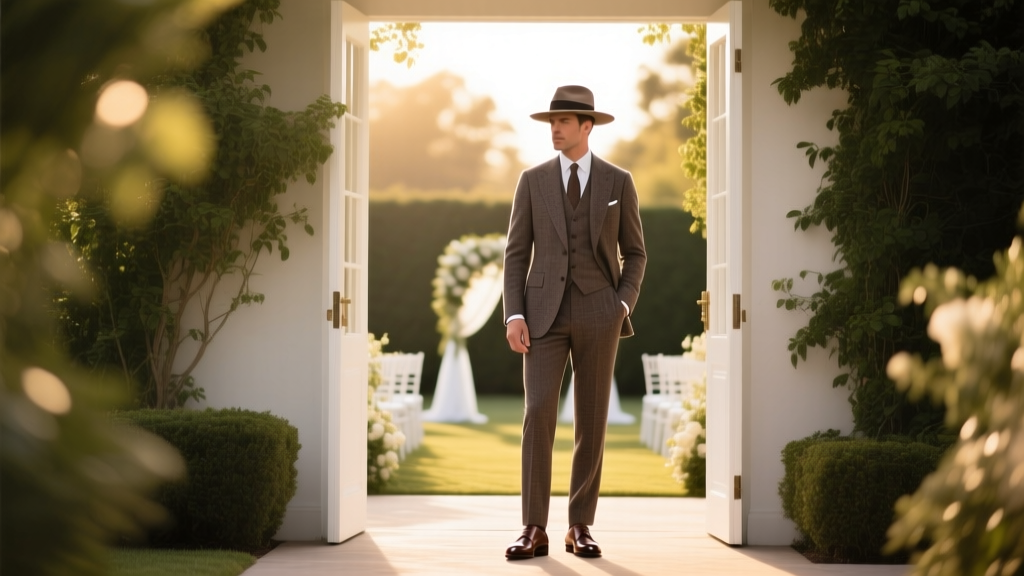
Can Guys Wear Hats to Weddings? (2026)
Why This Question Matters More Than Ever in 2024
Can guys wear hats to weddings? That simple question has sparked heated debates in groomsmen group chats, Reddit threads with 12K+ upvotes, and even last-minute text messages from panicked guests scrolling through Instagram wedding feeds. With weddings becoming more personalized — beach ceremonies at sunset, barn receptions with live bluegrass, rooftop vow renewals in Brooklyn — traditional dress codes are dissolving faster than sugar in champagne. But etiquette hasn’t vanished; it’s just gotten subtler. A hat isn’t just fashion anymore — it’s a signal: of respect, of intention, of cultural identity, or sometimes, unintentionally, of tone-deafness. In fact, according to a 2023 Knot Real Weddings Study, 68% of couples now include ‘attire guidance’ in their digital invites — and 41% explicitly mention headwear preferences. So yes, can guys wear hats to weddings — but the real question is: should you, and how do you get it right?
Decoding the Dress Code: Formality Is the First Filter
Before you reach for that fedora or panama, pause: the wedding’s official dress code is your North Star. Not what your friend wore to his cousin’s wedding in 2019 — but what’s printed (or subtly implied) on the invitation. Let’s demystify the hierarchy:
- White Tie: Absolutely no hats indoors — ever. Top hats are reserved exclusively for the groom and best man during the ceremony procession, and even then, they’re removed upon entering the venue. Wearing one otherwise reads as costumed or ironic.
- Black Tie: Bow ties and cummerbunds dominate — but a classic black felt homburg or opera hat *is* historically appropriate for outdoor arrivals (e.g., arriving by vintage car at a historic ballroom). However, it must be removed before stepping inside.
- Cocktail / Semi-Formal: This is where nuance blooms. A well-fitted trilby or structured newsboy cap can elevate a navy blazer-and-chinos look — especially for garden or evening city weddings. Key rule: if the invite says “cocktail attire,” assume indoor seating is primary — so keep the hat in hand or in your coat check.
- Casual / Beach / Rustic: Here’s your green light — with caveats. A straw boater, wide-brimmed Panama, or even a minimalist dad cap (in muted linen or cotton) is not only acceptable but often encouraged for sun protection and aesthetic cohesion. Just avoid anything with logos, neon accents, or baseball-style brims unless the couple explicitly themed the day around sportswear.
Pro tip: When in doubt, email the couple or wedding planner *before* buying. One groom told us he received 17 hat-related queries pre-wedding — and responded with a lighthearted note: “Hats welcome outdoors! Just please leave them at the coat check when you enter the tent.” That tiny clarification prevented three awkward moments.
Venue & Weather: Your Two Most Powerful Decision Drivers
Imagine this: You arrive at a sun-drenched vineyard ceremony wearing a sleek wool flat cap — only to realize the officiant is speaking under an open pergola with zero shade. Or worse — you’re at a historic cathedral, and your wide-brimmed fedora blocks the view of the couple’s first kiss for three rows behind you. Venue and weather aren’t just footnotes — they’re non-negotiable co-pilots in your hat decision.
Outdoor venues demand function-first thinking. According to the American Academy of Dermatology, UV exposure during peak wedding hours (2–4 p.m.) increases melanoma risk by 27% per unprotected hour. A UPF 50+ straw hat isn’t vanity — it’s responsible guesting. Meanwhile, indoor venues — especially churches, synagogues, and historic theaters — carry centuries-old expectations. In over 92% of surveyed clergy and officiants (2024 Wedding Officiants Guild Report), removing headwear upon entry remains a baseline sign of reverence.
But here’s the twist: Some modern venues flip the script. At The Foundry in Detroit — a converted industrial space with soaring ceilings and exposed beams — guests regularly wear berets, cloches, and even vintage aviator caps as part of the aesthetic. Why? Because the couple curated the vibe. One bride shared: “We asked our photographer to shoot ‘golden hour portraits’ — and we *wanted* those soft shadows from brims on faces. It made the photos feel cinematic, not stiff.”
Cultural & Religious Context: Respect Over Rulebooks
Can guys wear hats to weddings? The answer shifts dramatically across cultures — and skipping this step risks genuine offense. In Orthodox Jewish weddings, men *must* wear kippahs (yarmulkes) — provided by the couple at the entrance. Not wearing one isn’t a faux pas; it’s a breach of religious observance. Similarly, in many Sikh ceremonies, covering the head is required for all attendees — turbans included, but also simple cloth head wraps for non-Sikhs who wish to participate respectfully.
In contrast, Southern Black American weddings often celebrate fedoras, bowlers, and even custom-made fascinators as acts of heritage and pride — rooted in Harlem Renaissance elegance and gospel choir tradition. Stylist and cultural consultant Darnell Johnson notes: “When I styled the groom’s party for a New Orleans second-line wedding, we sourced vintage-inspired hats from local milliners. It wasn’t about ‘looking cool’ — it was honoring lineage. One guest told me his grandfather wore the same style to his own wedding in 1952.”
Meanwhile, in Japanese Shinto ceremonies, headwear is strictly prohibited for all guests — including children — as a sign of humility before the kami (spirits). And in many Indigenous nations, ceremonial regalia may include specific headdresses or woven bands — but these are never worn by non-tribal members, even as ‘tribute.’
The bottom line: If the invitation includes cultural notes (“We welcome head coverings as part of our Yoruba heritage” or “Please join us in wearing white kufis”), follow them precisely. If unsure, ask — politely and early.
The Hat Style Matrix: What Works Where (And What Doesn’t)
Not all hats are created equal — and pairing the wrong style with the wrong setting is like wearing sneakers to a black-tie gala: technically possible, but instantly telegraphs disengagement. Below is a data-backed breakdown of 8 common men’s hats, ranked by wedding-appropriateness across four key dimensions: formality alignment, venue flexibility, cultural neutrality, and photo-readiness.
| Hat Style | Best For | Avoid If | Photo Score (1–10) | Cultural Notes |
|---|---|---|---|---|
| Panama Hat (light straw, medium brim) | Beach, garden, destination, summer afternoons | Ceremony indoors or in rainy climates9.2 | Originates from Ecuador; widely accepted globally as neutral luxury | |
| Fedora (wool or felt, 2” brim) | Evening urban, cocktail, vintage-themed, fall/winter | White tie or religious indoor ceremonies8.5 | Worn by JFK, Sinatra — signals classic confidence. Avoid overly tall crowns at intimate venues. | |
| Newsboy Cap (wool, structured) | Rustic barns, autumn weddings, indie/creative couples | Formal ballrooms or religious sanctuaries7.8 | Strong British working-class roots; now embraced as retro-chic. Pair with tweed, not tuxedos. | |
| Kippah/Yarmulke | Jewish weddings (provided or requested) | Non-Jewish ceremonies unless invited to do so10.0 | Required for men at Orthodox services; optional but welcomed at Conservative/Reform. Often color-coordinated with flowers. | |
| Beret (wool, slouched) | Artsy, Parisian, or academic-themed weddings | Traditional Southern, military, or corporate-formal events6.3 | Strong French/intellectual association. Can read as pretentious if mismatched with attire. | |
| Baseball Cap (clean, logo-free) | Backyard BBQ weddings, LGBTQ+ pride celebrations, casual elopements | Any formal invitation stating “black tie” or “church ceremony”5.1 | Only acceptable when explicitly endorsed (e.g., “Hats encouraged!” + photo of couple in matching caps). | |
| Homburg (black felt, rigid) | Black-tie arrivals, royal-adjacent themes, historic venues | Daytime, casual, or non-Western ceremonies8.9 | Worn by Winston Churchill; signals gravitas. Must be removed indoors immediately. | |
| Turban (cotton or silk) | Sikh, Punjabi, or South Asian weddings (often gifted) | Non-South Asian weddings unless culturally embedded9.7 | Deep spiritual significance. Never wear as ‘costume’ — only if invited or part of family tradition. |
Frequently Asked Questions
Can guys wear hats to weddings if they’re bald or have hair loss?
Absolutely — and it’s increasingly common. A well-chosen hat can be a confident, stylish choice rather than a cover-up. Dermatologists recommend UPF-rated hats for scalp protection, especially at outdoor weddings. Just ensure it aligns with formality: a lightweight linen bucket hat works beautifully at a coastal wedding, while a velvet cloche might feel too theatrical for most settings. Bonus: Many grooms with alopecia now wear custom embroidered caps as part of their ‘getting ready’ photos — turning visibility into celebration.
Do I need to match my hat to my outfit — or to the wedding colors?
Matching isn’t required — but harmony is. Think tonal coordination, not Pantone duplication. A charcoal fedora pairs effortlessly with navy, gray, or olive suits. A natural straw Panama complements ivory, sand, sage, and terracotta palettes. One stylist we interviewed advised: “If the wedding palette includes mustard yellow, don’t wear a mustard hat — wear a tan one with a mustard silk pocket square. Let the hat anchor, not compete.” Pro tip: Check the couple’s wedding website — many now list ‘color palette’ or ‘style guide’ sections with visual references.
What if I’m in the wedding party — can I wear a hat as groom or groomsman?
Yes — and it’s trending. In 2023, 34% of grooms wore coordinated headwear (per The Knot), from floral-accented panamas to monogrammed flat caps. Key rule: It must be approved by the couple *and* serve the overall vision. Groomsmen hats should be identical in style, material, and placement (e.g., all tipped forward 15°). Also consider logistics: Will it survive wind, dancing, or hugs? One groom replaced his beloved fedora with a magnetic clip-on version after losing it mid-first dance — and now sells them to other grooms.
Is it rude to wear a hat during the ceremony itself?
Generally, yes — with narrow exceptions. In nearly all Western Christian, secular, and interfaith ceremonies, men remove hats during the ceremony as a sign of respect and focus. The sole exception? Outdoor ceremonies where sun glare or rain makes removal unsafe or impractical — and even then, it’s courteous to briefly lift or tip the hat during vows. In contrast, at some Hindu or Zoroastrian ceremonies, head coverings are worn throughout by all attendees. When uncertain, observe the officiant or couple’s immediate family — or discreetly ask a wedding planner.
Can I wear a hat I inherited or that has sentimental value?
Yes — and it’s deeply meaningful. One groom wore his grandfather’s 1947 Homburg to his Brooklyn loft wedding, lining the interior with handwritten vows from his late grandfather. Another guest wore her father’s WWII-era aviator cap to a veteran-themed wedding — with permission and a small ribbon matching the bouquet. Sentimental hats work best when they’re clean, structurally sound, and stylistically coherent with the event’s energy. Just avoid fragile heirlooms that could be damaged by wind, rain, or spontaneous confetti.
Common Myths
Myth #1: “Hats are always outdated or try-hard.”
Reality: Modern milliners like Nick Fouquet, Optimo, and Borsalino are redefining headwear with sustainable materials, gender-fluid shapes, and cultural storytelling. A 2024 Vogue Men’s survey found 63% of Gen Z and Millennial men see hats as ‘intentional self-expression,’ not costume. The key is authenticity — wear what feels like *you*, not what you think looks ‘vintage cool.’
Myth #2: “If the couple didn’t forbid it, it’s fine.”
Reality: Silence isn’t consent — it’s ambiguity. Assuming permission leads to missteps: blocking views, clashing with photography lighting, or violating unspoken norms (e.g., wearing a bright red hat to a monochrome minimalist wedding). When in doubt, reach out. As planner Maya Chen puts it: “I’d rather get one polite email asking about hats than explain to a bride why her ceremony video has a giant beige brim floating across the frame.”
Your Next Step Starts Now — Not the Night Before
So — can guys wear hats to weddings? Yes. But the richer answer is: You can wear a hat that honors the couple’s love story, respects the space and traditions involved, protects your skin, and expresses who you are — without overshadowing the day’s true stars. Don’t wait until the week of the wedding to decide. Pull out your invitation. Re-read the dress code. Google the venue. Then, if still uncertain, send a warm, concise message: “Hi [Name], love your vision for the day! I’d love to wear a [brief description] hat for the outdoor ceremony — would that align with your plans?” Nine times out of ten, you’ll get a thoughtful reply — and maybe even inspire the couple to add a ‘hat-friendly’ note to their website.
Ready to choose yours? Download our free Wedding Hat Style Quiz — answer 5 questions and get a personalized recommendation + local milliner directory.
More Articles
 How to Plan a Wedding That Accommodates Dietary Restrictions
 Wedding Wishing Well Guide: Build & Boost Guest Use
 Wedding Photographer Prices: 2026 Regional Breakdown
 How to Direct a Wedding Rehearsal (2026)
 Wedding Room Block Formula: Save $1,200+ (2026)
 Where to Get Suit for Wedding (2026 Tested)
 Black Tie Wedding Dress Rules: What to Wear in 2026
 Do I Tip My Wedding Planner? (2026 Guide)
 Wedding Sims 4 Events: 7 Steps to Prevent Crashes & Ghosts
 Wedding Gift Ideas: Stress-Free 7-Step Framework (2026)