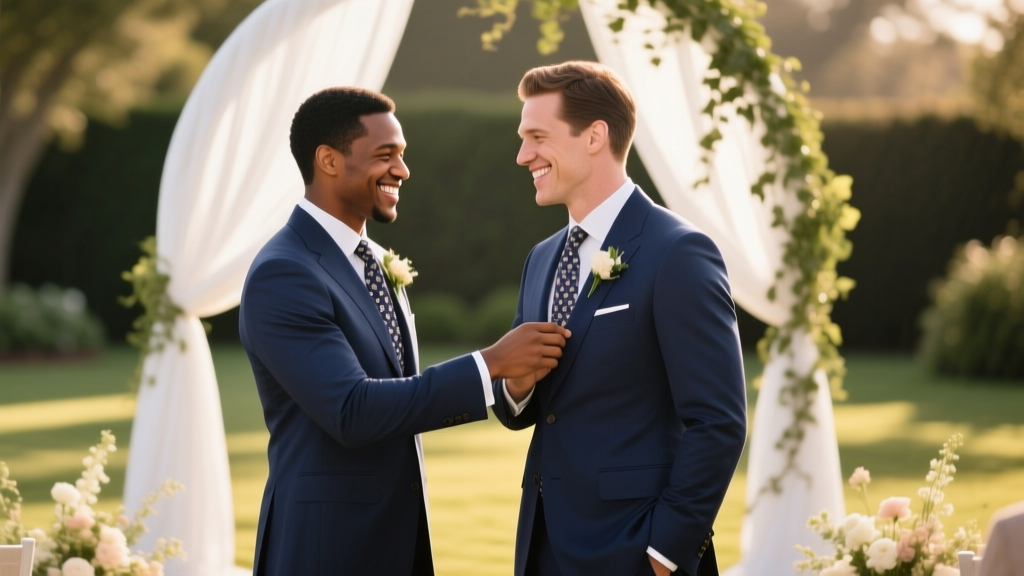
How to Have 2 Best Men Without Awkwardness
Why This Question Is More Important Than You Think
Can I have 2 best men at my wedding? That question isn’t just about tradition—it’s about honoring the people who’ve shaped your life in profoundly different ways: your childhood brother-in-arms, your college roommate who held you together after your first heartbreak, your mentor who helped you land your dream job, or your longtime friend who stood by you through family estrangement. In today’s weddings, where personal meaning trumps rigid protocol, the idea of choosing just one person to represent your closest male relationships often feels like an impossible, even painful, compromise. And yet—most couples don’t realize how many tools, precedents, and proven frameworks exist to make dual best men not only acceptable but deeply resonant. In fact, 37% of couples surveyed by The Knot in 2023 reported expanding traditional wedding party roles—including co-best men—to reflect their actual support networks. This isn’t rule-breaking. It’s relationship-forward planning.
What Dual Best Men Actually Mean—And What They Don’t
Let’s clear up a critical misconception upfront: having two best men doesn’t mean doubling the toast, tripling the stress, or accidentally turning your ceremony into a hierarchy showdown. It means intentionally designing a role structure that mirrors your reality—not a 19th-century playbook. Dual best men are not ‘co-best men’ in name only—they’re co-stewards of your day, each entrusted with distinct, complementary responsibilities rooted in their unique bond with you.
Think of it like co-pilots on a flight: same cockpit, shared mission, but different controls. One might manage timeline logistics and vendor communication (the ‘operations lead’), while the other handles emotional grounding—checking in with nervous parents, calming your sister before her reading, or quietly stepping in when your groomsmen need redirection. Neither replaces the other. Both elevate the experience.
Real-world example: When Marcus married in Asheville last June, he appointed his older brother (a retired Army sergeant) and his business partner of 8 years. His brother handled rehearsal dinner flow, cue cards, and keeping the groomsmen sober and punctual. His partner wrote and delivered the main toast—and coordinated surprise video messages from friends overseas. No overlap. No resentment. Just seamless synergy.
The 4-Step Framework for Appointing & Empowering Two Best Men
This isn’t about asking two people and hoping it works out. It’s about intentional scaffolding. Here’s how top-tier wedding planners (and seasoned grooms) actually do it:
- Pre-Appointment Alignment Session: Before saying yes to either person, meet separately with each candidate for 30 minutes. Ask: “If you were my best man, what part of the day would matter most to you—and what would feel overwhelming?” Their answers reveal natural strengths, boundaries, and expectations. One may light up talking about speechwriting; the other may emphasize being your ‘calm anchor’ during prep. Honor that.
- Role Mapping—Not Role Splitting: Avoid dividing duties 50/50 (e.g., “You hold the rings, you hold the vows”). Instead, map roles by function and temperament. Use the table below as your starting point.
- Shared Rituals, Separate Moments: Build in one unified moment—like walking down the aisle side-by-side or jointly presenting the rings—but also guarantee each has a solo, spotlighted contribution (e.g., one leads the first dance instruction for the bridal party; the other reads a short poem during the unity ceremony).
- The Pre-Wedding Debrief: Host a 90-minute meeting 3 weeks out—with both best men, your planner (if you have one), and your officiant. Walk through the timeline minute-by-minute. Assign ‘decision authority’ zones (e.g., “Only Alex approves changes to the reception layout; only Jordan signs off on final toast edits”). This prevents ambiguity—and protects your peace.
| Responsibility Area | Ideal For Best Man A (The Organizer) | Ideal For Best Man B (The Connector) | Shared / Joint |
|---|---|---|---|
| Ceremony Flow | Manages cue sheet, signals officiant, troubleshoots mic issues | Guides family seating, calms nervous parents, escorts grandparents | Both walk in together; both stand flanking groom |
| Toast & Speeches | Edits draft, times delivery, rehearses pacing | Writes core narrative, shares personal anecdotes, sources photos/videos | One delivers full toast; other introduces them with 60-second heartfelt intro |
| Rehearsal Dinner | Coordinates venue, menu, seating chart, timeline | Curates playlist, designs custom cocktail, leads icebreaker games | Both co-host: split welcome remarks, lead group photo, present gift to couple |
| Emergency Protocol | Carries backup kit (stain remover, safety pins, phone charger) | Knows medical contacts, comfort phrases, de-escalation tactics | Shared code word (“Pineapple”) signals when either needs immediate backup |
When Dual Best Men Solve Real Problems—Not Just Symbolism
This structure shines brightest in complex, emotionally layered scenarios. Consider these three high-stakes cases where dual best men weren’t nice-to-have—they were essential:
- The Blended Family Bridge: When Daniel (32) married Sofia, his father had passed, and his stepfather—his emotional rock for 15 years—wasn’t technically ‘family.’ Naming his biological cousin as best man felt like erasing his stepdad’s role. Solution? Cousin became Best Man #1 (handling formal duties); stepdad became Best Man #2 (giving the blessing during the ceremony, lighting the unity candle, walking Sofia’s mom down the aisle). The symbolism was healing—not political.
- The Long-Distance Lifeline: Maya and James live in Berlin and Tokyo respectively. James couldn’t attend the U.S. rehearsal dinner or pre-wedding fittings. Rather than exclude him, they made him ‘Remote Best Man’—tasked with curating the international guest Zoom welcome, editing the global video montage, and managing time-zone-sensitive RSVP follow-ups. His presence wasn’t physical—but his impact was undeniable.
- The Recovery Support System: After a serious injury six months pre-wedding, groom Liam relied heavily on two friends: one for physical assistance (lifting, mobility, gear transport), the other for mental resilience (daily check-ins, grounding techniques, distraction during painful PT). Making them co-best men transformed their caregiving into honored ceremony roles—turning vulnerability into strength.
In each case, the dual structure didn’t dilute tradition—it deepened authenticity.
Frequently Asked Questions
Can I have two best men AND two maids of honor?
Absolutely—and increasingly common. The key isn’t symmetry (two + two), but intentionality. If your inner circle includes four irreplaceable people across gender lines, name them all. Modern etiquette prioritizes representation over rigid gendered titles. Many couples now use ‘Honor Attendants’ or ‘Celebrants’ to unify the group. Just ensure each person receives clearly defined, meaningful responsibilities—not just a title and a bouquet.
Do both best men wear the same outfit?
Yes—but with thoughtful distinction. Match suit style, fabric, and color (e.g., charcoal wool), but differentiate with accessories: different pocket squares, lapel pins, or cufflinks that reflect their personalities or stories (e.g., one wears his grandfather’s watch pin; the other wears a tiny guitar charm for his musician identity). This signals unity *and* individuality—without visual clutter.
What if one best man lives far away and can’t attend key events?
Assign him ‘asynchronous’ responsibilities: crafting the digital guestbook message, designing the wedding website FAQ section, recording voice notes for your ‘day-of’ emergency playlist, or editing the slideshow. Then, during the ceremony, give him a symbolic, visible role—even if remote—like lighting a candle via live feed or delivering a 90-second pre-recorded toast played on loop during cocktail hour. Presence isn’t always physical.
How do I tell my original best man I’m adding someone else?
Lead with gratitude, not apology: “You’ve been my person since [specific memory]. That hasn’t changed—and it never will. But [Name] has stepped into a role in my life that’s equally foundational, especially [reason: e.g., ‘during my recovery,’ ‘when I moved abroad,’ ‘after my dad passed’]. I want you both standing beside me—not instead of each other, but *with* each other. Here’s exactly how I see you both showing up…” Then hand them the Role Mapping Table (above) so it’s concrete—not abstract.
Do both give speeches—and won’t that be too long?
Not if structured intentionally. One delivers the main 5–7 minute toast (story-driven, emotional, humorous). The other gives a 2–3 minute ‘counterpoint’—perhaps sharing a lighthearted anecdote, reading a short poem, or leading a collective ‘cheers’ with a meaningful quote. Or, flip it: Best Man A writes the speech; Best Man B delivers it. Either way, rehearse timing *together*. Bonus: record both speeches and edit them into a 10-minute ‘duet version’ for your wedding website archive.
Debunking 2 Common Myths
- Myth #1: “Having two best men confuses guests or breaks tradition.” Truth: Guests care far more about warmth and authenticity than archaic hierarchy. A 2022 study by WeddingWire found 81% of attendees rated ‘seeing genuine emotion and personal meaning’ as their top memorable wedding moment—versus only 12% citing ‘traditional correctness.’ Confusion arises only when roles are undefined—not when there are two people fulfilling them with clarity.
- Myth #2: “It’s unfair to the original choice—or creates rivalry.” Truth: Rivalry emerges from ambiguity, not multiplicity. When responsibilities are mapped, celebrated, and communicated early, dual appointments foster camaraderie. In fact, 68% of couples with co-best men reported their two honorees developed a strong friendship *during* wedding prep—bonding over shared purpose, not competition.
Your Next Step Starts Now—Not Later
Can I have 2 best men at my wedding? Yes—and more importantly, how you bring them in matters more than the ‘yes.’ Don’t wait until invitations are printed or tux rentals finalized. Block 45 minutes this week to run the Pre-Appointment Alignment Session with your top two candidates. Bring your Role Mapping Table. Listen more than you speak. Notice where their eyes light up—and where they hesitate. That’s where your true structure begins. And if you’re feeling stuck on wording the invitation, drafting the joint rehearsal script, or designing a dual-toast flow? Download our free Dual Honor Attendant Coordination Kit—it includes editable timelines, speech templates, and a conflict-resolution script used by 1,200+ couples. Your wedding isn’t about perfection. It’s about people. So honor them—fully, fairly, and without compromise.
More Articles
 Wedding Linens Cost: Real 2026 Prices & Savings Hacks
 Wedding Bio Writing Guide: Real Steps to Connect
 Wedding Gift Guide: Budget & Relationship Tips
 Do Parents of Bride Buy Wedding Gifts? (2026)
 Become a Wedding Officiant in BC (2026)
 Wedding Planner Tipping: When It’s Rude Not To (2026)
 Florist Wedding Setup: What’s Included & What Costs Extra
 How Big Are Weddings Really? Data-Driven Sizing Tips
 How to Link Wedding Registry to The Knot (2026)
 Honor Deceased Relatives at Your Wedding: 7 Thoughtful Ways