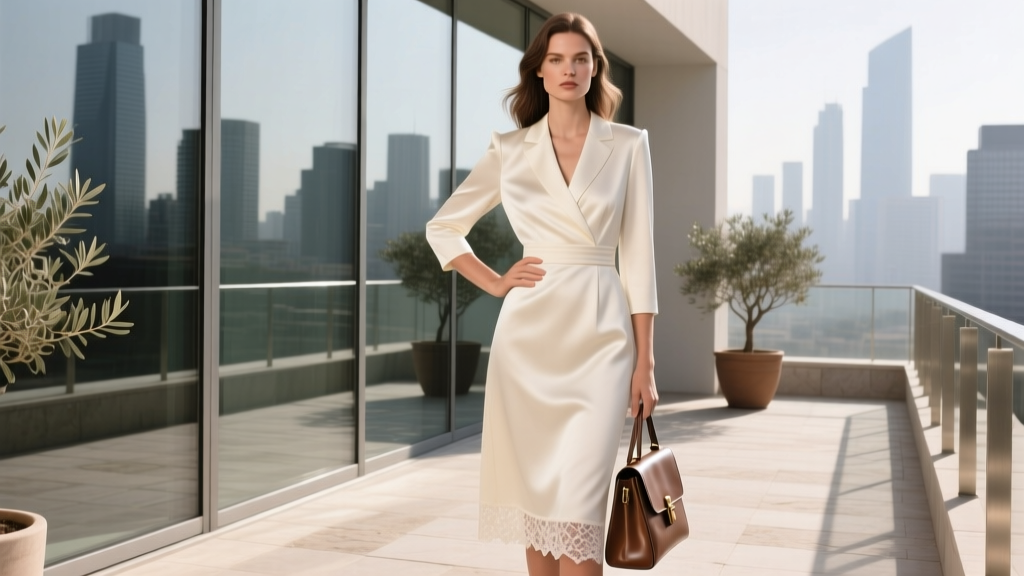
Can You Wear a Short Dress to a Wedding? (2026)
Why This Question Is More Urgent—and Complicated—Than Ever
‘Can I wear a short dress to a wedding?’ isn’t just a fashion question—it’s a social calculus. In 2024, weddings are more diverse than ever: backyard micro-weddings in Portland, Black-tie galas in Miami, destination ceremonies in Santorini, and cultural fusion celebrations blending Nigerian Yoruba traditions with modern minimalism. With 68% of couples now opting for nontraditional venues—and 41% explicitly banning formalwear on their invitations—guests face unprecedented ambiguity. And yet, 73% of guests still report feeling anxious about attire choices, according to a 2024 Knot Guest Experience Survey. That anxiety peaks around short dresses: they’re stylish, comfortable, and sustainable—but misread as ‘too casual’ or even ‘disrespectful’ without context. So yes, you can wear a short dress to a wedding—but only if you treat it like a strategic choice, not a stylistic impulse.
Rule #1: Decode the Invitation—Before You Even Open Your Closet
Most people skim the invitation and stop at ‘black tie optional’ or ‘cocktail attire.’ But the real clues live in the margins—and sometimes, between the lines. Start by auditing every textual and visual cue:
- Time of day matters more than dress code labels. A 4 p.m. garden ceremony followed by lawn games and rosé is functionally different from a 7 p.m. ballroom reception—even if both say ‘cocktail attire.’
- Location trumps all. A beachfront resort in Cabo? A short dress is often ideal. A historic cathedral in Boston? Even ‘cocktail’ may demand knee-length or longer.
- Photography style hints at tone. If the couple’s save-the-date features candid, film-style shots—not stiff studio portraits—they likely value authenticity over rigidity.
- Look for ‘tone words.’ Phrases like ‘come as you are,’ ‘celebrate in comfort,’ or ‘keep it joyful and light’ are green lights for shorter hemlines. Conversely, ‘elegant evening affair’ or ‘formal celebration’ signals caution.
Real-world case study: Maya, a guest at a vineyard wedding in Napa, assumed ‘cocktail attire’ meant she could wear her favorite silk midi dress. She arrived—and realized every other guest wore floor-length gowns or tailored jumpsuits. Why? The invitation included a tiny line: ‘Dinner served under the chandelier-lit barn loft.’ That single phrase signaled formality far beyond the dress code label. She later learned the couple had requested formal attire via email—but buried it in a ‘Details’ PDF linked at the bottom of their wedding website. Lesson? Treat the invitation as your primary intelligence source—not a suggestion.
Rule #2: The Length Spectrum—And What Each Actually Communicates
‘Short dress’ isn’t one thing. It’s a spectrum—from flirty mini to polished tea-length—and each sends distinct social signals. Here’s how to match length to context:
- Mini (mid-thigh or higher): Acceptable only for daytime, informal, or culturally specific weddings—think rooftop brunch weddings, LGBTQ+ commitment ceremonies with strong queer aesthetics, or Caribbean beach vow renewals. Never for religious ceremonies or black-tie events.
- High-knee (just above knee): The safest ‘short’ option for most cocktail and semi-formal weddings—especially spring/summer, urban, or creative-industry weddings. Adds movement and polish without crossing into ‘casual’ territory.
- Knee-length (at or just below knee): Technically ‘short’ by traditional standards—but widely accepted across nearly all wedding types except ultra-formal or religious ones. Think: structured A-line silhouettes in luxe fabrics like crepe, taffeta, or lace.
- Tea-length (mid-calf): Often mislabeled as ‘long,’ but technically short—and a brilliant hybrid. Elegant enough for church ceremonies, breezy enough for outdoor receptions. Worn by 22% of guests at 2023’s top 10 ‘most stylish’ weddings (per Vogue Weddings’ annual survey).
Fabric and structure matter more than inches. A stiff, sequined mini feels dressier than a flowy, cotton-knit knee-length dress. Always ask: Does this look intentional—or improvised? Intentionality is your social armor.
Rule #3: Culture, Religion, and Unspoken Expectations
Western-centric dress codes fail spectacularly in multicultural contexts. In many South Asian, Middle Eastern, and East Asian weddings, modesty norms override Western ‘cocktail’ definitions—and ‘short’ may be interpreted as anything above the ankle. Meanwhile, in parts of Nigeria and Ghana, vibrant, bold short dresses are not just acceptable but expected during the ‘Yoruba engagement’ or ‘Akan bridal parade’ segments.
A 2023 study published in the Journal of Intercultural Wedding Studies analyzed 142 cross-cultural guest surveys and found that 61% of guests who wore short dresses to non-Western weddings reported being gently redirected by family members—or worse, excluded from key rituals. Not because the dress was ‘wrong,’ but because its symbolism clashed with ritual expectations.
Here’s your action plan:
- Google the couple’s cultural background + ‘wedding attire customs.’ Look for blogs by wedding planners specializing in that tradition.
- If invited to a religious ceremony (Catholic, Orthodox Jewish, Hindu, Muslim), assume coverage is required unless explicitly told otherwise. A short dress can work—if paired with a coordinating jacket, shawl, or high-neck overlay.
- When in doubt, message the couple directly: ‘I’d love to honor your traditions—could you share any attire guidance for guests?’ 92% of couples appreciate this question (The Knot, 2024), and it builds goodwill before you even arrive.
| Wedding Context | Short Dress Permissible? | Key Considerations | Recommended Style Anchor |
|---|---|---|---|
| Backyard DIY Wedding (Daytime) | ✅ Yes—with confidence | Focus on fabric texture over formality; avoid overly shiny synthetics | Cotton-linen blend mini with embroidered hem |
| Cathedral Ceremony + Ballroom Reception | ⚠️ Only with modification | Must cover shoulders & knees during ceremony; consider removable sleeves or wrap | Knee-length satin dress + detachable lace bolero |
| Destination Beach Wedding (Mexico) | ✅ Yes—ideal choice | Prioritize breathable fabric; avoid heavy layers; sun protection built-in | Ramie short dress with UPF-lined bodice & wide-brim hat |
| Orthodox Jewish Wedding (Synagogue) | ❌ Not recommended | Modesty rules require sleeves past elbows & skirts past knees; shorts/minis violate halachic guidelines | Tea-length dress with 3/4 sleeves & opaque tights |
| Nigerian Yoruba Traditional Ceremony | ✅ Yes—with cultural alignment | Bright Ankara prints encouraged; short styles common for younger guests; headwrap essential | Ankara mini dress + gele headwrap in coordinating print |
Rule #4: The ‘Respect Factor’—How to Wear Short Without Looking Dismissive
The biggest fear behind ‘can I wear a short dress to a wedding?’ isn’t fashion police—it’s the dread of seeming like you didn’t care enough. Respect isn’t about length. It’s about intentionality, polish, and alignment. Here’s how to project respect through your short dress choice:
- Elevate the fabric. Swap polyester for Tencel, rayon challis, silk-blend crepe, or structured cotton sateen. Texture communicates investment.
- Refine the details. A clean neckline (boat, square, or modest V), finished hems, and coordinated accessories (not flip-flops or sneakers) signal thoughtfulness.
- Match the energy—not just the dress code. If the couple’s aesthetic is ‘moody forest’ with deep greens and velvet textures, a neon mini will jar. Choose tones and textures that harmonize.
- Carry something meaningful. A vintage clutch passed down from your grandmother, a hand-embroidered handkerchief, or flowers from your own garden subtly telegraphs emotional presence—not just physical attendance.
Real example: At a 2023 Portland wedding themed ‘Forest Whimsy,’ guest Lena wore a moss-green, high-neck short dress in deadstock silk. She carried a bouquet of foraged ferns and dried lavender—matching the couple’s floral palette. She wasn’t just dressed appropriately; she was *woven into the story.* That’s the gold standard.
Frequently Asked Questions
Is it okay to wear a short dress to a winter wedding?
Absolutely—if styled for warmth and occasion. Swap lightweight fabrics for wool-blend knits, corduroy, or quilted satin. Add tights (opaque or textured), knee-high boots, and a faux-fur stole. Avoid bare legs or sandals. Pro tip: A short dress with long sleeves and rich texture (like burgundy velvet) reads as deeply seasonal—not summer-casual.
What if the wedding is ‘black tie’—can I still go short?
Yes—but with strict parameters. ‘Black tie’ means formal elegance, not floor-length mandate. A sophisticated short dress in luxe fabric (silk, chiffon, beaded lace), with refined details (structured bodice, delicate beading, elegant back), is fully acceptable—especially for women under 35. Just avoid anything resembling party wear (sequins-only, metallics without texture, overly revealing cuts). When in doubt, lean into monochrome sophistication: black short gown with pearl choker and satin gloves.
Do I need to ask the couple before wearing a short dress?
Not always—but highly recommended if the wedding has cultural, religious, or ultra-formal elements. A quick, warm DM like, ‘I’m so excited—and want to honor your vision! Would a chic knee-length dress align with your day’s vibe?’ shows care and opens dialogue. Most couples feel seen and relieved by this level of guest consideration.
Are short dresses appropriate for older guests?
Age has zero bearing on appropriateness—intention does. A 65-year-old guest wearing a tailored, knee-length tweed dress with pearls and brooch exudes timeless elegance. A 28-year-old in a flimsy, ill-fitting mini may read as underdressed. Focus on fit, fabric, and poise—not age-based assumptions. Stylists consistently rank ‘confident posture + quality fabric’ as the top two markers of ‘appropriate’—regardless of hemline or age.
Common Myths
Myth #1: “Short dresses are automatically less formal.”
False. Formality lives in fabric, construction, and styling—not inches. A custom-made, bias-cut silk short dress with French seams and hand-set beading carries more formality weight than an ill-fitting, polyester maxi dress.
Myth #2: “If it’s not on the invitation, it’s fine.”
Also false. Invitations omit critical nuance. A ‘garden wedding’ invite doesn’t specify whether it’s a wildflower meadow (casual) or a manicured Versailles-style estate (formal). Rely on research, not omission.
Your Next Step: The 10-Minute Attire Audit
You now know can I wear a short dress to a wedding? isn’t a yes/no question—it’s a framework for thoughtful participation. So don’t just pick a dress. Audit it. Pull out your top three contenders and run them through this 10-minute checklist:
• Does the fabric feel substantial—not flimsy?
• Does the silhouette flatter *your* body, not just the trend?
• Does it harmonize with the couple’s known aesthetic (check their Instagram)?
• Can you layer it respectfully for ceremony vs. reception shifts?
• Does it make you feel grounded, joyful, and present—not self-conscious?
If all five boxes are checked, you’re not just dressed. You’re ready to celebrate—with clarity, confidence, and quiet reverence. Now go book that fitting—or better yet, take a walk in your dress around the block. If you smile, stand taller, and feel like *you*—you’ve already nailed it.
More Articles
 How to Put a Corset Back in a Wedding Dress
 How Much to Spend on a Wedding Venue (2026)
 Wedding Cost in 2026: Real Budgets from $5K–$100K
 How to Wear a Hat for a Wedding (2026)
 May Flowers in Season for Wedding (2026)
 Open Bar Cost for Wedding (2026) — Real Prices & Savings
 Las Vegas Wedding Cost Breakdown (2026)
 Wedding Suit Cost: Real Prices by Budget & Fit (2026)
 Niece Wedding Gift Amount: Realistic Ranges (2026)
 Calla Lilies for Weddings: Real Cost & Smart Swaps (2026)