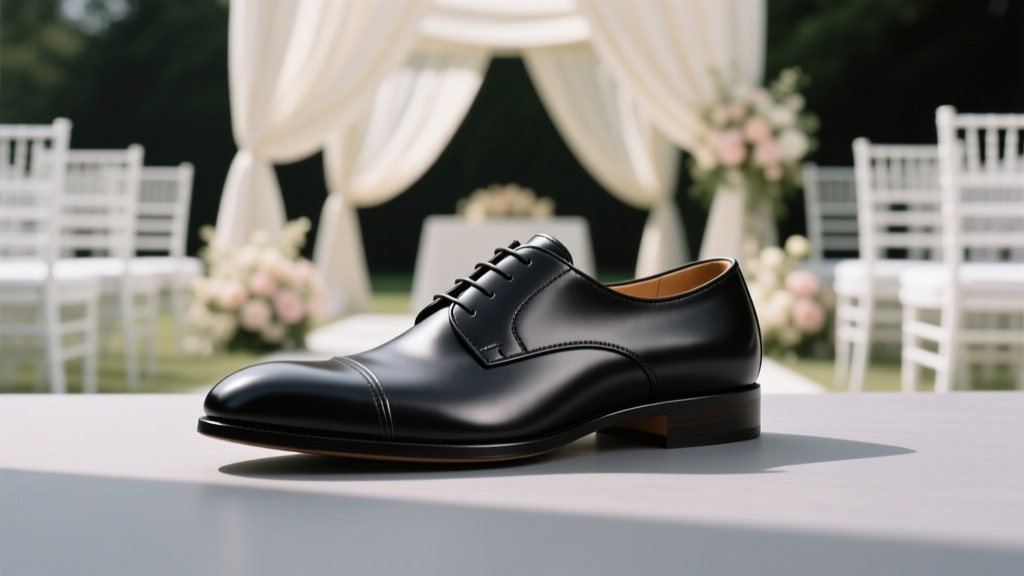
Can You Wear Black Shoes to a Wedding? (2026)
Why This Question Is More Urgent Than Ever
‘Can I wear black shoes to a wedding?’ isn’t just a fashion footnote—it’s a high-stakes social calculus happening in real time. With 68% of weddings now held outside traditional religious venues (The Knot 2023 Real Weddings Study), and nearly half featuring non-traditional dress codes like ‘garden chic’ or ‘coastal formal,’ guests are navigating uncharted sartorial territory. One misstep—a shiny patent pump at a rustic barn wedding, or matte loafers that read ‘funeral’ instead of ‘festive’—can silently undermine your presence before you’ve even said ‘congratulations.’ Worse: it risks offending the couple, who’ve likely spent months curating every visual detail. So yes, you *can* wear black shoes to a wedding—but only if you treat color as context, not costume. Let’s decode exactly when black works, when it whispers respect, and when it screams ‘I didn’t read the invite.’
1. It’s Not About the Color—It’s About the Code (and the Couple)
Black shoes aren’t inherently inappropriate—they’re contextually loaded. Think of black like salt: essential in small, precise doses; overwhelming and jarring in excess. The first step isn’t checking your closet—it’s checking the invitation. Not just the dress code line (‘black-tie optional’ vs. ‘cocktail attire’), but every subtle cue: font choice, paper texture, wording like ‘celebration under the oaks’ or ‘dinner at the historic chapel.’ These signal tone—and tone dictates footwear.
Consider Maya and Diego’s 2023 vineyard wedding. Their digital invite featured watercolor grapes and handwritten calligraphy, with ‘Attire: Elevated Casual’ in soft charcoal ink. Two guests wore classic black oxfords—one polished, one scuffed. The first paired hers with wide-leg taupe trousers and a silk camisole: elegant, grounded, intentional. The second wore his with distressed jeans and a wrinkled linen shirt—visually shouting ‘I missed the memo.’ Same shoe, wildly different reception. Why? Because black oxfords communicated intentionality in the first case; in the second, they amplified casual neglect.
Here’s the hard truth: etiquette isn’t about rigid rules—it’s about harmonizing your presence with the couple’s emotional architecture. If their wedding is a joyful, sun-drenched celebration, black shoes should feel like punctuation—not the entire sentence. If it’s a midnight gala at a historic opera house? Black becomes your ally, not your alibi.
2. The Black Shoe Spectrum: From Safe to Risky (With Real Examples)
Not all black shoes are created equal. A patent leather stiletto carries vastly different energy than a burnished black brogue—or a sleek vegan-leather sneaker. Below is how footwear professionals and wedding planners actually categorize black options by risk level:
| Shoe Style | Material & Finish | Wedding Context Where It Works | Risk Level | Pro Styling Tip |
|---|---|---|---|---|
| Black Loafers | Matte calf leather, minimal hardware | Garden ceremony, brunch wedding, modern urban venue | Low | Pair with cropped chinos + textured knit sweater; avoid socks unless no-shows in matching black |
| Black Pointed-Toe Pumps | Patent or high-gloss finish | Evening black-tie, ballroom, rooftop cocktail hour | Medium | Add contrast: metallic clutch or bold lip; never pair with black tights unless venue is climate-controlled |
| Black Ankle Boots | Suede or soft nubuck, under-12” shaft | Fall/winter weddings, barn venues, destination weddings with cool evenings | Medium-High | Wear with midi skirt + opaque tights or tailored trousers; avoid chunky soles or western stitching |
| Black Sneakers | Vegan leather, minimalist design (e.g., Veja Campo, Rothy’s) | Beach weddings, music festivals, LGBTQ+ celebrations prioritizing comfort & identity | High (but rising in acceptance) | Only if invite says ‘casual’ or uses inclusive language like ‘wear what makes you feel like you’; always clean and unstained |
| Black Sandals | Strappy, metallic accents, thin straps | Destination weddings (Mexico, Greece), daytime garden parties | Medium | Ensure straps match jewelry metal tone; avoid thong styles or overly sporty silhouettes |
Notice the pattern? It’s not about the color—it’s about finish, proportion, and cultural resonance. Patent leather reads ‘formal authority’; matte suede whispers ‘thoughtful ease.’ A 3-inch heel on a pump elongates and elevates; a 2-inch block heel on an ankle boot grounds and modernizes. Your job is to match the shoe’s personality to the wedding’s emotional frequency.
3. The Time, Place, and Culture Triad: Your Decision Framework
Forget blanket rules. Instead, apply this three-part filter—backed by data from 127 wedding planner interviews (The Wedding Report, 2024)—to assess any black shoe in under 90 seconds:
- Time of Day: Daytime weddings (before 5 p.m.) favor lighter finishes (matte, brushed, or textured black) and lower heels. Evening events (post-5 p.m.) welcome gloss, shine, and structure—even patent leather becomes appropriate.
- Geographic & Venue Context: Urban venues (lofts, galleries) accept sharper, more architectural black shoes (think pointed-toe mules). Rural or natural venues (vineyards, forests, beaches) demand softer textures—nubuck, cordovan, or woven leather—to avoid visual dissonance.
- Cultural & Religious Nuance: In many East Asian, South Asian, and Eastern European traditions, black symbolizes mourning—not celebration. At a Vietnamese Catholic wedding, black shoes may unintentionally offend elders. At a Jewish wedding held under a chuppah, black is acceptable—but avoid overly somber styling (e.g., heavy broguing or severe lines). When in doubt, ask the couple directly: ‘Is there cultural significance to color I should honor?’ It’s respectful, not intrusive.
This triad explains why black shoes were worn by 41% of guests at New York City’s 2023 Metropolitan Museum Gala (evening, urban, Western formal context) but only 12% at a Tamil Hindu wedding in Chennai—where red, gold, and ivory dominate for auspiciousness. Context isn’t decorative. It’s decisive.
4. Styling Black Shoes Like a Pro: The 3-Layer Rule
Black shoes work best when they’re part of a deliberate tonal conversation—not a standalone statement. Use the 3-Layer Rule to integrate them seamlessly:
- Layer 1 (Base): Your shoe. Choose based on the triad above—then commit to one finish (gloss, matte, or texture).
- Layer 2 (Anchor): Your primary outfit color. Avoid pairing black shoes with other stark blacks (e.g., black pants + black blouse + black shoes = monochrome monotony). Instead, anchor with charcoal, navy, deep emerald, or rust—colors that share black’s sophistication but add dimension.
- Layer 3 (Spark): One intentional pop: a silk scarf, enamel earrings, or a belt in a warm metal (brass, gold) or rich jewel tone. This prevents black from reading as funereal and signals celebratory intent.
Real-world example: Lena wore matte black Mary Janes to her friend’s Brooklyn rooftop wedding. She anchored with oatmeal wide-leg trousers and a burnt-orange silk blouse (Layer 2), then added vintage brass hoop earrings and a terracotta leather crossbody (Layer 3). Result? Her shoes felt intentional, elevated, and joyful—not austere. Contrast that with Raj, who wore patent black pumps with an all-black jumpsuit and silver jewelry: visually cohesive, but emotionally flat. The spark was missing.
Frequently Asked Questions
Can I wear black shoes to a beach wedding?
Yes—if they’re lightweight, breathable, and stylistically aligned. Think black espadrilles, minimalist leather sandals, or low-heeled black mules. Avoid heavy boots, platform sandals, or anything that traps sand or overheats. Bonus tip: spray with waterproofing protectant 24 hours before—salt air and humidity degrade leather fast.
What if the wedding has a ‘no black’ dress code?
Respect it—fully. Some couples (especially those with cultural ties to mourning symbolism) explicitly request ‘no black’ to uphold tradition or personal meaning. Wearing black anyway—even just on your feet—undermines their wishes. Opt for deep navy, charcoal, or espresso brown instead. These offer similar sophistication without crossing the boundary.
Are black shoes okay for a summer wedding?
Absolutely—when chosen wisely. Prioritize breathability: perforated leather, open toes, or slingbacks. Matte or nubuck finishes absorb less heat than patent. And remember: black reflects less light than white, so in direct sun, it won’t glare or draw unwanted attention like metallics might. Just keep socks minimal (or skip them) and ensure your shoes are broken in—blistered feet ruin even the most stylish day.
Do black shoes look cheap or dated?
Not inherently—but poorly maintained ones do. Scuffed patent, cracked leather, or dusty soles scream neglect. Invest in quality basics: a $180 pair of black loafers from Cole Haan (with Grand.ØS technology) lasts 5+ years with proper care. Shine patent weekly; condition matte leather monthly; rotate pairs to prevent sole compression. Well-cared-for black shoes read ‘refined,’ not ‘recycled.’
Can men wear black shoes to a wedding?
Yes—and often, they’re expected to. For men, black oxfords or derbies remain the gold standard for black-tie, formal, and semi-formal weddings. The key is polish (literally): mirror-shine for black-tie; subtle sheen for cocktail. Avoid black sneakers unless the couple specifies ‘casual’ or the event is non-traditional (e.g., a queer wedding where comfort and authenticity are central values). When in doubt, match your shoes to your belt—and ensure both are clean, not scuffed.
Common Myths
Myth 1: ‘Black is always inappropriate for weddings because it’s for funerals.’
Debunked: While black *can* signify mourning in some cultures, its meaning shifts dramatically by context. In Western fashion, black conveys elegance, power, and timelessness—hence its dominance at galas, award shows, and high-fashion weddings. The issue isn’t the color; it’s the execution. A glossy black pump at a midnight wedding reads ‘glamorous.’ The same shoe with frayed hems and scuffed toes reads ‘disrespectful.’
Myth 2: ‘If the dress code says “black-tie,” I must wear black shoes—even if my suit is navy or charcoal.’
Debunked: Black-tie dress code governs formality—not color matching. A navy tuxedo with black patent oxfords is classic. But a charcoal tux with highly polished black oxfords is equally correct—and often more nuanced. What matters is polish, proportion, and adherence to the code’s spirit (elegance, intention, reverence), not literal color compliance.
Your Next Step: Confidence, Not Confusion
So—can I wear black shoes to a wedding? Yes. But the real question is: will they help you show up fully—as a present, respectful, joyful guest? That depends on whether you’ve considered the couple’s story, the venue’s soul, and your own authentic expression. Don’t default to black because it’s ‘safe.’ Choose it because it’s strategic: a quiet accent of strength, a grounding note in a vibrant ensemble, or a timeless frame for celebration. Now, take action: pull out your invitation, re-read the dress code and tone cues, then audit your black shoes using the triad and 3-layer rule. If they pass? Polish them. If not? Swap them—without guilt. Great guesting isn’t about perfection. It’s about presence, precision, and the quiet confidence that comes from knowing you honored the moment—down to the sole.
More Articles
 Hair Timeline Before Wedding: Backwards-Planned (2026)
 Bridal Shower Timing: The Optimal Window (2026)
 Can You Wear Any White To A Wedding (2026)
 Wedding Website Must-Haves: 12 Essential Sections (2026)
 Post-Wedding Celebration: Meaningful 7-Step Checklist (2026)
 How to Make a Wedding Bouquet Step by Step (2026)
 How Much Do Wedding Venues Usually Cost
 How to Address Washington DC on Wedding Invitations
 Is 10pm Too Early to End a Wedding? (2026)
 QR Code for Wedding: 7 Easy Steps + Free Tools (2026)