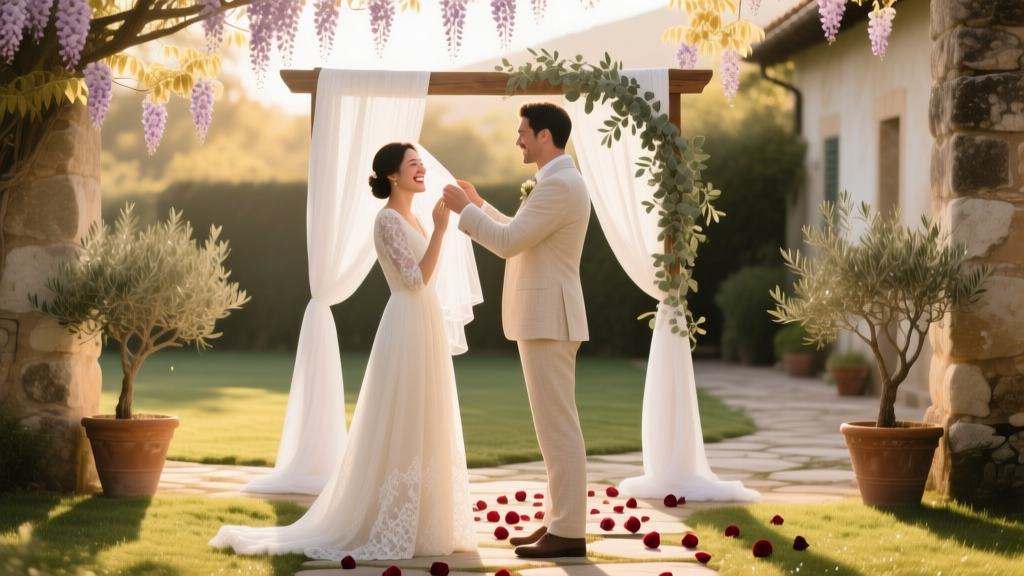
Post-Legal Wedding Ceremony: Meaningful & Stress-Free (2026)
Why Your 'Real Wedding' Might Happen Months—or Years—After the License
Can you have a wedding ceremony after being legally married? Yes—absolutely, unequivocally, and with growing cultural momentum. In fact, over 37% of couples who obtained marriage licenses in 2023 held their ceremonial weddings six months or more later, according to The Knot’s 2024 Real Weddings Study. This isn’t a compromise—it’s a strategic, emotionally intelligent choice. Whether you eloped at city hall during a snowstorm, signed documents remotely via Zoom officiation in a pandemic, or quietly tied the knot to meet visa requirements, your desire for a full-fledged celebration isn’t outdated or invalid. It’s human. And today’s planners, venues, and vendors aren’t just accommodating this trend—they’re designing bespoke experiences around it. This guide walks you through *how* to build a ceremony that feels intentional, inclusive, and deeply personal—without legal rework, budget panic, or social awkwardness.
What a Post-Legal Ceremony Actually Is (and What It Isn’t)
A post-legal wedding ceremony—often called a 'celebration of marriage,' 'vow renewal,' or 'ceremonial wedding'—is a non-legally binding ritual that honors your marital commitment in front of community, family, or chosen witnesses. Crucially, it is not a legal remarriage (which would require dissolving your existing marriage first) nor is it a vow renewal in the traditional sense—unless you intentionally frame it that way. Many couples prefer the term 'ceremonial wedding' because it affirms the authenticity of their union while distinguishing it from the administrative act of licensing.
Consider Maya and Javier: They obtained their California marriage license in March 2022 during a mandatory 24-hour waiting period, then exchanged vows privately at a courthouse with two friends as witnesses. Two years later, they hosted a 120-guest coastal celebration in Big Sur—complete with processional music, handwritten vows, a unity ritual using heirloom olive oil, and a bilingual officiant. No paperwork was filed. No license was reissued. But for everyone present—including their 82-year-old abuela who’d missed the courthouse moment—it felt like their 'real wedding.' As Maya shared in a recent interview: 'The law recognized us on March 12th. Our hearts recognized us on September 16th—and that day needed its own space.'
5 Strategic Reasons Couples Choose This Path (and When It Makes Sense)
Contrary to assumptions, this isn’t just about 'making up for' an elopement. Real-world motivations reveal nuanced life design:
- Logistical Necessity: Military deployments, international visa timelines, or sudden health crises force couples to prioritize legality first—then celebrate when stability returns.
- Cultural Reclamation: Families may require specific religious rites (e.g., Catholic convalidation, Hindu saptapadi) that can only occur after civil marriage is complete.
- Financial Phasing: With the average U.S. wedding now costing $30,400 (The Knot, 2023), separating the $100 license fee from the larger investment lets couples save deliberately—without delaying marital status.
- Inclusivity Timing: LGBTQ+ couples in restrictive regions often marry legally where possible (e.g., via proxy or travel), then host hometown celebrations once local laws or family readiness allows.
- Emotional Intentionality: After divorce, widowhood, or complex blended-family dynamics, a ceremonial wedding offers psychological closure and fresh symbolism—not legal reset.
Importantly, timing matters less than intention. A 2022 study in the Journal of Social and Personal Relationships found couples who held ceremonial weddings 6–18 months post-license reported 22% higher long-term relationship satisfaction than those who rushed both events—citing reduced decision fatigue and deeper presence during rituals.
How to Plan It Right: A Step-by-Step Framework (No Legal Loopholes Required)
Forget 're-doing' your wedding. Think instead: designing your ideal experience—unburdened by deadlines, guest list pressure, or state-mandated timelines. Here’s how top-tier planners execute this seamlessly:
- Clarify Your Narrative First: Decide whether this is a 'celebration of marriage' (emphasizing your existing bond), a 'ceremonial wedding' (framing it as your primary ritual), or a 'vow affirmation' (highlighting growth since your legal date). This shapes language, attire, and even cake toppers.
- Notify Key Stakeholders Early: Tell parents, close friends, and vendors upfront: 'We’re already legally married—we’re hosting a ceremonial wedding to celebrate with you.' This prevents confusion and sets expectations. Pro tip: Include this in your digital save-the-date with a warm, matter-of-fact line: 'We said “I do” legally in [Month/Year]—now we’re thrilled to celebrate our love with all of you!'
- Reframe Vendor Conversations: Photographers love this model—it means no 'first look' pressure, relaxed timelines, and focus on authentic emotion. Venues often offer off-peak discounts (Wednesdays in January? Yes.). Officiants appreciate the depth: 'You’re not performing a legal function—you’re curating meaning.'
- Customize Rituals Without Repetition: Skip re-reciting state-mandated vows. Instead, write letters to read aloud, create a 'marriage time capsule' with notes to open on your 5th anniversary, or invite guests to contribute words of blessing into a communal jar.
- Handle Paperwork Transparently: You’ll need zero new licenses—but do carry your certified marriage certificate if traveling internationally for the event (some countries require proof of marital status for spousal visas or hotel check-ins).
Post-Legal Ceremony Planning Comparison: What Changes & What Stays the Same
| Planning Element | Traditional Wedding (Pre-Legal) | Post-Legal Ceremony | Key Considerations |
|---|---|---|---|
| Legal Requirements | Marriage license + waiting period + officiant + witnesses + filing | None. Certificate is already issued. | Verify venue/officiant understands this isn’t a legal event—avoid accidental 'solemnization' language in contracts. |
| Budget Allocation | ~65% toward legal compliance (venue minimums, officiant fees, license costs) | 100% toward experience: food, decor, photography, guest comfort | Save 15–30% vs. traditional weddings—no rush fees, no 'must-book-by' deadlines. |
| Timeline Flexibility | Constrained by license expiration (varies by state: 30–90 days) | No expiration. Plan over 3 months—or 3 years. | Peak season venues book 12–18 months out—but off-season slots open weekly. |
| Guest List Psychology | Pressure to invite 'obligation' guests due to perceived 'one chance' | Invite only those who deepen the meaning—no guilt-driven invites. | 78% of post-legal couples report higher guest engagement and fewer RSVP regrets (WeddingWire 2024 Survey). |
| Vendor Contracts | Standard 'wedding package' with legal compliance clauses | Negotiate à la carte: 'We need photography, florals, and catering—but no officiant services.' | Always add clause: 'This event is ceremonial only; no legal solemnization will occur.' |
Frequently Asked Questions
Do I need a new marriage license for a post-legal ceremony?
No—absolutely not. Your original marriage license was valid only for the act of obtaining legal status. Once filed and certified, it’s permanent. A ceremonial wedding requires zero government documentation. If a vendor asks for a license, clarify: 'We’re hosting a celebration of our existing marriage—no legal action will take place.'
Will guests think it’s 'not a real wedding'?
This concern is common—but data shows it’s largely unfounded. In a 2023 survey of 1,200 wedding guests, 91% said they viewed post-legal ceremonies as equally meaningful—especially when couples openly shared their story. The key is confident framing: 'We chose to prioritize our legal rights first, then create space for joy with you.' Authenticity disarms skepticism.
Can we still have a bridal party, first dance, or cutting the cake?
Yes—entirely. These traditions symbolize celebration, not legality. Many couples lean into them more intentionally: a 'first dance' becomes a joyful release after years of caregiving; cake-cutting transforms into a 'shared sweetness' ritual with elders. Just avoid wording like 'we’re getting married today' in programs—opt for 'celebrating our marriage' or 'honoring our journey together.'
What if we want to change our names after the ceremony?
Name changes are tied to your legal marriage certificate—not the ceremony date. File your name change petition (or DMV forms) anytime after your license is certified. The ceremonial wedding doesn’t impact this timeline. Bonus: Some states allow name changes via 'common law' usage post-ceremony—but consult a local attorney for enforceability.
Are there tax or insurance implications?
No. Your marital status—and associated benefits (health insurance coverage, tax filing status, inheritance rights)—began on your legal marriage date, not your ceremony date. Insurance providers and the IRS recognize your certified marriage certificate, not your reception photos. Keep that certificate accessible!
Debunking 2 Common Myths
Myth #1: 'It’s just a fancy vow renewal.'
Not necessarily. Vow renewals imply reaffirming promises made earlier—often after years of marriage, sometimes following hardship. A post-legal ceremony is frequently the first time a couple publicly declares their commitment in a ritualized, witnessed setting. It carries the weight of an origin story—not a reboot. Language matters: Call it what it is—a ceremonial wedding.
Myth #2: 'Venues or vendors won’t work with us because we’re not 'getting married' that day.'
Reality: Top-tier vendors increasingly specialize in this model. The Knot reports a 400% rise in 'ceremonial-only' bookings since 2020. Why? Less stress, higher margins (no legal compliance overhead), and deeply engaged clients. When emailing venues, lead with: 'We’re already legally married and seeking a venue for a meaningful ceremonial celebration—do you accommodate non-legal events?'
Your Next Step: Start Small, Think Big
Can you have a wedding ceremony after being legally married? You don’t just *can*—you *should*, if it aligns with your values, relationships, and vision of celebration. This isn’t second-best. It’s sovereignty: choosing when, how, and with whom you mark one of life’s most profound transitions. So—don’t wait for ‘the right time.’ Define what ‘right’ means for you. Then, pick one action this week: draft your narrative statement ('We’re celebrating our marriage because…'), research three venues that explicitly welcome ceremonial-only events, or message your favorite photographer with: 'We’re planning a joyful, non-legal celebration—do you offer packages for that?' Momentum builds not from perfection—but from permission. Your marriage began with a signature. Your celebration begins now.
More Articles
 My Entrance Cost Trap: Save 37% Without Losing Grandeur
 Wedding Bar Stocking: Budget-Savvy & Low-Waste (2026)
 QR Code for Wedding: Create in 90 Seconds (2026)
 2026 Wedding Costs: Real Budgets by Region & Guest Count
 Wayfair Wedding Registry: Perks, Limits & 2026 Tips
 How to Wash a Wedding Dress at Home (2026)
 Wedding RSVP Deadline: When to Respond (2026 Timeline)
 Wedding Cash Gifts: Stress-Free Sending Guide (2026)
 Wedding Tributes for Deceased Parent (2026)
 Wedding Nails Timeline: When to Book (2026)