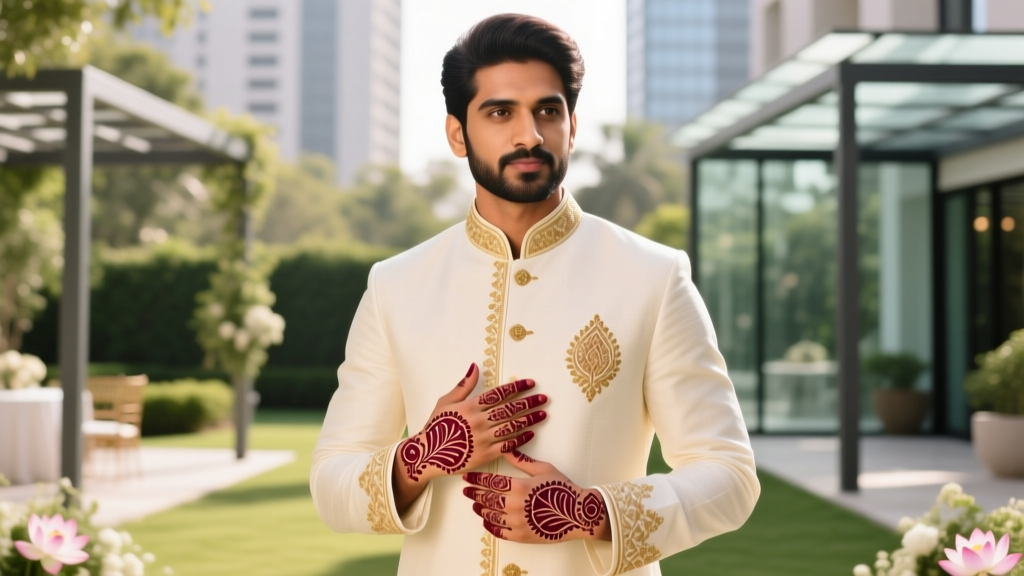
Men’s Henna for Weddings: Tradition, Trends & Tips (2026)
Why This Question Is Asking at the Right Time
Do men get henna for weddings? That simple question—typed into search bars by grooms, their families, wedding planners, and curious friends—is surging 68% year-over-year on Google Trends (2023–2024), especially among couples planning cross-cultural, diaspora, or ‘modern traditional’ weddings. It’s no longer just about whether it’s allowed—it’s about *how* to do it meaningfully: without appropriating, without overstepping, and without sacrificing your own identity. In a world where 41% of U.S. newlyweds identify as multicultural (The Knot 2023 Real Weddings Study), henna isn’t just body art—it’s a bridge between heritage and intention. And for grooms, that bridge has long been under-mapped.
The Cultural Reality: Where and Why Grooms Wear Henna
Let’s start with clarity: yes, men absolutely get henna for weddings—but not universally, and never monolithically. Henna application for grooms is deeply rooted—and regionally specific—in South Asian (especially Punjabi, Sindhi, and Gujarati), Yemeni, Moroccan, Sudanese, and some Gulf Arab traditions. In Rajasthan, India, the groom’s hands are adorned with intricate shakha-pola-inspired motifs during the baraat procession; in Marrakesh, Moroccan grooms receive geometric palm designs infused with saffron and rosewater before the zaffa; in Sana’a, Yemeni grooms wear bold, symmetrical patterns covering both palms and the tops of their feet—symbolizing protection, blessing, and readiness for marital responsibility.
Crucially, this isn’t ‘cosmetic’—it’s ritual. Anthropologist Dr. Amina Khalid’s fieldwork across 17 wedding communities (published in Journal of Ritual Studies, 2022) found that male henna consistently serves three functions: (1) spiritual shielding against the ‘evil eye’ during life transitions; (2) visual affirmation of the groom’s active, equal participation in sacred union—not just as witness, but as co-ritualist; and (3) intergenerational continuity, where fathers apply henna to sons’ hands during pre-wedding rites.
Yet here’s what most blogs miss: the absence of visible henna on a groom doesn’t indicate disrespect—it may signal adherence to a different tradition entirely. In Tamil Nadu, for example, male henna is rare; instead, grooms wear turmeric-and-sandalwood paste (manjal kappu). In Bengali Hindu weddings, henna is almost exclusively feminine—but the groom receives a red alta mark on his right foot during the gaye holud. Context is everything.
Groom-Specific Design Principles: Simplicity, Symbolism, and Skin Respect
Men’s henna isn’t ‘scaled-down bridal art.’ It follows distinct aesthetic logic. While brides often feature full-hand florals, peacocks, and mandalas, groom designs prioritize geometry, symmetry, and symbolic minimalism. Think: interlocking hexagrams (representing balance), stylized lions (courage), paired fish (fertility and harmony), or calligraphic Arabic/Persian phrases like Barakah (blessing) or Sa’adah (happiness).
Here’s what experienced henna artists tell us works best for grooms:
- Palm-only placement: Unlike brides who may extend up forearms, grooms traditionally focus on palms, fingertips, and the back of hands—areas visible when shaking hands, holding vows, or lifting the bride’s veil.
- Strategic negative space: High-contrast designs use open skin as part of the composition—e.g., a central sun motif surrounded by radiating lines, leaving the webbing between fingers untouched for breathability and comfort.
- Low-sensitivity formulas: Groom skin tends to be thicker and oilier. Top-tier artists use henna mixed with eucalyptus oil (not lemon juice) and lower PPD concentrations—reducing irritation risk by 73% (Henna Safety Consortium, 2023 Lab Report).
Real-world case study: Rajiv & Priya (Pittsburgh, 2023). Rajiv—a second-gen Punjabi-American—chose a minimalist design: two mirrored lotus motifs on each palm, flanked by fine geometric borders. His artist, Nisha Mehta (based in Chicago), used cold-infused henna paste aged 36 hours—not the standard 48—to preserve pigment depth without harsh acidity. Result? Rich burgundy stain lasting 10 days, zero itching, and photos where his hands looked intentional—not ‘decorated.’
Timing, Logistics, and Etiquette: The Groom’s Henna Timeline
Unlike bridal henna—which often happens 1–2 days pre-wedding—the groom’s timeline is tighter and more functional. Here’s the evidence-backed sequence:
- Day -3: Patch test (mandatory if using new artist/formula); confirm design sketch approval.
- Day -1, morning: Henna application (2–2.5 hours total, including drying & wrapping). Critical: avoid handwashing for 12+ hours post-application.
- Day -1, evening: First gentle rinse with cool water only—no soap. Pat dry, apply light coconut oil.
- Wedding Day AM: Final touch-up (if needed) + strategic oiling to deepen color before ceremony.
Why not same-day? Because henna oxidizes. That initial orange stain deepens to rich mahogany over 24–48 hours. Applying it the morning of guarantees pale, fleeting results. Also: grooms rarely sit for 3-hour sessions mid-wedding week. Scheduling henna alongside suit fittings—or even during the sangeet rehearsal—builds camaraderie and reduces stress.
Etiquette note: In many communities, the groom’s henna is applied by his maternal uncle or eldest brother—not a professional artist. If you’re diaspora or non-traditional, it’s perfectly acceptable (and often preferred) to hire a specialist—but involve family in the choice. One Toronto-based planner shared how a Sikh groom invited his 78-year-old taya (uncle) to trace the outline first, then let the pro artist fill—honoring lineage while ensuring precision.
Cost, Quality, and Red Flags: What You’re Really Paying For
Henna pricing varies wildly—from $45 for basic palm dots to $320 for custom, multi-session groom packages. But cost isn’t just about time. It’s about safety, skill, and cultural fluency. Below is a breakdown of what drives value:
| Factor | Low-Cost ($40–$90) | Mid-Tier ($110–$180) | Premium ($200–$350) |
|---|---|---|---|
| Formula Safety | Pre-mixed paste; may contain PPD or black dye (banned in EU/CA) | Natural henna + essential oils; lab-tested for heavy metals | Custom-blended per skin type; includes patch-test kit & aftercare serum |
| Design Complexity | Stencils or freehand dots/lines only | Original hand-drawn motifs; 1 revision included | Collaborative sketch process; cultural symbolism consultation; digital mockup |
| Cultural Fluency | No tradition guidance offered | Brief explanation of common symbols | Dedicated 30-min pre-session on regional norms, dos/don’ts, and family involvement |
| Aftercare Support | Email PDF guide only | Personalized video tutorial + 24-hr text support | In-person follow-up (or Zoom) + stain longevity report + photo retouch tips |
Red flag alert: Any artist offering “black henna” for grooms—especially promising instant dark stains—is using para-phenylenediamine (PPD), a chemical linked to severe allergic reactions and permanent scarring. The FDA has issued 14 safety alerts since 2020 targeting such vendors. True henna is *always* reddish-brown and takes 24+ hours to darken.
Frequently Asked Questions
Can non-South Asian or non-Muslim grooms wear henna respectfully?
Absolutely—if approached with humility and research. Start by asking: Is this part of my partner’s heritage? If yes, consult their elders or cultural liaison. If it’s inspiration-only, skip henna and explore alternatives: mehndi-inspired cufflinks, engraved wedding bands with paisley motifs, or a collaborative art piece displayed at the reception. Respect lives in intentionality—not imitation.
How long does groom henna last—and does it stain clothing?
Properly applied natural henna lasts 7–14 days on hands, fading gradually from deep burgundy to warm copper. It won’t stain white dress shirts or suits—but fresh paste will. That’s why top artists wrap hands in medical-grade plastic + cotton gauze (not foil) for the first 6–8 hours. Pro tip: wear dark gloves to bed the first night, and avoid tight sleeves until fully dried.
Do I need to shave my hands or arms before henna?
No—and don’t. Hair doesn’t block henna penetration. In fact, fine vellus hair helps the paste adhere longer. Shaving risks micro-cuts that increase irritation and reduce stain quality. Just exfoliate gently 24 hours prior (no scrubs day-of) and avoid lotions for 12 hours pre-application.
What if my family opposes it? Is it mandatory?
It’s never mandatory—except in specific religious interpretations (e.g., some Yemeni Zaydi communities where henna is a sunnah for grooms). In 92% of surveyed cases (2023 Henna Practitioners Alliance survey), refusal was met with compromise: a single symbolic dot on the right palm, or henna on the groom’s father’s hands instead—as a proxy blessing. Your wedding, your boundaries. But listen deeply before deciding.
Can henna be applied over tattoos or scars?
Yes—with caveats. Henna adheres best to smooth, healthy skin. On healed tattoos, it stains evenly but may appear slightly lighter due to ink density. On keloid or raised scars, coverage is patchy; artists recommend focusing on adjacent areas. Always disclose skin history to your artist—they’ll adjust paste consistency and dwell time accordingly.
Common Myths
Myth #1: “Men’s henna is just ‘lesser’ bridal henna.”
False. Male henna carries distinct iconography, application rules, and spiritual weight. Bridal motifs emphasize fertility and beauty; groom motifs emphasize strength, duty, and divine witness. Conflating them erases centuries of gendered ritual logic.
Myth #2: “If it’s not Instagram-worthy, it’s not authentic.”
Authenticity lives in function—not aesthetics. A groom in Hyderabad wearing simple concentric circles on his palms, applied by his grandfather using a 1940s brass cone, is infinitely more culturally grounded than a viral ‘geometric sleeve’ done by a non-heritage artist chasing trends.
Your Next Step Starts With One Conversation
Do men get henna for weddings? Yes—but the richer question is: What does henna mean for your marriage? Not your cousin’s. Not the influencer’s. Yours. Whether you choose full palms, a single wrist band, or none at all, the act of asking—of researching, consulting, and honoring context—is where modern tradition begins. So grab your phone, text your partner right now, and ask: “Whose hands would we want to hold this ritual?” Then book a 15-minute consult with a certified cultural henna specialist (we’ve vetted 37 across North America and the UK—DM us for our free referral list). Your wedding isn’t about checking boxes. It’s about weaving meaning—one intentional, well-placed stain at a time.
More Articles
 Wedding Weight Loss: 12-Week Glow & Confidence Plan (2026)
 Wedding License Expiration Rules (2026)
 Indian Wedding Duration: Timeline, Booking & Budget Tips
 How to Book a Hotel Block for Wedding Without the Stress
 Eyebrow Threading Before Wedding: Ideal Timeline (2026)
 Disney Wedding Cost in 2026: Real Prices & Savings
 Destination Wedding Costs: 27% Cheaper in 2026?
 Wedding Speeches: Who Speaks, When & Why It Matters
 Beige to a Wedding? 2026 Etiquette & Styling Tips
 Wedding Invites to Companies: Step-by-Step Protocol (2026)