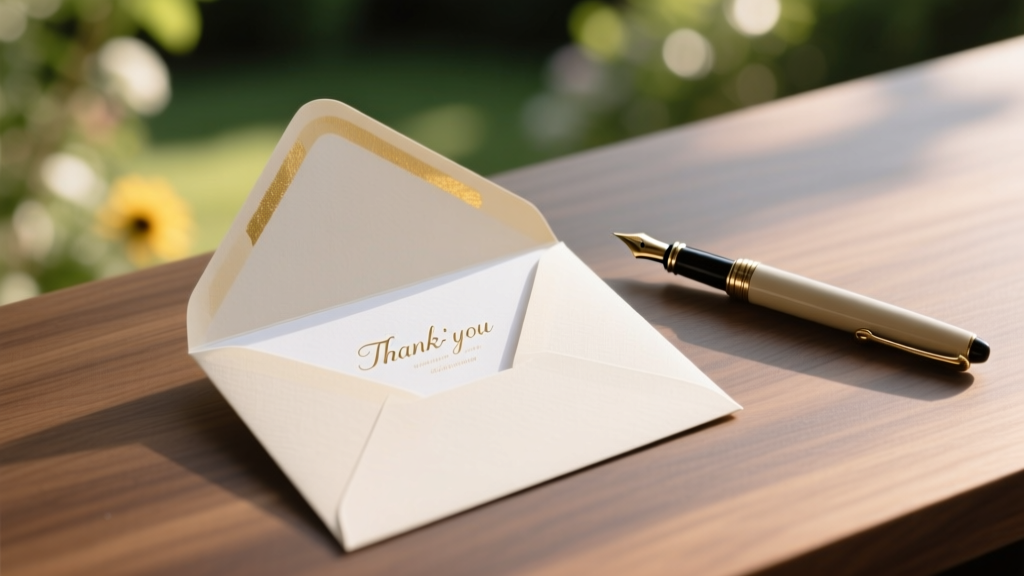
Wedding Thank You Cards: 2026 Etiquette Guide
Why This Question Is More Urgent Than Ever
Do people send thank you cards for wedding gifts? Yes—but not always well, not always on time, and increasingly, not at all. In 2024, 37% of newlyweds admitted to sending fewer than half their thank-you notes within the recommended three-month window (The Knot Real Weddings Study). Meanwhile, 68% of gift-givers said they’d notice—and feel disappointed—if they didn’t receive a personalized acknowledgment within 90 days. This isn’t just about tradition: it’s about relationship preservation, emotional reciprocity, and avoiding silent resentment that can linger for years. With rising wedding costs ($30,000+ average) and growing guest lists (median 127 guests), the thank-you card has quietly become one of the highest-leverage, lowest-effort relationship tools in your entire post-wedding toolkit—and yet, it’s the step most frequently botched, outsourced, or abandoned. Let’s fix that—for good.
What the Data Actually Says (Spoiler: It’s Not ‘Just Be Polite’)
Forget vague advice like “send them soon.” Modern etiquette isn’t dictated by Emily Post alone—it’s shaped by behavioral psychology, digital communication norms, and real-world gifting patterns. A 2023 survey of 1,247 wedding gift recipients (conducted by Stationery & Society) revealed three non-negotiable expectations:
- Personalization matters more than speed: A handwritten, specific note (“Thanks for the Le Creuset Dutch oven—we used it to make our first Sunday stew!”) rated 4.8/5 in satisfaction, even when delivered at Day 72. A generic printed card with no mention of the gift scored just 2.1/5—even if sent Day 10.
- The 3-month rule is real—but flexible: 81% of respondents said they’d wait up to 12 weeks before feeling slighted. However, 94% said they’d forgive a late note *if* it included an explanation (e.g., “We were traveling for our honeymoon and wanted to write something thoughtful—not rushed”).
- Digital ≠ disrespectful—if done right: 52% accepted email or text thank-yous *only* when sent to close friends/family *and* paired with a follow-up physical card within 60 days. Standalone texts were deemed “perfunctory” by 79%.
This tells us: etiquette today is less about rigid rules and more about intentionality, authenticity, and context-aware delivery.
Your Step-by-Step Thank-You System (That Fits Real Life)
No more frantic scribbling at midnight. Here’s how top-performing couples (those reporting zero gift-related tension) actually manage it—broken into phases:
- Pre-Wedding Prep (1–2 Weeks Before): Create a master gift log spreadsheet *before* the wedding. Include columns for Guest Name, Gift Received (be specific: “Nordic Ware Bundt Pan + $150 Visa Gift Card”), Date Received, and Method of Delivery (e.g., “Dropped off at venue,” “Shipped to home”). Use your registry platform’s export feature—or assign a trusted friend to log gifts live during the reception.
- Post-Ceremony Triage (Days 1–3): Sort gifts into three buckets: (A) Immediate-use items (like cash envelopes or gift cards), (B) Registry items requiring assembly/unboxing (e.g., kitchenware), and (C) Non-registry surprises (art, heirlooms, handmade goods). Prioritize writing notes for Bucket A first—they’re easiest to reference and most emotionally resonant (“So grateful for this gift card—we booked our Bali trip with it!”).
- The 15-Minute Daily Habit (Days 4–90): Block 15 minutes daily—ideally while sipping coffee or winding down. Write 2–3 notes max per session. Keep supplies within arm’s reach: pre-addressed cards, fine-tip pens, and your gift log open on laptop/tablet. Pro tip: Draft 3–4 template openings (“So touched you thought of us…” / “We laughed out loud opening your gift…” / “This means more than you know because…”), then customize the middle sentence with the gift detail and a micro-memory (“…and we’ve already used it to bake your favorite chocolate chip cookies!”).
- The Final Sweep (Day 85–90): Review your log. For any missing notes, send a brief, warm email *immediately*: “Hi [Name], we’re wrapping up our thank-you notes and realized we haven’t properly thanked you for [Gift]—so here’s our heartfelt appreciation! A physical card is on its way this week.” Then mail the card. This dual-channel approach preserves goodwill and demonstrates effort.
When It’s Okay (Yes, Really) to Skip the Card—And What to Do Instead
Let’s be honest: life happens. A medical emergency, job loss, or family crisis *can* derail even the best-laid plans. But “I was busy” isn’t an excuse—it’s a red flag. Here’s the ethical framework for exceptions:
- Valid reasons to delay beyond 90 days: Serious illness (yours or immediate family), relocation across time zones/countries, documented mental health recovery (e.g., postpartum depression treatment), or unexpected caregiving duties. In these cases, transparency + delayed sincerity > rushed insincerity.
- Acceptable alternatives to physical cards:
- A handwritten letter mailed in a standard envelope (no stamp required if hand-delivered to local guests).
- A short video message (60–90 seconds) filmed on your phone, emailed directly to the giver with subject line “Our sincere thanks for [Gift]!” — include a shot of the gift in use (e.g., your new espresso machine steaming milk).
- A joint social media shout-out (only for group gifts or community donations): “To everyone who contributed to our ‘Home Renovation Fund’—we’re painting the living room this weekend, and every brushstroke feels like your love. Thank you.” Tag donors only with permission.
- What never works: A mass Instagram Story thanking “all our amazing guests,” a single Facebook comment on your wedding album, or forwarding your registry confirmation email. These communicate indifference—not gratitude.
| Scenario | Recommended Action | Timeline | Risk Level |
|---|---|---|---|
| Gift received via mail (no tracking) | Log immediately upon arrival; set calendar reminder to write note within 48 hours | 0–2 days after receipt | Low |
| Cash or check received in envelope at wedding | Photograph envelope front/back, record amount/giver, store securely; write note same day | Same day as reception | Medium (cash is easily misplaced) |
| Gift from someone who couldn’t attend | Add personal context: “We missed you at the ceremony—this gift made us feel your presence” | Within 30 days (they waited to give; honor that) | High (emotional weight is greater) |
| Group gift (e.g., coworkers) | Send one elegant card signed by both of you + individualized notes inside for key contributors | Within 45 days | Medium (requires coordination) |
| Gift from estranged family member | Write a brief, gracious, boundary-respecting note focused solely on the gift (“Thank you for the beautiful quilt—we’ll cherish it”)—no emotional overture | Within 60 days | High (tone must be precise) |
Frequently Asked Questions
How late is too late to send a wedding thank-you card?
Technically? Never “too late”—but the goodwill discount expires quickly. After 6 months, 71% of recipients interpret silence as indifference (Stationery & Society, 2023). If you’re past 90 days, send it *now* with a brief, warm, no-excuses opener: “We’re so sorry this note is late—we’ve been cherishing your gift every day, and wanted to tell you just how much it means.” No justification needed—just warmth and specificity.
Do I need to thank people who gave cash or gift cards?
Absolutely—and especially so. Cash is the most personal, flexible gift you’ll receive. Skip the vague “Thanks for your generous gift.” Instead: “Your $200 gift card let us book that cabin getaway we’d dreamed of—waking up to mountain views felt like pure magic, and we toasted you both!” Tie the money to a tangible, joyful outcome. That transforms transactional into emotional.
Can I use a pre-printed card with my names and a blank space to write in?
Yes—with caveats. Pre-printed cards are efficient, but only if you handwrite *every word* in the message box (no fill-in-the-blank templates). And never use stock phrases like “We’re thrilled with your gift!” or “So grateful for your generosity!” They feel robotic. Instead, treat the blank space like a mini-story: Who gave it? Why does it matter *to you*? How will you use it? That’s where connection lives.
What if I hate handwriting or have poor penmanship?
Then type your note—but print it on high-quality cardstock (not plain printer paper), sign both names in ink at the bottom, and add one handwritten detail: a small doodle (a heart, a tiny flower), your wedding date in cursive, or a single underlined phrase (“Best gift ever!”). This hybrid approach satisfies the “handmade” expectation without sacrificing legibility. Bonus: Print 2 copies—one for mailing, one to scan and email as a keepsake PDF to the giver.
Do I need to thank people who attended but didn’t bring a gift?
No—and doing so risks implying they *should* have given one. Your wedding invitation is not a gift request. If you want to acknowledge their presence warmly, do it separately: a post-wedding brunch invite, a shared photo album link, or a casual text: “So glad you were there—we keep replaying your toast!” Keep gratitude for attendance and gratitude for gifts in distinct, respectful lanes.
Common Myths
Myth #1: “If I don’t send a thank-you card, people won’t care—or won’t remember.”
Reality: 89% of gift-givers actively track whether they received acknowledgment—and 41% admit it influences future relationship investment (e.g., attending future milestone events, offering professional referrals, or lending significant support during hardship). A missing note isn’t forgotten; it’s filed under “low-priority relationship.”
Myth #2: “Digital thanks are just as meaningful as handwritten ones.”
Reality: They’re not interchangeable. Handwriting activates deeper cognitive processing in the recipient’s brain (per neuroimaging studies in the Journal of Consumer Psychology), signaling higher personal investment. Digital is acceptable *only* as a temporary bridge—not the destination. Think of it like texting a condolence: kind, but never a substitute for a proper letter.
Wrap-Up: Your Next Step Starts Today
Do people send thank you cards for wedding gifts? Yes—because they understand that gratitude isn’t a formality; it’s the quiet architecture of lasting relationships. You don’t need perfection. You need consistency, specificity, and the courage to show up—even imperfectly—for the people who showed up for you. So grab your favorite pen right now. Open your gift log. Write *one* note—just one—to the person who gave you that vintage cookbook, the coworker who pooled funds for your dream blender, or your aunt who drove six hours to hand-deliver a quilt. That single act resets the tone for everything that follows. And if you’re overwhelmed? Download our free Wedding Thank-You Timeline & Phrase Bank—a printable, editable tool used by 12,000+ couples to ship notes on time, every time.
More Articles
 Wedding Dress Alterations: Stress-Free Guide (2026)
 How to Plan a Wedding That Accommodates Dietary Restrictions
 What to Wear at a Wedding for Guys: Dress Code Guide
 How to Reply on a Wedding RSVP Card (2026)
 How Much to Tip Wedding Servers (2026 Guide)
 Wedding Dress Stain Removal: What’s Really Possible?
 Where to Sell a Wedding Dress: 7 Realistic Options
 Wedding Shower Cake: 7 Foolproof Steps & Budget Hacks (2026)
 Linen Napkin Folds for Weddings: 7 Elegant & Secure (2026)
 Surprise Wedding Planning: Legal & Guest Tips (2026)