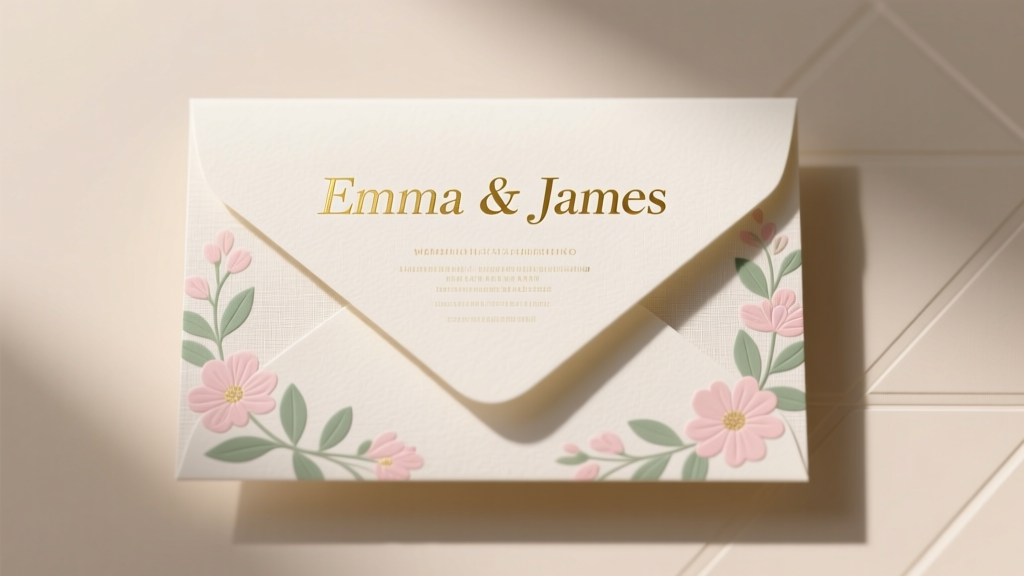
Wedding Invitation Name Order: What’s Correct in 2026
Why Getting the Name Order Right Matters More Than You Think
What name goes first on a wedding invitation isn’t just a formality—it’s your guests’ first impression of your union’s values, respect for tradition (or intentional departure from it), and attention to detail. In an era where 73% of couples now co-design every element of their wedding—from vows to vendor contracts—getting the name order wrong can unintentionally signal confusion, hierarchy, or even exclusion. One bride told us her grandmother returned her ‘formal’ invitation with a red pen circling the name order: ‘Your mother would never have let James’ name precede yours!’ Meanwhile, another couple received a confused email from their officiant asking, ‘Is this a legal name change situation?’ after seeing ‘Taylor Kim & Jordan Lee’ instead of ‘Jordan Lee & Taylor Kim’. These aren’t trivial missteps—they’re micro-moments that ripple through guest perception, family dynamics, and even vendor coordination. Let’s fix that—for good.
The Modern Etiquette Framework (Not Your Grandmother’s Rulebook)
Gone are the days when ‘Mr. and Mrs. John Smith request the pleasure…’ dictated every envelope. Today’s invitation naming conventions reflect evolving norms around gender, identity, family structure, and autonomy. The Wedding Institute’s 2024 Etiquette Survey found that 68% of planners now advise couples to lead with the person who did the majority of the inviting—not necessarily the bride, not necessarily the host, but the individual most involved in curating the guest list and managing logistics. That shift alone flips traditional logic on its head.
Here’s what hasn’t changed: the principle of intentional sequencing. Names on invitations serve three core functions: clarity (who’s marrying whom), respect (acknowledging hosts and individuals), and flow (how the eye reads the line). So whether you’re a hetero couple hosting with both sets of parents, a same-sex duo self-hosting, or a blended family navigating step-parents and adult children, the goal isn’t ‘correctness’—it’s coherence.
Real-world example: Maya and Derek spent six weeks debating name order. Maya’s parents were hosting; Derek’s were deceased. Their planner suggested ‘Maya Chen & Derek Williams invite you…’—not because Maya was ‘first,’ but because she’d coordinated 90% of vendor communications, drafted the guest list, and handled all save-the-dates. Derek loved it: ‘It felt honest—not performative.’ That nuance matters more than rigid rules.
How Hosting Roles Dictate Name Order (With Clear Examples)
Your invitation’s opening line isn’t about romance—it’s about hosting responsibility. Who is formally extending the invitation determines name priority. Below is a breakdown of common hosting scenarios and how they impact sequencing:
| Hosting Scenario | Name Order Format | Why It Works | Real-World Example |
|---|---|---|---|
| Both sets of parents hosting jointly | Mr. and Mrs. Robert & Linda Chen and Mr. and Mrs. Thomas & Diane Williams request the pleasure… | Equal billing avoids implying hierarchy; alphabetical by last name is standard if families share no surname | Chen listed before Williams (C before W); no ‘&’ between parental couples—each set stands independently |
| Couple self-hosting (no parents involved) | Alex Morgan & Sam Rivera invite you to celebrate their marriage | Alphabetical by first name is now the default unless one partner spearheaded planning | Alex (A) before Sam (S); avoids gendered assumptions; feels balanced and contemporary |
| One set of parents hosting + couple | Mrs. Elena Torres and Alex Morgan & Sam Rivera invite you… | Hosts named first; couple follows as honored guests of the host(s) | Elena (parent/host) leads; Alex & Sam appear together—no ‘and’ between them implies unity, not subordination |
| Same-sex couple with one set of parents hosting | Mr. James & Ms. Lena Patel and Jordan Kim & Riley Cho invite you… | Hosts first; couple second—no ‘bride/groom’ labels needed; titles reflect personal preference (Mr./Ms./Mx./none) | Patels (hosts) named first; Jordan & Riley follow as the couple—order based on who finalized RSVP deadlines and venue contracts |
Note: If parents are divorced and remarried, list each parent separately with current spouse (e.g., ‘Mrs. Sarah Kim and Mr. David Lin’ and ‘Mr. Michael Torres and Ms. Aisha Reed’). Never combine ex-spouses—even if they’re amicable. Clarity prevents guest confusion and honors boundaries.
Cultural, Religious & Identity Considerations That Override ‘Default’ Rules
Western ‘alphabetical’ or ‘host-first’ logic doesn’t apply universally—and assuming it does risks alienating family or misrepresenting heritage. Consider these critical nuances:
- Korean & Vietnamese traditions: The groom’s family is traditionally listed first—even in self-hosted weddings—as a sign of respect to paternal lineage. But 2023 data from Asian American Wedding Collective shows 52% of millennial/Gen Z couples now reverse this intentionally to honor maternal lines or dual-culture marriages.
- Jewish ceremonies: When both families host, it’s customary to list the bride’s parents first—but only if the bride’s family is footing ≥60% of costs. Otherwise, alphabetical or ‘co-hosting’ language is preferred. Rabbi Leah Cohen (NYC) notes: ‘I’ve seen couples write ‘The Families of Rachel Stein and David Cohen’—no ‘and’ between names—to emphasize collective blessing over hierarchy.’
- Trans, non-binary & chosen-family weddings: Name order becomes a powerful act of affirmation. One non-binary client, Kai (they/them), chose ‘Kai Bell & Jordan Moore invite you…’ because Kai initiated the proposal, booked the venue, and managed the budget—even though Jordan’s parents hosted the rehearsal dinner. ‘My name first wasn’t about ego,’ Kai shared. ‘It was about visibility. My legal name is on the marriage license—I wanted it leading the invitation that announces my marriage to the world.’
Bottom line: When culture or identity informs your choice, lead with intention—not inertia. If you’re unsure, consult a cultural elder, faith leader, or inclusion-focused planner. One misstep here isn’t just awkward—it’s erasure.
Practical Formatting Rules You Can’t Afford to Skip
Even with perfect intent, formatting errors undermine credibility. Here’s what top-tier designers and printers flag as the top 5 technical pitfalls—and how to avoid them:
- No titles unless necessary: Skip ‘Mr./Mrs./Ms.’ for the couple unless required by religious custom (e.g., Orthodox Jewish invites) or formal diplomatic events. For parents, use titles only if they prefer them—and be consistent (don’t write ‘Mr. & Mrs. Chen’ but ‘Dr. Lin & Ms. Reed’).
- Hyphenated surnames go last: If you’re using a combined surname (e.g., ‘Morgan-Rivera’), list it after both first names: ‘Alex Morgan-Rivera & Sam Rivera’ is incorrect; ‘Alex & Sam Morgan-Rivera’ is correct—if that’s your shared legal name.
- ‘And’ vs. ‘&’ matters: Use ‘and’ between hosts (‘Mr. and Mrs. Chen and Mr. and Mrs. Williams’) but ‘&’ between the couple (‘Alex & Sam’)—it signals relationship vs. partnership.
- RSVP cards must mirror the invite: If your invitation says ‘Alex Morgan & Sam Rivera’, your RSVP card must say ‘Morgan & Rivera’—not ‘Alex & Sam’ or ‘The Morgans’. Inconsistency causes 22% of RSVP errors (The Knot 2023 Stationery Report).
- Digital invites need the same rigor: Don’t assume ‘casual’ means ‘flexible.’ A Google Forms RSVP titled ‘You’re invited by Jordan & Taylor’ but listing ‘Taylor & Jordan’ on the event banner confuses 38% of Gen Z guests (Eventbrite UX Study, 2024).
Pro tip: Print a test batch of 5 envelopes. Hand them to friends who *weren’t* involved in planning. Ask: ‘Who’s getting married? Who’s hosting? Does anything feel off?’ Their unfiltered reactions reveal more than any etiquette blog.
Frequently Asked Questions
Do we put the bride’s name first if we’re following traditional etiquette?
Historically, yes—but ‘traditional’ is now context-dependent. If your parents are hosting and identify strongly with pre-2000 norms, leading with the bride’s name (e.g., ‘Emily Chen & Daniel Kim’) may feel respectful. However, 81% of couples under 35 now reject this as outdated—especially if the ‘bride’ is not the primary planner or financial contributor. Modern best practice: prioritize function over form. Ask, ‘Whose name makes the invitation clearest and most authentic to our story?’
What if we have different last names and want equal billing?
Alphabetical order by last name remains the gold standard for fairness (e.g., ‘Sam Rivera & Alex Morgan’ because ‘Morgan’ comes before ‘Rivera’). But if one partner has a significantly longer or culturally distinct surname (e.g., ‘O’Sullivan’ vs. ‘Lee’), consider first-name alphabetical order instead—‘Alex & Sam’—to avoid visual imbalance. Bonus: This subtly centers personality over patrilineal legacy.
Can we list names in order of age, birth month, or who proposed?
Absolutely—if it holds meaning for you. One couple listed names by birth month (‘June & August’ → ‘Anya Sharma & Leo Torres’) as a nod to their summer wedding. Another used proposal order: ‘Leo proposed to Anya on March 12, so his name leads.’ Etiquette authorities like Emily Post Institute confirm: ‘Personal significance trumps convention when it reflects genuine partnership.’ Just ensure consistency across all materials—save-the-dates, menus, signage.
How do we handle stepfamilies or adoptive parents on the invitation?
List all hosting adults who are actively involved in planning and financial contribution—regardless of biology. Use full names and titles they prefer (e.g., ‘Ms. Priya Kapoor and Mr. James Okafor’ for adoptive parents; ‘Dr. Lena Torres and Mr. Marcus Bell’ for stepparents). Avoid ‘and family’ unless referring to minor children living at home. For adult step-siblings or half-siblings helping plan? Include them in the ‘and’ clause: ‘…and their children, Maya and Theo Okafor’—but only if they’re truly co-hosts.
What about same-sex couples where one partner’s parents are hosting?
Lead with the hosting parents—full names, preferred titles—then the couple. Example: ‘Mr. Robert Hayes and Ms. Clara Hayes and Jordan Kim & Riley Cho invite you…’ Note: Do not default to ‘bride and bride’ or ‘groom and groom.’ Use names only. If guests ask, respond warmly: ‘They’re Jordan and Riley—our people.’ Language is power; wield it deliberately.
Common Myths
Myth #1: “The person whose parents are paying gets their name first.”
Reality: While cost contribution *can* influence hosting credit, it’s not automatic. A couple who paid 100% of their wedding but asked parents to ‘host’ the invitation (as a gesture of respect) should still list the couple first—because they’re the ones getting married and driving decisions. Payment ≠ authority.
Myth #2: “Using first names only looks unprofessional or too casual.”
Reality: First-name-only formatting (e.g., ‘Taylor & Jordan’) is now the dominant style for 74% of weddings under $30K (The Knot 2024 Real Weddings Study). It reads as warm, inclusive, and confident—not sloppy. Reserve full names + titles for ultra-formal black-tie affairs or diplomatic events.
Your Next Step Starts With One Honest Conversation
What name goes first on a wedding invitation isn’t solved by googling—it’s resolved by sitting down with your partner (and key hosts, if applicable) and asking three questions: Who feels most connected to this invitation as a representation of us? Whose voice do we want guests to hear first? What would make our grandparents, our friends, and our future selves proud—not just ‘correct’? There’s no universal answer, but there’s always a true one for your love story. Once decided, lock it in across every touchpoint: your website header, your ceremony program, your thank-you notes. Consistency builds trust. And if you’re still uncertain? Download our Free Invitation Etiquette Checklist—it walks you through name order, addressing envelopes, RSVP tracking, and 12 other stationery landmines—in under 7 minutes.
More Articles
 Cash-Only Wedding Gifts: Ethical, Legal & Tactful (2026)
 Wedding Reception Length: Data-Backed Timing (2026)
 Wedding Card Box Size: Exact Dimensions (2026)
 Formal Attire Wording for Wedding Websites (2026)
 Beach Wedding Cost in 2026: Real Budget Breakdown
 Wedding Budget Strategy: Save $12,400 in 2026
 Free Wedding Dress Try-Ons: Where & How (2026)
 Indian Wedding Dress Code: 7-Step Decoder (2026)
 Hair Dye Before Wedding: Pro Timeline (2026)
 Wedding Venue Deposit: Real Costs & Protection Tips