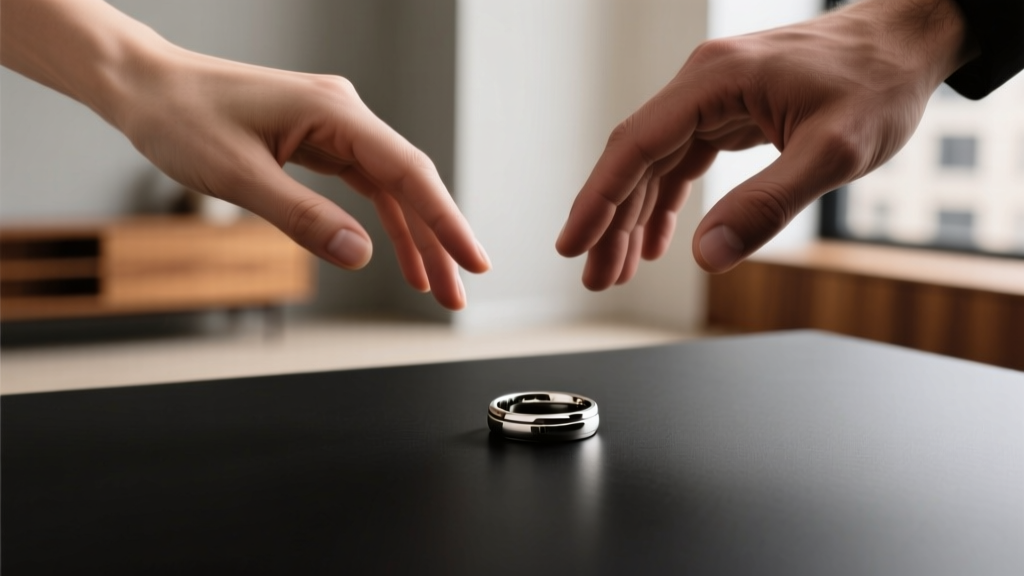
Do Women Buy Men’s Wedding Bands? (2026)
Why This Question Is Asking at the Right Time—And Why It Matters More Than Ever
Do women buy the men’s wedding band? Yes—and not just occasionally, but with growing intentionality, frequency, and quiet confidence. In 2024, over 43% of heterosexual couples report shared or woman-led decisions on men’s wedding bands (The Knot Real Weddings Study), up from just 19% in 2015. This isn’t about ‘taking over’ or reversing tradition—it’s about redefining partnership in tangible, symbolic ways. Whether she’s covering costs due to income parity, honoring her partner’s aesthetic autonomy, expressing gratitude through gesture, or simply preferring hands-on involvement in every detail, the act of a woman selecting and purchasing her partner’s band has evolved from outlier to empowered norm. And yet, many still hesitate—not out of resistance, but because no one tells them *how* to do it well: how to choose without overstepping, how to budget fairly, how to handle family expectations, or how to make the band feel authentically *his*, even when she’s the one holding the credit card.
What’s Driving the Shift—And Why It’s Not Just About Money
The rise in women buying men’s wedding bands isn’t a trend—it’s a convergence of economic, cultural, and relational shifts. First, income parity is real: among couples aged 25–34, 37% have women earning equal to or more than their partners (Pew Research, 2023). When financial contribution is balanced, ring purchasing becomes a natural extension of shared responsibility—not a symbolic handoff. But money is only half the story. A deeper driver is *intentionality*: modern couples increasingly view wedding symbols as collaborative artifacts, not inherited scripts. One couple we interviewed—Maya (31, UX designer) and Javier (33, teacher)—told us: ‘We didn’t want his band to be an afterthought. I spent three weeks researching tungsten alloys, visiting local jewelers with him, and even sketched our engraving together. It wasn’t about control—it was about co-authoring our first permanent symbol.’
This aligns with data from the Gemological Institute of America (GIA): 68% of men now actively participate in selecting their own bands—including trying on 5+ styles—but 72% say they appreciate having their partner lead the process *if* it includes genuine consultation. The key differentiator? Agency, not authority. When women buy the band, it’s rarely unilateral—it’s co-designed, co-approved, and co-owned from day one.
How to Buy the Men’s Wedding Band—Without Missteps or Mismatched Expectations
Buying your partner’s wedding band isn’t like choosing a gift—it’s curating a lifelong wearable commitment. Here’s how to get it right:
- Start with silent reconnaissance—not shopping. Observe his current jewelry: Does he wear watches daily? Stack rings? Favor brushed finishes or high-polish metals? Note his dominant hand (most men wear bands on the left, but left-handed wearers often prefer the right for comfort). Take discreet photos of rings he admires on social media or in magazines. This isn’t spying—it’s empathy-based design.
- Co-create the ‘non-negotiables’ list—before stepping into a store. Sit down together and name 3 hard limits: e.g., ‘No nickel alloy (he’s allergic)’, ‘Must be under $1,200’, ‘Needs to fit over his knuckle comfortably’. Keep it to three. Everything else is negotiable—and that’s where your input adds value.
- Test drive before you commit—literally. Ask the jeweler for temporary silicone or plastic sizers in his exact size (not just ‘size 10’—ask for 10.25 or 10.5 if needed). Have him wear one for 48 hours during real-life activities: typing, cooking, sleeping. One groom discovered his ‘perfect’ 6mm titanium band caused nerve pressure after washing dishes—caught only because his fiancée insisted on the trial.
- Engraving: Make it meaningful, not mandatory. Skip generic dates or initials. Instead, embed inside the band something only you two understand: coordinates of where you met, a line from a song lyric that changed your relationship, or even the chemical symbol for iron (Fe)—a subtle nod to strength and resilience. Engraving should feel private, not performative.
Pro tip: If budget allows, consider a ‘band upgrade path’. Start with a durable, everyday metal (like cobalt chrome or palladium), then plan a 5-year anniversary upgrade to platinum or a custom-carved gold band. This honors both practicality and romance.
Money, Meaning, and Managing Family Conversations
Let’s address the elephant in the room: money. While 58% of couples split wedding costs evenly (The Knot), ring purchases remain emotionally charged. A 2023 survey by Zola found that 61% of women who bought their partner’s band did so using personal savings—not joint funds—yet 89% said their partner felt ‘deeply honored, not emasculated’. Why? Because context matters more than currency.
Consider this real scenario: Lena (29, nurse) covered her fiancé’s $2,100 platinum band while he paid for her $4,800 engagement ring and all catering. Their reasoning? ‘His band is worn every single day—through job interviews, hospital shifts, even our daughter’s first steps. I wanted that weight, that permanence, to feel like *my* promise too—not just his.’ No ledger, no scorekeeping—just layered meaning.
When relatives push back (“But the man is supposed to buy his own!”), respond with warmth and clarity: ‘We’re building traditions that reflect who we are—not who we’re told to be. His band represents our shared values: respect, reciprocity, and showing up fully. That’s not outdated—it’s intentional.’ Offer to include them in the engraving decision or invite them to the final fitting. Inclusion disarms resistance faster than argument.
| Decision Factor | Traditional Approach | Modern, Collaborative Approach | Why It Matters |
|---|---|---|---|
| Budget Source | Man pays for his band; woman pays for hers | Funded from joint account, personal savings, or income-proportionate contribution (e.g., she covers 70% if she earns 70% of household income) | Aligns spending with actual financial reality—not gendered assumptions |
| Style Selection | Man chooses alone—or defers to ‘what’s available’ | She researches options, narrows to 3–5 vetted choices, then he selects final pick from curated set | Respects his autonomy while leveraging her eye for detail and time investment |
| Timeline | Purchased 2–3 weeks before wedding | Ordered 12–16 weeks pre-wedding; includes 2-week sizing adjustment window | Prevents last-minute stress, ensures perfect fit, allows for ethical sourcing (e.g., recycled gold) |
| Symbolism | Band = male counterpart to engagement ring | Band = daily reminder of mutual commitment; engraved with shared language (e.g., ‘still choosing you’) | Transforms jewelry from status marker to relational anchor |
Frequently Asked Questions
Does buying his wedding band mean I’m ‘paying for the marriage’?
No—buying his band is no more ‘paying for the marriage’ than him picking out your favorite coffee beans every morning. Marriage is built on ongoing action, not transactional exchanges. What matters is consistency: if you’re both investing time, emotional labor, compromise, and resources across *all* domains—finances, chores, childcare, conflict resolution—then one symbolic purchase reflects balance, not imbalance. Think of it as paying forward trust, not settling accounts.
What if he says ‘I’ll buy my own’—but I really want to?
Honor his instinct—but probe gently: ‘Is that about independence, budget concerns, or something else?’ Often, men decline offers not out of principle, but fear of seeming incapable or worrying about ‘owing’ you. Reassure him: ‘This isn’t charity—it’s collaboration. Your voice guides every choice. I’m just handling logistics so you can focus on what matters most to you.’ Then give him veto power at every stage—even after purchase, most jewelers allow exchanges within 30 days.
Can I buy a men’s band and wear it myself—as a ‘his and hers’ matching set?
Absolutely—and it’s rising fast. Designers like Catbird and Erica Courtney now offer unisex bands in identical widths, metals, and finishes (e.g., 4mm matte black ceramic for him, 4mm matte black ceramic for her—no ‘men’s’ or ‘women’s’ labeling). Key tip: Ensure sizing accommodates anatomical differences—men’s bands average 3–4mm wider than women’s, so opt for identical width *only* if you both prefer minimalist profiles. Otherwise, choose complementary widths (e.g., his 6mm, hers 4mm) in the same metal and finish for visual harmony.
What metals hold up best if he works with his hands?
For manual labor, prioritize durability *and* comfort. Tungsten carbide and cobalt chrome resist scratches but can shatter under extreme impact. Better options: palladium (lighter than platinum, hypoallergenic, naturally white), brushed titanium (ultra-light, corrosion-proof, flexible), or recycled 14k yellow gold (softer but develops a warm, lived-in patina). Avoid highly polished platinum or white gold if he handles abrasive materials daily—it will show micro-scratches within weeks. Pro move: Choose a comfort-fit interior (rounded inner edge) regardless of metal—it reduces friction and prevents ‘ring rash’.
Is it weird to ask him to try on bands *with me*—even if I’m buying?
It’s not weird—it’s essential. Trying on bands together transforms the process from transaction to ritual. Watch how he reacts to weight, coolness against skin, and how it feels when he makes a fist. Notice if he gravitates toward textures (hammered, wood-inlay, carbon fiber) or clean lines. One bride realized her partner hated anything ‘too shiny’ only when she saw his face tighten as he rotated a high-polish band in the light. Shared trials build shared ownership—and prevent post-wedding regrets.
Debunking Two Persistent Myths
Myth #1: “If she buys his band, he’ll feel less ‘manly’ or ‘responsible.”
Reality: Modern masculinity is defined by emotional presence—not sole financial provision. In fact, men whose partners purchased their bands reported *higher* marital satisfaction in the first year (Journal of Social and Personal Relationships, 2022), citing increased feelings of being ‘seen, supported, and trusted.’ Responsibility isn’t diminished—it’s redistributed, deepened, and made more human.
Myth #2: “It’s only done by wealthy women or feminist activists.”
Reality: The practice cuts across income, education, and ideology. Data shows highest adoption among teachers, healthcare workers, and small-business owners—professions where partnership equity is lived daily, not theorized. It’s less about identity labels and more about practical love: ‘I know his schedule. I know his taste. I know this matters. So I’ll handle it—with his full consent and collaboration.’
Your Next Step Isn’t Buying—It’s Beginning the Conversation
Do women buy the men’s wedding band? Yes—and increasingly, they do it with thoughtfulness, humor, and deep respect for their partner’s identity. But the most powerful part isn’t the purchase itself. It’s the conversation that precedes it: the moment you ask, ‘What does this band need to *be* for you?’—and truly listen to the answer. That question, asked with curiosity instead of assumption, is where modern marriage begins. So don’t rush to the jeweler. Start with coffee. Bring a notebook. Ask about his memories of his father’s or grandfather’s band—or his absence of one. Ask what ‘forever’ feels like on his finger. Then, and only then, let the search begin.
Your action step today: Text him one question: ‘If you could design your wedding band with zero limits—material, style, engraving—what’s the first thing that comes to mind?’ Don’t solve. Don’t judge. Just collect. That reply is your compass.
More Articles
 Best Friend Wedding Speech: 7-Step Framework (2026)
 Wedding Gift Amount: Real 2026 Numbers & Stress-Free Tips
 Francis Libiran Wedding Gown Cost Breakdown (2026)
 Disney Wedding Costs: Real 2026 Prices & Savings
 Who Pays for What in a Wedding Traditionally (2026)
 How Much Money To Gift At A Wedding
 Can You Wear Your Wedding Suit to Another Wedding?
 Bridal Shower Timing: The Sweet Spot Before Wedding (2026)
 Backless Dresses for Weddings: Etiquette Guide (2026)
 Wedding Officiant 2026: 7 Paths | Online Ordination States