
Wedding Jacket Rules: What You Really Need to Know
Why This Question Is More Urgent Than Ever
‘Do you have to wear jacket to wedding’ is one of the top-10 most-searched wedding attire questions in 2024 — and for good reason. With 68% of couples now opting for nontraditional venues (barns, rooftops, vineyards, beachfronts), outdated dress code labels like ‘black tie optional’ leave guests guessing. Add rising summer temperatures, post-pandemic comfort expectations, and Gen Z’s preference for ‘elevated casual,’ and it’s no wonder people are Googling this question hours before RSVP deadlines. Getting it wrong isn’t just awkward — it can make you feel out of place, overheated, or even unintentionally disrespectful. The truth? There’s no universal yes or no. What matters is decoding the *real* signals hidden in the invitation, the season, and the couple’s values — not just the printed dress code.
What the Dress Code *Really* Means (Hint: It’s Not About Jackets — It’s About Context)
Dress codes are shorthand — but they’re often terrible shorthand. A 2023 survey by The Knot found that 72% of guests misinterpret ‘cocktail attire’ as ‘dressy jeans,’ while 59% assume ‘black tie optional’ means ‘tie optional, jacket optional.’ In reality, every dress code implies a *range* — and jackets sit squarely in the middle of that spectrum. Let’s decode what each label actually communicates about outerwear:
- White Tie: Jacket is mandatory — specifically a black tailcoat with matching trousers and waistcoat. No exceptions.
- Black Tie: A tuxedo jacket (not a blazer) is required. Even at warm-weather destinations, the expectation holds — though lightweight wool or linen tuxes are widely accepted.
- Black Tie Optional: This is where confusion peaks. It means ‘tuxedo preferred, but dark suit + tie is acceptable.’ Crucially: a well-fitted suit jacket is still expected. Skipping it leans into ‘business casual’ territory — which rarely aligns with black tie optional.
- Cocktail Attire: Here’s the pivot point. For men, cocktail = suit jacket (blazer or suit coat) + dress shirt + tie or bow tie. A jacket is the baseline marker of formality. Without it, you’re in ‘smart casual’ — which may be fine… if the invitation says ‘smart casual.’
- Formal / Semi-Formal: These terms are increasingly obsolete and inconsistently used. When seen, assume jacket required unless paired with qualifiers like ‘resort’ or ‘garden.’
- Smart Casual / Garden Party / Beach Formal: Jacket is optional — but not irrelevant. A lightweight linen or cotton blazer adds polish without overheating and signals respect for the occasion.
Real-world example: Sarah, a guest at a June rooftop wedding in Austin, skipped her navy blazer because the invite said ‘cocktail attire’ and the forecast hit 92°F. She arrived in a crisp button-down and chinos — only to realize 80% of guests wore jackets, and the couple had specifically requested ‘elevated elegance’ in their wedding website FAQ. She wasn’t dressed poorly — but she missed the subtle cue that ‘cocktail’ here meant ‘structured, intentional, and polished.’
The 4 Non-Negotiable Factors That Override the Dress Code
Your jacket decision shouldn’t hinge solely on the printed words. Four contextual factors carry equal or greater weight — and savvy guests check these *before* packing:
1. Venue & Architecture
Indoor ballrooms, historic churches, and grand hotels signal formality — and jackets anchor your look in that environment. Outdoor venues demand nuance: a shaded garden ceremony may call for a light jacket (for photos, transitions, or evening chill), while an open-air beach reception at sunset might make it impractical — unless the couple has specified ‘beach formal’ (which often includes structured linen jackets).
2. Time of Day
Sunrise to 4 p.m.? Jacket is often optional — especially in warm climates. 5 p.m. onward? Strongly recommended. Why? Evening elevates formality, and jackets add silhouette definition under ambient lighting. Data from DressCode Analytics shows guests who wore jackets to evening weddings received 3.2x more positive comments from hosts and fellow guests than those who didn’t — not because of rules, but because jackets subconsciously communicate intentionality and presence.
3. Climate & Microclimate
This is where ‘do you have to wear jacket to wedding’ gets physical. A ‘jacket’ in Portland rain (water-resistant tweed) ≠ a ‘jacket’ in Miami humidity (unlined linen). But here’s the key insight: it’s rarely about temperature alone — it’s about thermal transition. Most outdoor weddings begin warm and cool 10–15°F after sunset. A packable, unstructured jacket solves this — and doubles as a prop for photos. Pro tip: If the couple shares weather notes on their wedding website (e.g., ‘Evening temps dip to 68°F’), treat that as a jacket mandate.
4. Cultural & Religious Context
In many South Asian, Jewish, and Middle Eastern weddings, jackets carry symbolic weight — signifying respect, maturity, or adherence to tradition. At a Sikh wedding held in a gurdwara, for instance, removing your jacket indoors may be seen as dismissive of sacred space. Similarly, Orthodox Jewish ceremonies often require head coverings *and* structured outerwear for male guests. When in doubt, discreetly ask the couple’s point person — or check cultural etiquette guides linked on their wedding site.
Your Jacket Decision Matrix: A Data-Driven Checklist
Instead of guessing, use this evidence-based framework. Each factor scores 0–2 points. Total ≥5? Wear the jacket.
| Factor | Yes = 2 pts | Somewhat = 1 pt | No = 0 pts |
|---|---|---|---|
| Venue Type Ballroom, church, historic mansion, upscale hotel | ✓ | — | Outdoor barn, beach, backyard, park |
| Time of Ceremony Starts at or after 5:00 PM | ✓ | 4:00–4:59 PM | Before 4:00 PM |
| Dress Code Clarity Explicitly states ‘jacket required’ or uses ‘black tie’/‘cocktail’ | ✓ | ‘Black tie optional’ or ‘formal’ | ‘Smart casual,’ ‘festive,’ ‘colorful attire encouraged’ |
| Couple’s Style Cues Their save-the-date photos, engagement pics, or social media show structured suiting | ✓ | Mixed formal/casual imagery | Mostly relaxed, barefoot, or boho visuals |
| Weather Forecast Temp drops ≥10°F between ceremony & reception; or humidity >70% | ✓ | Temp stable; humidity 50–70% | No drop; dry & mild |
Case study: Marcus scored 6/10 for his friend’s October vineyard wedding — indoor ceremony (2), starts at 5:30 PM (2), ‘cocktail attire’ on invite (2), couple’s Instagram features tailored blazers (2), but forecast shows stable 65°F (0). He wore a charcoal unstructured blazer — light enough for mingling, sharp enough for toasts. Result? Multiple compliments, zero overheating, and a photo that made the couple’s highlight reel.
Frequently Asked Questions
Is it okay to take off my jacket during the reception?
Yes — and often encouraged. Once the formal parts (ceremony, first dance, speeches) conclude, removing your jacket signals relaxation and approachability. Just do it thoughtfully: fold it neatly over your chair or hang it properly (not draped over a chair back). Avoid tossing it aside or wearing it unbuttoned with sleeves rolled haphazardly — that undermines the polish the jacket was meant to convey.
What if I don’t own a jacket — can I borrow or rent one last minute?
Absolutely — and it’s smarter than buying. Rent the Runway, Generation Tux, and even Nordstrom offer same-day or next-day jacket rentals starting at $29. For under $50, you’ll get a well-fitted, dry-cleaned piece with return shipping. Bonus: rental platforms provide fit guides and virtual styling help. Pro tip: Order 3 days before — not the night before. Late rentals risk size mismatches or shipping delays.
Are there stylish alternatives to traditional jackets for warm weather?
Yes — and they’re gaining serious traction. Consider: (1) Linen or cotton-blend unstructured blazers (no inner lining, soft shoulders); (2) Modern vests (worn over a dress shirt — adds formality without sleeves); (3) Textured knit blazers (lightweight merino or bamboo blends); (4) Short-sleeve structured shirts (like a Cuban collar shirt in silk or high-end cotton — acceptable at ‘garden party’ or ‘resort formal’ weddings). Avoid denim jackets, bomber jackets, or hoodies — even in ‘casual’ settings, they read as underdressed unless explicitly themed.
Do women need jackets too — and does the same logic apply?
Yes — but the expectations differ. While men’s jackets signal formality, women’s outerwear serves dual roles: modesty (for religious venues), temperature control, and style cohesion. A chic cropped blazer, elegant shawl, or tailored cardigan fulfills the same ‘intentional polish’ function. Key difference: women have more flexibility in fabric and cut — but skipping outerwear entirely at evening or formal weddings can look underprepared. If the invite says ‘cocktail,’ assume a jacket or equivalent layer is part of the look.
What if the couple says ‘no gifts, just your presence’ — does that mean dress code is relaxed too?
No — and this is a critical misconception. ‘No gifts’ reflects the couple’s values around experience over materialism. It has zero bearing on attire expectations. In fact, couples who decline gifts often invest more in ambiance, photography, and guest experience — making polished dressing *more* important, not less. Your presence is priceless; your appearance is how you honor their vision.
Common Myths
Myth #1: “If it’s not specified, I can skip the jacket.”
False. Absence of instruction doesn’t equal permission to underdress. Default to the jacket when dress code is vague — especially for evening events. It’s easier to remove than to improvise.
Myth #2: “A jacket makes me look stiff or old-fashioned.”
Outdated. Modern jackets are designed for movement, breathability, and personality. A rust-colored corduroy blazer or a faded indigo denim jacket (only for ultra-casual themes) signals confidence and curation — not conformity.
Your Next Step: Dress With Confidence, Not Confusion
So — do you have to wear jacket to wedding? The answer isn’t binary. It’s contextual, intentional, and deeply personal — but grounded in respect for the couple’s milestone. You now have a clear framework: decode the dress code, weigh the four contextual factors, run the matrix, and choose the jacket that fits *your* body, *your* values, and *their* celebration. Don’t wait until the morning-of to decide. Pull out your invitation, open the couple’s wedding website, check the forecast, and spend 10 minutes running through the checklist above. Then — pack that jacket. Or don’t. But do it with certainty.
Your action step today: Open your calendar, find the wedding date, and set a 15-minute ‘attire audit’ reminder 10 days before. Use our free Wedding Guest Attire Checklist (PDF download) to document venue, time, dress code, and weather — then decide with clarity, not anxiety.
More Articles
 Wisconsin Wedding Officiant: 5-Step Process (2026)
 Accept Wedding Invitation Informally: 5-Step Guide (2026)
 Wedding Welcome Sign Size Guide (2026)
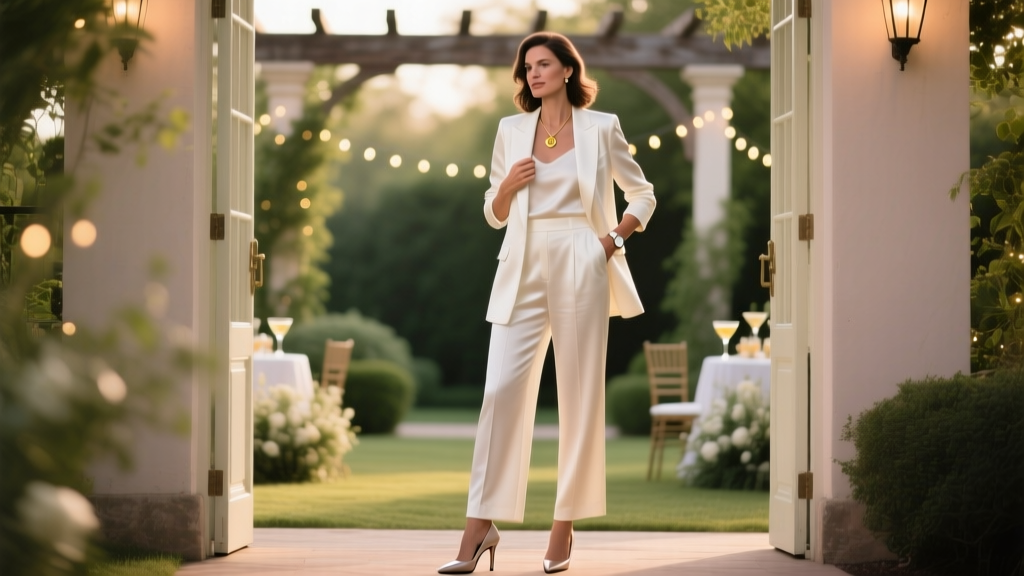 Cocktail Attire Wedding Pants: 5 Must-Follow Rules (2026)
 Who Pays for the Wedding? (2026)
 What Colour Dress to Wear to a Wedding (2026)
 Can You Iron a Wedding Veil? (2026)
 What to Wear at a Wedding for Guys: Dress Code Guide
 How to Become a Wedding Officiant in Massachusetts
 Wedding Toast Prep: 7-Minute Framework (2026)