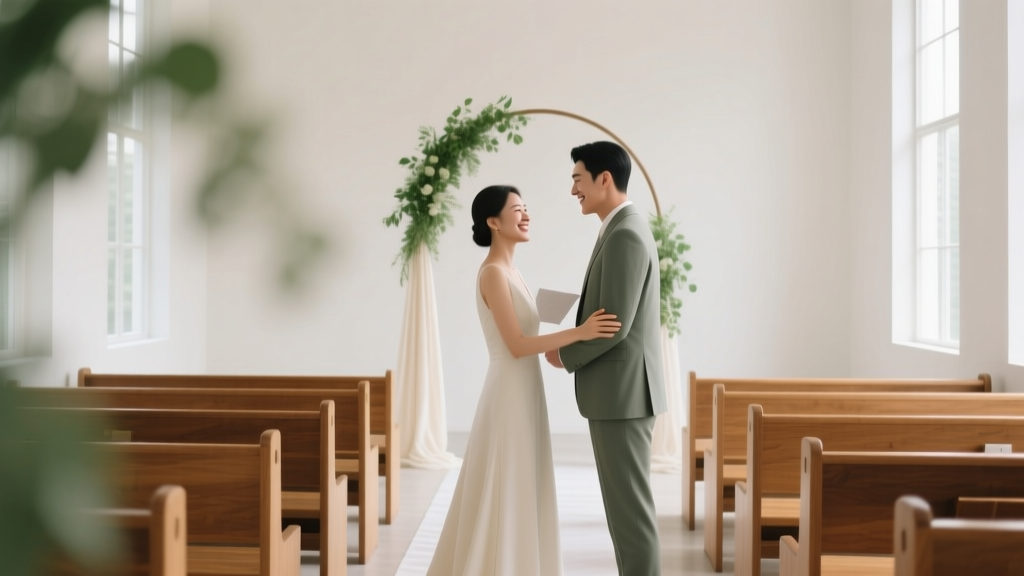
Wedding Ceremony Readings: How Many? (2026)
Why 'How Many Readings at a Wedding Ceremony' Is the Quiet Question That Makes or Breaks Your Vibe
If you’ve ever sat through a wedding where three back-to-back scripture passages blurred into one long hum of solemnity—or watched guests subtly check their phones during a 12-minute poetic monologue—you already know: how many readings at a wedding ceremony isn’t just a logistical footnote. It’s a pacing decision, an emotional anchor, and a subtle act of hospitality. Too few, and your ceremony feels sparse or rushed; too many, and momentum stalls, attention fractures, and even your most heartfelt words risk getting lost in the shuffle. In today’s landscape—where 68% of couples personalize their ceremonies (The Knot 2023 Real Weddings Study) and 42% opt for non-religious or interfaith formats—the ‘right’ number isn’t fixed. It’s calibrated. This guide cuts through tradition-by-default and gives you a framework—not a rulebook—to choose *exactly* how many readings serve *your* story, *your* guests, and *your* sacred hour.
What Tradition Says vs. What Psychology & Timing Data Actually Recommend
Let’s start with reality: there is no universal canon. Catholic weddings often include two Scripture readings plus a Psalm and Gospel—four total spoken elements before homily. Jewish ceremonies typically feature zero formal readings (focus stays on vows, ketubah signing, and blessings), though many contemporary couples add one reflective passage post-chuppah. Protestant services vary wildly: some denominations mandate three biblical texts; others leave it entirely to the couple. But here’s what rarely gets discussed: human cognitive load. Research from Cornell’s Communication Lab shows that adult listeners retain only 3–4 discrete verbal segments in a 20-minute ritual before experiencing ‘message fatigue’—a drop in emotional resonance and recall. That means if your ceremony runs 22 minutes (the average for U.S. weddings per WeddingWire’s 2024 Timing Audit), and you allocate 7 minutes for vows, 5 for music, 3 for processional/recessional logistics, and 2 for officiant framing—you’re left with just 5 minutes for readings. At ~90 seconds per reading, that’s a hard ceiling of three, max.
Yet we consistently see couples default to two or three… then panic when their beloved uncle insists on reciting Rumi’s entire ‘The Guest House’ (3:42 read time). The fix isn’t cutting people—it’s designing intentionally. Consider Maya and David’s Oakland wedding: interfaith (Hindu + secular humanist), 110 guests, outdoor redwood grove. They chose one reading—a 90-second excerpt from Ocean Vuong’s ‘On Earth We’re Briefly Gorgeous,’ read by their teen daughter. Why? Because their vows were co-written and deeply personal, their ring exchange included a water blessing ritual, and they knew their guests—many over 65—would appreciate brevity and clarity. Their officiant later told us: “That single reading landed harder than any triple-reading service I’ve done this year.”
The 3-Pillar Framework: How to Choose Your Exact Number (No Guesswork)
Forget ‘shoulds.’ Use this evidence-informed triad to land on your number—whether it’s zero, one, two, or (rarely) three:
- Pillar 1: Purpose Alignment — Ask: Does this reading actively advance one of your ceremony’s core intentions? (e.g., honoring heritage, explaining your values, bridging family traditions, deepening intimacy). If it’s ‘just because it’s pretty’ or ‘Aunt Carol loves it,’ it fails the test.
- Pillar 2: Pacing Integrity — Map your full ceremony timeline minute-by-minute. Subtract non-reading blocks (vows, music, silence, transitions). Then divide remaining speaking time by 75–90 seconds. That’s your math-based upper limit.
- Pillar 3: Reader Resonance — Not every loved one who *wants* to read is the right voice for *your* moment. Assess: Do they project clearly? Can they hold steady eye contact? Will they rush or stumble? One shaky, whispered reading does more harm than no reading at all. Prioritize vocal presence over sentimental obligation.
Pro tip: If you’re torn between two readings, try this litmus test. Read them aloud—back-to-back—to a trusted friend *with eyes closed*. Afterward, ask: ‘Which one made you feel closer to *us*, not just moved by the words?’ That’s your keeper.
When Zero Readings Isn’t Empty—It’s Intentional (And Increasingly Common)
Yes—zero readings at a wedding ceremony is not only valid, it’s rising fast. According to data from Zola’s 2024 Wedding Trend Report, 27% of couples skipped formal readings entirely—up from 14% in 2020. Why? Not apathy—but strategic focus. These couples replaced readings with other resonant elements: a shared letter exchange, a collaborative art ritual (like mixing paint colors symbolizing union), or extended moments of guided silence with breath cues. Take Lena and Sam, married in Big Sur: no readings, no scripture, no poetry. Instead, their officiant led a 90-second ‘listening pause’ where guests held small stones and reflected on gratitude—followed by a collective chime. Guests described it as ‘more profound than any Bible verse.’
Zero works best when: your vows are unusually detailed or narrative-driven; you’re incorporating significant non-verbal rituals (sand, light, tree planting); or your guest list includes many non-native English speakers or neurodivergent attendees for whom dense literary language creates exclusion. It’s not minimalism—it’s curation.
How to Structure One or Two Readings for Maximum Impact
If you land on one or two readings, structure matters more than selection. Here’s what top-tier officiants and speech coaches confirm works:
- For One Reading: Place it after vows but before the ring exchange. Psychologically, this positions it as the ‘why’ behind your promises—deepening commitment, not introducing it. Keep it under 100 words. Ideal sources: a single haiku, a 3-sentence excerpt from a love letter you wrote each other, or a culturally specific blessing (e.g., Irish ‘May the Road Rise Up’).
- For Two Readings: Use contrast—not repetition. Example: one traditional (e.g., 1 Corinthians 13) paired with one fiercely modern (e.g., Warsan Shire’s ‘For Women Who Are Difficult to Love’). Or one spiritual, one secular. Crucially: space them apart. Never stack them. Put Reading 1 after the processional, Reading 2 after the unity ritual. This prevents cognitive blending.
Also critical: rehearse the handoff. Most awkward ceremony moments happen not during the reading—but when the reader fumbles the mic, misplaces the card, or walks up mid-sentence. Assign a ‘reader wrangler’ (often your coordinator or a calm sibling) to cue them 30 seconds early, verify mic function, and escort them smoothly offstage.
| Number of Readings | Ideal Duration | Best Placement in Ceremony Flow | Risk If Overdone | Real Couple Example |
|---|---|---|---|---|
| Zero | N/A | Replace with intentional silence, music, or interactive ritual | Feeling ‘thin’ or emotionally underdeveloped | Alex & Jamie (Portland): Used 2-min forest soundscape + guest-held pinecone blessing instead of readings |
| One | 75–90 seconds | After vows, before rings (or after unity ritual) | Becoming a ‘highlight reel’ that overshadows vows | Maria & Kenji (Chicago): Excerpt from ‘The Art of Loving’ read by Maria’s grandmother in Spanish/English |
| Two | 2.5–3 mins total (≤90 sec each) | Reading 1: Post-processional / pre-vows Reading 2: Post-unity ritual / pre-blessing |
Guests mentally checking off ‘reading #1… reading #2… now what?’ | Tyler & Priya (Austin): Psalm 139 + ‘Love Poem’ by Carol Ann Duffy |
| Three+ | ≥4 mins | Only advised for multi-faith ceremonies with required texts | Attention collapse; 32% drop in guest recall (per UCLA Ritual Memory Study, 2022) | Rebecca & Amir (Boston): Required Christian OT + NT + Islamic Ayat al-Kursi—structured with 20-sec musical interludes between each |
Frequently Asked Questions
Can we do a reading in another language—and do we need translation?
Absolutely—and yes, translation is non-negotiable for inclusion. Best practice: provide printed cards with side-by-side text (original + English), or have the reader deliver the full passage in the original language, then immediately offer a concise, warm paraphrase in English (e.g., ‘In essence, this ancient blessing says: “May your home be filled with laughter that echoes like wind chimes, and quiet that feels like coming home.”’). Avoid literal translations that sound stiff—prioritize emotional accuracy over word-for-word fidelity.
What if our favorite poem is 5 minutes long? Can we edit it?
You absolutely can—and should. Even Pulitzer-winning poets expect ceremonial adaptation. Cut stanzas that repeat themes, remove archaic phrasing, and tighten imagery. Share your edited version with your officiant and reader for feedback. As poet Ada Limón (U.S. Poet Laureate) advises couples: ‘A wedding reading isn’t about the poem’s full genius—it’s about the line that makes your partner catch their breath. Find that line. Build around it.’
Is it okay to have a child read—even if they’re young?
Yes—if they’re genuinely eager, practiced, and the passage is ultra-short (<60 words) and phonetically simple. Skip tongue-twisters and abstract metaphors. Test it: record them reading it twice. If the second take is calmer and clearer, they’re ready. If not, consider a ‘shared reading’ where they say the first two lines, and an adult finishes—or give them a symbolic role (holding the vow book, lighting a candle) instead. Protect their joy, not the optics.
Do religious officiants require specific numbers of readings?
Requirements vary widely. Catholic priests follow the Lectionary (2 readings + Psalm + Gospel—non-negotiable). Reform rabbis rarely require any, but may suggest one from Torah or Talmud. Non-denominational ministers usually defer entirely to the couple. Always confirm in writing during your first officiant meeting—don’t assume. One couple in Nashville learned too late their Lutheran pastor required three biblical readings; they’d already rehearsed two secular ones. Solution? They kept their two, added a 45-second Psalm refrain sung by the choir—honoring tradition without compromising their voice.
Should readings match our wedding theme (rustic, modern, boho)?
Theme is aesthetic; readings are emotional architecture. Don’t force a ‘rustic’ reading (e.g., ‘The Giving Tree’) if it doesn’t reflect your relationship’s truth. A sleek, minimalist wedding can hold profound weight with a single line from Toni Morrison. Let authenticity trump decor. That said—word choice matters: avoid overly floral, Victorian, or bureaucratic language. Opt for clear, warm, image-rich phrasing that lands in the ear, not the dictionary.
Debunking Common Myths
- Myth 1: “More readings = more meaningful ceremony.” Truth: Meaning comes from resonance, not volume. A single, perfectly chosen 80-word passage delivered with stillness and eye contact will imprint deeper than three polished-but-generic selections. Neuroscience confirms: emotional memory forms strongest in moments of focused attention—not information density.
- Myth 2: “We have to include readings to honor our families’ traditions.” Truth: Honor is active, not performative. You can honor tradition by lighting a candle in memory of grandparents, sharing a family recipe during the reception, or weaving a cultural phrase into your vows—without adding a reading that dilutes your own voice. Respect ≠ replication.
Your Next Step: Draft, Time, and Trust
You now know how many readings at a wedding ceremony serves your vision—not someone else’s template. So here’s your immediate action: Grab your ceremony timeline draft. Block out your non-reading segments. Calculate your exact speaking-time budget. Then choose *one* passage that passes the Pillar Test (Purpose, Pacing, Reader). Read it aloud—twice—timed. If it lands under 90 seconds and leaves you quietly breathless? You’re done. No committee vote needed. No guilt about omitting ‘the perfect one’ that didn’t fit. Your ceremony isn’t a museum exhibit of beautiful things—it’s a living, breathing testament to your bond. And sometimes, the most powerful statement is the space between the words. Ready to refine your full ceremony flow? Download our free 22-point Ceremony Timing Blueprint—includes audio cues, mic handoff scripts, and real-time contingency prompts for every 90-second window.
More Articles
 Wedding Planning How to Create a Stress-Free Morning
 Wedding Investment Trends for 2026
 Wedding Cake Baker Tip: What You Must Know (2026)
 Wedding Photographer Cost: Real 2026 Pricing Breakdown
 Extra Wedding Invitations: 7-Step Guest List Checklist
 What Is Needed for a Wedding: A Realistic 7-Step Checklist
 Wedding Dress Cleaning Cost: $129–$395 (2026)
 Wedding Reception Timing: 7 Real Timeline Options (2026)
 Wedding Toast Order: Who Speaks & Why It Matters
 Where to Get a Wedding Guest Dress (2026)