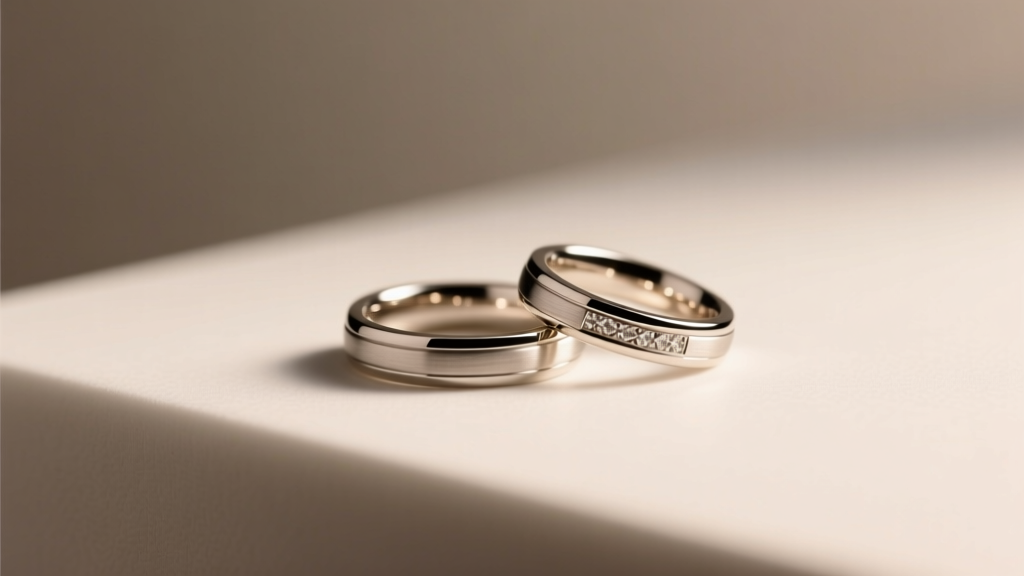
Engagement Ring Truth: What You Really Need (2026)
Why This Question Is More Urgent Than Ever
If you’ve recently gotten engaged—or are even just thinking about it—you’ve likely scrolled past dozens of Instagram reels showing diamond close-ups, heard well-meaning relatives ask, 'So when’s the ring coming?' and quietly wondered: Do you need an engagement ring and a wedding band? That question isn’t just logistical—it’s emotional, financial, and deeply personal. In 2024, nearly 68% of couples delay engagement ring purchases by 3–6 months (The Knot Real Weddings Study), and 41% opt for non-traditional or no-ring ceremonies altogether. Yet outdated norms still whisper guilt into the quiet moments before bed. This isn’t about rejecting romance—it’s about reclaiming intentionality. Whether you’re budgeting for student loans, honoring cultural traditions that don’t include rings, or simply valuing experiences over heirlooms, this guide gives you permission—and practical tools—to decide with clarity, not confusion.
What ‘Need’ Really Means: Legal, Cultural, and Emotional Layers
Let’s start with the hard truth: no U.S. state or country requires an engagement ring or wedding band to legally marry. You can obtain a marriage license, say vows at city hall, on a mountain, or via Zoom—and walk away fully married without ever touching metal. So why does the pressure persist? Because ‘need’ here is rarely about legality—it’s about signaling, symbolism, and social scaffolding. An engagement ring historically functioned as a ‘betrothal contract’ in medieval Europe—proof the woman was ‘spoken for.’ Today, it often serves as visual shorthand: ‘We’re serious. We’re committed. We’re planning.’ But that shorthand isn’t universal—and it’s increasingly optional.
Consider Maya and David, a Brooklyn-based couple who postponed their engagement ring purchase for 14 months. ‘We used that time to pay off $18,000 in combined credit card debt,’ Maya shared. ‘Our “ring” was a joint savings account we named “The Future Fund.” When we finally bought bands, they were recycled gold, engraved with coordinates of where we first kissed. No one asked for proof—we showed up present, prepared, and joyful.’ Their story reflects a broader shift: 57% of Gen Z and Millennial couples now define commitment through shared actions (cohabitation, joint finances, travel) more than symbolic objects (McKinsey Consumer Trends Report, 2023).
That said, cultural context matters deeply. In parts of India, South Korea, and Nigeria, engagement jewelry carries intergenerational weight—refusing it may unintentionally signal disrespect. In contrast, Scandinavian couples often skip engagement rings entirely, moving straight to simple, matching wedding bands worn from day one. The key isn’t choosing ‘right’ or ‘wrong’—it’s auditing your own values, family dynamics, and long-term vision.
The Two-Ring System: History, Evolution, and Modern Flexibility
The ‘engagement ring + wedding band’ combo isn’t ancient—it’s mid-20th century marketing genius. De Beers’ 1947 ‘A Diamond Is Forever’ campaign didn’t just sell diamonds; it sold a sequence: proposal → diamond ring → wedding → gold band → lifelong loyalty. Before that, many cultures used single bands (like Roman ‘annulus’ rings) or no rings at all. Even today, only ~62% of U.S. brides wear both rings simultaneously (Jewelers of America, 2023). So where does flexibility live?
- Engagement ring only: Common among LGBTQ+ couples (where traditional gendered proposals don’t apply) and those prioritizing simplicity. Often styled as a ‘forever ring’ meant to be worn daily, not just pre-wedding.
- Wedding band only: Gaining traction among men (who historically wore bands but rarely engagement rings) and women who prefer minimalist aesthetics. Many choose stackable bands designed to sit flush with future engagement rings—or stand alone with meaningful engravings.
- No rings at all: Validated by rising secularism and eco-consciousness. A 2024 survey found 29% of couples cite ‘ethical sourcing concerns’ as a top reason for skipping traditional rings.
Crucially, rings aren’t binary—they’re modular. Sarah, a teacher in Portland, wears her grandmother’s vintage sapphire ring as her ‘engagement piece’ and plans to add a thin platinum band on her wedding day—not because she ‘needs’ both, but because each tells part of her love story.
Your Real Decision Framework: 4 Questions That Cut Through the Noise
Forget ‘should I?’—ask these instead. Each answers a concrete, high-stakes concern hiding behind the keyword do you need an engagement ring and a wedding band:
- What’s our non-negotiable symbol of commitment? Is it a physical object, a shared ritual (planting a tree, writing letters), or a verbal promise? If the answer is ‘none of the above,’ rings may feel performative—not purposeful.
- What’s our current financial reality—and what does ‘responsible’ look like for us? The average engagement ring costs $6,000 (The Knot, 2023), while wedding bands average $1,200/couple. That’s $7,200—equivalent to 12 months of rent in many cities. Ask: Does spending this now align with our goals (home down payment? grad school? starting a business?)?
- How will this choice impact our families—and can we navigate that with grace? If your partner’s grandmother expects a family diamond, consider a compromise: wear it during photos, then store it safely and wear your own band daily. Boundaries aren’t rejection—they’re respect.
- What message do we want our rings (or lack thereof) to send—today and decades from now? A lab-grown diamond says ‘innovation and ethics.’ A wooden band says ‘nature and impermanence.’ A tattoo says ‘permanent, personal, unbreakable.’ Choose meaning—not momentum.
Rings vs. Alternatives: A Practical Comparison Table
| Option | Avg. Cost Range | Key Pros | Key Cons | Ideal For |
|---|---|---|---|---|
| Traditional Engagement Ring + Wedding Band | $5,000–$15,000+ | Widely recognized symbolism; heirloom potential; strong resale value (for natural diamonds) | High upfront cost; ethical/sourcing concerns; risk of loss/damage; may feel outdated to younger couples | Couples valuing tradition, family expectations, or investment-grade pieces |
| Single Stackable Band (Engagement + Wedding) | $800–$3,500 | Minimalist, gender-neutral, lower cost, easier maintenance, grows with relationship (add stones later) | Less ‘ceremonial’ visual impact; may require explaining to older relatives | Modern, budget-conscious, or design-focused couples |
| Lab-Grown Diamond Ring + Recycled Metal Band | $2,200–$6,000 | Ethically sourced, 30–40% cheaper than mined diamonds, identical appearance/chemistry, eco-friendly metals | Lower resale value; some jewelers still resist certification; perceived ‘less special’ by traditionalists | Eco-conscious, value-driven, or scientifically minded couples |
| No Rings + Symbolic Alternative | $0–$500 | Zero financial burden; zero ethical dilemmas; highly personalized (e.g., engraved compass, custom song lyric tattoo, shared time capsule) | May cause social friction; lacks tactile daily reminder; harder to ‘show’ in photos/social media | Couples prioritizing experiences, minimalism, or radical authenticity |
Frequently Asked Questions
Is it weird to wear just a wedding band and no engagement ring?
Not at all—it’s increasingly common and deeply personal. Many women choose this path for comfort (no prongs catching on clothes), style (clean lines), or principle (rejecting gendered expectations). Men have worn wedding bands exclusively for decades. What feels ‘weird’ is often just unfamiliarity. Pro tip: If questioned, try ‘We chose simplicity—and it feels so right.’ Confidence disarms curiosity.
Can I use my engagement ring as my wedding band?
Absolutely—and many do. Some reset the stone into a new band; others wear it solo on the left ring finger post-wedding. Jewelers call this ‘ring stacking’ or ‘one-ring transition.’ Just ensure the setting is durable for daily wear (e.g., bezel settings hold better than delicate prongs). Bonus: It honors continuity, not compartmentalization.
Do same-sex couples ‘need’ engagement rings?
No—and historically, they’ve been far more innovative here. Same-sex engagements often reject heteronormative scripts entirely: rings may be exchanged simultaneously, chosen together, or replaced with mutual tattoos, custom art, or even pet adoptions. The ‘need’ dissolves when tradition isn’t the default. Your relationship sets the rules—not Hallmark.
What if my partner wants a ring but I don’t?
This is where compassion meets clarity. Start with empathy: ‘I love that this means something beautiful to you. Can we explore what that meaning is—and how we might honor it in a way that feels true to us both?’ Often, the desire isn’t for the object—it’s for public affirmation, security, or family peace. Solutions include a modest band, a family heirloom reimagined, or a symbolic gesture (like planting a tree on proposal day). Never force—but never silence your truth either.
Are there religions or cultures where rings aren’t used?
Yes—many. Hindu weddings feature the ‘mangalsutra’ (sacred necklace), not rings. Islamic marriages emphasize the ‘nikah’ contract and gift (mahr), with rings optional. Jewish ceremonies focus on the chuppah and ketubah; rings are common but not mandatory. In Indigenous Māori traditions, carved greenstone pendants (hei tiki) signify lineage—not marital status. Understanding your roots—or your partner’s—can reveal richer symbols than gold and diamonds.
Debunking 2 Persistent Myths
Myth #1: ‘No ring = no real commitment.’ Commitment is proven through consistency—not carats. Research from the Gottman Institute shows lasting relationships hinge on daily micro-interactions (active listening, shared chores, vulnerability)—not symbolic objects. A couple who travels, cooks, argues respectfully, and plans futures together embodies commitment far more powerfully than one wearing $10k rings while emotionally disconnected.
Myth #2: ‘You’ll regret skipping rings later.’ Regret studies show people rarely regret *spending less*—they regret *spending wrong*. A 2023 Journal of Consumer Psychology study found 73% of ‘ring regret’ stemmed from buying something that didn’t reflect personal values (e.g., ethically dubious diamonds, oversized styles that caused discomfort). Meanwhile, couples who chose alternatives reported higher long-term satisfaction—because their choice aligned with identity, not inertia.
Your Next Step Isn’t Buying—It’s Deciding
You now know: Do you need an engagement ring and a wedding band? The answer is always no—unless you decide yes, for reasons that resonate in your bones. This isn’t about denying romance—it’s about deepening it. So pause. Breathe. Grab a notebook (or open a Notes app) and answer just one question: What would make me feel most seen, supported, and authentically celebrated on my wedding day—and every day after? Write it down. Then, protect that answer like the sacred thing it is. If rings emerge from that clarity? Perfect. If they don’t? Even more perfect. Your love doesn’t need a frame to be real. It already is. Ready to explore options that match your values? See how lab-grown diamonds deliver identical beauty with 100% ethical assurance, or browse 37 gender-neutral, eco-conscious wedding bands—all with real customer stories and 3D previews.
More Articles
 When to Rent a Tux for a Wedding (2026)
 Wedding Cost Breakdown 2026: What You Really Spend
 Honoring a Loved One at Your Wedding (2026)
 White Dress with Blue Flowers to Wedding? (2026)
 How Much to Sell Your Wedding Dress For (2026)
 Where Is The Best Place To Make A Wedding Registry (2026)
 How Much to Give for a Wedding (2026 Guide)
 3rd Anniversary: Stress-Free Leather Celebration (2026)
 The Knot Wedding Invitations: Do They Auto-Send? (2026)
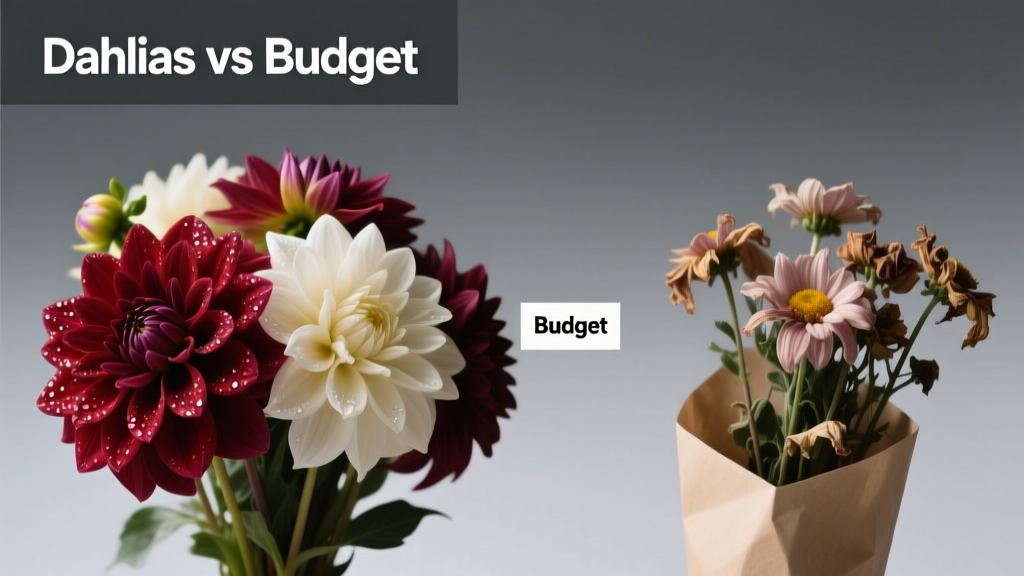 Dahlias vs Budget: Real-World Cost Analysis for Home Gardeners and Landscapers