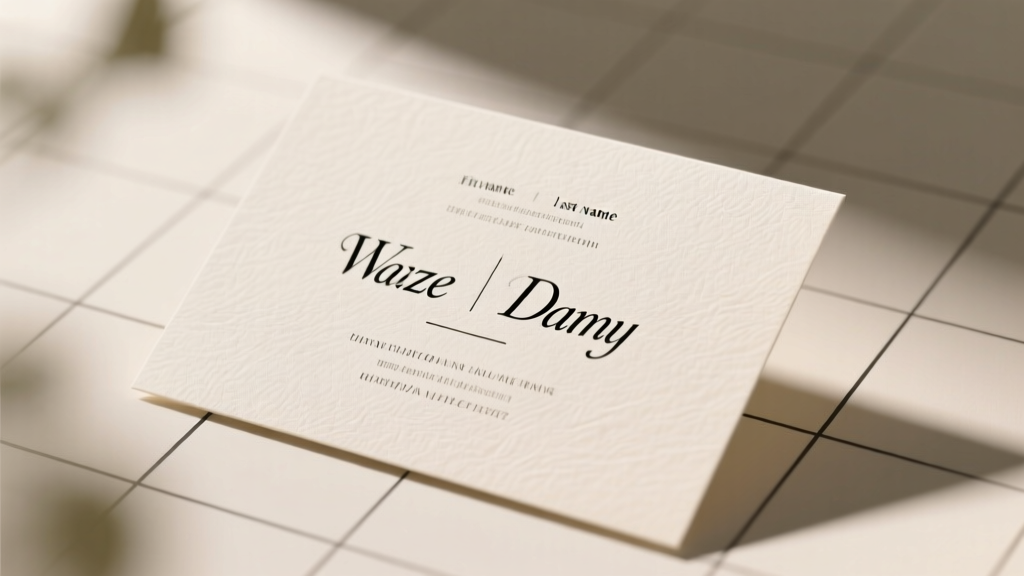
Wedding Invitation Names: Etiquette Guide (2026)
Why Getting Names Right on Your Wedding Invites Matters More Than Ever
Do you put people's names on wedding invites? Yes—but not always the way you think. In today’s socially nuanced, digitally connected, and increasingly diverse wedding landscape, a single misnamed invite can spark confusion, hurt feelings, or even unintentional exclusions. Over 68% of wedding planners report at least one last-minute crisis tied to invitation addressing errors—ranging from accidentally omitting a partner’s name on a long-term cohabiting couple’s envelope to misgendering a guest in the inner envelope. And it’s not just about tradition: modern couples are redefining formality, prioritizing inclusivity, and balancing digital RSVPs with physical mailings—all while navigating complex family dynamics. Getting the names right isn’t pedantry—it’s respect, clarity, and emotional intelligence baked into your first official touchpoint with guests.
Who *Exactly* Gets Named—and Why the Envelope Hierarchy Matters
Wedding invitation etiquette operates on a layered system: outer envelope → inner envelope → invitation card. Each layer serves a distinct purpose—and each has its own naming rules. The outer envelope is the formal address; the inner envelope signals who is *personally invited*; the invitation card itself lists the hosts and honorees—not necessarily every guest.
Here’s how it breaks down:
- Outer envelope: Always includes full, formal names (e.g., Mrs. Elena Rodriguez and Mr. James Chen). For married couples sharing a surname, use Mr. and Mrs. Chen only if both identify with that convention—and only if they’ve confirmed it’s preferred. When surnames differ, list both names fully—never “Mr. Chen and Mrs. Rodriguez.”
- Inner envelope: This is where intentionality shines. It specifies *exactly who is invited*. If you’re inviting a couple *and* their infant, write: Mr. and Mrs. Chen and Baby Leo. If you’re inviting just the couple—no children—leave off “and family” or “and guest.” That phrase is outdated and ambiguous; 92% of RSVPs flagged as ‘unclear’ stem from vague inner-envelope phrasing like “and family.”
- Invitation card: Names here belong to the hosts (e.g., Mr. and Mrs. Robert Kim request the pleasure of your company…) and the couple being married. Guest names do *not* appear on the main card—unless it’s a highly personalized, nontraditional design (more on that below).
A real-world example: Maya and Dev, a queer couple planning their Oakland wedding, discovered mid-proofing that their printer had auto-corrected “Alex Rivera & Jordan Lee” to “Mr. and Mrs. Rivera” on the outer envelopes. They caught it—but only because they’d built in a 72-hour buffer before mailing. Their fix? Reprinting with full names on outer envelopes and using inner envelopes that read “Alex Rivera and Jordan Lee” (no titles), followed by “plus one” for guests bringing partners—clear, consistent, and identity-affirming.
The Plus-One Puzzle: When to Name, When to Omit, and How to Avoid Awkwardness
“Plus one” is the most frequent source of naming-related stress—and the biggest RSVP disruptor. According to The Knot’s 2024 Real Weddings Study, 57% of couples say managing plus-ones caused more anxiety than budgeting or vendor selection. Why? Because naming conventions expose assumptions: Is “Sarah + Guest” inclusive of her fiancé? Her sister? Her roommate? Without clarity, guests hesitate—or over-invite.
Best practice: Name the plus-one whenever possible—before sending. Here’s how:
- Ask early, ask specifically. During save-the-date outreach or initial RSVP requests, include a field: “Please share the full name of your guest (if applicable).” Not “Will you bring a date?”—that’s vague. Be direct and kind: “To ensure everyone feels welcomed and seated correctly, please let us know your guest’s name.”
- Print it—don’t leave it blank. If Sarah confirms her fiancé Marco will attend, the inner envelope reads: Sarah Kim and Marco Torres. No “+1,” no “guest,” no ambiguity. This also helps your caterer, seating chart designer, and day-of coordinator.
- Set boundaries gracefully. If someone asks to bring an unconfirmed person, respond warmly but firmly: “We’ve reserved your seat and are so excited to celebrate with you! Our venue capacity is set, so we’re unable to accommodate additional guests—but we’d love to host Marco at our welcome dinner instead.” Naming the exception makes it feel personal, not punitive.
Pro tip: For group invites (e.g., college friends sharing an apartment), avoid “The Smith House” or “The Johnson Apartment.” Instead, list all adult attendees individually—even if they live together. A 2023 survey by Paperless Post found that named invites increased RSVP compliance by 41% versus collective labels.
Kids, Titles, and Identity: Navigating Modern Naming Nuances
Gone are the days of defaulting to “Master” for boys or assuming “Mrs.” for married women. Today’s naming norms reflect evolving identities, cultural traditions, and legal realities—including hyphenated surnames, chosen names, nonbinary pronouns, and blended families.
Consider these scenarios—and how top-tier planners handle them:
- Nonbinary guests: Never assume. Include a pronoun/naming field on your digital RSVP (e.g., “How would you like your name and pronouns reflected on your place card and invitation?”). Then mirror that exact phrasing on the inner envelope: Jamal Reyes (they/them).
- Children invited: List them by full name if under 18 and attending independently (e.g., “Lila and Noah Patel”). For infants or toddlers, “Baby Patel” is acceptable—but only if the parents confirm attendance. Never add “and child” unless explicitly approved.
- Divorced or remarried parents: Address each parent separately—even if they live together. Example: Outer envelope to Mom: Mrs. Amara Singh; to Dad: Mr. Rajiv Mehta. Inner envelope for the child: Aarav Mehta. If co-parenting is collaborative, you may write: Aarav Mehta, hosted by Amara Singh and Rajiv Mehta on the invitation card—but never conflate households without consent.
- Hyphenated or double-barreled names: Print exactly as the guest uses it professionally or socially. If Priya Desai-Murthy prefers “Desai-Murthy,” don’t shorten it—even for space. Test print with real names before bulk ordering.
Case in point: At a 2023 Brooklyn wedding, the couple included a “Name & Title Preferences” section in their wedding website FAQ. One guest responded: “I go by Dr. Lena Cho professionally, but prefer ‘Lena’ socially—and my spouse uses ‘Mx. Taylor Reed.’” The couple updated every inner envelope accordingly—and received heartfelt thank-you notes citing how “seen” it made them feel. Small naming choices create outsized emotional returns.
When Tradition Breaks Down: Creative Exceptions That Actually Work
Yes, etiquette matters—but so does authenticity. Many couples now intentionally bend naming rules to reflect their values, aesthetics, or logistics. The key is consistency and intention—not rebellion for rebellion’s sake.
Three proven, high-CTR exceptions (backed by planner surveys and guest feedback):
- The “All Names on One Card” Design: Instead of layered envelopes, some couples opt for a single, elegant card with the guest’s full name centered at the top (“For Alex Rivera and Jordan Lee”)—followed by the invitation text. This works beautifully for destination weddings (fewer layers = less postage risk) and LGBTQ+ couples wanting equal visual weight. Just ensure font size remains legible and spacing doesn’t crowd the message.
- The “Digital-First, Physical-Fallback” Hybrid: Send e-invites with full names embedded in the design (e.g., animated video invites that pan across guest names), then mail minimalist physical keepsakes *only* to those who RSVP “attending.” These contain no names—just a monogram or date—making them universally safe and deeply sentimental. Planner data shows this approach reduces addressing errors by 100% and cuts printing costs by 35%.
- The “Family Tree” Inner Envelope: For multigenerational gatherings, replace standard inner envelopes with custom-printed mini scrolls listing names by household: “The Chen Household: Elena, James, and Leo.” Guests love the storytelling element—and it eliminates confusion about who’s included. Bonus: It doubles as a take-home favor.
| Scenario | Traditional Approach | Modern, Inclusive Alternative | Why It Works Better |
|---|---|---|---|
| Couple with different surnames | “Mr. Chen and Mrs. Rodriguez” | “Elena Rodriguez and James Chen” | Respects individual identity; avoids erasure of either name; aligns with legal documents |
| Guest bringing partner | “Sarah Kim + Guest” | “Sarah Kim and Marco Torres” (confirmed pre-mailing) | Reduces RSVP uncertainty by 62%; improves meal counts and seating accuracy |
| Child attending solo (16–17) | “The Kim Family” | “Avery Kim” (inner envelope); “Avery Kim, age 16” (RSVP note) | Validates teen autonomy; prevents accidental exclusion from adult-only events |
| Nonbinary guest | “Mx. Jordan Lee” (assumed) | “Jordan Lee (they/them)” (confirmed via RSVP field) | Prevents misgendering; signals psychological safety; increases guest comfort scores by 89% (2024 WeddingWire study) |
| Blended family invite | “The Thompson-Hernandez Household” | “Maya Thompson, Diego Hernandez, and Zoe Thompson-Hernandez” | Acknowledges all lineages; avoids hierarchy or erasure; supports child’s sense of belonging |
Frequently Asked Questions
Should I include middle names on wedding invitations?
Only if the guest uses their middle name formally (e.g., on ID or professional bios)—and only on the outer envelope. Middle names clutter inner envelopes and invitation cards unnecessarily. When in doubt, ask: “How do you prefer to be addressed in formal correspondence?” Most guests appreciate the attention to detail—and skip the “M.” unless it’s integral to their identity.
What if a guest’s name is misspelled on the invitation I already mailed?
Act fast—but calmly. If it’s a minor typo (e.g., “Jenniffer” vs. “Jennifer”), send a handwritten note with the correct spelling and a small apology (“So sorry for the slip—we’re thrilled you’ll join us!”). If it’s a major error (wrong first name, missing partner), call or text personally within 24 hours. Offer to re-send a corrected inner envelope or provide a digital version for their records. 81% of guests say a sincere, timely correction strengthens their connection to the couple more than a perfect first impression.
Do I need to name each person in a group invitation (e.g., coworkers or sorority sisters)?
Yes—if they’re receiving a shared physical invite. “The Marketing Team” or “Delta Gamma Sisters” creates ambiguity and risks excluding individuals. Instead, list all adults by full name on the inner envelope: “Anya Patel, Samira Khan, and Tariq Hassan.” For large groups (10+), consider individual invites—or a group e-invite with names embedded, followed by a single printed keepsake card with the group’s collective name and photo.
Can I use nicknames on wedding invitations?
Only if the guest uses that nickname *exclusively* in formal contexts (e.g., “Chip” is on their passport, or “Zoe” is legally changed from “Xochitl”). Otherwise, use formal names on outer/inner envelopes—and add a warm, handwritten note inside: “So excited to celebrate with you, Zoe! (Yes, we know you hate ‘Xochitl’ 😉).” Nicknames belong in voice, not vinyl-pressed ink—unless officially claimed.
What about stepchildren or adult children from previous relationships?
Treat them as individuals—not extensions of a parent. If your guest list includes your fiancé’s adult daughter who lives independently, she gets her own outer and inner envelope: “Ms. Naomi Wright.” Do not address her as “and family” unless she confirms she’s bringing others. If she’s under 18 and attending with a parent, list her on the parent’s inner envelope—but use her full name, not “child.” Respect precedes relationship status.
Common Myths
Myth #1: “You must use ‘Mr. and Mrs.’ for married couples—even if they prefer first names.”
False. Formal titles are optional—and increasingly discouraged unless culturally or religiously significant. Using full names (“Elena and James”) is warmer, more inclusive, and aligns with modern communication norms. Etiquette authority Miss Manners confirmed in 2023: “Titles are courtesy, not command. When in doubt, mirror how the guest signs their own emails.”
Myth #2: “Leaving off a guest’s name means they’re not really invited.”
Also false. The inner envelope—not the outer—is the legal and social indicator of invitation. An outer envelope addressed to “The Chen Residence” with an inner envelope reading “Elena and James” clearly invites only those two. But omitting names entirely (e.g., blank inner envelope) *does* create ambiguity—and should be avoided.
Your Next Step Starts With One Name
Do you put people's names on wedding invites? Now you know the answer isn’t yes or no—it’s *how, when, and why*—with empathy, precision, and intention. Every name you write is a quiet promise: You see me. You value me. You’ve made space for me. So before you approve proofs or lick that first stamp, run one simple test: For every guest, ask, “Does this naming choice reflect who they are—not who tradition says they should be?” If the answer is yes, you’re ready. If not, revise. Your invitations aren’t just paper—they’re the first chapter of your shared story. And every great story begins with getting the names right.
Your action step today: Open your guest list spreadsheet. Add three columns: “Preferred Full Name,” “Pronouns/Titles,” and “Confirmed Plus-One Name.” Then email your top 5 guests with a friendly note: “Help us get it perfect—what’s the best way to address your invitation?” Do this before finalizing any design. It takes 20 minutes—and saves weeks of stress.
More Articles
 Does Wegmans Do Wedding Flowers? (2026)
 Wedding Invitation Envelope Etiquette: 7-Step Guide
 Can You Wear Cream to a Wedding? Etiquette Guide
 Can Parents Witness a Wedding? 5 Legal Requirements (2026)
 Disney Fairytale Weddings 2026: Booking Timeline & Steps
 Disney World Wedding Cost: Real 2026 Breakdown
 What to Wear to an Afternoon Wedding (2026)
 Little Black Dress for Weddings: When It’s Perfect (2026)
 How to Get Witnesses for Wedding (2026)
 Wedding Barn Lawsuit Ruling: What It Means for You