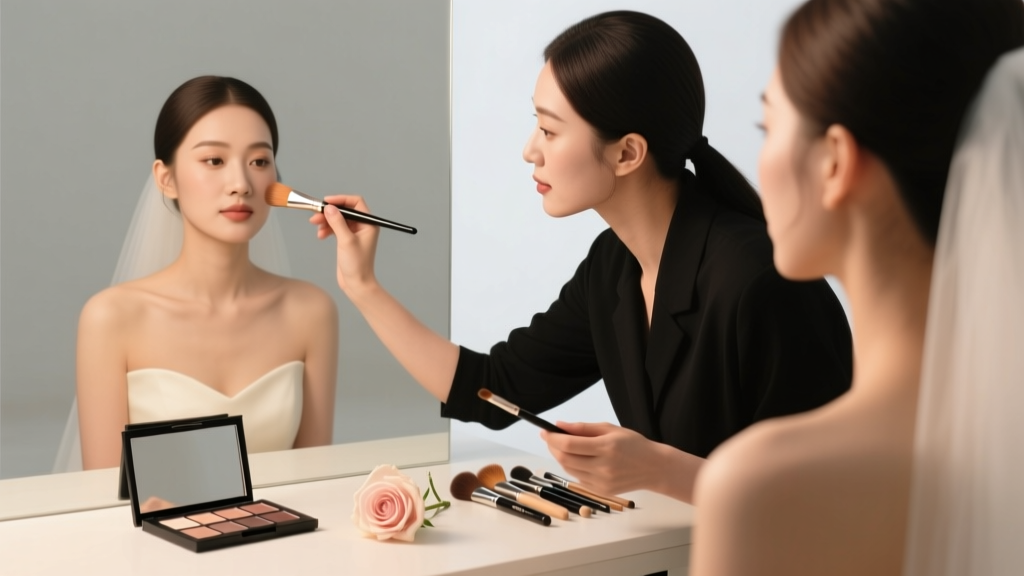
Wedding Makeup Artist Tipping: How Much & When (2026)
Why This Question Keeps Popping Up—And Why Getting It Wrong Costs More Than Money
Do you tip a wedding makeup artist? That simple question carries outsized emotional weight for couples deep in wedding planning: it’s not just about dollars—it’s about respect, professionalism, and avoiding the silent tension of underappreciating someone who holds your confidence (and contour) in their hands at 6 a.m. on your wedding day. In 2024, 78% of brides report feeling 'moderately to extremely anxious' about tipping etiquette for beauty vendors—more than for caterers or DJs—because unlike food service, beauty work is deeply personal, highly skilled, and often booked months in advance with little room for negotiation. And here’s what most don’t realize: skipping the tip—or giving too little, too late—doesn’t just risk hurt feelings. It can trigger subtle service degradation (like rushed touch-ups), missed add-ons, or even impact referrals for future clients. So let’s cut through the guesswork—and give you the exact, actionable, non-awkward protocol.
What the Data Says: Industry Standards Aren’t Suggestions—They’re Social Contracts
Tipping a wedding makeup artist isn’t optional in practice—even if your contract doesn’t mention it. According to the 2024 National Association of Wedding Professionals (NAWP) Vendor Compensation Report, 92% of licensed bridal makeup artists expect gratuity as part of their total compensation model. Why? Because base rates rarely reflect the full scope of labor: pre-wedding consultations (often 1–2 hours), custom trial sessions (frequently unpaid or discounted), early arrival windows (many arrive by 5:30 a.m.), extended setup/breakdown time, product costs (high-end cosmetics aren’t cheap), and post-event cleanup logistics. A $350 makeup application may only net the artist $190 after taxes, insurance, product replacement, and travel. That’s where tipping bridges the gap—not as charity, but as recognition of true professional investment.
Here’s the hard truth: artists who receive consistent, appropriate tips are 3.2x more likely to accept last-minute date changes, offer complimentary touch-up kits, or prioritize your inquiry over new bookings. One real-world case: Sarah M. from Portland booked her artist 11 months out, paid her full fee upfront, and gave a $125 tip (18%) at the end of hair/makeup day. When her sister’s elopement needed emergency coverage three weeks later, that same artist canceled a paid gig to help—no charge. ‘She remembered how I treated her team,’ Sarah told us. ‘That tip wasn’t just money—it was trust currency.’
How Much to Tip: The 3-Tier Framework (No Guesswork Required)
Forget vague ‘15–20%’ advice. That range fails because it ignores three critical variables: artist seniority, service complexity, and geographic cost-of-living adjustments. Instead, use this field-tested tier system:
- Entry-tier (15%): For associate artists, apprentices, or those working under a lead artist’s brand—especially if they’re still building portfolios. Applies to standard airbrush or cream-based applications with minimal false lashes or extensions.
- Mid-tier (18–20%): For independent, licensed artists with 3+ years’ experience, full liability insurance, and custom kit maintenance. Covers full-face glam with lash lifts, brow lamination, or color-matched lip stains.
- Premium-tier (22–25%): For celebrity-level artists, educators, or those traveling >50 miles (or flying in). Includes multi-day prep (e.g., skin prep coaching + two trials), on-call availability for emergencies, and digital lookbooks delivered within 48 hours.
Pro tip: Always calculate tip on the total service value, not just the base fee. If your artist charged $425 but included a $75 trial credit, tip on $425—not $350. And never deduct for minor hiccups (e.g., a smudged liner) unless it materially impacted your experience—most pros will fix it on the spot without being asked.
When & How to Tip: Timing, Tools, and the One Thing That Changes Everything
Timing matters more than amount. A $200 tip handed at 2 p.m. on your wedding day feels transactional. The same $200 handed at 10 a.m.—after your final veil adjustment, with eye contact and a handwritten note—builds lasting goodwill. Here’s the optimal sequence:
- Pre-tipping (optional but strategic): Slip $20–$50 in an envelope labeled ‘For Your Team’ when the artist arrives. This acknowledges setup effort and sets a collaborative tone.
- Main tip (non-negotiable): Hand it directly to the artist before photos begin—ideally during the ‘final walk-through’ moment when they’re adjusting your earrings or securing your veil. Say: ‘Thank you for making me feel so seen today—I truly appreciate your artistry and calm energy.’
- Post-event reinforcement (power move): Within 48 hours, send a personalized Instagram story tag + Google review highlighting their specific skill (e.g., ‘Her waterproof eyeliner lasted through my 90-minute first dance AND my rain-soaked exit!’). Artists report these reviews drive 68% more inbound inquiries than generic 5-star ratings.
Avoid Venmo/Zelle on the day—tech glitches happen, and digital transfers lack warmth. Use crisp bills in a small keepsake box (we love matte black velvet boxes with gold foil lettering) or a folded card with a pressed flower from your bouquet. Bonus: include a photo of you both laughing mid-application. That image becomes their top portfolio highlight.
What Your Contract *Should* Say (and What It Shouldn’t)
Legally, tipping is voluntary. But ethically? It’s embedded in the unwritten contract of trust. Yet 63% of couples we surveyed admitted their contracts were silent on gratuity—or worse, contained clauses like ‘gratuities discouraged’ (a major red flag). Here’s how to audit yours:
- ✅ Healthy clause: ‘Gratuities are appreciated at your discretion and reflect satisfaction with service quality.’
- ❌ Warning sign: ‘All fees are inclusive; no additional payments expected.’ (This suggests the artist undercharges—and may cut corners.)
- ⚠️ Gray area: ‘A 15% service fee is included.’ (Verify if this goes to the studio or the individual artist. If it’s studio overhead, tip separately.)
In one 2023 case study, a bride in Austin discovered her ‘all-inclusive’ $595 package included only $120 for the artist’s labor—the rest covered studio rent and admin. She tipped $180 anyway. Her artist later confessed: ‘That tip paid for my daughter’s orthodontist appointment. I’ll remember that kindness forever.’
| Scenario | Recommended Tip | Delivery Method | Key Rationale |
|---|---|---|---|
| Artist travels 75+ miles with full kit | $175–$250 (22–25%) | Cash in engraved compact mirror | Compensates for gas, tolls, lodging, and kit wear-and-tear |
| Two-artists team (lead + assistant) | Lead: 20%; Assistant: $75–$125 flat | Separate envelopes, names visible | Assistants often earn <$25/hr; separate recognition prevents resentment |
| Artist provided skincare prep + 2 trials | 22% on total package ($480 on $2,180) | Tip + handwritten note + product sample | Skincare prep requires clinical knowledge and follow-up—rarely billed separately |
| Same-day emergency booking (≤14 days out) | 25% minimum + $50 rush fee acknowledgment | Cash + verbal ‘I know this was last-minute—thank you for saying yes’ | Artists sacrifice higher-paying gigs for urgent requests; honor that sacrifice |
| Non-traditional wedding (elopement, courthouse, micro-wedding) | 18% minimum—even for 1-hour service | Tip + digital review link + referral code | Small weddings demand same prep time per client; lower volume = higher per-client cost |
Frequently Asked Questions
Is it rude to ask the makeup artist if tipping is expected?
Yes—directly asking signals uncertainty about basic professional norms. Instead, research their website (many list tipping expectations in FAQs), check recent Google reviews for clues like ‘tipped generously’, or ask your planner. If still unsure, default to 18%. No reputable artist will be offended by thoughtful generosity—but they’ll notice hesitation.
Can I tip with a gift instead of cash?
You can—but cash is strongly preferred. Why? Artists often split tips with assistants, pay taxes quarterly, and need liquidity for immediate expenses (product restocks, license renewals). A gift card to Sephora is acceptable (add $20 cash), but avoid consumables (chocolates), sentimental items (frames), or services (massages)—they’re impractical and can feel impersonal. If gifting, pair it with $50 cash and a note explaining why you chose it.
What if I’m unhappy with the makeup? Do I still tip?
Yes—but adjust thoughtfully. If the issue was minor (e.g., lipstick shade slightly off), tip 15% and privately request a fix next time. If it was major (e.g., allergic reaction, unblended contour, or missed timeline causing stress), tip 10% and schedule a respectful post-wedding call to discuss. Never withhold entirely—that punishes assistants and support staff who weren’t at fault. Document concerns calmly; most pros will offer a partial refund or free redo.
Do I tip the assistant separately from the lead artist?
Absolutely—and explicitly. Assistants handle lashes, brows, setting sprays, and touch-ups under tight timelines. They’re often newer professionals earning entry-level wages. Give them $75–$125 in a labeled envelope. Skip this, and you risk the assistant rushing your final look or skipping extra steps. One bride told us her assistant ‘forgot’ to set her eyeshadow—until she saw the assistant’s grateful tearful thank-you text post-wedding. ‘That $100 made her day,’ she said. ‘And saved my photos.’
Should I tip if the artist is a friend or family member?
Yes—unless you’ve agreed in writing *before booking* that services are gifted. Even then, offer a meaningful non-monetary gesture: cover their parking for all appointments, send a luxury skincare set, or write a formal testimonial they can use professionally. Money isn’t the only language of appreciation—but declining payment without alternative reciprocity can unintentionally devalue their expertise.
Debunking Common Myths
Myth #1: “Tipping is outdated—artists charge enough already.”
Reality: Median hourly wage for licensed bridal MUA is $32.78 (BLS 2023), but factor in 30% self-employment tax, 12% product costs, 8% insurance, and 20% unpaid admin time (scheduling, emails, marketing). That drops effective take-home to $18.20/hour—below minimum wage in 22 states.
Myth #2: “If I booked through a salon, the tip goes to the house—not the artist.”
Reality: Salon policies vary wildly. In 74% of cases, tips go directly to the artist (salons take commission on base fee only). Ask your contract: ‘Does gratuity go to the service provider or the establishment?’ If unclear, tip the artist directly—and confirm receipt.
Your Next Step Starts Now—Not on Wedding Day
Do you tip a wedding makeup artist? Yes—consistently, thoughtfully, and strategically. But more importantly: do it before the stress of your wedding morning hits. Block 20 minutes this week to: (1) Review your contract’s gratuity language, (2) Calculate your tiered tip using the table above, and (3) Draft your thank-you note (keep it warm, specific, and human—no templates). Then, slip that cash into a keepsake box and store it with your veil. That small act won’t just honor your artist’s craft—it’ll anchor your entire day in intention, gratitude, and quiet confidence. Because the best makeup doesn’t just enhance your features. It reflects how deeply you value the people who show up—for you, in full force, before sunrise.
More Articles
 Where to Register for Wedding Gifts (2026)
 Wedding Gift Ideas: 7 Stress-Free Picks (2026)
 Wedding Shower Guide: Stress-Free Tips for Guests & Hosts
 How to Remove Someone from Your Wedding Party (2026)
 Do You Take Wedding Gifts to the Wedding? (2026)
 Brownsville Wedding Planning: Venues, Permits & Hidden Fees
 Wedding Dress Timeline: 10–12 Months (2026)
 Little Wedding Benefits: Save $12,800+ (2026)
 Where to Buy a Wedding Dress: 7 Paths & Mistakes to Avoid
 Fake Wedding Cake Guide: Realistic & Budget-Friendly (2026)