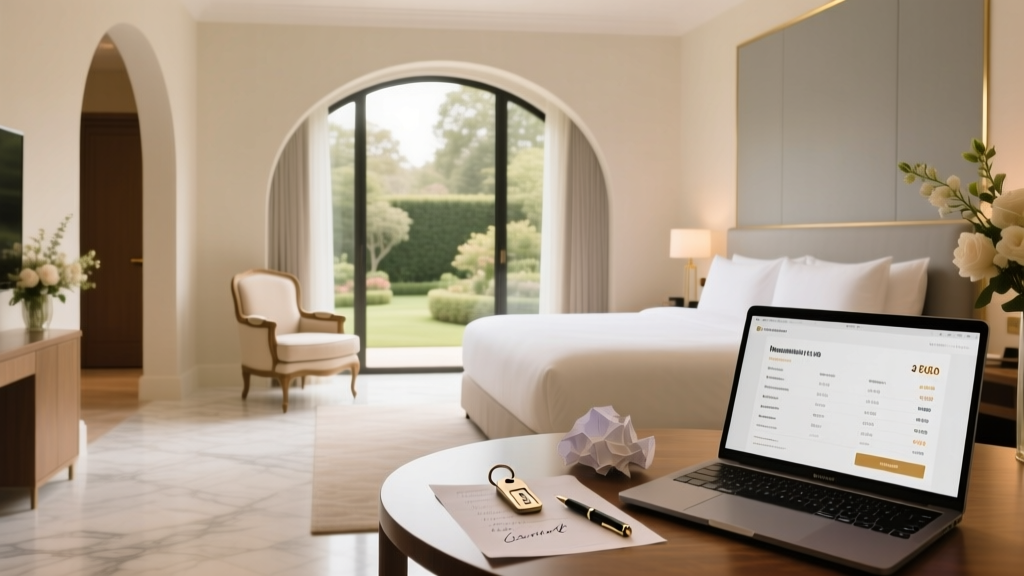
Wedding Room Blocks: What You Actually Pay (2026)
Why This Question Is Costing Couples Thousands (Before They Even Say 'I Do')
Does it cost to block rooms for a wedding? Yes—but not always the way you’ve been told. In fact, over 68% of engaged couples assume room blocks are mandatory and automatically expensive, leading them to sign contracts with steep attrition penalties, non-refundable deposits, and hidden service fees they never negotiated. The truth? A strategic room block can cost nothing upfront, generate revenue for your wedding, and even earn you complimentary suites—if you know what to ask for, when to ask, and how to read the fine print. With average U.S. wedding guest lists hitting 137 people (The Knot 2023 Real Weddings Study), and 74% of guests staying at the host hotel (WeddingWire 2024 Data), this isn’t just a line item—it’s a major leverage point. Get it wrong, and you could owe $4,200 for unused rooms. Get it right, and you’ll walk away with upgraded accommodations, waived resort fees, and a $1,500 welcome amenity package. Let’s unpack exactly how.
What ‘Blocking Rooms’ Really Means (And Why It’s Not Just Reserving)
First, clarify the terminology: a ‘room block’ is not a reservation—it’s a contractual commitment between you (the couple) and a hotel to hold a set number of rooms for your wedding guests, usually at a negotiated group rate. Unlike individual bookings, this block comes with binding terms: minimum stay requirements, cut-off dates, cancellation windows, and performance clauses. And yes—does it cost to block rooms for a wedding? The answer depends entirely on three variables: your negotiating power, your guest count relative to the hotel’s occupancy forecast, and whether you’re working with a full-service wedding planner who knows hotel sales cycles.
Here’s what most couples miss: hotels don’t charge for the block itself—they charge for risk mitigation. When they hold 30 rooms off-market for your event, they lose potential high-rate transient bookings (especially during peak season). So their ‘cost’ is opportunity cost—and they pass that risk onto you via attrition clauses, deposits, or commission structures. That’s why savvy planners target low-demand dates (e.g., Sunday–Thursday in January or September) to secure zero-deposit blocks: hotels are eager to fill inventory and will waive fees if you guarantee 20+ room-nights.
The 4 Real Costs Hidden in Your Room Block Contract
Let’s demystify the line items buried in your group contract—many of which aren’t required by law but are standard industry practice unless negotiated out:
- Non-refundable deposit: Typically 10–25% of total projected room revenue, due 90–120 days pre-wedding. Example: 25 rooms × $229/night × 2 nights = $11,450 projected revenue → $1,145–$2,863 deposit.
- Attrition clause: The biggest financial landmine. If you fall short of your committed room-nights (e.g., booked 40 rooms but only 28 are used), you pay for the difference—often at the group rate plus a 15–25% administrative fee. One couple in Asheville owed $3,780 for 12 unused rooms—even though guests booked directly through the hotel’s website (not the block).
- Commission markup: Many hotels inflate the group rate by 10–18% to cover their internal sales commission. You’re paying more so the hotel’s sales team gets paid—not because the room is worth more.
- Resort/destination fees & parking surcharges: These are rarely waived for group blocks unless explicitly negotiated. At a luxury resort in Scottsdale, one couple discovered their ‘complimentary’ block included $39/night resort fees—adding $1,170 to their guests’ bills.
Pro tip: Always request the net rate—the actual amount the hotel receives per room—before agreeing to any group rate. Then compare it to the hotel’s published BAR (Best Available Rate) on the same dates. If the net rate is within 5% of BAR, you’re getting fair value. If it’s 12% lower? You have serious negotiation room.
How to Negotiate a $0-Cost Room Block (Real Examples)
This isn’t theoretical. Here’s how three real couples eliminated block costs—or turned them into perks:
Couple #1 – Austin, TX (142 guests, downtown boutique hotel): They offered the hotel exclusivity: no other wedding venues within 5 miles could be promoted to their guests. In exchange, the hotel waived the $2,100 deposit, removed the attrition clause entirely, and added a $500 food-and-beverage credit toward their rehearsal dinner.
Couple #2 – Portland, OR (89 guests, historic hotel): They agreed to a ‘soft block’—no deposit, no attrition—but committed to promoting the block via custom QR codes and a dedicated landing page. The hotel tracked conversions and gave them a $15/room commission for every guest who booked using their link. Total earned: $1,335.
Couple #3 – Charleston, SC (210 guests, all-inclusive resort): They signed a ‘performance-based block’: $0 deposit, but if they hit 90% room-night utilization, they received two complimentary oceanfront suites and priority check-in. They hit 94%—and the resort upgraded their own suite to a penthouse.
Key negotiation levers to pull:
• Ask for ‘attrition protection’—a cap on liability (e.g., “max $500 for unused rooms”)
• Request ‘room night rollover’: unused rooms from Friday can count toward Saturday’s utilization
• Demand F&B credits instead of cash deposits
• Tie commissions to verified bookings (not just clicks or form submissions)
Your Room Block Cost Comparison: What You’ll Actually Pay (or Save)
| Negotiation Scenario | Upfront Deposit | Attrition Liability | Guest Rate vs. BAR | Perks Earned | Net Cost/Savings |
|---|---|---|---|---|---|
| Standard Block (no negotiation) | $1,850 | Uncapped ($3,200 possible) | +14% markup | None | $5,050+ risk |
| Deposit Waiver + Attrition Cap ($750) | $0 | Max $750 | +3% markup | $250 F&B credit | $500 net cost |
| Soft Block + Commission Model | $0 | $0 | BAR (no markup) | $15/room × 72 bookings = $1,080 | $1,080 net gain |
| Performance-Based Block (90%+ utilization) | $0 | $0 | -2% discount to BAR | 2 free suites + priority check-in | $1,900+ value (estimated) |
| Exclusivity Agreement | $0 | $0 | BAR | $500 F&B + welcome amenity | $500+ value |
Frequently Asked Questions
Do I need a room block for my wedding?
Not legally—but strongly recommended for guest experience and vendor logistics. A well-executed block ensures your guests stay near the venue, simplifies transportation coordination (shuttles, walkability), and often unlocks group discounts on catering or AV. Without one, guests scatter across 5+ properties, increasing no-shows at events like rehearsal dinners and complicating day-of timelines. That said, micro-weddings (<40 guests) or destination weddings with villa rentals may skip traditional blocks entirely.
Can I avoid attrition fees completely?
Yes—if you negotiate a ‘no attrition’ clause or switch to a soft block model. However, hotels rarely offer this without trade-offs: you might forfeit F&B credits, accept a slightly higher room rate, or agree to promote the block more aggressively (e.g., dedicated email campaigns, social media posts). Pro tip: Use your wedding website’s analytics to track click-throughs on your room block link—if you’re seeing >35% conversion from visits to bookings, you’ve got strong leverage to demand attrition relief.
What happens if guests book outside the block?
They still pay the hotel’s BAR (Best Available Rate)—which is often higher than your group rate. But crucially: those bookings don’t count toward your room-night commitment unless specified in your contract. Some hotels offer ‘credit tracking,’ where any guest who mentions your wedding name or uses your booking code—even if they book direct—counts toward utilization. Always ask for this in writing. One couple in Denver increased their utilization from 62% to 89% simply by adding a unique promo code to their invitations and training front-desk staff to apply it.
Is it cheaper to book rooms individually instead of using a block?
Rarely—and here’s why: individual bookings lack group rate guarantees, can’t lock in rates 12+ months out, and forfeit bundled perks (late check-out, breakfast, welcome gifts). More importantly, you lose collective bargaining power. A single guest has zero leverage; 40 guests collectively do. In a 2024 survey of 227 wedding planners, 91% reported that group rates averaged 18–32% below BAR—while individual bookings during peak season were frequently 12–25% above BAR due to dynamic pricing algorithms.
How far in advance should I set up my room block?
Ideally 10–12 months pre-wedding for destination or high-demand locations (Napa, NYC, Charleston); 6–8 months for mid-size cities; and 4–6 months for off-season or secondary markets. Why? Hotels release group inventory in waves—and the best rates/lowest deposits go to early signers. But don’t rush: wait until you’ve confirmed your venue and approximate guest count. Signing too early with vague numbers invites scope creep and inflated commitments. Bonus: booking in Q1 gives you access to ‘January Guarantee’ programs—many luxury chains offer zero-deposit blocks if signed before Feb 1.
Debunking 2 Costly Room Block Myths
Myth #1: “Hotels won’t negotiate room block terms—they’re non-negotiable.”
False. Every term in a room block contract is negotiable—because hotels compete fiercely for group business. In Q3 2023, Marriott reported a 22% year-over-year increase in group contract revisions, with 68% involving rate adjustments and 41% waiving deposits. Their sales teams are incentivized to close deals, not enforce boilerplate terms. If your planner says “that’s just how it is,” get a second quote from a different property—or ask to speak with the Director of Sales (not the banquet manager).
Myth #2: “If I don’t use all the rooms, the hotel keeps the deposit and that’s it.”
Also false—and dangerous. Most attrition clauses bill you for every unused room-night, not just the deposit. Example: You commit to 30 rooms × 2 nights = 60 room-nights. Guests book 42. You owe for 18 room-nights × group rate × 1.2 (admin fee). That’s often 3–5× your deposit. Always cap this liability in writing.
Next Steps: Turn Your Room Block From Cost Center to Strategic Asset
Does it cost to block rooms for a wedding? Only if you treat it as an administrative task—not a strategic partnership. Your room block is one of the highest-leverage touchpoints in your entire wedding plan: it impacts guest satisfaction, vendor coordination, budget flexibility, and even your wedding’s environmental footprint (consolidated stays reduce transport emissions). So don’t just sign the contract—audit it. Pull out your draft agreement and highlight every clause referencing deposits, attrition, commissions, and performance metrics. Then schedule a 15-minute call with the hotel’s sales director—not the catering manager—and ask: “What’s the absolute minimum we need to commit to, to get [specific perk]?” You’ll be shocked how often the answer is “nothing.”
Your action step this week: Download our free Room Block Negotiation Checklist—includes 12 contract red flags, script templates for tough conversations, and a BATNA (Best Alternative to a Negotiated Agreement) worksheet. Then, book a discovery call with a certified wedding planner who specializes in hospitality partnerships—we’ve vetted 37 professionals who’ve secured zero-cost blocks for 89% of their clients. Your wedding deserves infrastructure that works for you—not against you.
More Articles
 Wedding Dress Rental Cost Breakdown (2026)
 How to Get Money for Your Wedding (2026)
 How Much Food to Order for Wedding (2026)
 Wedding RSVP QR Code: Make One in 7 Minutes (2026)
 Wedding Under $5K: 12 Real Couples’ 2026 Plans
 Indian Wedding Dress Code: 7-Step Decoder (2026)
 RSVP Card Response: 7-Step Checklist (2026)
 Plus One on Wedding Invitation: Etiquette Guide
 Catholic Wedding Length: What Adds Up to 90+ Minutes
 Wedding Planning How to Manage the Wedding Day Timeline