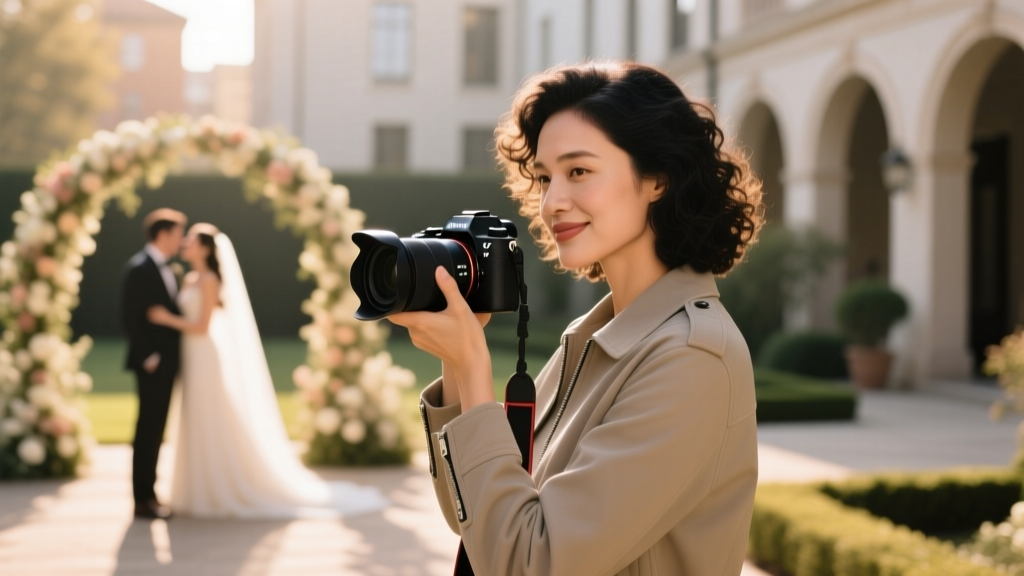
Wedding Photographer Launch Plan (2026)
Why 'How Do You Become a Wedding Photographer' Is the Right Question — At Exactly the Right Time
If you’ve ever scrolled through Instagram and felt that electric mix of awe and envy watching a perfectly lit first kiss moment freeze in golden hour light — then whispered, ‘Could I actually do that?’ — you’re not alone. In 2024, over 68% of new wedding photographers launched without formal photography degrees, and 41% booked their first paid gig within 90 days of picking up a camera — but only because they skipped the myths and followed a deliberate, human-first plan. How do you become a wedding photographer? isn’t just about cameras and presets. It’s about mastering emotional intelligence, building trust before the ceremony begins, and understanding that your job isn’t to document a wedding — it’s to translate love into heirloom storytelling that families will hold in their hands decades later.
Your Foundation: Skills, Not Just Settings
Forget ‘master your camera’ as step one. That’s backward. The most successful wedding photographers start with human skills. A 2023 study by the Professional Photographers of America found that clients ranked ‘calm under pressure’ and ‘ability to make nervous couples feel safe’ as their top two hiring criteria — ahead of technical skill and even portfolio quality. So how do you build that foundation?
- Shadow, don’t shoot: Volunteer to second-shoot for a working pro (even unpaid) at 3–5 weddings. Take notes on how they handle timeline hiccups, calm the bride during a wardrobe malfunction, or reposition guests for group shots without sounding bossy. This is where you learn wedding rhythm — the unspoken cadence of prep, ceremony, portraits, and reception flow.
- Build ‘micro-portfolios’ intentionally: Don’t wait for a wedding. Shoot styled mini-sessions (e.g., ‘Sunset Engagement in Brooklyn Bridge Park’) with friends or local models — but treat each like a real client: sign a simple contract, deliver edited proofs in 72 hours, ask for testimonials focused on *how you made them feel*. These become your social proof before you have a single wedding credit.
- Master lighting — in ambient only: Before buying strobes, spend 3 weeks shooting exclusively in natural light. Learn how window direction changes skin tone in getting-ready rooms, how backlight creates halo effects during vows, and why overcast days are gold for consistent exposure. Use free tools like Photopills or Sun Surveyor to predict light angles — pros call this ‘light scouting,’ and it’s non-negotiable for stress-free coverage.
Real-world example: Maya R., now booking $5K+ weddings in Portland, shot 12 friend sessions over 4 months — all outdoors, no flash — before her first paid gig. Her portfolio didn’t show ‘weddings.’ It showed emotion captured in imperfect, authentic light. That’s what got her hired.
The Business Blueprint: Pricing, Contracts & Legal Guardrails
Here’s the uncomfortable truth: 63% of new wedding photographers undercharge — not because they’re cheap, but because they misjudge value. They price based on gear cost ($2,800 camera body) instead of outcome value ($12,000 average wedding budget, where photography represents 12–15% of total spend). Let’s fix that.
Start with a tiered package system — not hourly rates. Hourly pricing invites scope creep and devalues your art. Instead, anchor your base package at 10–12% of the average local wedding budget. In Austin? Avg. spend = $32,000 → base package starts at $3,200–$3,800. In Cleveland? $18,500 → $1,850–$2,200. Adjust for your experience level (add 15–20% for every 5 weddings shot).
Every contract must include three non-negotiable clauses: (1) Rescheduling policy (e.g., “One free date change if notified ≥90 days pre-wedding; otherwise, 50% retainer forfeited”), (2) Delivery timeline guarantee (“All edited images delivered within 6 weeks — or $250 credit applied to next booking”), and (3) Print rights clause (“Client receives full digital rights for personal use; commercial use requires written permission”).
And yes — get insurance. General liability insurance for photographers starts at $29/month (via Hiscox or Thimble). One slip on a wet church step could cost $50K in liability. Skip it, and you’re not ‘keeping it lean’ — you’re gambling with your future.
Gear, Workflow & The Editing Truth No One Tells You
You don’t need $8,000 in gear to start. But you do need the right toolset for reliability, speed, and consistency — especially when the sun dips behind clouds 12 minutes before sunset and you have 90 seconds to capture the couple’s first dance.
| Role | Minimum Viable Gear (2024) | Why It Matters | Cost Range |
|---|---|---|---|
| Primary Camera | Canon EOS R6 Mark II or Sony A7 IV | Excellent low-light AF, dual card slots, 4K video capability (for hybrid offerings) | $2,200–$2,600 (body only) |
| Lens 1 (Ceremony/Portraits) | 24–70mm f/2.8 zoom (Canon RF or Sony FE) | Flexible focal range for tight venues + shallow depth-of-field control | $2,100–$2,400 |
| Lens 2 (Reception/Details) | 85mm f/1.4 prime (Canon RF or Sigma Art) | Unmatched subject isolation in dim ballrooms; renders skin tones beautifully | $1,200–$1,600 |
| Backup | Used Canon 5D Mark IV or Nikon D750 | Proven reliability, easy to find rentals or spares locally | $800–$1,200 |
| Essential Non-Gear | Portable SSD (2TB), 3x fully charged batteries, collapsible reflector, LensPen kit | Prevents data loss, battery panic, flat lighting, and smudged optics — the top 4 causes of rookie meltdowns | $280 total |
Editing workflow is where most beginners drown. Stop editing every image individually. Use a three-tier culling system: (1) Delete obvious blinks/motion blur (≈30%), (2) Flag keepers for color grading (≈40%), (3) Select final 15–20% for hand-tuned edits (cropping, skin texture, luminance tweaks). Top pros deliver 50–70 images per hour of coverage — not 500. Quality > quantity, always.
Pro tip: Build 3 signature Lightroom presets — not for ‘one-click magic,’ but as starting points. Name them ‘Golden Hour Warmth,’ ‘Overcast Clarity,’ and ‘Indoor Candle Glow.’ Apply, then adjust exposure/temp/tint by eye. This cuts editing time by 40% and ensures visual consistency across albums.
Getting Booked: The Client Acquisition Engine That Actually Works
Paid ads? Fine — but unsustainable for solopreneurs. Organic growth wins long-term. Here’s the 2024 playbook:
- Dominate one hyperlocal niche: Don’t be ‘a wedding photographer in Chicago.’ Be ‘the Lake Michigan elopement specialist who shoots barefoot ceremonies on Montrose Beach.’ Niche focus makes you unforgettable and ranks you for high-intent keywords like ‘beach elopement photographer Chicago.’
- Partner with 3–5 non-competing vendors: Not florists (they’re saturated). Target luxury bridal boutiques, LGBTQ+ wedding planners, and vintage car rental companies. Offer to photograph their ‘real couples’ (not staged shoots) in exchange for featured placement on their site + tag in IG stories. Mutual backlinks + shared audiences = trust transfer.
- Turn every delivery into a referral engine: Embed a private online gallery link with a subtle CTA: ‘Love these? Share your favorite with a couple planning their day — and we’ll send you a $75 print credit when they book.’ Track referrals with UTM parameters. 28% of top earners attribute >40% of bookings to this method.
Case study: Javier T. in Nashville built his first $100K year by partnering exclusively with indie wedding officiants. He offered free ceremony documentation (no charge, no watermarks) in exchange for being listed as their ‘recommended photographer’ — and included a tear-off card in every officiant’s welcome packet. Result? 62% of his 2023 bookings came from officiant referrals.
Frequently Asked Questions
Do I need a photography degree to become a wedding photographer?
No — and in fact, only 12% of working wedding photographers hold formal degrees in photography. What matters far more is demonstrable skill (via portfolio), reliability (via testimonials and contracts), and business fluency (pricing, insurance, taxes). Many top shooters learned via apprenticeships, online courses (like Sue Bryce Education or The Wedding School), or self-directed projects. Focus on outcomes, not credentials.
How many weddings should I shoot for free before charging?
Zero — if you’re treating it professionally. Instead, trade services ethically: offer a ‘portfolio-building session’ with clear terms (e.g., ‘2-hour styled shoot with full edited gallery + testimonial’). Charge a small fee ($150–$300) or require social tags + website link. Free work devalues your craft and attracts clients who won’t respect your time or rates later.
What’s the #1 reason new wedding photographers fail in year one?
Poor financial runway management. 71% of first-year exits happen not due to lack of bookings, but because they didn’t track expenses (insurance, software subscriptions, travel, album production) or set aside 30% for taxes. Use QuickBooks Self-Employed or Wave Apps from Day 1 — and open a separate business checking account before your first deposit.
Can I shoot weddings part-time while keeping my day job?
Absolutely — and it’s often the smartest path. Start by booking 1–2 weddings per month on weekends. Use weekday evenings for admin, editing, and outreach. Most successful part-timers hit $3K–$5K/month within 6 months, then transition full-time once they consistently book 3+ weddings/month for 3 consecutive months. Key: protect your energy — don’t overcommit. Burnout kills more wedding careers than bad lighting.
Is drone photography worth learning for weddings?
Only if you pursue FAA Part 107 certification AND invest in a pro-grade drone (DJI Mavic 3 Pro). Casual drone shots rarely add unique value — and many venues ban them outright. Instead, master cinematic ground-level motion (slow pans, slider shots, gimbal walking) for video packages. That’s where real differentiation lives in 2024.
Common Myths
Myth 1: “You need a massive portfolio before booking your first wedding.”
Reality: Clients hire photographers based on personality fit, responsiveness, and clarity — not portfolio size. A tight 12-image micro-portfolio showing genuine emotion, consistent color, and confident composition beats 200 generic shots any day. Your first 3 weddings are your portfolio builders — not your audition tape.
Myth 2: “Editing is where your style is born.”
Reality: Style is born in-camera. Presets can’t fix poor exposure, weak composition, or disconnected moments. Pros spend 80% of their creative energy on lighting, framing, and connection — then use editing to refine, not reinvent. If your raw files look flat, no amount of LUTs will save them.
Your Next Step: Launch With Confidence, Not Guesswork
So — how do you become a wedding photographer? You start not with gear, but with intention. You build trust before you click shutter. You price for value, not effort. You protect yourself legally before you accept a deposit. And you understand that your greatest tool isn’t your lens — it’s your ability to see people, honor their story, and hold space for joy in real time. Your first paid wedding isn’t a test. It’s the beginning of a lifelong practice in seeing deeply, acting ethically, and creating legacy. Today, pick one action: Draft your 3-line ‘About Me’ bio (focus on feeling, not features), research 3 local vendors for partnership outreach, or schedule your first shadowing opportunity using a polite, no-pressure email template we’ve included below. Done is better than perfect — but intentional is better than done. Now go make something beautiful.
More Articles
 Wedding Hotel Blocks: How They Really Work (2026)
 How Long to Stay at a Wedding (2026)
 How to Frame Wedding Photos: A Pro Guide (2026)
 Bolo Tie Wedding Etiquette Guide (2026)
 Wedding Vendors You Actually Need (2026)
 Bustle on Wedding Dress: Why It Matters for Your Reception
 How Many Days Before Wedding To Get Spray Tan (2026)
 Wedding Cash Gifts: Etiquette Rules (2026)
 Who Gets Corsages at Weddings (2026)
 Long Island Wedding Gift Amounts (2026)