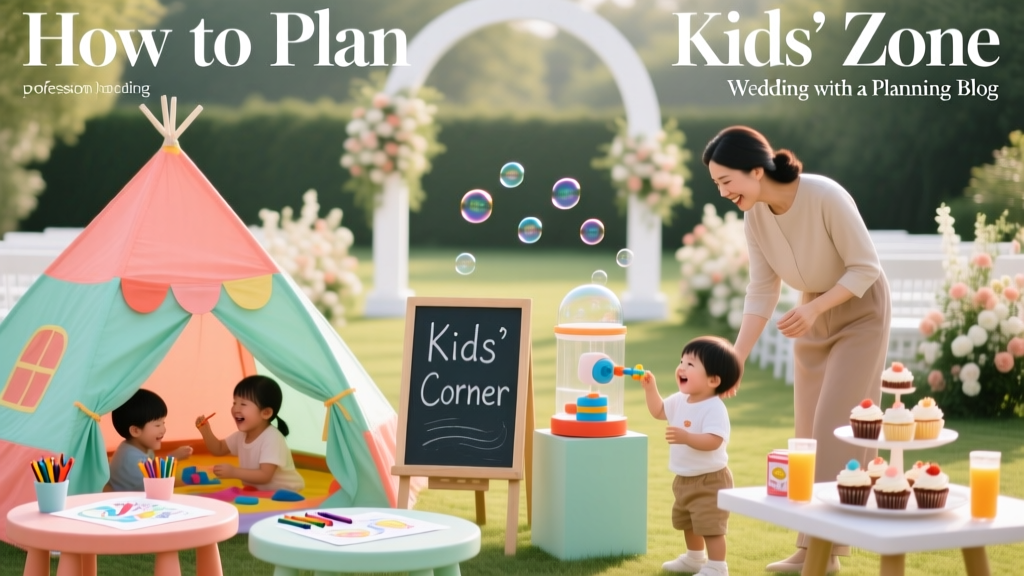
How to Plan a Wedding With a Kids Zone
If you’re inviting families to your wedding, there’s a good chance your guest list includes little ones you genuinely love… and a few energetic kiddos you haven’t met yet. You might be picturing a sweet flower girl moment—followed by a toddler meltdown during vows, or a pack of children doing laps around the dance floor during your first dance.
Here’s the good news: you don’t have to choose between a family-friendly wedding and a stylish, meaningful celebration. Planning a wedding with a kids zone is one of the most effective ways to keep children happy, parents relaxed, and your timeline running smoothly—without making anyone feel “managed.” Done well, a kids zone feels like thoughtful hospitality, not a separate party in the corner.
This guide walks you through what to set up, how to budget, when to book help, and the small details that make a kids zone feel effortless (even if you’re planning on a tight timeline).
What a “Kids Zone” Really Is (and Why It Works)
A kids zone is a dedicated, supervised area where children can play, rest, and snack—especially during the parts of the wedding day that are hardest for them (ceremony, speeches, long dinner). The goal isn’t to “keep kids out of the way.” It’s to give them something age-appropriate to do so they’re not bored, overstimulated, or hungry.
Benefits for everyone
- Parents: can actually listen to vows, enjoy cocktails, and stay later.
- Kids: have activities built for their attention spans (and a place to decompress).
- You: get fewer interruptions, fewer last-minute surprises, and a calmer vibe.
- Your venue and vendors: have clearer traffic flow and fewer safety concerns.
Step 1: Decide the “Style” of Kids Zone That Fits Your Wedding
Start by choosing a kids zone format that matches your venue, guest count, and budget. Think of it like picking a cocktail-hour setup: there are levels.
Option A: Activity Corner (best for small weddings)
Ideal for 5–10 children, especially if most are school-age and will come/go.
- Coloring table, puzzles, sticker books
- Small basket of quiet toys
- One or two teen “helpers” or a family member assigned to check in
Option B: Supervised Kids Room (best for medium-to-large weddings)
Ideal for 10–25 children. This is the most popular “sweet spot” because it gives parents confidence.
- Separate room or lounge area near reception
- Professional childcare team
- Games + crafts + movie corner + snack station
Option C: Full Kids Reception (best for very kid-heavy weddings)
Ideal for 25+ children, or when many guests are traveling with kids and staying overnight.
- Dedicated space with structured activities
- Kid-friendly meal timing
- Clear pickup/drop-off plan
- Rest area for younger kids
Real-world scenario
You’re having a 120-person wedding and inviting 18 kids: A supervised kids room during the ceremony and reception speeches is usually enough. Many kids will join the dance floor later—and that’s part of the fun.
Step 2: Count Kids, Ages, and Family Needs Early
This is where your kids zone becomes smart rather than generic. You’ll plan better (and spend less) when you know exactly who you’re accommodating.
Kids zone planning checklist
- Estimate number of children on the guest list (before invitations go out).
- Group by ages:
- 0–2 (babies/toddlers)
- 3–5 (preschool)
- 6–9 (young kids)
- 10–12 (tweens)
- 13–17 (teens)
- Ask parents what helps: dietary needs, nap schedules, sensory considerations, allergies.
- Decide when kids are welcome: ceremony, cocktail hour, dinner, dancing—or some combination.
Tip: Add one simple line to your wedding website RSVP: “If you’re bringing children, please share their ages and any allergies.” This keeps it organized without making it a big announcement.
Step 3: Choose the Right Location (Comfort + Safety First)
Your kids zone doesn’t need to be large. It needs to be strategically placed and easy to supervise.
What to look for at your venue
- Close enough for parents to access quickly (especially for nursing, diaper changes, or anxious kids)
- Far enough from speeches and DJ speakers to avoid overstimulation
- Bathroom access nearby
- Good lighting (kids crafts + dim reception lighting don’t mix well)
- Safe flooring and minimal breakables
Indoor vs. outdoor kids zones
- Indoor: better temperature control, easier to run a movie corner, safer for toddlers.
- Outdoor: great for lawn games, bubbles, and high-energy play—best with a boundary (fence, hedges, or rented stanchions).
Pro tip: If your venue has a bridal suite or green room not needed after the ceremony, ask if it can become the kids zone later in the night.
Step 4: Hire Childcare (or Build a Responsible Coverage Plan)
This is the piece that makes parents exhale. If you can allocate budget anywhere, professional wedding childcare usually delivers a big return in guest comfort.
How many caregivers do you need?
- Babies/toddlers: 1 caregiver per 2–3 children
- Preschool: 1 per 4–5 children
- School-age: 1 per 6–8 children
- Mixed ages: plan for the youngest group; they set the staffing needs
What to ask childcare providers
- Are caregivers background-checked and CPR/first-aid certified?
- Do they bring activities, or do you supply them?
- How do they handle diapering and bathroom breaks?
- What’s the plan for a sick child or a child who won’t settle?
- Do they have insurance?
Budget range: Rates vary by location, but many couples spend $300–$1,200+ depending on hours, staffing, and whether activities are included. If that number feels high, remember: it can be the difference between guests leaving at 8:30 and staying until the last song.
If you can’t hire a childcare team
You can still create a functional kids zone—just be honest about what it is. Consider:
- Hiring one professional sitter for a smaller group
- Asking two trusted teens/cousins to help (with clear expectations and pay)
- Creating a quiet activity area in sight of parents, rather than a separate room
Important: Never “assign” childcare to bridesmaids, groomsmen, or grandparents unless they volunteer and truly want that role. It can create resentment fast.
Step 5: Stock the Kids Zone With the Right Mix of Activities
Think in categories: quiet, active, creative, and calming. Variety keeps the peace.
Kids zone essentials (most weddings)
- Quiet activities: coloring books, crayons, sticker sheets, Water Wow-style pads, picture books
- Creative: craft kits, pipe cleaners, Play-Doh (check venue rules), DIY “wedding crown” station
- Active: bean bag toss, ring toss, mini bowling set, bubbles (outdoor), hula hoops
- Calming: floor pillows, small tent, weighted lap pad (if requested), sensory toys
- Movie corner: laptop/tablet + headphones or low-volume speaker, kid-friendly movies, subtitles on
Age-specific ideas
- Toddlers: soft blocks, board books, stacking toys, a “busy board,” stuffed animals
- Kids 6–9: LEGO table, simple card games, scavenger hunt
- Tweens: photo booth props, disposable cameras, trivia cards
- Teens: lounge seating, phone charging station, a small “mocktail” bar, instant camera
Real-world scenario
Your ceremony is outdoors in summer: Create a “cool down” kids basket near the kids zone with mini fans, water, electrolyte pops, and sunscreen (parents apply). It’s a small touch that prevents a lot of crankiness.
Step 6: Plan Food, Drinks, and Allergy-Safe Snacks
Hungry kids are loud kids. A smart snack plan is one of the easiest ways to keep your reception flowing.
Easy kid-approved options
- Applesauce pouches
- Individual crackers/pretzels
- Fruit cups or banana halves
- Cheese sticks (if refrigeration is available)
- Mini sandwiches
- Water and juice boxes (check with venue)
Allergy and safety tips
- Avoid open bowls of nuts or mixed candy unless you know allergies.
- Label snacks clearly (especially gluten/dairy).
- Keep choking hazards (whole grapes, popcorn for toddlers) out of toddler reach.
Budget tip: Ask your caterer about a kids meal option and whether it can be served early. When kids eat earlier, parents enjoy dinner more.
Step 7: Build the Kids Zone Into Your Wedding Day Timeline
A kids zone works best when it supports your schedule—rather than being a vague “extra.”
Sample timeline integration
- 30–45 minutes before ceremony: Kids arrive, settle in, start quiet activities
- Ceremony: Kids can attend with parents or be in kids zone (you decide); have a “quick exit” plan for noisy moments
- Cocktail hour: Activities + snacks; great time for crafts
- Grand entrances/speeches: Movie corner or quiet games
- After dinner: Kids can rejoin the dance floor, rotate in/out, or continue with games
- Later night: Rest zone for overtired kids; parents decide when to pick up
Communication that prevents confusion
- Put kids zone hours on your wedding website
- Add one sign at the venue: “Kids Zone (Ages X–Y) — Please sign in/out”
- Tell parents who’s supervising and where to go
Common Mistakes to Avoid (and What to Do Instead)
- Mistake: Putting the kids zone right next to the DJ.
Do instead: Choose a quieter room or add sound-dampening (doors closed, hallway buffer, rugs). - Mistake: Assuming kids will “just dance.”
Do instead: Plan a mix—some kids love dancing, others want structure. - Mistake: No plan for toddlers during vows.
Do instead: Create a “parent exit route” and provide quiet toys in the back row. - Mistake: Too many messy crafts.
Do instead: Choose low-mess options (stickers, coloring, foam shapes) and protect surfaces. - Mistake: Not clarifying supervision responsibilities.
Do instead: Use clear language: “Professional childcare provided from 4–10 pm” or “Parents remain responsible.”
Wedding Planner Pro Tips for a Smooth, Stylish Kids Zone
- Make it feel intentional: Match bins, signs, and linens to your wedding colors for a polished look.
- Create a “quiet kit” for the ceremony: mini coloring pads, fidget toys, and snacks (if allowed).
- Offer a kids favor that doubles as an activity: mini LEGO packs, sticker books, or a small plush.
- Set a charging station: Parents love it, teens will actually use it, and it keeps phones off dinner tables.
- Plan lighting: A small lamp or string lights in the kids room makes it cozy and functional.
Budgeting for a Kids Zone (Where to Spend vs. Save)
Spend on:
- Supervision (safety and parent comfort are the point)
- Comfort (rugs, pillows, temperature control)
- Simple, durable activities that won’t break immediately
Save on:
- Borrowing toys from friends with kids (sanitize and label)
- Printing your own coloring pages (include a cute wedding-themed one)
- Buying bulk crayons, stickers, and activity books
Rule of thumb: Couples often budget $15–$40 per child for activities/snacks (plus childcare). If you’re inviting a lot of kids, the per-child cost drops when you buy in bulk and focus on a few high-impact stations.
FAQ: Planning a Wedding With a Kids Zone
Do we need a kids zone if we already have a kids menu?
A kids menu helps during dinner, but it doesn’t solve boredom during the ceremony, speeches, or long transitions. A small activity area—even just coloring and quiet toys—can make a big difference.
How do we politely tell parents there’s childcare available?
Add a warm note on your wedding website: “We’ll have a supervised kids zone available during the reception. You’re welcome to use it as much or as little as you’d like.” Avoid making it sound mandatory unless that’s truly your plan.
What if a parent doesn’t feel comfortable leaving their child?
That’s completely normal. Design your kids zone so parents can stay for a few minutes to help kids settle, and choose a location close enough that they can check in easily.
Is it okay to have a kid-free ceremony but kid-friendly reception?
Yes—many couples do this. Just communicate clearly on invitations and your wedding website, and offer the kids zone during the ceremony timeframe so parents aren’t scrambling.
What’s the best way to handle naps or overtired toddlers?
Include a calm corner with dim lighting, pillows, and a small tent or screen for privacy. Keep expectations realistic: some families will still leave early, and that’s okay.
How far in advance should we book wedding childcare?
For peak wedding season, aim for 3–6 months out (earlier for large weddings or destination venues). If you’re within 4–8 weeks, still ask—some providers can staff last-minute dates.
Your Next Steps (So This Feels Easy, Not Overwhelming)
If you want a wedding that truly welcomes families while protecting your ceremony and reception flow, a kids zone is one of the kindest upgrades you can make. Start small if you need to—one supervised room, a simple activity table, and a smart snack plan can change the whole night.
- This week: estimate the number of kids and gather ages via RSVP or a quick message.
- Next: ask your venue about available rooms, noise separation, and rules for snacks/activities.
- Then: book childcare (or confirm your coverage plan), and build the kids zone into your timeline.
You’re not just planning a party—you’re hosting the people you love, exactly as they are, kids included.
For more practical, real-life wedding planning help, explore more guides on weddingsift.com.
More Articles
 How to Dress Up a Maxi Dress for a Wedding
 Wedding Suit Colors: Venue, Season & Time Rules (2026)
 Email Wedding RSVP Guide: Etiquette & Tips
 Wedding Glow-Up Plan: 7-Week Prep (2026)
 How Much Food to Order for Wedding (2026)
 Wedding Hotel Blocks: Hidden Fees & Savings (2026)
 Marriage Certificate: 7-Step Process (2026)
 How Long Is a Catholic Wedding Ceremony? (2026)
 Beige at Weddings: How to Wear It Without Clashing (2026)
 How Vegas Weddings Work: Real 2026 Guide