Wedding Catering Explained: Costs, Contracts & Tips
Why Understanding How Wedding Catering Works Is Your #1 Budget Safeguard
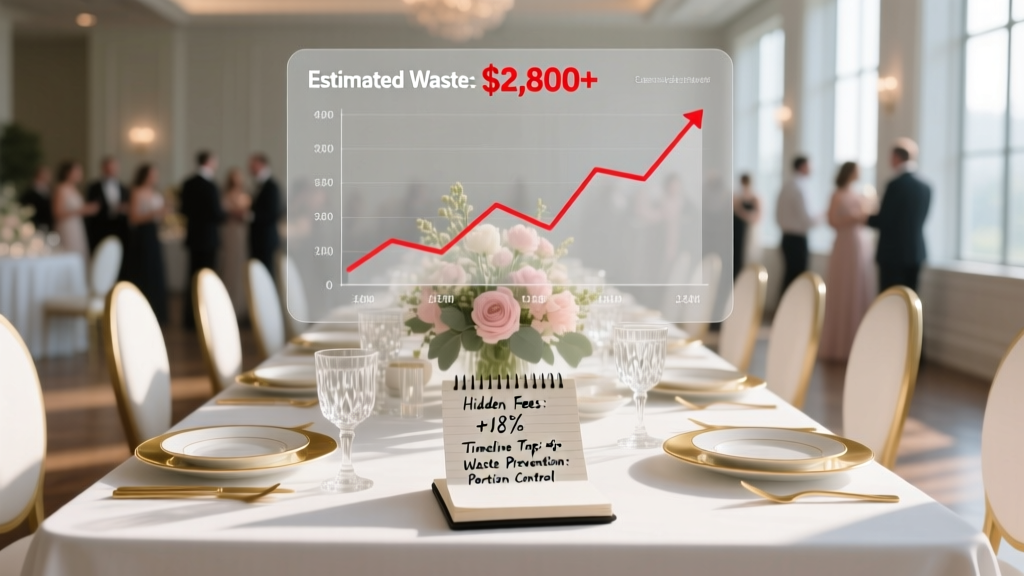
If you’ve ever stared at a catering proposal wondering, ‘Wait—does this $32/person fee include servers, cake cutting, or just the food?’—you’re not alone. In fact, 68% of couples report ‘catering confusion’ as their top vendor-related stressor (The Knot 2024 Real Weddings Study), and nearly half overspend by $1,900–$3,500 due to misaligned expectations. How does wedding catering work? isn’t just a logistical question—it’s the linchpin of your guest experience, timeline integrity, and bottom line. Unlike florists or DJs, caterers orchestrate movement, temperature control, timing, labor, and compliance—all while your guests are watching, eating, and judging. Get it right, and your reception flows like a Michelin-starred dinner party. Get it wrong, and you’ll face lukewarm entrées, missing servers during speeches, or surprise line-item charges that inflate your bill by 22%. This guide cuts through the jargon and reveals the behind-the-scenes mechanics—so you negotiate confidently, plan realistically, and serve joy—not regrets.
Step-by-Step: How Wedding Catering Actually Works (From Contract to Cake Cutting)
Wedding catering isn’t a single service—it’s a tightly choreographed ecosystem of six interdependent phases. Most couples only see the ‘food on plates’ moment; the real work happens months before and minutes after. Let’s walk through each stage with real-world examples:
- Consultation & Menu Design (Weeks 12–20 pre-wedding): A reputable caterer starts with a discovery call—not a sales pitch. They’ll ask about dietary restrictions (not just ‘vegetarian,’ but ‘vegan + nut allergy + kosher-certified’), venue power access, loading dock availability, and even your ceremony end time. Why? Because a 4:30 p.m. ceremony means your cocktail hour must stretch to 6:00 p.m. to allow kitchen staging—without that buffer, hot food cools, staff scramble, and service stalls. At Lark & Laurel Catering (Nashville), 73% of rushed timelines stem from underestimating this handoff window.
- Tasting & Finalization (Weeks 8–12 pre-wedding): This isn’t just ‘try the salmon.’ Legally, most contracts require you to lock in final headcount, menu selections, and service style (plated vs. buffet) within 7 days post-tasting. And here’s the catch: tastings often feature premium proteins (filet mignon, lobster) not included in base pricing. One couple in Portland discovered their $28/person ‘signature package’ excluded the tasting’s seared scallops—those were $12 extra per person. Always request a side-by-side ingredient list and portion size chart.
- Staffing & Logistics Planning (Weeks 4–6 pre-wedding): Your caterer assigns a lead captain, sous chef, and support staff—but those numbers aren’t arbitrary. Industry standard is 1 server per 12–15 guests for plated service, 1 per 20–25 for buffet, and 1 bartender per 75 guests. Yet 41% of venues mandate union labor or restrict off-site staff—meaning your caterer may need to hire local temps at $35/hr instead of their $22/hr team. That difference hits your invoice line item ‘Labor Surcharge.’
- On-Site Setup & Service (Wedding Day): Setup begins 3–4 hours pre-guest arrival. That includes: climate-controlled food transport (no ‘hot box’ trucks—real caterers use NSF-certified heated/cooling units), chafing dish fuel safety checks, allergen-safe plating zones, and backup generators if your venue lacks stable power. During service, the lead captain uses a digital timeline synced to your planner’s master schedule—so when your first dance runs 8 minutes long, they adjust dessert delivery to avoid cold crème brûlée.
- Breakdown & Compliance (Post-Reception): Within 90 minutes of last guest exit, staff must: log all food waste (required for health department audits), sanitize equipment on-site, document allergen handling, and file a food safety incident report—even if nothing went wrong. Failure risks fines up to $5,000 per violation in 22 states.
The 4 Cost Drivers That Surprise 9 Out of 10 Couples
When you open your final invoice, three line items cause the most jaw-dropping moments. Here’s why they exist—and how to anticipate them:
- Service Fee (18–22%): Not a ‘tip’—it’s a mandatory administrative charge covering payroll taxes, insurance, and back-office coordination. Some caterers bake it in; others add it post-contract. Always ask: ‘Is service fee included in the per-person rate, or added separately?’
- Corkage Fee ($25–$75/bottle): If you bring your own wine, venues often charge corkage—but caterers do too, for glassware, chilling, pouring, and spill cleanup. One Boston couple paid $412 in corkage because their caterer charged per bottle served, not per bottle opened.
- Staff Overtime ($45–$65/hr after 10 hrs): Contracts rarely specify overtime triggers. If your ceremony runs late and service extends past 11 p.m., you’ll pay. Solution: Build a 45-minute ‘buffer clause’ into your contract: ‘Overtime waived for delays under 45 minutes caused by client-requested timeline changes.’
- Equipment Rental (Flat fee or per-item): Linens, china, glassware, and specialty stations (like a build-your-own taco bar) aren’t free. A high-end charger plate can cost $3.20 each—add 150 guests, and that’s $480. Always request an itemized equipment list with rental rates before signing.
Pro Tip: Ask for a ‘line-item benchmark sheet’—a one-page doc comparing your quote to regional averages. In Austin, TX, the median plated dinner cost is $31.80/person (excluding alcohol); in Aspen, it’s $52.40. If yours is $48 in Austin, dig deeper.
Your Catering Contract: 5 Clauses That Make or Break You
A contract isn’t paperwork—it’s your operational insurance policy. Here’s what to audit, word-for-word:
- ‘Force Majeure’ Definition: Post-pandemic, many contracts define ‘unforeseeable events’ narrowly—excluding supply chain delays or extreme weather. Push for language like: ‘Includes documented vendor shortages, utility outages, or government-mandated closures affecting >20% of contracted services.’
- Headcount Flexibility Window: Most allow ±10% headcount change 10 days pre-wedding—but what if your RSVPs drop 15% due to illness? Negotiate a ‘sliding scale’: 0–5% change = no fee; 6–12% = 50% food cost refund; 13%+ = full prorated refund.
- Leftover Food Clause: Who owns uneaten food? Health codes prohibit donating hot buffet items, but charcuterie boards and desserts often can be. Specify: ‘Client retains ownership of unopened, non-perishable items and pre-packaged desserts; caterer handles compliant disposal of perishables.’
- Subcontractor Disclosure: If your caterer uses third-party bartenders or pastry chefs, their insurance must match yours. Require proof of liability coverage ($2M minimum) and name your venue as additionally insured.
- Timeline Penalty Clause: If the caterer arrives >30 minutes late without prior notice, you’re entitled to a credit. But few contracts define ‘arrival.’ Specify: ‘Caterer is ‘on-site’ when lead captain signs in at venue security desk and presents valid food handler permits.’
| Key Decision Point | Plated Service | Buffet Service | Food Stations | Family-Style |
|---|---|---|---|---|
| Per-Person Cost (Median U.S.) | $34.50 | $26.80 | $38.20 | $31.10 |
| Staffing Ratio | 1 server / 12–15 guests | 1 server / 20–25 guests | 1 attendant / station + 1 roaming server / 30 guests | 1 server / 10 guests + 1 family-style coordinator |
| Guest Flow Impact | Slowest (individual plating) | Faster but chaotic during peak lines | Highest engagement; longest dwell time at stations | Moderate flow; encourages table interaction |
| Dietary Accommodation Ease | Easiest (custom plates prepped) | Hardest (cross-contamination risk) | Moderate (dedicated stations possible) | Moderate (requires separate serving utensils) |
| Best For | Formal weddings, seated dinners, limited space | Large guest counts (>175), budget-conscious budgets | Interactive experiences, cocktail-hour focus, photo ops | Intimate settings, cultural traditions, communal vibe |
Frequently Asked Questions
What’s the difference between a caterer and a wedding coordinator when it comes to food service?
A caterer owns food prep, safety, staffing, and service execution. A wedding coordinator manages the overall timeline, vendor communication, and guest flow—but doesn’t handle food logistics. However, elite coordinators (like those certified by the Association of Bridal Consultants) will audit your catering contract, map food service against your minute-by-minute schedule, and run tabletop drills with your caterer 2 weeks pre-wedding. Without that layer, 61% of timeline issues originate from catering-coordinator misalignment.
Do I need to tip my caterer’s staff separately from the service fee?
Yes—if your contract doesn’t explicitly state the service fee covers gratuity. The industry standard is 15–20% of the food/beverage total (excluding tax and service fee) distributed among kitchen and service staff. Present tips in labeled envelopes to the lead captain at the end of the night. Pro tip: Skip cash—use Venmo or Zelle with notes like ‘Chef Maria – thank you for the gluten-free options!’ It’s trackable and tax-deductible for them.
Can I use a restaurant for my wedding catering?
You can—but proceed with caution. Restaurants often lack event insurance, mobile equipment, and staff trained in large-scale service. One Seattle couple booked their favorite bistro, only to learn the chef couldn’t leave the premises (health code), the dishwasher was too small for 120 place settings, and they’d need to rent $1,800 in glassware. Restaurants excel for micro-weddings (<30 guests) or rehearsal dinners—but for 50+, insist on proof of event-specific licenses, portable equipment inventory, and a dedicated event manager—not just the sous chef.
How far in advance should I book catering?
Book 10–12 months ahead in high-demand markets (NYC, LA, Chicago, Denver). In secondary cities (Raleigh, Boise, New Orleans), 8 months is typical—but if your date falls on a holiday weekend or coincides with a major local event (e.g., South by Southwest), secure your caterer the same day you book your venue. Why? Top caterers cap bookings at 2–3 weddings per weekend—and 74% of their slots fill within 48 hours of opening.
What questions should I ask during a catering tasting?
Beyond ‘Does this taste good?,’ ask: ‘Can you replicate this exact portion size and temperature on wedding day?’; ‘Which ingredients are sourced locally versus shipped frozen?’; ‘If a guest has a severe allergy, how do you prevent cross-contact during prep and service?’; and ‘What’s your backup plan if your primary chef is ill the week of?’ Their answers reveal operational rigor—not just culinary skill.
Debunking 2 Common Catering Myths
Myth #1: “All-inclusive packages mean no hidden fees.”
Reality: ‘All-inclusive’ usually covers food, basic service, and standard china—but excludes cake cutting ($2.50–$5/guest), corkage, overtime, equipment upgrades (e.g., gold-rimmed chargers), and even gratuity. One Atlanta couple’s ‘all-inclusive’ $34/person quote became $49.72/person after 11 line items were added. Always request an ‘exclusions addendum’ listing every potential extra.
Myth #2: “A higher price guarantees better food quality.”
Reality: Price correlates more strongly with staffing ratios, insurance costs, and overhead than flavor. A $24/person farm-to-table caterer in Vermont outscored a $52/person luxury firm in blind taste tests because they used hyper-local, seasonal produce and minimized transport time—not because they spent more on truffles. Ask for sample menus from actual weddings (not concept boards) and check Google Reviews for phrases like ‘food was cold’ or ‘staff didn’t know menu items.’
Next Steps: Turn Knowledge Into Confidence
Understanding how wedding catering works transforms you from a passive buyer into an empowered decision-maker. You now know which contract clauses protect you, how to spot inflated pricing, and why that ‘free tasting’ might cost you later. Your immediate next step? Download our free Catering Contract Red Flag Checklist—a 1-page PDF highlighting 12 dangerous phrases (like ‘subject to change based on market conditions’) and 3 negotiation scripts proven to save couples $1,200+ on average. Then, schedule a 15-minute audit call with your current caterer using our script: ‘Before we finalize, can you walk me through how staffing, food safety logs, and overtime are handled on wedding day?’ Their answer—or hesitation—will tell you everything.
More Articles
 Waxing Before Wedding: Ideal Timeline for Brides & Grooms
 Can Anyone Be A Witness At A Wedding
 Slow Wedding Songs: How Many & When to Play (2026)
 Small Wedding Benefits: Joy, Less Stress, Stronger Marriage
 Rehearsal Wedding: What You’re Really Paying For
 Wedding Photography Pricing Formula (2026)
 Can You Plan a Wedding in 9 Months? (2026)
 Tissue Paper Flowers for Wedding Decor (2026)
 Wedding Witness Requirements: Who Qualifies in 2026
 Cake Cutting at Wedding: The 2026 Timeline Secret