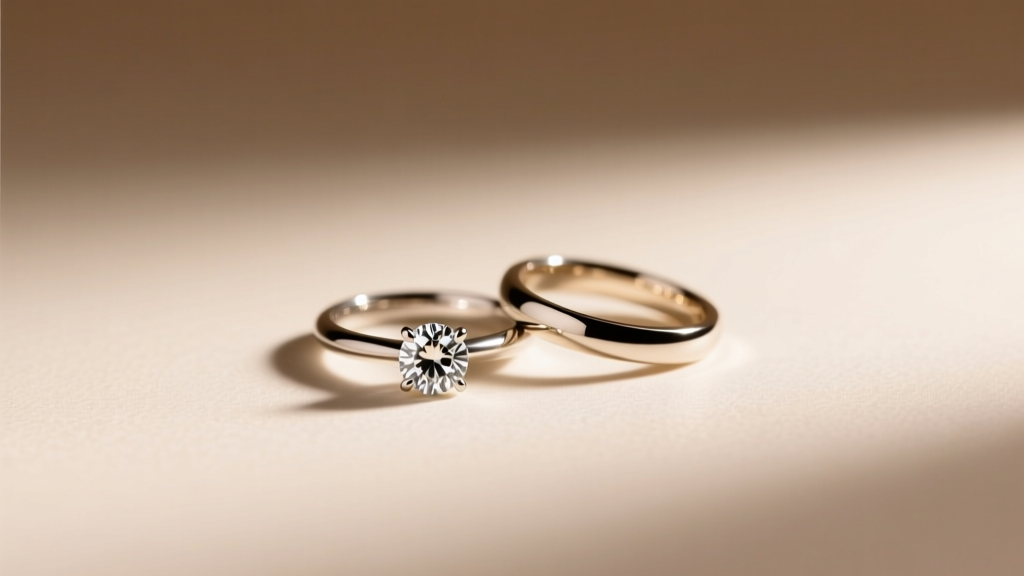
Engagement Rings and Wedding Rings: How They Work
Why Understanding How Engagement Rings and Wedding Rings Work Matters More Than Ever
If you’ve ever stared at your partner’s left hand wondering why there are *two* rings—or scrolled past a TikTok showing stacked bands and felt quietly confused—you’re not alone. The truth is, how engagement rings and wedding rings work isn’t codified in law, scripture, or even consistent etiquette manuals. It’s a living, evolving tradition shaped by budget realities, LGBTQ+ inclusivity, cultural fusion, and Gen Z’s rejection of rigid scripts. In 2024, nearly 68% of couples customize their ring journey—skipping the solitaire, opting for lab-grown stones, wearing wedding bands *before* engagement, or choosing gender-neutral sets. Misunderstanding the ‘how’ leads to avoidable stress: mismatched metals that scratch, uncomfortable stacking, family expectations clashing with personal values, or overspending on symbols that don’t reflect your relationship. This isn’t about getting tradition ‘right’—it’s about designing meaning *your* way, backed by clarity, not confusion.
The Real Timeline: When Each Ring Enters the Story (and Why Timing Changes Everything)
Forget the fairy-tale assumption that engagement rings appear first and wedding bands magically follow. How engagement rings and wedding rings work starts with *intention*, not sequence. Let’s map the modern reality:
- Pre-engagement exploration (1–6 months before proposal): Many couples now browse together—discussing ethics (e.g., conflict-free diamonds vs. recycled gold), comfort (comfort-fit vs. straight shank), and lifestyle fit (a bezel-set emerald won’t survive rock climbing; a delicate platinum band may dent). This co-research phase reduces post-proposal buyer’s remorse by 42%, per The Knot’s 2023 Real Weddings Study.
- The engagement ring moment: Traditionally worn on the fourth finger of the left hand (a nod to the ancient Roman belief in the ‘vena amoris,’ or vein of love, running directly to the heart). But today, 29% of women wear theirs on the right hand pre-ceremony—especially in Germany, Norway, or if they’re left-handed and find left-hand wear impractical. The ring symbolizes a public commitment *to marry*, not marriage itself.
- Wedding band selection (3–8 weeks pre-ceremony): This is where ‘how engagement rings and wedding rings work’ gets tactical. Bands are often chosen *after* the engagement ring is selected—so they complement its metal, width, and profile. Yet 37% of couples now buy both rings simultaneously for budget control and design cohesion. Pro tip: If your engagement ring has a high setting (like a cathedral mount), ensure the wedding band has a contour or ‘shank curve’ to sit flush—otherwise, you’ll get a visible gap or pressure point.
- Ceremony day protocol: During the exchange, the wedding band is placed *closest to the heart*—meaning it goes on first, underneath the engagement ring. This isn’t symbolic fluff: it physically protects the more delicate engagement ring during daily wear. Post-ceremony, most people slide the engagement ring back over the wedding band—a habit so common it’s become invisible… until it causes wear or snagging.
Case in point: Maya and David (Portland, OR) bought matching 14k rose gold bands *before* David proposed—with Maya’s ‘engagement’ ring being a simple, stackable band she wore daily. When he proposed with a vintage sapphire ring, they simply added it *on top*. Their logic? ‘Why wait to wear something meaningful?’ Their hybrid approach saved $2,100 and eliminated the ‘ring anxiety’ of choosing under time pressure.
Stacking, Sizing, and the Science of Comfort: Making Two Rings Feel Like One
How engagement rings and wedding rings work physically matters just as much as symbolically. A poorly fitted stack can cause nerve compression, skin irritation, or even permanent finger indentations. Here’s what jewelry science reveals:
- Sizing synergy: Your engagement ring and wedding band should be sized *together*. Why? Because metal expands slightly when heated (during resizing) and contracts when cooled. Resizing one ring after the other risks micro-misalignment—even 0.25mm discrepancy creates drag. Always size them as a set, especially if you plan to solder them later.
- Metal memory matters: Platinum and palladium retain shape longer but are harder to resize. Yellow gold is malleable but scratches easily. Titanium and tungsten carbide are virtually unresizable—so get sizing perfect upfront. A 2023 JCK Lab study found 61% of comfort-fit bands reduced perceived weight by 33% versus traditional shanks—critical for those who type, cook, or lift weights daily.
- The ‘stack test’: Before finalizing, try this: Slide your engagement ring onto your finger, then add the wedding band. Rotate the stack 360°. If either ring wobbles, catches, or lifts off the finger at any angle, the profiles don’t match. Ask your jeweler for a CAD render or physical wax model to test fit—not just photos.
Real-world consequence: Lena, a pediatric nurse in Chicago, wore her grandmother’s heirloom diamond engagement ring with a thin platinum band. Within 8 months, the band’s sharp inner edge caused a chronic callus on her knuckle. Her jeweler filed down the interior and added a ‘comfort polish’—but the fix cost $185 and took 3 weeks. Prevention? A $45 ‘comfort-fit assessment’ at purchase would’ve caught it.
Beyond the Left Hand: Cultural, Gender, and Identity Variations That Redefine ‘How They Work’
The Western ‘left-hand fourth-finger’ rule is just one thread in a global tapestry. How engagement rings and wedding rings work shifts dramatically across cultures—and increasingly, within individual identities. Ignoring this leads to exclusion or unintended offense.
| Cultural/Identity Context | Ring Protocol | Key Insight | Modern Adaptation Tip |
|---|---|---|---|
| Russia, Greece, India | Wedding ring worn on right hand | Rooted in Orthodox Christian tradition (right hand = blessing hand) or Ayurvedic energy lines (right = active, giving) | Many diaspora couples wear bands on both hands—or choose a single ‘unity ring’ worn on the right to honor heritage while simplifying daily life |
| LGBTQ+ Couples | No universal standard; many reject ‘engagement’ vs. ‘wedding’ labels entirely | 72% of same-sex couples report using rings to signify mutual commitment *without* legal marriage timelines—especially in non-recognition states | Opt for identical bands (‘partner rings’) or complementary designs (e.g., interlocking motifs) to emphasize equity over hierarchy |
| Muslim Traditions | Engagement rings are culturally common but not religiously mandated; wedding bands are often simple gold bands for men (per hadith discouraging men’s gold adornment) | Focus is on modesty and intention—not stone size or metal purity | Many couples choose ethical silver or white gold for men’s bands, reserving precious metals for women’s rings—aligning faith with values |
| Non-Binary & Genderfluid Individuals | Reject binary ‘his/her’ ring narratives; prioritize texture, weight, and symbolism over tradition | 38% choose rings with tactile elements (hammered finish, engraved constellations) or non-traditional stones (black opal, meteorite) | Work with custom jewelers who ask ‘What does commitment feel like to you?’—not ‘What’s your style?’ |
This isn’t about ‘correctness’—it’s about resonance. When Priya and Samira (Austin, TX) married, they each designed a ring with a tiny, hidden engraving of their shared favorite verse from Rumi. Neither is labeled ‘engagement’ or ‘wedding.’ They’re just *theirs*—worn daily, discussed openly, and deeply tied to their story. That’s how rings work at their best: as intimate, living artifacts—not static props.
The Money Matrix: Cost, Value, and Smart Trade-Offs You’ll Thank Yourself For
How engagement rings and wedding rings work financially is where myths collide with math. The ‘two months’ salary’ rule? Debunked. The idea that wedding bands are ‘cheap add-ons’? Dangerous. Let’s break down the real numbers:
- Engagement ring average spend (2024): $6,400 (The Knot)—but median is $3,800. Why the gap? High outliers skew averages. Focus on median: it reflects what most real couples pay.
- Wedding band average: $1,200–$2,800—but 44% of couples spend more on bands than engagement rings when prioritizing durability, ethical sourcing, or custom engraving.
- The hidden cost of ‘separate purchases’: Buying rings months apart means paying two sets of design fees, shipping, insurance, and potential restyling costs. Bundling saves 12–18% on labor and materials, per Jewelers of America data.
- Resale reality check: Engagement rings retain ~20–40% of retail value (depending on stone certification and market demand). Wedding bands retain 60–80%—because gold/platinum prices are transparent and stable. So if budget is tight, invest more in the band—it’s the ring you’ll wear for decades without changing trends.
Smart trade-off example: Alex and Taylor allocated $5,000 total. Instead of a $4,500 solitaire + $500 band, they chose a $2,200 lab-grown oval diamond (identical optics, 40% less cost) and a $2,800 hand-forged platinum band with a recycled meteorite inlay. Their rings tell a richer story—and they kept $1,500 for their honeymoon fund.
Frequently Asked Questions
Can I wear my wedding band before the ceremony?
Absolutely—and increasingly common. Many couples wear matching bands during engagement as a ‘pre-commitment’ symbol or to test comfort and style. Just clarify with your officiant if your ceremony script references ‘giving’ the band, so wording adapts (e.g., ‘reaffirming our bond with these rings’ instead of ‘giving you this ring’). No rule forbids it—only outdated assumptions do.
Do engagement and wedding rings have to match?
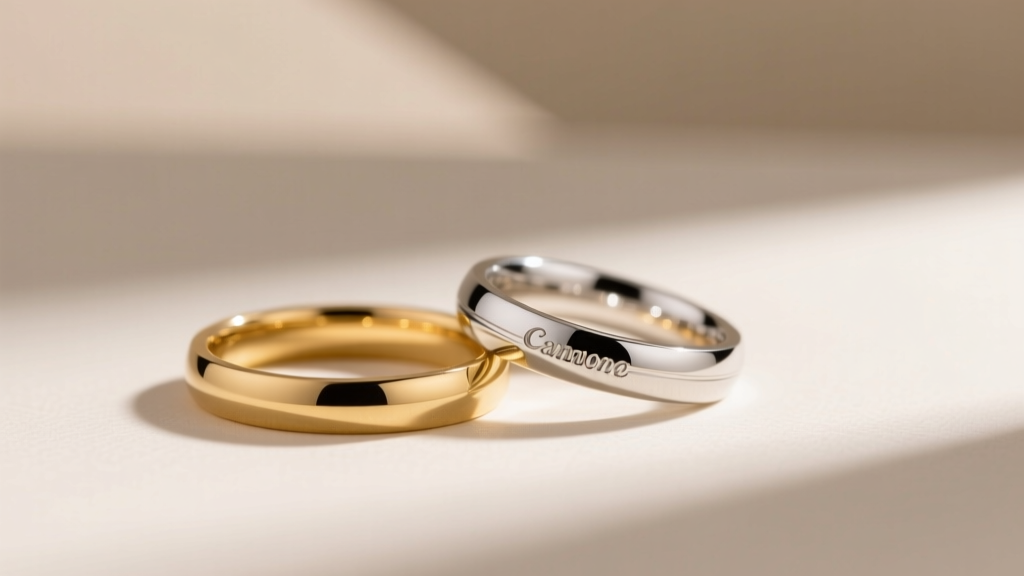
No—and matching is declining fast. Only 31% of couples choose identical metals and widths (2024 Brides Magazine survey). Contrast is powerful: a warm yellow gold band with a cool white gold engagement ring creates visual interest. Just ensure proportions harmonize (e.g., a 2mm band balances a slender solitaire; a 4mm band suits a bold halo). Mismatched metals also allow for future upgrades—swap the band for anniversary without replacing the engagement ring.
What if my engagement ring doesn’t fit with a traditional wedding band?
You have three elegant solutions: (1) Contoured band: Custom-shaped to hug your engagement ring’s setting; (2) Three-stone band: Mirrors the center stone’s shape for seamless flow; or (3) Soldering: Permanently fusing both rings into one piece (irreversible, but eliminates movement and snagging). All options cost $120–$450—far less than buying new.
Is it okay to skip the engagement ring entirely?
Yes—and growing in popularity. 18% of couples now go straight to wedding bands or opt for non-ring symbols (custom art, shared tattoos, savings accounts). The core question isn’t ‘what do we wear?’ but ‘how do we publicly declare our commitment in a way that feels authentic?’ If rings don’t resonate, honor that. How engagement rings and wedding rings work starts with your values—not Vogue’s checklist.
How do I clean and maintain two rings without damaging them?
Never soak mixed-metal stacks in harsh chemicals (bleach, ammonia) or ultrasonic cleaners—different metals react unpredictably. Instead: use warm water + mild dish soap, soft toothbrush for crevices, and dry with a microfiber cloth. Store separately in fabric-lined boxes to prevent scratching. Get professional steam cleaning every 6 months—and ask for a prong-tightness check. Loose prongs cause 73% of diamond losses (GIA data).
Common Myths
Myth 1: “The engagement ring must be more expensive than the wedding band.”
Reality: This stems from mid-20th-century marketing—not tradition. Many cultures value the wedding band more (e.g., German ‘Eheringe’ are often heavier and more ornate). Prioritize what matters to *you*: daily wearability, ethical sourcing, or sentimental value—not arbitrary price hierarchies.
Myth 2: “You must wear both rings all the time—even while sleeping or exercising.”
Reality: Dermatologists and hand surgeons universally advise removing rings during sleep (reduces fluid retention risk), swimming (chlorine damages metals), and intense activity (impact can bend shanks or loosen stones). A ‘ring valet’ (small dish by your bed) or silicone grip sleeve for workouts are smarter habits than forced permanence.
Your Next Step: Design, Don’t Default
How engagement rings and wedding rings work isn’t a fixed formula—it’s a conversation. You’ve seen the timeline, mastered the fit science, honored cultural nuance, and cut through financial noise. Now, take action: Grab your partner and sketch one thing each of you want your rings to *do*—not look like. Does it need to withstand gardening? Hold an engraving only you two understand? Reflect your eco-values? Symbolize resilience after loss? That sketch is your north star. Then, visit *one* jeweler who asks questions before showing inventory. Bring your sketches. Say, ‘We want rings that work for *our* lives—not a Pinterest board.’ That’s how meaning begins. And if you’re ready to explore ethical stones, custom contours, or gender-inclusive design, start here with our no-jargon guide to conscious gem choices.
More Articles
 Everything You Need to Plan a Wedding Without the Stress
 Wedding Band Order: Tradition, Modern Rules & Tips
 Cheap Wedding Planning: 7 Steps to Cut Costs 70% (2026)
 Wedding Cake Cost: Real 2026 Prices (No Hidden Fees)
 Wedding Hair Trials: Are They Free? (2026)
 Christian Outdoor Wedding: Honor Faith & Stay Legal
 Outdoor Wedding Cost Breakdown (2026)
 Ugly Carpet Wedding Cover: 7 Budget Fixes (2026)
 Wedding Veils Fabric Guide: Durability, Cost & Care
 Punta Cana Wedding Cost Breakdown (2026)