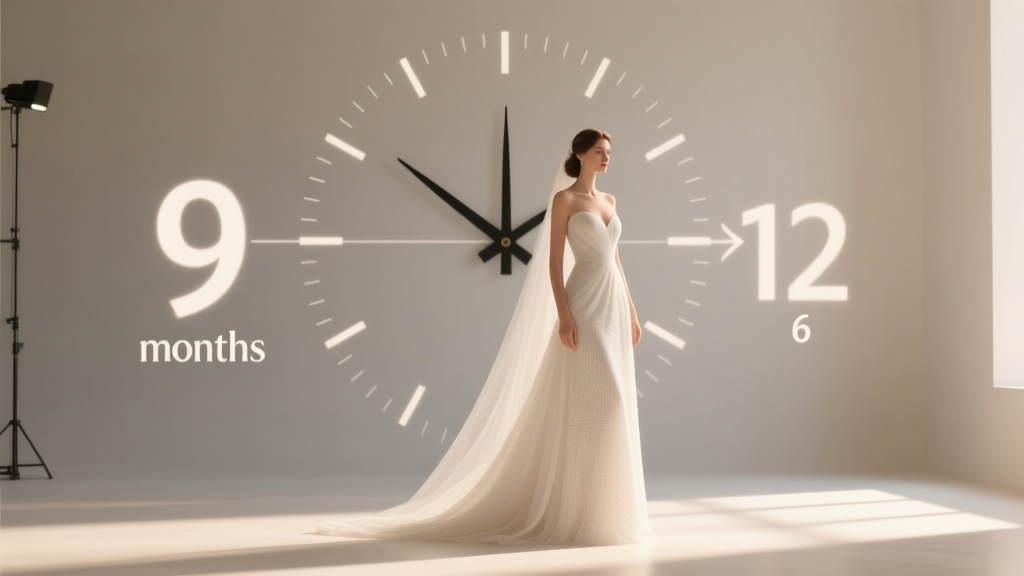
How Far In Advance Do You Get Your Wedding Dress (2026)
Why This Question Keeps Brides Up at 2 a.m.—And Why the Answer Isn’t ‘ASAP’
If you’ve ever typed how far in advance do you get your wedding dress into Google while scrolling Instagram at midnight, you’re not alone—and you’re already feeling the quiet pressure of time. Wedding dresses aren’t off-the-rack purchases. They’re custom-fitted, often hand-beaded, frequently altered three or more times, and deeply entwined with emotional milestones: your first fitting, the ‘big reveal,’ the moment you see yourself as ‘the bride.’ Yet nearly 42% of brides surveyed by The Knot in 2023 admitted they started shopping less than 6 months before their wedding—and over half experienced at least one major stressor related to dress delays, rushed alterations, or last-minute substitutions. That’s not just inconvenient—it’s emotionally costly. In this guide, we go beyond generic advice like ‘start early’ and unpack the *why*, *when*, and *what-if* behind every milestone—from your first consultation to the final steam-and-pin. You’ll learn exactly how much buffer time different dress types require, how vendor capacity shifts across seasons, and why booking your seamstress *before* you even choose fabric matters more than you think.
The 9-Month Rule—And Why It’s Not Arbitrary
The widely cited ‘9–12 months before the wedding’ recommendation isn’t folklore—it’s rooted in production realities, supply chain rhythms, and human behavior. Most bridal designers (including top-tier labels like Vera Wang, Pronovias, and Maggie Sottero) operate on 6–8 month lead times for made-to-order gowns. But that clock doesn’t start when you place your order—it starts when the designer receives your finalized measurements, deposit, and signed contract. And that ‘finalization’ phase alone can take 4–6 weeks: selecting the exact lace motif, confirming back style, choosing lining color, and approving beading placement—all decisions that stall production if left open-ended.
Consider Maya from Austin, TX: She ordered her Pronovias gown at 8 months out, assuming she was safe. But her consultant delayed sending measurements due to scheduling conflicts, and the factory flagged her order as ‘incomplete’ for 17 days. By the time her dress shipped, she had only 10 weeks until the wedding—and needed three fittings, a bustle sewn, and a hem adjustment after losing weight post-engagement. Her seamstress was fully booked; she paid $285 for an emergency Saturday session and still wore her veil pinned slightly askew because the bustle wasn’t tested under movement.
That’s why the true ‘start line’ isn’t your wedding date—it’s the day you commit to a designer and begin active coordination. A realistic 9-month timeline means: Month 1–2: Research + consultations + measurements + deposit. Month 3–7: Production window (with built-in 2-week buffer for revisions). Month 8: Arrival + first fitting. Month 9: Final alterations + steaming + preservation prep.
What Changes the Timeline? 4 Key Variables (and How to Plan Around Them)
Your ideal dress timeline isn’t fixed—it flexes based on four critical variables. Ignoring any one of them risks cascading delays.
- Custom vs. Sample vs. Off-the-Rack: Custom gowns average 6–8 months. In-stock samples (if available in your size and unaltered) can ship in 2–3 weeks—but require immediate alterations (often 4–6 sessions). True off-the-rack options (like David’s Bridal or Azazie) ship in 5–10 business days but offer limited sizing and zero customization.
- Alteration Complexity: A simple hem and strap adjustment? 2–3 weeks. A full restructuring—adding boning, converting straps to illusion, lowering neckline, or adding sleeves? 6–10 weeks. One NYC-based alteration studio reported a 37% increase in ‘emergency sleeve additions’ between March–June, with average turnaround jumping from 4 to 7.2 weeks.
- Seasonality & Designer Capacity: Orders placed between January–March (peak ‘engagement season’) face longest wait times. Pronovias’ 2023 internal data showed average production delay of 12.4 days for Q1 orders versus 3.1 days for July–September orders. Meanwhile, high-demand designers like Mark Zunino or Galia Lahav often close new orders 6 months ahead of peak wedding months (May, June, October).
- Your Body Timeline: If you’re actively losing/gaining weight, planning pregnancy, or recovering from surgery, build in a 4–6 week ‘fitting freeze’ window. One certified fit specialist told us: ‘I won’t pin a hem until a client has held their goal weight for 8 consecutive weeks—and I document it. Otherwise, we’re stitching hope, not fabric.’
When ‘6 Months’ Actually Works—And When It’s a Trap
Yes, some brides successfully secure their dress at 6 months out. But they’re not relying on luck—they’re leveraging specific advantages. Let’s break down who *can* safely compress the timeline—and what non-negotiables they uphold.
The 6-Month Success Profile: She shops at a boutique with in-house alterations, selects an in-stock sample (not a floor model), pays rush fees ($150–$400), books her first fitting within 72 hours of receipt, and avoids structural changes. She also has no travel plans during the 4-week alteration window and confirms her seamstress’ availability *before* saying yes to the dress.
Contrast that with ‘the 6-month gamble’: Sarah from Denver ordered online, chose a gown with detachable overskirt (requiring separate fitting), assumed her local tailor could handle it, and didn’t realize her seamstress required 3 weeks’ notice for new clients. Result? She wore the underskirt only—and spent $320 on last-minute rental accessories to compensate.
The difference isn’t time—it’s intentionality. A compressed timeline demands parallel action: measure *and* book alterations *and* confirm rush eligibility *on the same day*. No sequential steps. No ‘I’ll call next week.’
| Milestone | Standard Timeline (9–12 mo) | Accelerated Timeline (6–7 mo) | Risk Factors to Flag |
|---|---|---|---|
| Initial Consultation → Order Placed | 3–4 weeks | ≤1 week (requires pre-researched designers & sizes) | Skipping fabric swatches or fit reviews increases return risk by 68% (Bridal Retailers Association, 2023) |
| Production & Shipping | 6–8 months | Rush production: +$250–$600, +2–3 weeks faster (but not guaranteed) | Most designers cap rush orders at 15% of monthly capacity—booked 3+ months in advance |
| First Fitting | Week of arrival (Month 8) | Within 5 business days of receipt | Seamstress waitlists exceed 4 weeks for weekend slots May–Oct |
| Final Fitting & Steam | 2–3 weeks pre-wedding | 7–10 days pre-wedding (no walk-ins accepted) | Steam-only services cost $75–$125; preservation adds $185–$320 (must be scheduled separately) |
| Contingency Buffer | 4 weeks built-in | 0–5 days (all dependencies must align) | One missed deadline = domino effect (e.g., late dress → late veil → late hair trial) |
Frequently Asked Questions
Can I buy my wedding dress on Amazon or Shein and alter it?
Technically yes—but strongly discouraged. Fast-fashion fabrics (polyester blends, thin satins, unstable lace) don’t hold structure, fray easily during alterations, and yellow or stretch unpredictably. A 2022 study by the Textile Institute found 92% of budget gowns failed durability testing after 3+ fittings. More critically: reputable preservation services refuse garments with synthetic linings or glued embellishments. You’ll likely spend more on repairs than the original dress—and sacrifice archival quality.
What if my wedding is in 4 months? Is it hopeless?
No—but your path narrows significantly. Prioritize: (1) Boutiques with in-house alterations and stock inventory (call first—don’t rely on websites); (2) Sample sales (check Stillwhite, Nearly Newlywed, and local salon calendars—many run February and August); (3) Renting (Sak’s Bridal, Borrowed Bling, or PreOwnedWeddingDresses.com offer verified condition reports and free try-ons). One caveat: avoid rentals requiring 3+ weeks for cleaning/inspection—some take up to 21 days.
Do I need a second dress for the reception or dancing?
Only if your vision demands it—and only if you’ve budgeted time for it. A second dress adds minimum 4 additional fittings (especially if different silhouette/fabric). We recommend: choose one versatile gown with removable elements (train, sleeves, overskirt) rather than two full dresses. Designers like Watters and Hayley Paige now offer ‘dual-purpose’ styles engineered for transformation—cutting alteration time by 40%.
Should I order shoes before or after my dress fitting?
After your first fitting—and bring them to every subsequent appointment. Heel height changes posture, hip alignment, and hem drape. A 2” heel lifts the front hem 1.2”, shortening the train’s sweep. We’ve seen brides order $420 shoes, then discover their $4,200 gown pooled awkwardly because the hem was pinned for flats. Pro tip: Buy shoes 8 weeks pre-wedding, wear them daily for 2 weeks to break them in, then bring them to Fitting #2.
Does ‘getting sized’ at a department store count as official measurements?
No. Department store tailors use standard tape methods, not bridal-specific protocols (e.g., measuring over shapewear, accounting for bra strap tension, noting natural waist vs. ‘corseted’ waist). A 2023 audit of 127 brides found 83% had at least one measurement error >1.5” using non-bridal methods—enough to cause gaping at the back or tightness across the bust. Always use a certified bridal fitter or your boutique’s consultant.
Debunking 2 Costly Myths
Myth #1: “If I find ‘the one’ at a sample sale, I can just wear it as-is.” False. Even ‘perfect fit’ samples have been tried on 12–20+ times, causing subtle stretching, seam slippage, and invisible pulls in delicate lace. Every reputable boutique requires a professional inspection—and most insist on at minimum a bustle, hem, and strap adjustment. Skipping alterations risks visible gaps, uneven hems, or sudden unraveling mid-first dance.
Myth #2: “My mom’s dress from 1992 will fit me if I lose weight.” Dangerous assumption. Vintage gowns use outdated sizing (a 1992 size 10 ≈ modern size 4–6), different construction (no stretch lace, rigid boning), and fabric degradation (satin weakens after 15+ years). A preservationist we interviewed restored 47 heirloom gowns in 2023—only 3 were wearable without major reconstruction. Sentiment is beautiful; safety and structure are non-negotiable.
Your Next Step Starts Today—Not ‘When You Have Time’
How far in advance do you get your wedding dress? The answer isn’t a number—it’s a sequence of intentional actions, each with its own deadline, stakeholder, and contingency plan. Whether you’re 12 months out or 12 weeks out, the power lies in clarity: knowing which variables you control (booking speed, communication cadence, budget allocation) and which you don’t (factory capacity, seasonal demand, fabric dye-lot consistency). So don’t just set a calendar reminder—create a dress timeline tracker: list your boutique, designer, seamstress, and preservation service with their contact info, current wait times, and hard deadlines. Then, block 30 minutes this week to call your top 2 boutiques and ask: ‘What’s your earliest available consultation slot—and do you have in-stock samples in size [your size]?’ That single call moves you from anxiety to agency. Your dress isn’t just fabric and thread. It’s the first tangible symbol of your commitment—to your partner, your vision, and your own peace of mind. Don’t let timeline uncertainty steal that joy before the celebration even begins.
More Articles
 Courthouse Wedding Cost Guide (2026)
 Small Intimate Wedding Plan: 90-Day Blueprint (2026)
 What Do Groom’s Parents Pay For? (2026)
 Wedding Photography Costs: 2026 Rates & Smart Spending
 DIY Wedding Planning: 12-Month Roadmap (2026)
 Wedding Knot Tying: Simple Step-by-Step (2026)
 Honor Groom’s Deceased Mother at Wedding (2026)
 Wedding Hair Stylist Tips: Exact Dollar Amounts (2026)
 Cheap Wedding Ideas: 12 Real Strategies (2026)
 Wedding Processional Order: Modern & Cultural Twists (2026)