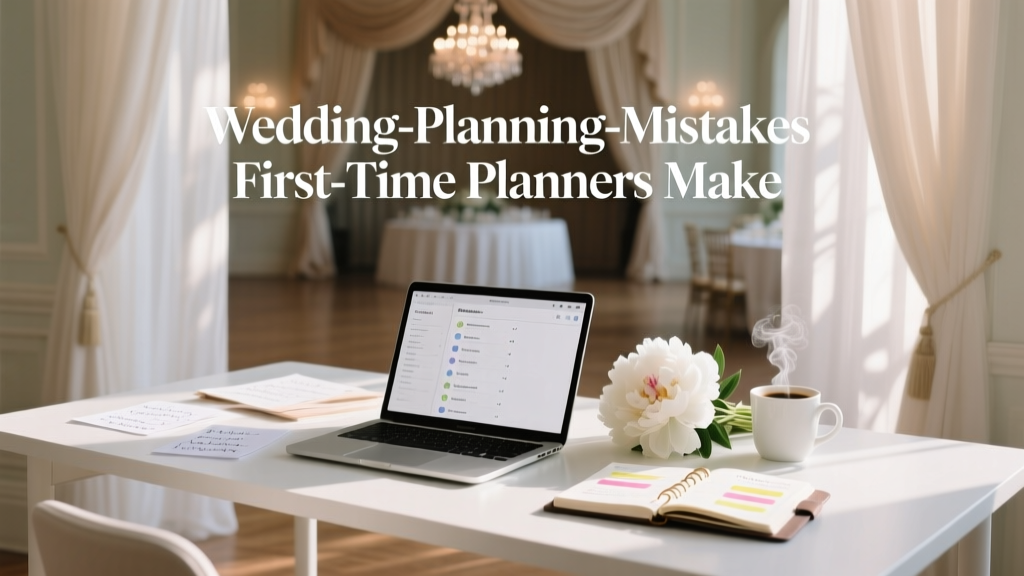
Wedding Planning Mistakes First-Time Planners Make
You’re engaged—cue the happy tears, the screenshots of dreamy venues, and the “Wait… how do we actually do this?” moment. If you’re planning your first wedding, it can feel like everyone else knows the rules you somehow missed. You didn’t. Wedding planning has a learning curve, and even the most organized couples hit a few bumps.
The good news: most wedding planning mistakes are completely avoidable once you know what to watch for. This guide walks you through the most common pitfalls first-time planners make—plus the practical fixes, budget tips, and timeline advice wedding planners rely on every day. Think of it as a friendly nudge in the right direction, so you can enjoy the process and stay focused on what matters most: getting married.
Whether you’re planning an intimate backyard celebration or a 200-guest ballroom wedding, the goal is the same—make confident choices, protect your budget, and keep your stress level reasonable.
1) Starting Without a Clear Vision (and a Shared One)
One of the biggest wedding planning mistakes is jumping into venue tours, Pinterest boards, or dress shopping before you and your partner agree on the big-picture vibe and priorities. Without a shared vision, you’ll keep changing directions—which is expensive and exhausting.
What this looks like in real life
- You book a modern loft venue, then realize you’ve been saving rustic barn décor for months.
- One of you wants a laid-back brunch wedding; the other assumes a formal Saturday night event.
- You keep adding “must-haves” because you haven’t defined what matters most.
A quick “wedding vision” checklist (15 minutes)
- Pick 3 words you want guests to feel (example: “warm, elegant, fun”).
- Choose your top 3 priorities (food, photos, live music, guest comfort, etc.).
- Agree on the guest experience: formal vs. casual, adult-only vs. family-friendly, local vs. destination.
- Set non-negotiables (example: outdoor ceremony, cultural traditions, specific date season).
Planner pro tip: When you’re torn between options, ask: “Does this support our 3 words and top priorities?” If not, it’s probably not worth the money or stress.
2) Underestimating the True Cost of a Wedding
Sticker shock is real. First-time planners often build a budget around the obvious line items (venue, catering, photography) and forget the “small” costs that add up quickly.
Common hidden budget items couples miss
- Service charges, gratuities, and taxes (often 20–35% on catering and rentals)
- Alterations and accessories (shoes, undergarments, veil, jewelry)
- Marriage license, officiant fees, and ceremony permits
- Delivery fees (cake, rentals, flowers) and setup/breakdown labor
- Day-of stationery (menus, programs, signage, place cards)
- Vendor meals and travel fees
- Rain plan costs (tenting, heaters, umbrellas)
Budget guardrails that actually work
- Start with your real maximum. Decide the top number you can spend without regret.
- Build in a 10–15% buffer. This protects you from last-minute additions.
- Get “all-in” quotes. Ask vendors: “Is this the total including taxes/fees?”
- Track spending weekly. A simple spreadsheet is enough if it’s updated consistently.
Real-world scenario: A couple books a venue for $6,000 and feels great—until they learn catering requires the venue’s preferred list with a $12,000 minimum, plus a 24% service charge. The fix is asking early: minimum spends, required vendors, and fee structures.
3) Booking Vendors in the Wrong Order
Another classic wedding planning mistake: booking details before the foundational pieces are secured. Your date, venue, and key vendors influence everything else.
Recommended booking order (for most weddings)
- Venue (locks your date and capacity)
- Planner/coordinator (if you’re hiring one—earlier is better)
- Photographer/videographer (popular dates go fast)
- Caterer (if not included with venue)
- Entertainment (DJ/band)
- Officiant
- Florist
- Hair and makeup
Planner pro tip: Before signing anything, confirm your venue’s restrictions: end time, sound rules, candle policies, vendor insurance requirements, and whether you must use preferred vendors.
4) Waiting Too Long on the Guest List
Your guest count affects your venue options, catering costs, rentals, invitations, and even your floor plan. Couples often delay the guest list because it’s emotional—and it is—but it’s also a budget tool.
How to build a guest list without spiraling
- Start with categories: immediate family, close friends, extended family, coworkers.
- Set a target number based on budget and venue capacity (not wishful thinking).
- Create an A-list and B-list from day one.
- Define your “must-have” rule: would you take this person to a celebratory dinner?
Real-world scenario: You fall in love with a 90-person garden venue, then realize your “rough list” is 140. That forces a venue change (often more expensive) or painful cuts later. Doing the guest list early keeps you in control.
5) Skipping a Month-By-Month Timeline
First-time planners often rely on general checklists but don’t build a timeline that fits their actual date. That leads to rushed decisions, limited vendor availability, and unnecessary stress.
A practical wedding planning timeline (quick version)
12–9 months out
- Set budget and guest count estimate
- Book venue, planner/coordinator, photographer
- Choose wedding style, wedding party (if any)
8–6 months out
- Book catering, DJ/band, officiant
- Shop attire (allow time for ordering and alterations)
- Send save-the-dates (especially for destination or holiday weekends)
5–3 months out
- Book hair and makeup
- Finalize design direction with florist/rentals
- Create a ceremony outline and reception flow
- Order invitations
2–1 months out
- Send invitations
- Finalize seating plan and rentals
- Confirm vendor timelines and delivery details
- Do final fittings and beauty appointments
Final 2 weeks
- Provide final headcount to caterer
- Create a detailed day-of schedule
- Pack emergency kit and wedding-day essentials
- Confirm final payments and tips
Planner pro tip: Add decisions to your timeline, not just tasks. Example: “Choose first dance song by X date” and “Finalize ceremony readings by X date.” That’s what keeps the mental load manageable.
6) Trying to DIY Too Much
DIY can be meaningful and budget-friendly—until it becomes a second full-time job. First-time planners often underestimate how long projects take, and they forget setup and transport logistics.
DIY projects that tend to go well
- Welcome sign or simple printed signage
- Party favors (kept small and easy)
- Photo display or memory table
- Playlist for cocktail hour (if you’re not using live music)
DIY projects that commonly cause stress
- Handmade centerpieces for every table
- Complex floral design without experience
- Cooking or baking for a large guest count
- Anything requiring day-of setup while you’re getting ready
Real-world scenario: A couple plans to assemble 25 centerpieces the night before. By midnight, they’re exhausted, flowers are wilting, and they still need to greet out-of-town guests. A better approach: DIY one “statement” element and outsource the rest.
7) Not Reading Contracts (or Not Understanding Them)
Contracts are where expectations live. Many wedding planning mistakes come from assumptions: refund policies, overtime fees, what happens if a vendor can’t attend, and what’s actually included.
Contract checklist before you sign
- Payment schedule: deposit, milestones, final payment due date
- Cancellation/postponement terms: refunds, credits, rebooking fees
- Overtime rates: for photo, video, venue, DJ
- Deliverables: number of hours, edited photos, albums, setup time
- Insurance requirements: who provides it and what coverage is needed
- Force majeure: weather, illness, emergencies
Planner pro tip: If a contract says “up to” (example: “up to 8 hours”), clarify what triggers less time or additional fees. Ask questions before you sign—vendors expect it.
8) Forgetting the Guest Experience
It’s your wedding, and it should reflect you—but the best weddings also feel smooth for guests. First-time planners sometimes focus heavily on aesthetics while overlooking comfort and flow.
Guest experience basics that make a big difference
- Clear timing: don’t leave guests waiting between ceremony and reception without a plan
- Enough seating: especially during cocktail hour and for elderly guests
- Weather prep: shade, water, fans, heaters, umbrellas
- Easy directions: signage, parking plan, shuttle details
- Food timing: serve dinner before guests get too hungry (and before speeches run long)
Real-world scenario: A ceremony starts at 3:00, cocktail hour is 4:00, and dinner isn’t served until 7:30 due to extended photos and a long room flip. Guests get restless. Fix it by building photos into the timeline, doing a first look, or simplifying the transition.
9) Not Assigning Day-Of Responsibilities
You shouldn’t be the point person on your wedding day. Neither should your mom, your maid of honor, or your best man—unless they truly want that role and you’ve given them a clear plan.
Create a simple “wedding day task map”
- Who has the vendor contact list? (ideally your coordinator)
- Who brings: marriage license, rings, vow books, escort cards, tips?
- Who handles: gifts/cards, décor drop-off, end-of-night packing?
- Who is the emergency kit holder? (safety pins, stain remover, band-aids)
Planner pro tip: Even if you don’t hire a full planner, consider a day-of coordinator. That single decision prevents a lot of last-minute stress and keeps small problems from reaching you.
10) Ignoring Your Relationship (and Your Energy) Along the Way
This is the mistake no one sees coming: planning becomes the main topic of every conversation, every weekend is consumed by wedding tasks, and you start feeling like coworkers on a project instead of partners.
Simple boundaries that help
- Set one or two “wedding planning nights” per week—no planning outside them
- Split decisions by category (one person leads décor, the other handles logistics)
- Schedule a monthly no-wedding date night
- When stress spikes, return to your top three priorities
Real-world scenario: You’re arguing about chair styles when what you really need is a break. Step away, grab dinner, and revisit the decision with a budget cap and a deadline. Most décor choices feel easier once you’ve rested.
Quick “Avoid These Mistakes” Wedding Planning Checklist
- Agree on your wedding vision and top priorities before booking
- Build a realistic budget with a 10–15% buffer
- Finalize a working guest count early
- Book vendors in a strategic order (venue first)
- Use an actual month-by-month timeline, not just a generic list
- Limit DIY to what you can finish at least 2 weeks before the wedding
- Read every contract and confirm what’s included
- Plan for guest comfort: weather, seating, timing, transportation
- Assign day-of responsibilities (or hire a coordinator)
- Protect time for your relationship
FAQ: Wedding Planning Mistakes and How to Avoid Them
How early should we start planning our wedding?
Many couples start 12–18 months out, especially for popular dates and in-demand venues. If you have 6–9 months, it’s still doable—you’ll just want to book the big vendors quickly and keep decisions streamlined.
What’s the biggest budget mistake first-time couples make?
Underestimating fees and “extras” like service charges, rentals, and delivery/setup costs. Always ask for an all-in estimate and keep a buffer so you’re not forced into last-minute compromises.
Do we really need a wedding planner or day-of coordinator?
Not everyone needs full-service planning, but most couples benefit from at least a month-of or day-of coordinator. It’s often the difference between you enjoying the day and you troubleshooting timelines, vendors, and setup.
How do we stick to our wedding planning timeline?
Set decision deadlines (not just task deadlines), schedule weekly 30-minute check-ins, and keep a shared planning document. If something isn’t moving forward, it usually means you need more information—request quotes, confirm policies, or set a budget cap and pick.
What should we do if we’re already behind on planning?
Start with the essentials: lock your venue/date, then book your photographer, catering (if needed), and entertainment. Next, tackle attire and invitations. Consider bringing in a coordinator to help you catch up and organize the final months.
How can we reduce wedding planning stress without cutting corners?
Focus spending on your top priorities, simplify what doesn’t matter to you, and outsource the tasks that drain your energy. A calm, well-run wedding almost always feels more luxurious than an overcomplicated one.
Your Next Steps (Keep It Simple)
If wedding planning feels overwhelming right now, choose just three actions to complete this week:
- Write down your 3 wedding vision words and top 3 priorities.
- Draft a guest count range (minimum and maximum).
- Build a starter budget with a 10–15% buffer and start requesting all-in quotes.
You don’t have to plan perfectly to have a beautiful wedding. You just need a plan that supports your relationship, your budget, and the kind of celebration you want your guests to remember.
Want more support? Explore more wedding planning guides, checklists, and smart budgeting tips on weddingsift.com.
More Articles
 Aren Leekong Wedding Services: 2026 Timeline & Pricing
 DIY Lighted Wedding Columns: Budget-Friendly 2026 Guide
 Is 50 Degrees Too Cold for an Outdoor Wedding?
 Do Guys Wear Tuxedos to Weddings? (2026 Guide)
 Eyebrow Threading Before Wedding: Ideal Timeline (2026)
 Wedding Usher Role: Who, When & Why It Matters
 Handwritten Wedding Thank You Cards: Truth & Tips
 Wedding Place Cards: Exact Dimensions (2026)
 Courthouse Wedding Guest Limits (2026)
 Wedding Candy Bar Setup Guide (2026)