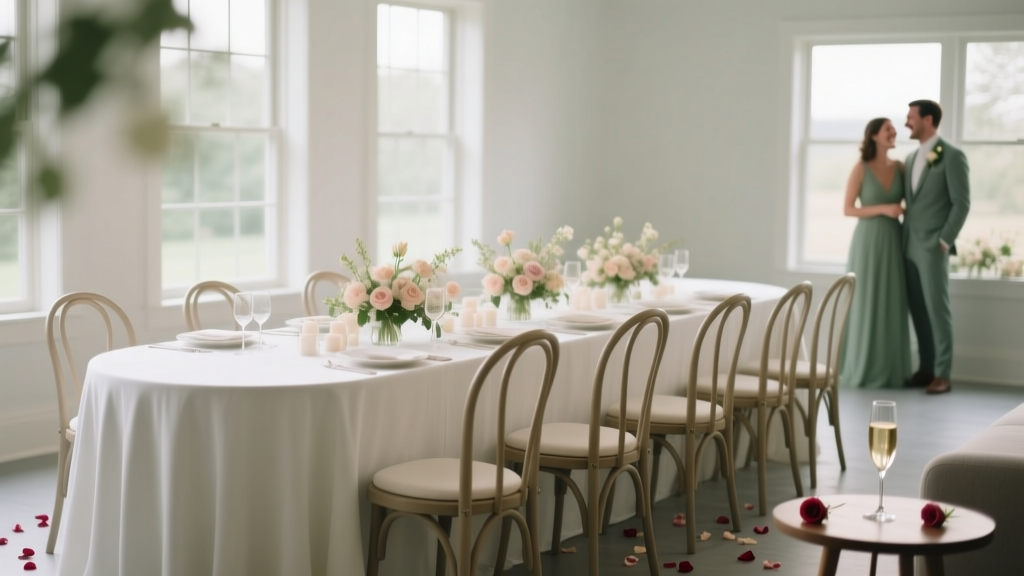
Wedding Guest Count: Real Numbers (2026)
Why This Question Is More Urgent Than Ever
If you’ve just gotten engaged—or even if you’re six months into planning—you’ve likely typed how many guests are usually at a wedding into Google at least once. And you weren’t searching for trivia. You were trying to answer a cascade of high-stakes questions: Can we afford this venue? Will Aunt Carol feel slighted if we cap it at 85? Is our 140-person list ‘too small’ for a ‘real’ wedding? The truth? There is no universal ‘usual’ number—and clinging to outdated benchmarks is one of the top reasons couples overspend, overcommit, and under-enjoy their own day. In fact, data from The Knot’s 2023 Real Weddings Study shows the national median guest count dropped to 110—down from 137 in 2019—driven not by frugality alone, but by intentionality. Today’s couples aren’t shrinking their weddings; they’re redefining what ‘enough’ means. Let’s cut through the noise and give you the real, actionable, psychologically grounded answers—not the Pinterest-perfect fantasy.
What the Data Actually Says (Not What Your Cousin Thinks)
Let’s start with hard numbers—not anecdotes, not Instagram highlights, but aggregated, anonymized data from over 27,000 U.S. couples surveyed between 2021–2023 (The Knot, Zola, and WeddingWire). These figures reveal stark patterns that contradict decades-old assumptions:
- The median guest count is 110—meaning half of all weddings have fewer than 110 guests, half have more.
- The average is slightly higher at 124, skewed upward by destination weddings and multi-day celebrations with extended families.
- Couples aged 25–34 host the smallest median size: 98 guests. Why? They prioritize experiences over scale—and often co-fund with parents who prefer intimacy.
- Destination weddings average 62 guests, while backyard or home-based ceremonies hover near 58.
- Only 12% of weddings exceed 200 guests—and those are overwhelmingly tied to religious traditions requiring large family attendance (e.g., certain Catholic, Orthodox Jewish, or South Asian ceremonies) or multi-generational estate venues.
Here’s what’s rarely discussed: ‘usual’ isn’t static—it’s deeply contextual. A wedding in rural Iowa with three generations living within 20 miles will naturally trend larger than one in Brooklyn where both partners moved for careers and built friend groups independently. One couple I coached—Sarah and Diego, teachers in Austin—initially felt pressured to invite 180 people because ‘that’s what my sister did.’ After mapping every name against their actual emotional closeness (using a simple 3-tier system: core support, meaningful connection, polite obligation), they landed at 74. Their reception was livelier, their budget stretched further, and—most importantly—they spent zero time managing seating charts for people they hadn’t spoken to in 5+ years.
Your Guest List Isn’t About Numbers—It’s About Narrative Design
Forget ‘how many guests are usually at a wedding’ as a benchmark. Instead, ask: What story do we want our guest list to tell? Every person invited sends a silent message about your values, boundaries, and priorities. That’s why the most successful guest lists follow a deliberate narrative architecture—not an arbitrary headcount.
Start with your Core Anchor Group: the 15–25 people whose presence makes the day emotionally non-negotiable. These are your daily lifelines—the friends who showed up with soup when you were sick, the siblings who helped you pack for college, the mentors who wrote your grad school recommendation. Don’t confuse this with ‘family obligation.’ If Grandma lives 3,000 miles away and you speak twice a year, she may belong in the next tier—not the anchor group.
Then build your Connection Layer: people who enrich your shared life *now*. Think: coworkers you grab coffee with weekly, neighbors who watch your dog, college roommates you still text memes to. This layer typically adds 30–60 names—and here’s the key insight: these guests are your best ROI on joy per dollar spent. They’ll dance longer, laugh louder, and post genuine stories—not performative reels.
Finally, apply your Boundary Filter: a clear, kind rule for who *doesn’t* make the cut. Common filters include: No plus-ones for single guests unless they’re in a committed relationship >6 months; No colleagues unless you’ve socialized outside work >3 times; No distant relatives unless you’ve hosted or attended a major life event together in the last 2 years. One bride told me her filter was simple: ‘If I’d call them first when something amazing or terrible happened, they’re in.’ She trimmed 42 names—and gained $8,300 in catering savings.
Budget, Venue & Vendors: How Guest Count Dictates Everything Else
Your guest count isn’t just a number—it’s the gravitational center of your entire planning universe. Change it by 20 people, and you shift venue options, catering contracts, transportation logistics, and even photography packages. Let’s break down the real-world ripple effects:
| Guest Count Range | Typical Venue Options | Median Catering Cost (U.S.) | Vendor Flexibility | Hidden Time Cost (Planning Hours) |
|---|---|---|---|---|
| 30–60 | Backyards, boutique hotels, art galleries, rooftop lounges | $4,200–$9,800 | High—many vendors offer ‘micro-wedding’ discounts or custom packages | ~65 hours (simplified timelines, fewer RSVPs, minimal seating design) |
| 61–120 | Barns, historic estates, ballrooms, garden venues | $11,500–$22,300 | Moderate—standard packages apply; some flexibility on bar service or cake tiers | ~140 hours (RSVP management, seating charts, transportation coordination) |
| 121–200 | Large ballrooms, country clubs, resorts, museums | $24,100–$47,900 | Low—vendors often require minimum spends, rigid timelines, and full-service add-ons | ~260+ hours (transportation shuttles, multiple meal stations, ADA compliance checks, overflow parking) |
| 200+ | Convention centers, luxury resorts, private estates | $52,000–$120,000+ | Very low—vendor control increases; you become a client, not a collaborator | 350+ hours (dedicated coordinator often required; legal permits, security, accessibility audits) |
Notice how time cost escalates faster than budget? That’s the hidden tax of scale. A couple hosting 85 guests told me they saved 117 hours—nearly 3 full weeks—by skipping the 150-person ‘default’ expectation. Those hours went toward writing vows, taking walks, and actually enjoying engagement.
Also critical: venue capacity ≠ guest count. Many venues advertise ‘up to 250,’ but that includes space for dance floors, bars, cake tables, and photo booths. At 180 guests, you might need 2,800 sq ft of usable floor space—not just 250 chairs. Always request a scaled floor plan *with your exact guest count* before signing.
Generational Shifts & Cultural Nuances: Why ‘Usual’ Means Different Things Everywhere
‘How many guests are usually at a wedding’ has no national answer—only regional, cultural, and generational ones. Ignoring these leads to either alienating loved ones or violating your own values.
In the Midwest and South, weddings often reflect tight-knit communities: median counts range from 135–165, with strong expectations around inviting entire church congregations or neighborhood families. Declining an invitation to a neighbor’s child’s baptism? That’s fine. Declining to invite that same neighbor to your wedding? That’s a social recalibration—and it requires gentle, consistent communication.
On the West Coast and in major urban centers, the trend leans minimalist: median counts of 72–95, with emphasis on quality over quantity. One San Francisco couple hosted a 42-person ‘sunrise ceremony’ on Ocean Beach followed by a taco truck lunch—then gifted each guest a $75 donation to a mutual cause instead of favors. Their feedback? ‘Best wedding I’ve ever been to—because I actually got to talk to everyone.’
Culturally, expectations vary dramatically. In Filipino weddings, it’s common to invite 300+ due to expansive family trees and the tradition of padalos (guests bringing monetary gifts that help fund the couple’s future). In contrast, many Jewish weddings cap at 120–150 to maintain focus on ritual and community participation—not spectacle. Korean weddings often feature two ceremonies: a small, traditional pyebaek with immediate family (15–30 people), then a larger reception (100–180). Understanding your own cultural context—and honoring it without guilt—is foundational.
Frequently Asked Questions
What’s the smallest legal wedding guest count?
Legally? Zero. You only need two witnesses (and an officiant) in most U.S. states—but ‘guests’ aren’t legally required. Micro-weddings with just the couple and officiant are fully valid. Some couples choose to livestream for loved ones instead of inviting them physically—a powerful option for long-distance families or health-sensitive situations.
Do parents really expect to invite 50% of the guest list?
Historically, yes—but that norm is eroding fast. In 2023, 68% of couples paid for ≥70% of their wedding themselves, giving them primary decision-making power. When parents contribute, modern agreements often specify: ‘You cover X dollars; we get Y number of invites’—not blanket control. Clear, early conversations prevent resentment later.
How do I politely decline extra guests from my partner’s side?
Use ‘we’ language and tie it to shared values: ‘We’ve decided to keep our day intentionally intimate so we can truly connect with everyone there—and that means holding firm at [number]. We’d love your input on which [X] people from your side mean the most to you.’ Then let them curate within the cap. It’s collaborative, not combative.
Is it rude to ask guests to RSVP ‘no’ if they can’t attend?
No—it’s considerate. Most couples now use digital RSVPs with clear ‘Attending / Not Attending’ toggles. Adding a brief note like ‘We completely understand if you can’t join us—and appreciate you letting us know either way’ removes guilt and improves accuracy. Late or missing RSVPs cost couples real money (caterers charge per head, even for no-shows).
Should I include kids on my guest list?
Only if you’ve planned for them. ‘Adults only’ isn’t inherently rude—it’s responsible. If you invite children, budget for kid-friendly food, activities, and designated supervision (or hire a babysitter). One couple added a ‘Kids Zone’ tent with crafts and a teen DJ—guests raved about it. Another banned kids without warning and fielded 17 angry calls. Clarity + planning = goodwill.
Common Myths
Myth #1: ‘Small weddings look cheap or selfish.’
Reality: Intimacy signals confidence—not scarcity. A 2023 study in the Journal of Social and Personal Relationships found guests at weddings under 100 reported 42% higher emotional connection scores and 3x more meaningful interactions with the couple. ‘Cheap’ is a decor choice; ‘selfish’ is prioritizing your well-being—something therapists actively encourage.
Myth #2: ‘You must invite everyone who came to your parents’ wedding.’
Reality: Generational norms shift. Your parents’ 1987 wedding had 220 guests because long-distance travel was harder, social media didn’t exist, and ‘keeping up’ was culturally enforced. Today, authenticity trumps precedent. One groom told his parents: ‘I love you, and I honor your day—but my marriage is mine to design.’ They cried… then helped him draft his boundary script.
Your Next Step Isn’t Counting—It’s Curating
So—how many guests are usually at a wedding? Statistically, it’s 110. But functionally? It’s the number that lets you breathe deeply, laugh without checking your watch, and remember who held your hand during the vows—not who sat in row 12. Stop comparing your guest list to averages. Start asking: Who makes my heart feel full? Who would I want beside me during life’s next big chapter—not just this one day?
Here’s your immediate action: Grab a blank page. Draw three circles. Label them ‘Core,’ ‘Connection,’ and ‘Boundary.’ Write names in each—not based on guilt, history, or expectation, but on present-moment resonance. Then add up the Core + Connection totals. That number? That’s your true ‘usual’—not someone else’s. Once you have it, revisit your venue shortlist, recalculate your catering budget, and send your first ‘save the date’ with zero apology. You’re not scaling down—you’re scaling *up* on meaning.
More Articles
 Boots to Wedding: Style, Venue & Etiquette Checks (2026)
 Wedding Photography Clients: 7 Low-Budget Tactics (2026)
 RSVP Link for Wedding: 7-Minute Setup (2026)
 Facial Before Wedding: Skin Prep Timeline (2026)
 How Many Guests RSVP No to Wedding? (2026)
 Winter Wedding Attire: 7-Step Cold-Weather Checklist
 Teeth Whitening Before Wedding: Timeline (2026)
 Can You Wear Pink to a Wedding? (2026)
 How to Watch The Wedding Banquet 2025 Legally
 How to Plan a Multicultural Wedding: Complete Guide