## Stop Stressing Over Your Guest List — Here's What Actually Matters
The guest list is where most wedding planning falls apart. You start with 50 people in mind, and somehow it balloons to 180 before you've booked a venue. Sound familiar? The number of guests you invite shapes everything — your budget, your venue options, your catering cost, and honestly, the entire feel of your day. Getting this number right early saves thousands of dollars and months of stress.
---
## Section 1: What the Numbers Actually Look Like
Wedding size generally falls into four categories:
- **Micro wedding**: 10–20 guests — intimate, low-cost, highly personal
- **Small wedding**: 20–75 guests — close family and friends only
- **Medium wedding**: 75–150 guests — the most common range in the US
- **Large wedding**: 150–300+ guests — full celebration, higher cost and complexity
According to The Knot's 2024 Real Weddings Study, the average US wedding hosts around **117 guests**, with an average cost of **$35,000**. That breaks down to roughly **$300 per guest** when you factor in catering, seating, favors, and florals.
**The math is simple**: every person you add costs money. Knowing your per-head cost before finalizing the list is the single most powerful tool you have.
---
## Section 2: How to Set Your Guest Count Before You Do Anything Else
Most couples make the mistake of choosing a venue first, then trying to fit their guest list into it. Do it the other way around.
**Step 1: Set your total wedding budget first.**
If your all-in budget is $20,000 and your per-head cost is $250, your hard ceiling is 80 guests — before flowers, photography, or a dress.
**Step 2: Write your "must-invite" list independently.**
Both partners write their non-negotiables separately, without input from parents. Combine the lists. That number is your floor.
**Step 3: Apply the "2-year rule."**
If you haven't spoken to someone in two years, they don't need to be there. This alone cuts most lists by 15–20 people.
**Step 4: Decide on a children policy early.**
Adults-only receptions can reduce your count by 20–30 people at larger family gatherings. Make the decision once and communicate it clearly.
**Step 5: Set a firm number before talking to parents.**
Once you have a number, present it as a decision — not a discussion. Offer each set of parents a fixed allocation (e.g., 15 spots each) rather than an open invitation to add names.
---
## Section 3: How Venue Capacity Changes Everything
Your venue's comfortable capacity — not its maximum — should guide your guest count. A room that fits 150 people at maximum capacity feels cramped and loud. At 100 guests, it feels full and festive.
Key questions to ask every venue:
- What is the **comfortable seated capacity** for a plated dinner?
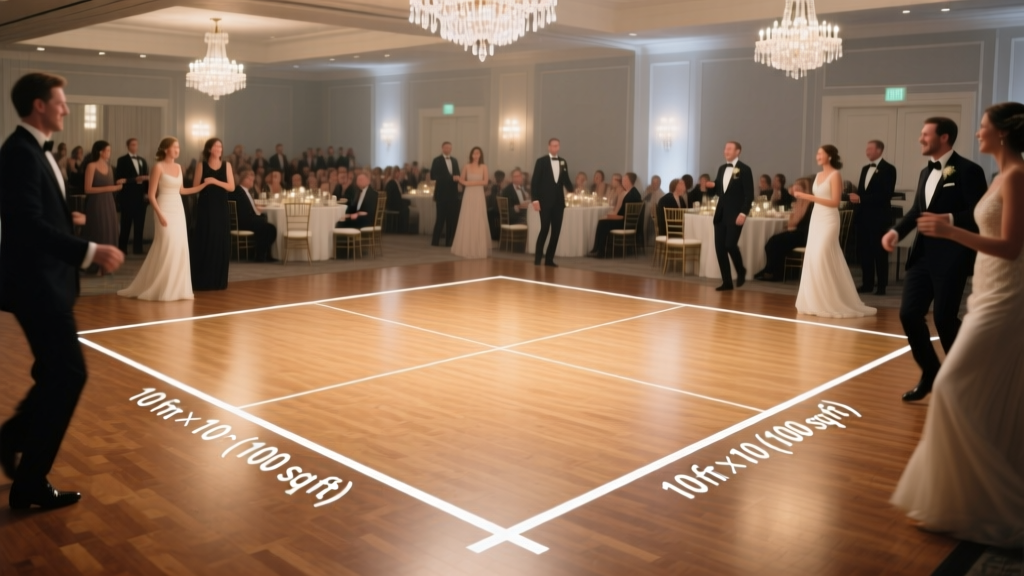
- What is the **dance floor capacity** if you want room to move?
- Does the venue require a **minimum spend** that effectively sets a guest floor?
For outdoor weddings, factor in tent rental, weather contingencies, and restroom access — all of which scale with guest count.
If you're torn between two venues, choose the one that fits your ideal guest count comfortably, not the one that fits your maximum possible list.
---
## Section 4: Destination Weddings and Small Weddings — A Different Calculus
If you're planning a destination wedding, expect 40–60% of invitees to decline due to travel costs and logistics. This means you can invite more people than you want to attend — but be honest with yourself about who you're actually hoping shows up.
For couples leaning toward a micro or small wedding (under 50 guests), the benefits are significant:
- Average savings of **$10,000–$20,000** compared to a 150-person wedding
- More flexibility on venue (private homes, restaurants, small estates)
- More time with each guest on the day itself
- Less logistical complexity in planning
The trade-off is real: some family members will feel excluded, and managing those expectations requires direct, early communication.
---
## Common Myths About Wedding Guest Lists
**Myth 1: "You have to invite everyone who invited you to their wedding."**
This is the guilt trap that inflates more guest lists than anything else. Reciprocal invitations are a courtesy, not a contract. If your relationship has changed, your circumstances are different, or your wedding is intentionally small, you are not obligated to return every invitation you've ever received. A brief, honest explanation to close friends is enough.
**Myth 2: "A bigger wedding means a better wedding."**
Guest count has no correlation with how meaningful or memorable a wedding is. Many couples report that their smaller weddings felt more personal, less stressful, and more connected than large receptions where they barely spoke to half the room. The "right" size is the one that fits your budget, your values, and the experience you actually want — not the one that looks impressive on paper.
---
## The Bottom Line: Start With a Number, Not a List
The couples who navigate the guest list with the least stress are the ones who set a firm number first — based on budget and venue — and then fill it intentionally. They don't start by listing everyone they know and then try to cut.
**Your next action**: Before you open a spreadsheet or talk to a single family member, sit down with your partner and agree on one number. Write it down. That number is your anchor for every conversation that follows.
Get that right, and the rest of your planning gets significantly easier.

 Wedding Ceremony Script: Customizable & Timed (2026)
 Korean Wedding Cost 2026: Real Numbers by City & Venue
 Wedding Dance Floor Size: Exact Square Footage Formula
 Wedding Hotel Blocks: A Stress-Free 7-Step Guide
 Can You Wear Coral to a Wedding? (2026)
 How Long Should Your Wedding Dance Be? (2026)
 Bust Measurement for Wedding Dress: 5-Step Method (2026)
 Wedding Envelope Handwriting: Save Time or Risk Delays?
 How Much Flowers Do You Need for a Wedding (2026)
 How to Decorate a Wedding Arbor (2026)