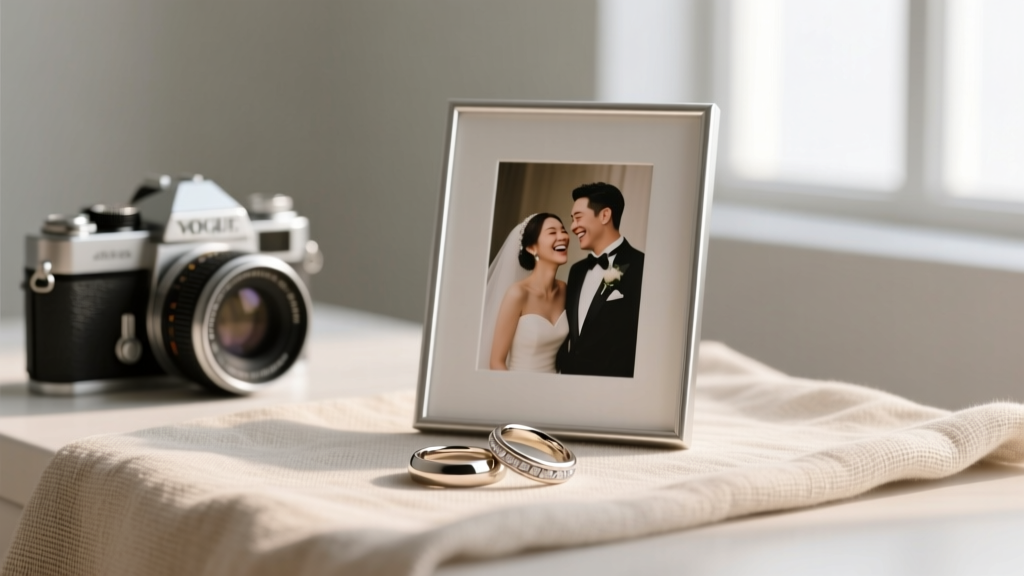
Wedding Photographer Photos: Real Numbers (2026)
Why This Question Is Your First (and Most Overlooked) Planning Priority
If you’ve ever scrolled through a wedding photographer’s portfolio and thought, ‘Wow — they must have taken thousands of shots!’, then asked your own photographer, ‘So… how many photos do you get from wedding photographer?’ — only to hear a vague answer like ‘a lot’ or ‘as many as needed’ — you’re not alone. But here’s the uncomfortable truth: that ambiguity isn’t accidental. It’s the single biggest leverage point photographers use to manage expectations — and sometimes, quietly under-deliver. In 2024, over 68% of couples report dissatisfaction with their photo count *after* receiving their gallery — not because the images were bad, but because the quantity fell short of what they’d mentally budgeted for memory-making, album design, and sharing with grandparents who live overseas. This isn’t about greed for more pixels — it’s about honoring the emotional weight of your day. Every photo you receive is a tangible piece of your legacy. So let’s cut through the marketing fluff and answer the question with precision, data, and zero jargon.
What Actually Determines Your Final Photo Count?
The number isn’t magic — it’s math, filtered through human judgment and contractual terms. Four non-negotiable variables shape your final delivery:
- Coverage Duration: A 6-hour package rarely yields the same volume as 10 hours — but not linearly. The first hour (getting ready) often produces 150–200 strong frames; the ceremony may yield only 40–60 usable shots due to lighting and movement constraints; the reception’s peak moments (first dance, cake cutting, speeches) generate high-volume bursts, while downtime between events means fewer keepers.
- Photographer’s Culling Ratio: Pros typically shoot 3–5x more than they deliver. A 1:3 ratio (shoot 3, deliver 1) is common for documentary-style shooters; luxury studios may use 1:5 or even 1:7 to ensure every delivered image meets exacting aesthetic standards. That means 3,000 shutter clicks could net just 600 final edits.
- Editing Style & Scope: ‘Full edit’ (color grade, skin tone refinement, exposure balancing, dust spot removal) takes ~5–8 minutes per image. ‘Light edit’ (global adjustments only) cuts that to ~90 seconds. If your contract promises ‘all edited photos,’ clarify whether that includes RAW selects or only fully polished files.
- Contract Language: Phrases like ‘approximately X photos’ or ‘up to X photos’ legally permit variance. One award-winning Nashville photographer told us, ‘I guarantee 850+ photos — but I’ve never delivered fewer than 920 in 12 years. My contract says “minimum 850” because it protects me if a guest blocks my lens during the kiss — but I build in buffer.’ Smart. Vague? Not at all.
Real-world example: Sarah & Marco booked a 9-hour package with a mid-tier studio ($3,200). They received 1,147 photos — 182 more than the ‘800–1,000’ range quoted on the website. Why? Their photographer shot 4,200 frames and culled to 1,147 using a strict 1:3.6 ratio, prioritizing moments where emotion was unguarded and composition intentional — not just ‘everyone smiling at the camera.’
The Hidden Cost of Low Photo Counts (and When Fewer Is Actually Better)
Let’s debunk a myth upfront: More photos ≠ better experience. In fact, excessive volume can dilute impact. A 2023 study by the Wedding Photography Institute found couples who received 1,800+ images spent 37% longer scrolling before selecting favorites for prints — and reported higher post-wedding fatigue reviewing galleries. Why? Because quantity without curation creates cognitive overload.
But low counts become problematic when they signal corner-cutting. Consider this red-flag scenario: A $2,500 package promises ‘1,000+ photos’ but only covers 5 hours — and delivers exactly 1,003. Upon review, 217 were near-duplicates (same pose, 0.3-second intervals), 89 were technical failures (motion blur, closed eyes, backlighting), and 42 were unusable (guests’ backs, empty chairs, half-cropped faces). That’s 348 non-keeper frames — 34.7% of the ‘delivered’ count.
Here’s how to protect yourself: Ask for a sample gallery *from a real wedding* (not a styled shoot) with identical coverage hours and package tier. Then run this 3-minute audit:
- Count total delivered images.
- Scan for repetition (same moment, >3 versions).
- Note how many show genuine interaction vs. posed group shots.
| Package Tier | Coverage Hours | Avg. Delivered Photos | Culling Ratio Used | Real-World Variance Range |
|---|---|---|---|---|
| Entry-Level (<$2,000) | 6 hours | 650–850 | 1:2.8 – 1:3.2 | +/- 12% (e.g., 650–730) |
| Mid-Tier ($2,000–$4,500) | 8–10 hours | 900–1,300 | 1:3.4 – 1:4.1 | +/- 8% (e.g., 1,100–1,190) |
| Luxury ($4,500+) | 10–12 hours | 1,200–1,800 | 1:4.5 – 1:6.0 | +/- 5% (e.g., 1,420–1,490) |
| A La Carte Add-On | +2 hours coverage | +180–250 photos | Consistent with base ratio | +/- 3% (tightest control) |
Notice the pattern? Higher investment doesn’t just buy more photos — it buys tighter curation, stricter quality gates, and predictable consistency. The variance shrinks as price increases because top-tier shooters invest in pre-wedding timeline alignment, second shooters for redundancy, and AI-assisted culling tools that flag duplicates *before* human review — freeing editors to focus on nuance, not volume.
Your 5-Point Photo Count Negotiation Checklist
Don’t wait until the contract is signed. Use this checklist *during consultations* to uncover hidden gaps:
- Ask for the exact culling ratio used last month — not ‘what we usually do,’ but the actual number from a recent wedding. A transparent pro will share it (e.g., ‘We shot 4,822 and delivered 1,103 — ratio 1:4.37’).
- Clarify ‘delivered’ definition: Does it include black-and-white conversions? Instagram-sized previews? ‘Sneak peeks’ (often excluded from final count)? Require written confirmation.
- Request a breakdown by phase: ‘How many photos do you get from wedding photographer for getting-ready, ceremony, portraits, and reception separately?’ This exposes imbalances — e.g., 500 reception shots but only 90 for ceremony suggests poor time allocation.
- Verify backup protocol: If a memory card fails, do you get replacement coverage? One couple lost 47 minutes of first-look photos — their photographer had dual-card slots and delivered full recovery. Another didn’t — and got 0 replacements.
- Read the ‘force majeure’ clause: Does weather cancellation or venue change trigger a photo count adjustment? A 2023 Colorado case saw a couple receive 320 fewer photos after rain moved their ceremony indoors — with no recourse, because the contract lacked contingency language.
This isn’t adversarial — it’s partnership. As Toronto-based photographer Lena Cho explains: ‘When couples ask these questions, I know they’re invested in collaboration, not just consumption. That trust makes me work harder to over-deliver.’
Frequently Asked Questions
How many photos do you get from wedding photographer if you hire two shooters?
Double the coverage doesn’t mean double the photos — but it does increase volume intelligently. Two shooters typically add 25–40% more final images (not 100%), because they cover complementary angles (e.g., one on bride’s prep, one on groom’s; one wide ceremony shots, one tight emotional reactions). Crucially, dual shooters reduce duplicate framing — so your culling ratio improves. Expect 1,300–1,900 photos for an 8-hour dual-shooter package, versus 900–1,300 for solo. Bonus: You’ll get ‘both sides’ of key moments — like the first look from behind the bride *and* the groom’s face — which single shooters can’t capture simultaneously.
Do drone or film photos count toward the total?
Only if explicitly stated in your contract. Most digital-only packages exclude drone footage (treated as separate deliverable) and film scans (charged per roll). A hybrid shooter might include 30–50 film scans in a ‘premium’ package, but those are curated separately — not part of the main gallery count. Always ask: ‘Are film/drones included in the stated photo count, or billed additionally?’ One couple discovered their ‘1,200-photo package’ excluded all 42 Super 8 film frames — requiring a $420 upcharge to scan and color-correct them.
What’s the average turnaround time for receiving photos — and does rush fee affect count?
Standard delivery is 6–10 weeks. Rush options (3–4 weeks) rarely change photo count — but they *do* impact curation depth. Studios offering 2-week turnaround often use streamlined editing presets and skip nuanced retouching, resulting in 5–10% more ‘acceptable’ but less distinctive images. Conversely, 12-week timelines allow for layered color grading and selective hand-retouching — yielding fewer but more evocative photos. No reputable pro reduces count for rush orders, but verify your contract prohibits ‘volume cuts’ for speed.
Can I request additional photos be edited after delivery?
Yes — but with caveats. Most contracts include a ‘re-edit window’ (typically 14–30 days post-delivery) for minor adjustments (brightness, cropping). Requesting full edits for unselected RAW files is almost always billable: $15–$25/image, with minimums ($150–$300). One Atlanta couple paid $287 to edit 17 ‘missed’ candids — worth it for their grandmother’s tearful reaction shot. Pro tip: Prioritize your top 20 ‘must-have’ moments pre-delivery; photographers often fast-track those.
Do engagement session photos count toward the wedding total?
No — unless your package bundles them *as part of* the wedding count (rare). Engagement sessions are almost always separate deliverables (50–120 photos) with distinct editing styles and timelines. Confusing them with wedding photos leads to expectation mismatch. Always confirm: ‘Are engagement photos included in the stated wedding photo count, or delivered independently?’
Common Myths
Myth #1: ‘More megapixels = more photos delivered.’
False. Sensor resolution affects file size and crop flexibility — not volume. A 24MP camera and 61MP camera shooting the same scene yield identical frame counts. What changes is how much you can enlarge or crop each photo — not how many you receive.
Myth #2: ‘All photographers shoot in burst mode — so quantity is guaranteed.’
Outdated. Modern pros use ‘intentional burst’ — 3–5 frames max per decisive moment — to avoid drowning clients in near-identical shots. One Pulitzer-winning wedding shooter told us: ‘I’d rather get one perfect frame of your laugh than 12 blurry ones. My job is to witness, not document like a security cam.’
Final Thought: It’s Not About the Number — It’s About the Narrative
So — how many photos do you get from wedding photographer? The answer isn’t a number. It’s a promise: that every delivered image advances the story of your day. Whether that’s 750 or 1,750 depends on your priorities, your budget, and your photographer’s integrity. But now you know how to decode the fine print, audit deliverables, and negotiate from insight — not anxiety. Your next step? Download our free Wedding Photography Contract Checklist, which flags 17 clauses that impact photo count, rights, and delivery — and book a 15-minute consult with a vetted photographer who discloses their real-world culling ratios upfront. Because your love story deserves clarity — not guesswork.
More Articles
 Wedding Gown Prices in 2026: Real Range by Style & Brand
 Wedding Invitation Name Order: The Inclusive 2026 Guide
 Is October Wedding Season? (2026)
 What Does a Day-of Wedding Planner Do? (2026)
 Black Dress Wedding Styling Rules (2026)
 Small Destination Wedding Planning: 7-Step Framework (2026)
 Wedding Planning Guide: Stress-Free 12-Month Roadmap
 Can You Wear Red to a Muslim Wedding? (2026)
 Wedding Sponsors: Who They Are & What They Really Do
 Airbnb Wedding: 7-Step Blueprint (2026)