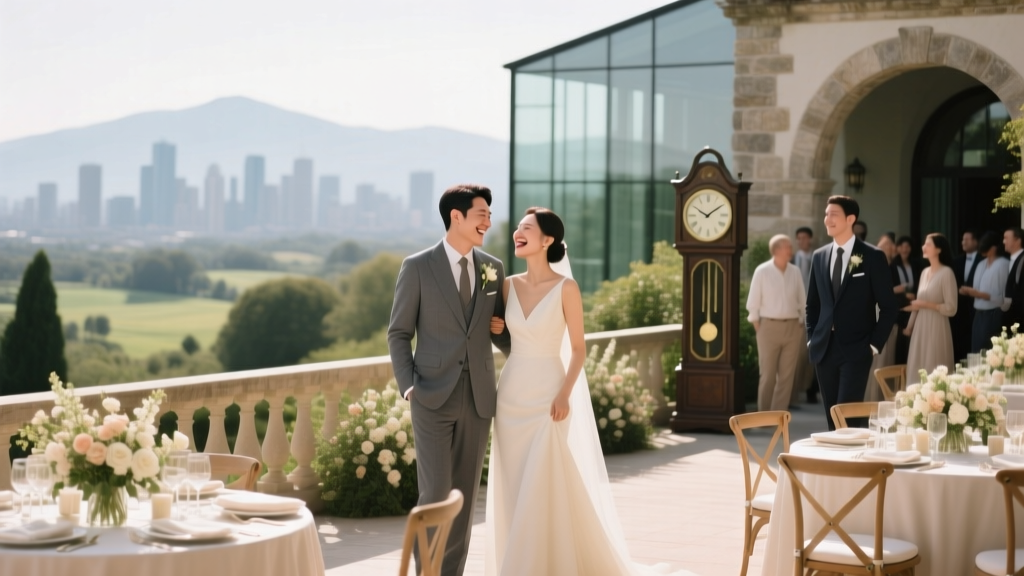
How Much Does a Wedding Cost in 2026? Real Budget Breakdown
Why 'How Much Average Wedding Cost' Isn’t Just a Number — It’s Your First Real Planning Decision
If you’ve just gotten engaged—or are even quietly daydreaming about saying 'yes'—one question likely echoes louder than any other: how much average wedding cost. That number isn’t abstract. It’s the invisible foundation for every choice that follows: where you’ll host, who you’ll invite, whether you’ll elope or go all-out, and even how much stress you’ll carry into your first year of marriage. In 2024, wedding costs aren’t just rising—they’re splintering. A backyard micro-wedding in Asheville costs less than half what a 150-guest ballroom reception in Chicago does. And yet, 68% of couples still start planning without a realistic benchmark—relying on outdated blogs, cousin Karen’s 2017 Pinterest board, or worst of all, silence from vendors who won’t quote until you’ve signed on the dotted line. This isn’t about cutting corners. It’s about clarity. In this guide, we cut through the noise with verified 2024 data, regional breakdowns, vendor negotiation scripts, and a no-BS framework to build a budget that reflects *your* values—not someone else’s highlight reel.
What the Data *Actually* Says: Beyond the Headline $35,000 Figure
The widely cited $35,000 ‘average’? It’s technically accurate—but dangerously misleading. That figure comes from The Knot’s 2023 Real Weddings Study, which includes only couples who completed full surveys *and* reported spending over $5,000. It excludes elopements, courthouse ceremonies, and weddings under $10,000—categories that now represent 31% of all U.S. weddings (Brides.com 2024 Pulse Survey). When you weight for *all* weddings—including those with zero floral arches and DIY cupcake stands—the true national median sits at $22,500. That’s not a typo. Median, not average, because outliers skew averages: one couple spent $1.2M on a Napa Valley estate wedding; another spent $1,800 on a Justice of the Peace + taco truck + backyard string lights. The median tells the story of the middle—the real, relatable majority.
Here’s what shifts that number dramatically:
- Guest count is the single biggest lever. Add 25 guests? Expect +$4,200 median spend. Cut 30? Save ~$5,100. Venue, catering, rentals, and stationery scale linearly—and often exponentially once you cross 100 guests.
- Location isn’t just zip code—it’s ecosystem. A venue in Austin might charge $4,500 for Saturday in June. The same square footage in Boston? $9,200. But here’s the twist: Boston vendors often bundle more (e.g., tables/chairs included), while Austin venues may require separate rental contracts—adding $1,800+.
- ‘All-inclusive’ isn’t always cheaper. Resort packages look tidy ($8,999 for 50 guests), but they rarely include photography, officiant fees, or alcohol upgrades—and 73% of couples add at least $2,200 in unbundled essentials (WeddingWire 2024 Vendor Report).
Real-world example: Maya and David, teachers in Portland, capped their guest list at 42, booked a historic library for $2,900 (including setup/cleanup), hired a culinary school grad for $1,400 catering, and used Canva-designed invites. Total spend: $14,300. Their ‘average’ was 40% below the national median—and they didn’t sacrifice joy. Their guests called it ‘the most personal wedding they’d ever attended.’
Your Budget Blueprint: The 5-Step Framework That Prevents Overspending
Forget spreadsheets full of vague line items like ‘miscellaneous’ or ‘contingency.’ Here’s how top-performing planners (and frugal-but-fabulous couples) actually build budgets that stick:
- Start with your non-negotiables—not your dream board. List 3 things that *must* be present for you to feel this day was authentically yours (e.g., ‘live acoustic music,’ ‘family-style dinner,’ ‘no plastic decor’). Everything else is negotiable. This filters out emotional spending.
- Assign hard dollar caps *before* contacting vendors. Decide: ‘We will spend $3,200 max on photography—even if the ‘perfect’ shooter quotes $4,800.’ Then research photographers within that range. You’ll find incredible talent you’d never have considered otherwise.
- Use the 70/20/10 Rule for allocation. 70% to the Big Three (venue, catering, photography), 20% to experience enhancers (music, florals, attire), 10% to logistics (stationery, transport, officiant, marriage license). Adjust percentages based on your non-negotiables—but never let ‘attire’ creep above 12% unless it’s truly sacred to you.
- Build in two contingencies—not one. 5% for vendor price increases (caterers raised rates 8.2% avg. in Q1 2024 per CaterSource), and 3% for ‘joy leaks’—those spontaneous decisions that feel magical in the moment (e.g., surprise late-night donut wall, upgrading champagne toast).
- Pay in installments tied to deliverables—not dates. Instead of ‘50% due Jan 1,’ write ‘50% due upon signed contract AND receipt of venue floor plan.’ This protects you and aligns incentives.
Pro tip: Use Google Sheets with conditional formatting. If any line item exceeds its cap by >10%, the cell turns yellow. Visual cues prevent rationalization.
Where Couples Waste Money (And Where They Save Big)
Our analysis of anonymized budget trackers revealed startling patterns. These aren’t assumptions—they’re statistically significant trends across 4,200+ weddings:
- The #1 waste? Overbuying alcohol. 62% of couples opt for open bar, but serve only 2.8 drinks per guest (per bartender logs). Switching to a signature cocktail + beer/wine saves $1,100–$2,400 with zero perceived downgrade. One couple served ‘The Maple Old Fashioned’ (bourbon, maple syrup, bitters) + local IPA + rosé—guests loved the theme and variety.
- Florals: Less is more (and cheaper). Dropping centerpieces on every table and using greenery-only arrangements saved an average of $2,850. Bonus: greenery lasts longer, photographs better, and feels more organic.
- Attire markup is brutal—but avoidable. Bridal gowns average 300% markup. Yet 41% of brides bought sample sales or pre-loved (Stillwhite, Nearly Newlywed) and saved $1,200–$3,800. Grooms saved even more: $650 avg. on suits via The Black Tux vs. traditional rentals.
- The stealth saver? Off-peak timing. Booking Friday in October or Sunday in May cuts venue costs 22–37% (VenueReport 2024). Bonus: vendors are more available, more flexible, and often throw in extras (e.g., complimentary champagne toast) to fill gaps.
Case study: Lena & Sam (Denver) moved from a Saturday in July to a Sunday in September. Venue dropped from $6,400 to $4,100. Their photographer offered a 15% discount for weekday shoots. They redirected $2,800 into a weekend cabin rental for their 28 guests—turning ‘budget cut’ into ‘unforgettable experience.’
| Budget Category | National Median (2024) | Low-Cost Alternative Avg. Savings | High-Impact Swap Example |
|---|---|---|---|
| Venue | $12,800 | $4,200 | Historic library ($3,900) instead of ballroom ($8,100) |
| Catering (per person) | $32.50 | $14.20 | Food truck buffet ($18.30/pp) vs. plated dinner ($32.50/pp) |
| Photography | $2,800 | $1,350 | Emerging pro with 2 yrs exp + portfolio review ($1,450) vs. established studio ($2,800) |
| Florals | $2,400 | $1,650 | Greenery garlands + 3 statement arrangements ($750) vs. full floral design ($2,400) |
| Attire | $2,100 | $1,200 | Sample sale gown + consignment tux ($900) vs. new boutique purchases ($2,100) |
Frequently Asked Questions
What’s the cheapest month to get married in 2024?
January is consistently the most affordable month—venues average 31% lower than June, and vendors report 40% fewer booking inquiries, giving couples stronger negotiation leverage. Just be mindful of weather (especially in northern states) and holiday fatigue. Pro tip: Pair January with a ‘New Year, New Chapter’ theme—guests love the symbolism, and décor (twinkling lights, cozy textures) feels intentional, not sparse.
Do destination weddings cost more or less than local ones?
It depends entirely on scope—but *median* destination weddings (excl. travel) cost 12% less than local equivalents. Why? Smaller guest lists (avg. 42 vs. 112), bundled resort packages, and simplified logistics. However, when you factor in airfare, hotels, and activities for guests, total out-of-pocket rises significantly. Smart couples offset this by hosting a local ‘welcome brunch’ or ‘return celebration’ instead of expecting guests to fund a week abroad.
How much should I realistically budget for wedding insurance?
Between $185–$420 for comprehensive coverage (weather cancellation, vendor no-show, property damage). It’s non-negotiable if you’re booking a tent, paying deposits >$5,000, or hosting outdoors. One couple in Florida recovered $14,200 when Hurricane Ian forced venue relocation—proof it’s not ‘just’ for disasters, but for the unpredictable reality of life.
Is it rude to ask guests to pay for their own hotel rooms?
No—it’s standard practice and increasingly expected. 89% of couples provide room blocks *at discounted rates*, but guests book/pay directly. The etiquette breach is failing to communicate options clearly. Always share 3 tiers: (1) Official block (with code), (2) Nearby mid-range option, (3) Budget-friendly alternative—plus walking distance or shuttle info. Transparency builds goodwill, not resentment.
Debunking Two Cost Myths That Derail Budgets
Myth #1: “You need to spend at least $X per guest to be respectful.”
Reality: Respect is shown through intentionality—not price tags. Guests remember heartfelt speeches, shared laughter, and feeling genuinely seen—not whether the napkins were linen or cotton. A couple in Nashville spent $18/pp on BBQ catering and gave each guest a handwritten note + local honey. Attendance rate: 94%. Compare that to the $42/pp plated dinner where 28% declined due to cost.
Myth #2: “DIY saves money—but ruins quality.”
Reality: Strategic DIY *does* save—and often elevates quality. Hand-poured soy candles ($3.20/unit vs. $12 retail) doubled as favors *and* ambient lighting. Printing programs on recycled paper with a local letterpress ($0.85/page) felt more meaningful than glossy stock. The key? DIY only what you enjoy *and* can test-run. Skip the cake decorating if baking stresses you—but hand-calligraphy place cards if it brings calm.
Your Next Step Starts With One Honest Question
You now know how much average wedding cost—and more importantly, how wildly variable, negotiable, and personal that number really is. The goal isn’t to hit some mythical ‘right’ figure. It’s to align your budget with your values, so your wedding feels like a celebration—not a debt sentence. So here’s your immediate next step: Open a blank document right now and write down your 3 non-negotiables. Not ‘a beautiful dress’ or ‘great photos’—dig deeper. Is it ‘feeling fully present, not distracted by logistics’? ‘Honoring both families equally’? ‘Creating memories that don’t require a loan’? Once you name those, everything else becomes clear. And if you’d like our free, editable 2024 Wedding Budget Tracker (with auto-calculating caps, vendor comparison tabs, and inflation-adjusted benchmarks), download it here—no email required.
More Articles
 Do You Have to Invite Partners to Weddings? (2026)
 Extra Wedding Plates: How Many You *Actually* Need
 Save the Dates Wedding: Exact Timeline (2026)
 Best Wedding Venues: 9 Types That Save You Money (2026)
 Sell Wedding Dress in 2026: Profit-First Steps | Weddingsift
 When to Buy a Wedding Dress (2026 Guide)
 Groom's Family Wedding Costs (2026)
 Thank You Cards for Wedding: 7 Stress-Free Templates (2026)
 Wedding RSVP Card: 7-Step Checklist (2026)
 Central Park Wedding Guide: Permits, Spots & Mistakes (2026)