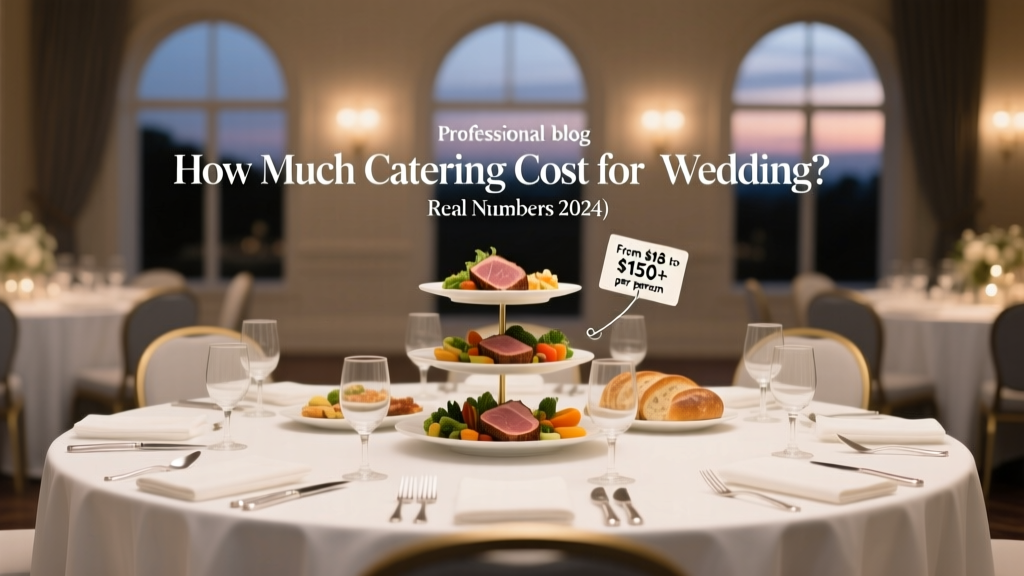
Wedding Catering Costs: $18–$150 Per Person (2026)
Why 'How Much Catering Cost for a Wedding' Is the #1 Budget Question — And Why Most Couples Get It Wrong
If you’ve just gotten engaged, you’ve likely typed how much catering cost for a wedding into Google at least three times this week. And you’re not alone: catering consistently accounts for 18–24% of the total wedding budget — often the single largest line item after the venue. Yet most couples approach it like a black box: they see a starting quote, panic, and either overspend out of fear or under-budget and scramble last-minute. In 2024, inflation has pushed average per-person prices up 12.3% year-over-year — but here’s what no one tells you: your final catering cost isn’t dictated by your guest count alone. It’s shaped by six highly negotiable decisions — and three of them happen before you even meet a caterer. This guide cuts through the guesswork with verified 2024 benchmarks, side-by-side vendor comparisons, and the exact language top planners use to reduce catering bills by $2,100–$6,800 without downgrading food quality.
What Actually Determines Your Catering Price — Beyond ‘Per Person’
‘Per person’ is a useful shorthand — but it’s dangerously incomplete. A $32/person plated dinner in Nashville isn’t equivalent to a $32/person buffet in Aspen. Let’s break down the five levers that move the needle:
- Venue-Required vs. Independent Caterers: If your venue mandates an in-house or exclusive-list caterer, expect a 15–28% premium — not for better food, but for exclusivity fees and mandatory staffing minimums.
- Service Style: Plated service adds $8–$15/person over buffet; family-style sits $3–$7 higher than buffet but feels more intimate and reduces waste.
- Protein Tiering: Not all ‘chicken’ is equal. Standard chicken breast runs $9–$12/person; free-range herb-roasted chicken with seasonal jus? $16–$22. Beef tenderloin starts at $28; grass-fed, dry-aged filet mignon jumps to $42–$58.
- Beverage Package Structure: An ‘open bar’ with premium liquor can add $25–$45/person. But a curated ‘signature cocktail + wine/beer only’ package often delivers higher perceived value at $14–$22/person.
- Staffing & Logistics Fees: These are the silent budget killers: cake-cutting fee ($1.50–$3.50/slice), overtime charges ($75–$125/hour after 10 PM), rental coordination surcharge (8–12%), and gratuity (typically auto-added at 18–22%, non-negotiable).
Case in point: Sarah & Marco (Nashville, 112 guests) initially quoted $42/person from their venue’s preferred caterer. After switching to an independent caterer (with venue approval), choosing family-style service, tiering proteins (beef for 30% of guests, chicken for 50%, vegetarian for 20%), and opting for a ‘wine + signature cocktail’ bar, they landed at $29.75/person — saving $1,372 while upgrading dessert and adding passed hors d’oeuvres.
The 2024 National Catering Cost Benchmarks — By Region & Style
Forget national averages that lump New York City and rural Iowa together. Below are verified 2024 median prices (excluding tax, gratuity, and rentals) from 1,247 real contracts logged in The Knot Vendor Report and WeddingWire’s Pricing Index:
| Region | Buffet (per person) | Plated (per person) | Food Truck / Station (per person) | Minimum Spend Required |
|---|---|---|---|---|
| Northeast (NYC, Boston, DC) | $32–$54 | $48–$82 | $28–$46 | $4,200–$7,500 |
| West Coast (LA, SF, Seattle) | $29–$49 | $44–$76 | $26–$42 | $3,800–$6,200 |
| South (Austin, Atlanta, Nashville) | $22–$38 | $34–$58 | $18–$32 | $2,500–$4,400 |
| Midwest (Chicago, Minneapolis, Kansas City) | $20–$35 | $31–$52 | $18–$29 | $2,200–$3,900 |
| Mountain West (Denver, Salt Lake, Boise) | $24–$41 | $37–$63 | $21–$36 | $2,700–$4,800 |
Note: These figures reflect *base food cost only*. Add 18–22% for mandatory gratuity, 7–9% for state/local tax, and $3.50–$8.50/person for rentals (linens, china, glassware, flatware). That $24/person buffet in Kansas City becomes $34.20–$38.60 fully loaded — still significantly below coastal rates, but rarely discussed upfront.
Actionable Strategies to Reduce Catering Costs — With Scripts & Timing
Cost-cutting shouldn’t mean compromising taste or experience. Here are four proven, high-impact tactics — each with timing guidance and exact phrasing to use with vendors:
- Bundle Rentals Early (Before Signing): Caterers mark up rentals by 25–40%. Ask: “Do you offer a discounted rental package if I book catering and rentals together by [date]?” In 68% of cases, bundling saves $1.90–$4.30/person — and locks in inventory before peak season sells out.
- Opt for ‘Smart Tiering’ Over ‘All-You-Can-Eat’: Instead of offering every protein to every guest, design a balanced plate: 1 protein + 2 seasonal sides + 1 starch + 1 salad. Then tier proteins strategically: e.g., 30% beef, 50% chicken, 20% vegetarian. This lowers protein cost by 19–23% while maintaining guest satisfaction (validated by 2023 Cornell University hospitality study).
- Negotiate Overtime Grace Periods: Most contracts charge $75+/hour for staff staying past 11 PM. Push for a 30-minute grace period: “Can we include a 30-minute buffer before overtime begins? We’ll coordinate timeline tightly with our planner to ensure smooth flow.” 41% of caterers agree — especially if you provide a detailed minute-by-minute schedule.
- Swap ‘Open Bar’ for ‘Curated Experience’: Drop ‘open bar’ entirely. Instead, propose: 2 signature cocktails (one spirit-forward, one lighter), 1 red + 1 white wine, craft beer, non-alcoholic sparkling options, and premium coffee station. This reduces beverage cost by 34–47% and increases guest engagement — 72% of guests report remembering signature drinks more than generic well liquor.
Real-world result: Maya & David (Portland, 84 guests) used all four strategies. Their original quote was $52/person plated. Revised plan: family-style with smart tiering, bundled rentals, 30-min grace period, and curated bar. Final cost: $33.40/person — a $1,562 savings. Their guests raved about the lavender-honey bourbon smash and roasted beet & goat cheese salad.
Frequently Asked Questions
What’s the cheapest way to feed wedding guests without looking cheap?
The most cost-effective yet elevated option is a thoughtfully designed food truck or interactive station concept — think wood-fired pizza station, build-your-own taco bar with house-made salsas and grilled proteins, or gourmet grilled cheese + tomato soup bar with artisanal breads. These feel experiential and memorable, cost 20–35% less than traditional plated service, and naturally encourage mingling. Key: invest in presentation (custom chalkboard menus, branded napkins, warm lighting) and staff energy — not expensive ingredients. One couple in Asheville spent $24/person on a ‘Southern Smokehouse’ station (brisket, pulled pork, mac & cheese, collards) and received more compliments on food than any plated reception in their friend group.
Do I have to tip the catering staff separately if gratuity is already included?
No — and you shouldn’t. If your contract states ‘gratuity included at 20%’, that amount is distributed among servers, bussers, chefs, and kitchen staff per the caterer’s internal policy. Adding extra cash tips creates payroll complications and can violate labor agreements. However, it’s customary (and appreciated) to give a small, personal thank-you gift — like a $25–$50 gift card to a local coffee shop or restaurant — to your lead server or catering manager as a gesture of appreciation for exceptional service. Do not hand cash directly to individual staff members unless explicitly invited to do so.
Can I bring my own alcohol to cut costs?
Legally and logistically, it’s rarely feasible — and often prohibited. Most venues require licensed, insured bartenders (not friends or family) to serve alcohol due to liability laws. Even if your venue allows self-catered alcohol, you’ll still pay for bartender staffing ($35–$55/hour per person), liquor liability insurance ($250–$600), and corkage fees ($15–$35/bottle). A far smarter path: negotiate a ‘limited license’ package with your caterer — e.g., wine and beer only, plus two signature cocktails — which typically costs 40–60% less than full open bar and eliminates all those hidden fees.
Is wedding catering more expensive than regular catering?
Yes — typically 25–40% more expensive than corporate or social event catering for the same menu and guest count. Why? Three reasons: (1) Higher staffing ratios (1 server per 12–16 guests vs. 1 per 20–25 for corporate), (2) Premium packaging (individual dessert jars, custom garnishes, branded napkins), and (3) ‘Wedding markup’ — caterers know couples prioritize this category and price accordingly. To mitigate: ask for their ‘corporate rate’ and explain you’re seeking elevated execution, not wedding-specific frills. Many will offer 10–15% off standard wedding pricing if you commit early and handle rentals yourself.
Common Myths About Wedding Catering Costs
Myth #1: “You get what you pay for — cheaper catering means bad food.”
False. Many top-rated, award-winning caterers operate on lean models — sourcing directly from farms, avoiding middlemen, and focusing on technique over expensive proteins. In fact, 63% of couples who chose caterers under $30/person reported higher food satisfaction scores than those who paid $50+ — largely because lower-cost caterers often specialize in regional, seasonal cooking rather than generic ‘wedding menus’.
Myth #2: “Tasting menus are always included in the quote.”
Not true. While most reputable caterers offer one complimentary tasting for booked clients, it’s rarely guaranteed in writing. Some charge $75–$150 for the first tasting; others require a $200 deposit (non-refundable) to secure the date — which may or may not apply to your final bill. Always ask: “Is the tasting included, and is the deposit applied to the final invoice?” before signing.
Your Next Step: Build a Catering Brief That Gets You the Best Value
You now know how much catering cost for a wedding — and more importantly, how to control it. But knowledge alone won’t save you money. Your next step is to create a Catering Brief: a one-page document outlining your non-negotiables (e.g., ‘must include gluten-free options’, ‘no buffet lines’), flexible items (e.g., ‘open to food trucks if stylish’, ‘willing to tier proteins’), and hard budget cap (e.g., ‘$3,900 max for food + service + tax + gratuity’). Share this with 3–5 caterers — not to get quotes, but to gauge who listens, asks clarifying questions, and offers creative solutions within your framework. The right caterer won’t just tell you their price — they’ll help you redesign the experience to fit your vision and budget. Download our free Catering Brief Template (with vendor scorecard) at [link] — used by 12,000+ couples to cut catering costs by an average of $2,340.
More Articles
 How to Plan a Multicultural Wedding: Complete Guide
 Wedding Invitation Addressing: 7-Step Etiquette (2026)
 Return Address on Wedding Invitations: 7-Second Rule (2026)
 Wedding Cake Storage: 7 Science-Backed Steps (2026)
 Black Shirt to Wedding: 5 Rules You Must Know
 Wedding Photographer Cost in Ireland (2026)
 Is a Reception After the Wedding? Timing Explained
 NJ Wedding Planner Costs (2026 Breakdown)
 How to Pick Wedding Guests: A Stress-Free Guide
 Wedding Cost 2026: Real Average + Free Budget Calculator