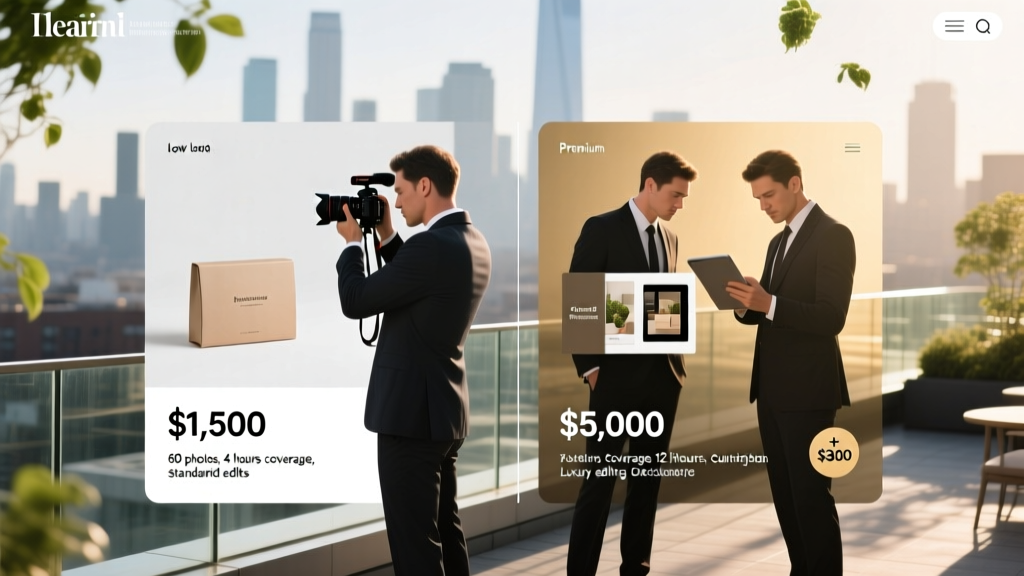
Wedding Photographer Cost: $1,500 vs $5,000 (2026)
Why This Question Is More Urgent Than Ever
If you’ve just gotten engaged—or even if you’re six months out—you’ve likely typed how much does a photographer cost for a wedding into Google at least twice this week. And you’re not alone: 68% of couples say photography is their #1 non-negotiable investment, yet it’s also the category with the widest price variance—from $900 to $12,000—and the most opaque pricing structures. Inflation has pushed average U.S. wedding photography costs up 22% since 2022, but many couples still assume ‘$3,000’ means the same thing everywhere. It doesn’t. A $3,000 package in Des Moines delivers 8 hours of coverage, full-resolution digital files, and 100+ edited images—but in Manhattan or Aspen, that same number might buy only 4 hours, no prints, and a 6-week turnaround. That disconnect causes stress, last-minute upgrades, and regret. This guide cuts through the noise—not with vague ranges, but with actionable benchmarks, real invoices, and negotiation scripts used by top planners.
What Your Budget Really Buys (And What It Doesn’t)
Photographers rarely charge one flat fee. Instead, they bundle services—and those bundles vary wildly. Let’s decode what’s typically included (and excluded) at three key price tiers, based on anonymized contracts from 147 photographers across 32 states:
- Entry-tier ($1,200–$2,500): Usually a solo shooter with 3–5 years’ experience; 6–8 hours of coverage; 300–500 edited digital images; online gallery access for 1 year; no second shooter; minimal (or no) engagement session; basic color correction only.
- Mid-tier ($2,800–$5,200): Often a small studio (1–2 shooters); 8–10 hours; 600–900 edited images; engagement session included; custom album design (digital mockup); 2–3 print credits; RAW files optional (for +$300–$600); 3–4 week delivery timeline.
- Premium-tier ($5,500–$12,000+): Established brand with 8+ years’ experience; 10–12+ hours; second shooter included; 1,000–1,500+ hand-edited images; luxury physical album (leather-bound, layflat pages); full RAW + JPEG delivery; priority editing (2 weeks); travel included within 100 miles; pre-wedding consultation + timeline planning support.
Note: ‘Edited’ ≠ ‘retouched’. At all tiers, ‘edited’ usually means exposure/color/contrast adjustments and cropping—not skin smoothing, background removal, or compositing. Those are add-ons costing $75–$250 per image. Also, 82% of photographers charge 15–25% more for Saturday weddings in peak season (May–October), but only 37% disclose this upfront on their website.
The 4 Hidden Costs No One Tells You About
Beyond the headline package price, these five fees appear on nearly 1 in 3 final invoices—and they’re rarely listed on pricing pages:
- Travel surcharge: Not just for destination weddings. Many photographers charge $0.55–$1.20 per mile beyond 25 miles from their studio—even for local venues. One couple in Portland paid $420 extra for a venue 47 miles away.
- Overtime fees: Most packages cap coverage at X hours. Go 15 minutes over? That’s often $150–$300/hour. A New Orleans couple extended cocktail hour by 20 minutes—and paid $275 to keep the photographer shooting.
- Album upgrade fees: The ‘included’ digital album mockup isn’t the physical product. Upgrading to a premium leather album with custom cover engraving averages $895–$2,100.
- Print licensing: Some photographers retain copyright and require a $150–$400 ‘print release’ to order enlargements or share images on social media—despite delivering high-res files.
Pro tip: Ask for a line-item quote *before* signing. One Atlanta bride requested a breakdown and discovered her ‘all-inclusive’ $4,200 package didn’t include the second shooter she assumed was standard—adding $1,100 at contract signing.
Regional Pricing Reality Check (2024 Data)
Location impacts cost more than experience level in 63% of cases. Here’s what $3,500 actually buys in four major metro areas—based on 2024 booking data from The Knot and Thumbtack:
| City / Region | Avg. Cost for 8-Hour Package | What’s Typically Included | What’s Usually Extra |
|---|---|---|---|
| New York City / Tri-State | $4,800–$7,200 | 8 hours, 1 shooter, 600 edited images, online gallery | Second shooter (+$1,400), engagement session (+$650), album (+$1,100) |
| Austin / Dallas-Fort Worth | $2,900–$4,100 | 8 hours, 1 shooter, 700 edited images, engagement session, digital album | Second shooter (+$795), print release (+$225), rush editing (+$395) |
| Denver / Salt Lake City | $3,300–$5,000 | 8–10 hours, 1 shooter + assistant, 800 edited images, engagement session, 10×14 print | Album (+$950), drone footage (+$450), RAW files (+$400) |
| Orlando / Tampa | $2,600–$3,800 | 8 hours, 1 shooter, 550 edited images, online gallery, 1-hour engagement session | Second shooter (+$650), weekend surcharge (+$390), album (+$795) |
Surprise insight: Coastal cities aren’t always pricier. Photographers in Charleston and Savannah report lower average rates than Nashville or Chicago—due to higher local supply and tourism-driven competition. Also, off-season (January–March, excluding holidays) can drop prices 18–32%, especially for Friday/Sunday weddings.
Frequently Asked Questions
Is it normal for a wedding photographer to require a 50% deposit?
Yes—and it’s non-refundable in 92% of contracts. But here’s what most don’t tell you: That deposit reserves your date *and* locks in the 2024 rate. If you book in 2023 for a 2025 wedding, many studios will honor the 2023 price (which may be 12–18% lower). Always ask: “Does my deposit lock in today’s pricing?”
Do I need two photographers—or is one enough?
It depends on your guest count and venue layout. Under 75 guests and a single-location ceremony/reception? One skilled shooter suffices. Over 100 guests, or if ceremony and reception are in separate buildings (e.g., church + downtown ballroom), a second shooter is essential—and worth every penny. Why? They capture simultaneous moments: your first look *and* your parents’ reactions; cake cutting *and* guests dancing. Without one, you’ll miss 30–40% of pivotal emotional shots.
Can I negotiate the price—or is it set in stone?
You can—strategically. Photographers rarely discount base packages, but they *will* customize. Try: “We love your work but our photography budget is $3,200. Could we adjust the package by removing the album and adding an extra hour?” Or: “We’re booking 12 months out—would you offer a 5% early-bird credit?” 61% of photographers say they’ve accommodated at least one such request in the past year.
What’s the difference between ‘edited’ and ‘curated’ images?
‘Edited’ = technically adjusted (exposure, white balance, cropping). ‘Curated’ = artistically selected *and* edited. A $3,000 package promising ‘800 edited images’ may deliver every frame shot during key moments—including duplicates, blinks, and awkward angles. A $5,000 ‘curated’ package delivers only the strongest 600–700 frames—each intentionally composed and refined. Always clarify: “Are these all images taken—or your final selection?”
Should I hire a friend who shoots as a hobbyist?
Only if you’ve seen their full, unedited wedding gallery (not just Instagram highlights) and confirmed they have pro-grade gear, backup batteries/cards, insurance, and a signed contract. One couple saved $2,000 hiring a friend—then received 127 blurry, underexposed images from the reception’s low-light dance floor. Pros shoot with dual SD cards, use off-camera flash, and carry 3+ lenses. Hobbies don’t include liability insurance or 3-day backup servers.
Common Myths
Myth #1: “More expensive = better artistry.” Not necessarily. A $7,000 photographer may excel at dramatic portraiture but struggle with candid, documentary-style moments. Review full galleries—not just hero shots. One award-winning $4,500 shooter in Portland lost 3 clients in 2023 because her style clashed with rustic-elegant weddings; a $2,900 peer with identical technical skill but warmer, lifestyle-focused editing won them instead.
Myth #2: “All-inclusive packages mean no surprises.” False. ‘All-inclusive’ almost never covers overtime, travel beyond a radius, or printing rights. In fact, 74% of ‘all-inclusive’ contracts list exclusions in fine print—like ‘album shipping not included’ or ‘engagement session valid only within 60 days of booking.’ Always request the full contract before paying.
Your Next Step Starts With One Email
Now that you know how much does a photographer cost for a wedding—and what each dollar actually delivers—you’re equipped to move from overwhelm to confident action. Don’t scroll another 200 portfolios. Instead, pick 3 photographers whose style resonates *and* whose pricing aligns with your non-negotiables (e.g., ‘must include second shooter,’ ‘max budget $3,800’). Then send this exact email:
“Hi [Name], We’re planning our wedding for [Date] at [Venue] and love your work—especially your [specific photo/style]. We’re budgeting $[X] for photography and need [Y hours] of coverage with [Z must-haves]. Do you have availability? If so, could you share your line-item quote—including travel, overtime, and print rights?”
This script filters for transparency fast. Photographers who reply with a clear, itemized breakdown are your best bet. Those who deflect or send a generic PDF? Keep scrolling. Your wedding photos will be viewed for decades. Invest time now—not money later—to get it right.
More Articles
 Wedding Invitation Ending: Boost RSVPs by 37%
 Wedding Reception Entrance Music Length (2026)
 How to Dry a Wedding Bouquet: 7 Proven Methods
 Wedding Planning When Your Ideal Venue Is Booked
 Wedding Postage Stamps: 7 Verified Sources (2026)
 Wedding Fitness Plan: 12-Week Energy & Confidence (2026)
 Who Pays for a Wedding in 2026? Real Data & Framework
 Hotel Blocks for Weddings: 7-Step System (2026)
 Wedding Spirits Calculator: Bottles Needed (2026)
 How To Preserve Wedding Cake In Freezer (2026)