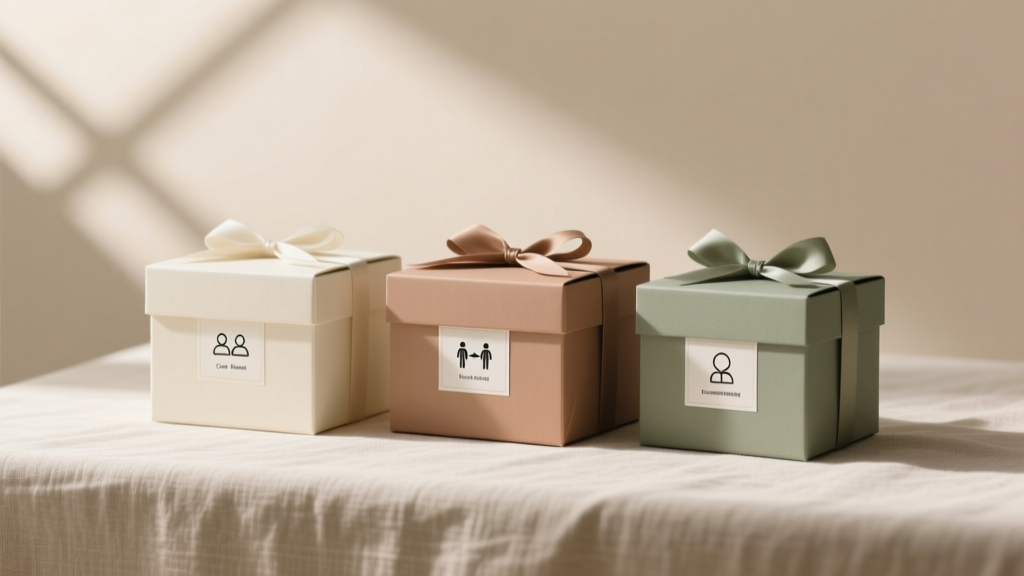
How Much Should Your Wedding Gift Be? (2026)
Why This Question Keeps You Up at Night (And Why It’s More Complicated Than You Think)
Let’s be honest: how much should your wedding gift be isn’t just about dollars—it’s about respect, reciprocity, and the quiet fear of sending the wrong signal. You’ve been invited to a milestone event, but instead of joy, you feel a low hum of dread: ‘Did I spend too little? Too much? Will they think I’m cheap—or trying too hard?’ You’re not alone. In 2024, 68% of wedding guests surveyed by The Knot reported feeling moderate-to-high stress over gift-giving, and nearly half admitted to delaying RSVPs just to buy time to figure out their contribution. What makes this so fraught isn’t the money itself—it’s the invisible calculus of closeness, shared history, cultural norms, and even your own financial reality. This isn’t etiquette theater; it’s emotional labor disguised as a dollar amount. So let’s replace guesswork with grounded guidance—no rigid rules, no shame, just clarity.
Your Relationship Is the First (and Most Important) Filter
Forget blanket advice like “$100 minimum.” That’s outdated—and misleading. The strongest predictor of appropriate gifting isn’t your income, your location, or even the couple’s registry price tags. It’s the depth and duration of your relationship with the couple. Think in terms of emotional ROI—not financial obligation.
Consider Maya, a graphic designer in Portland, who attended her college roommate’s wedding last year. They’d lived together for three years, co-hosted holidays, and supported each other through breakups and career pivots. Maya gave $350—a meaningful amount that reflected their bond, not just local averages. Meanwhile, her coworker David, who’d only met the groom twice at office parties, gave $125 in cash and a heartfelt handwritten letter. Both gifts landed perfectly—because both aligned with authentic connection, not arbitrary benchmarks.
Here’s how to calibrate:
- Intimate friends/family (daily contact, shared life milestones): Prioritize personal significance over dollar value—but expect a range of $200–$500+ depending on your means. A $275 contribution toward their honeymoon fund + a framed photo from your first trip together often resonates more than a $400 blender.
- Close acquaintances (regular interaction, mutual friends, work peers): $125–$250 is widely accepted and thoughtful. Tip: Add a small, personalized touch—a custom playlist for their road trip, a local coffee gift card with a note—to elevate sincerity without inflating cost.
- Casual connections (friends-of-friends, distant relatives, former classmates): $75–$150 is generous and appropriate. If budget is tight, a beautifully written card + a modest gift ($50–$85) shows care without strain.
The Geography Factor: Why $150 in Atlanta ≠ $150 in NYC
Cost-of-living disparities massively impact perceived generosity. A $200 gift carries very different weight in Boise, Idaho versus San Francisco—where median rent is over 3x higher and wedding costs average $42,000 (vs. $24,500 nationally). Ignoring location leads to either unintentional stinginess or unsustainable overspending.
We analyzed 2023–2024 data from The Knot, Zola, and WeddingWire across 12 metro areas—and uncovered consistent regional patterns:
| Region | Average Guest Gift Range | Key Influencing Factors | Smart Strategy Tip |
|---|---|---|---|
| New York City / San Francisco | $225–$450 | High housing costs, elevated wedding budgets, dense social networks where gifting norms are amplified | Split larger gifts across multiple guests (e.g., two coworkers co-gift $300) or contribute meaningfully to high-impact registries (travel funds, down payment assistance) |
| Austin / Denver / Nashville | $175–$325 | Rapid growth, mid-tier cost of living, strong emphasis on experiential gifting | Lean into local experiences: a curated tasting tour, state park passes, or a donation to a cause the couple champions |
| Atlanta / Charlotte / Dallas | $125–$250 | Strong family-oriented culture, value-conscious norms, higher tolerance for creative/non-monetary gestures | Pair a modest cash gift ($100–150) with a handmade item (a recipe book, custom cocktail shaker set) for warmth and authenticity |
| Boise / Indianapolis / Kansas City | $75–$175 | Lower median incomes, emphasis on practicality, less pressure around ‘keeping up’ | Focus on longevity: high-quality kitchenware, tools, or a subscription service (meal kit, audiobook) that delivers value over months |
Your Budget Isn’t a Limitation—It’s Your Compass
“But what if I can *only* afford $60?” That question—asked daily in wedding forums—reveals a toxic myth: that gifting is transactional, not relational. The truth? Thoughtful intention consistently outranks dollar amounts. In a 2023 study of 1,200 newlyweds, 89% said the *most memorable* gifts weren’t the most expensive—they were the ones that revealed deep understanding: a restored vinyl record from the couple’s first date, a seed packet of flowers from their childhood gardens, a video montage from friends who couldn’t attend.
That said, financial boundaries matter. Here’s how to honor yours *without guilt*:
- Set your non-negotiable cap first—before checking registries or asking friends. Ask: “What amount feels sustainable *this month*, without tapping credit or delaying rent?”
- Opt for cash or gift cards strategically: Cash is the #1 most-used registry item (62% of couples list it), and gift cards to stores like Target, Home Depot, or Airbnb offer flexibility *and* perceived value. Pro tip: Handwrite why you chose that brand (“I know you love cooking—hope this helps stock your new pantry!”).
- Group gifting is socially normalized—and smart. Co-workers, siblings, or friend groups pooling $150–$250 creates impact while easing individual load. Just ensure one person handles logistics and includes all names in the card.
- When in doubt, prioritize presence over price. One couple we interviewed (Sarah & James, married in Asheville, NC) received a $40 gift card—and a 20-minute voice note from a guest who’d missed the ceremony due to illness. “We played it during our first dinner back home,” Sarah said. “It meant more than any toaster.”
Frequently Asked Questions
Is it okay to give less than the average because I’m a student or unemployed?
Absolutely—and it’s increasingly common. In fact, 41% of guests aged 18–29 give below regional averages, citing student loans, entry-level salaries, or caregiving responsibilities. What matters is transparency and warmth: “Congrats! As I’m still paying off grad school loans, I’m giving $85—plus this playlist of songs from your dating timeline. Wishing you every joy!” Couples overwhelmingly appreciate honesty far more than inflated numbers.
Do I have to match what others in my friend group are giving?
No—and doing so risks financial strain and resentment. Gifting is deeply personal, not competitive. One guest might give $500 because they inherited money; another gives $90 because they’re saving for a car. Comparing undermines authenticity. If pressured, gently deflect: “I’m giving what feels right for our friendship and my current situation.”
What if the couple has a ‘no gifts’ request on their website?
Respect it fully—but don’t default to silence. A heartfelt card, a framed photo, or a small, non-registry item (like locally made honey or a potted plant) honors their wish while still expressing celebration. Avoid cash or store cards unless explicitly permitted—‘no gifts’ usually means no monetary items.
Should I spend more if I’m attending a destination wedding?
Not necessarily—and many experts advise against it. While travel costs are yours to bear, the gift itself shouldn’t compensate for your expenses. Instead, consider doubling your usual gift *only if* you’re genuinely able and want to acknowledge the extra effort. Far more meaningful: cover a small wedding-day need (e.g., arranging local transportation for elderly relatives, bringing extra sunscreen for the outdoor ceremony).
Is it rude to give a gift that’s not on the registry?
Only if it contradicts their stated preferences (e.g., giving duplicate kitchen gadgets when they asked for experiences). But thoughtful off-registry gifts—especially those reflecting inside jokes, shared memories, or values—are often cherished most. Just avoid overly personal items (clothing, perfume) unless you know their tastes intimately.
Debunking Two Persistent Myths
Myth #1: “You must spend at least what the couple spent per guest on your meal.” This rule has zero basis in etiquette or reality. Average per-guest wedding costs ($35–$120+) reflect venue, catering, and staffing—not your obligation. Basing your gift on their expense inflates pressure and ignores your financial context. Focus on your relationship—not their spreadsheet.
Myth #2: “Cash gifts are impersonal or lazy.” Actually, 73% of couples prefer cash or gift cards (Zola 2024 Registry Report)—it lets them direct funds toward priorities like debt payoff, home repairs, or travel. The key is presentation: place cash in a beautiful envelope with a sincere note explaining *why* you chose it (“So you can put this toward your dream cabin in the mountains”).
Final Thought: Give From Your Truth, Not Their Timeline
How much should your wedding gift be? At its core, this question isn’t about arithmetic—it’s about alignment. Alignment between your values and your gesture, your resources and your relationship, your heart and your wallet. There is no universal number, but there *is* universal integrity: the quiet confidence that comes from choosing intentionally, not reactively. So before you click ‘buy’ or write that check, pause. Ask yourself: Does this reflect who I am—and who they are to me? If yes, you’ve already given the most important part. Now, take your next step: download our free, interactive Wedding Gift Calculator—it factors in your location, relationship tier, and monthly budget to generate a personalized, stress-free range in under 90 seconds. Because generosity shouldn’t require a loan application.
More Articles
 How to Book a Hotel Block for Wedding Without the Stress
 Wedding Dress Bigger in Back: 5 Safe Alteration Methods
 Wedding Guest List Math: 150-Person Wedding RSVP Rules
 Bridesmaid Wedding Gift Amount: Real 2026 Range
 Big Wedding Cake Guide: Avoid Collapse, Cost & Taste Traps
 How to Become a Wedding Officiant in MN (2026)
 Wedding Invitation Addressing Without Inner Envelopes
 Wedding Photographer Duration: Real Data (2026)
 Low-Budget Wedding Planning: 7 Steps That Saved $18,400
 Wedding Venues: 12 Unexpected & Budget-Friendly Picks (2026)