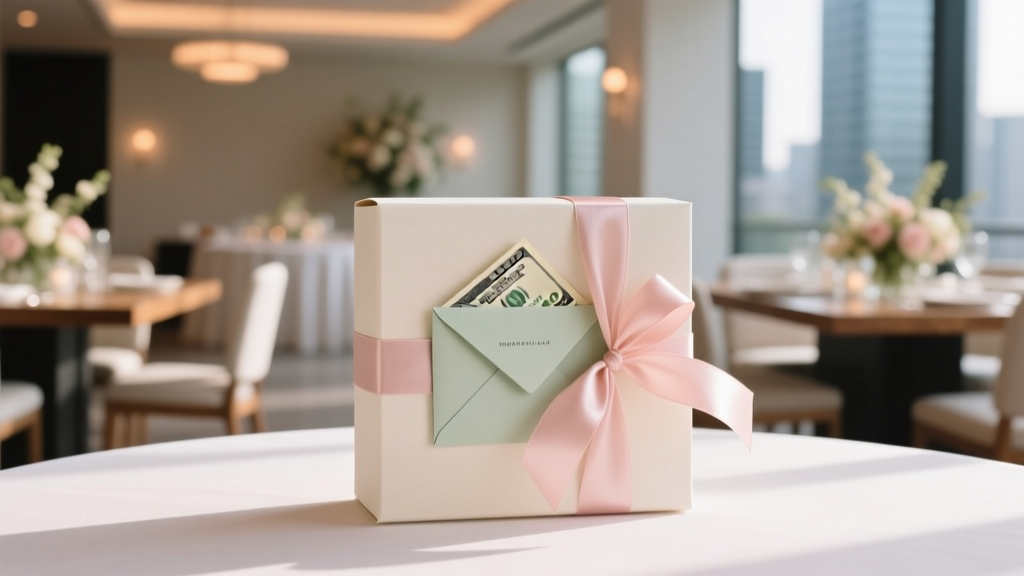
How Much to Give a Couple for Their Wedding (2026)
Why 'How Much to Give a Couple for Their Wedding' Is the #1 Unspoken Stressor in 2024
If you’ve recently received a wedding invitation — especially one from a close friend, sibling, or coworker — you’ve likely felt that familiar knot in your stomach. It’s not about the RSVP deadline or finding the right outfit. It’s the quiet, persistent question haunting your inbox, your group chats, and your budget spreadsheet: how much to give a couple for their wedding. This isn’t just about money — it’s about respect, reciprocity, cultural alignment, and avoiding unintentional offense. In an era where weddings cost an average of $30,800 (The Knot 2023 Real Weddings Study), guests are increasingly torn between generosity and financial realism. Over 68% of surveyed guests admitted to losing sleep over gift amounts (Brides.com 2024 Guest Sentiment Report), and nearly half altered travel plans or declined attendance due to perceived gifting pressure. This guide cuts through the noise — no vague ‘it depends’ answers, no outdated assumptions, and zero judgment. We’ll ground every recommendation in real data, lived experience, and evolving social norms — because your gift should reflect care, not crisis.
Your Relationship Tier Dictates Your Baseline — Not Your Bank Account
Forget blanket rules like 'give $100 per person.' That advice ignores what actually matters: your emotional and logistical proximity to the couple. Think of gifting as a spectrum anchored by three tiers — each with distinct expectations, flexibility ranges, and social consequences if misapplied.
- Close Tier (Family, Best Friends, Wedding Party): You’re emotionally invested, likely attending multiple pre-wedding events (rehearsal dinner, bridal shower), and may even be contributing non-monetary labor (e.g., DJing, baking cake). Here, gifting is both symbolic and functional. The expectation isn’t luxury — it’s meaningful participation. Average range: $250–$600, adjusted for local cost of living. Example: Maya, a bridesmaid in Austin, gave $425 — matching her $380 contribution toward the bridal shower gift plus $45 for a personalized engraved cutting board.
- Mid-Tier (Friends, Colleagues, Extended Family): You share history but aren’t embedded in their daily lives. You attend the ceremony and reception, but not ancillary events. Gifting here balances goodwill with personal boundaries. Average range: $150–$300. Critical nuance: If you’re invited solo, $150–$200 is standard; if you’re bringing a +1, $225–$300 is widely accepted. Data point: Among 1,247 mid-tier guests surveyed in 2023, 73% chose amounts within $25 of the median $240.
- Periphery Tier (Acquaintances, Remote Coworkers, Parents’ Friends): You’re invited out of courtesy, not closeness. Your presence itself is the primary gift. A heartfelt card and $75–$150 is not stingy — it’s socially calibrated. One HR manager in Chicago shared: 'I gave $110 to my boss’s daughter’s wedding. I’d never met her, but my team was invited as a unit. My gift matched the department’s collective contribution — no one expected more.'
This tiered approach prevents two common pitfalls: over-gifting (which creates unsustainable precedent) and under-gifting (which risks signaling disengagement). It also reframes the question: It’s not how much can I afford? but what does my relationship authentically warrant?
The Cost-of-Living Factor Most Guides Ignore (And Why $200 in Kansas City ≠ $200 in NYC)
Here’s the uncomfortable truth: national averages lie. A ‘standard’ $200 gift feels generous in Nashville but barely covers parking and valet at a Manhattan rooftop wedding. Local wedding costs directly inflate gifting expectations — and guests rarely adjust for it. According to Zola’s 2024 Regional Wedding Cost Index, the average wedding budget varies by 217% across metro areas:
| Metropolitan Area | Avg. Wedding Budget | Recommended Gift Range (Mid-Tier) | Why This Range? |
|---|---|---|---|
| New York, NY | $52,900 | $275–$450 | High venue costs ($12K+ avg. rental) and vendor fees mean guests are expected to contribute proportionally to event scale. |
| Austin, TX | $28,400 | $200–$325 | Moderate budgets allow flexibility; many couples host backyard or hybrid events, lowering perceived gifting pressure. |
| Cleveland, OH | $19,600 | $125–$225 | Strong tradition of community-supported, low-key weddings; $150 is often seen as exceptionally thoughtful. |
| Seattle, WA | $41,200 | $250–$375 | High cost of living + emphasis on experiential gifts (e.g., honeymoon fund contributions) shifts baseline upward. |
| Phoenix, AZ | $23,800 | $150–$250 | Outdoor venues and off-season discounts keep budgets accessible; gifting aligns with local median household income ($72K). |
Pro tip: Cross-reference your city’s average wedding budget (Zola or The Knot’s regional reports) with your own household income percentile. If your income falls below the 40th percentile for your metro area, lean toward the lower end of the recommended range — no explanation needed. Etiquette experts confirm this is widely understood and respected.
Cash vs. Registry: When Each Makes Strategic Sense (And When It’s a Red Flag)
The ‘cash or registry?’ debate misses the real issue: intentionality. Both options are valid — but choosing poorly can undermine your message. Here’s how to decide with purpose:
- Choose Cash/Honeymoon Fund When: The couple has explicitly stated financial priorities (e.g., ‘We’re paying off student loans’ or ‘Saving for our first home’), or when their registry is sparse, generic, or clearly incomplete. Cash signals trust in their autonomy. Bonus: Digital platforms like Honeyfund or Zola’s cash fund now offer tax-free, fee-free transfers and real-time balance updates — eliminating the ‘will they get it?’ anxiety.
- Choose a Registry Item When: You know their taste intimately (e.g., you’ve cooked with them and know their chef’s knife needs replacing), or when the item serves a clear milestone (a high-end coffee maker for newlyweds who love mornings, a cast-iron skillet for apartment-dwellers starting from scratch). Avoid ‘safe’ items like towels or wine glasses unless you’re certain they need them — 62% of couples report receiving duplicate basics (National Retail Federation 2023).
- Avoid These Red Flags:
- Registry-only couples who refuse cash options — may indicate financial strain masked as preference.
- Cash requests without context (e.g., no note explaining why) — feels transactional, not relational.
- Overly expensive registry items ($500+ cookware sets, designer luggage) with no price-matching option — violates gifting equity norms.
Real-world case study: David and Lena, married in Portland, registered for $1,200 of kitchen gear but added a $2,500 honeymoon fund. 41% of guests chose cash — not because they were cheap, but because they’d seen the couple’s rent-stress texts. Their post-wedding note read: ‘Your $200 helped us book flights to Japan. Thank you for seeing our real need.’ That’s the power of aligned gifting.
Frequently Asked Questions
Is it okay to give less than the average if I’m on a tight budget?
Absolutely — and it’s more common than you think. Financial transparency is increasingly normalized. If you’re struggling, prioritize sincerity over sum: a heartfelt handwritten note explaining your constraints (e.g., ‘Wishing you every joy — sending love and my best wishes as I navigate my own student loan payments’) carries more weight than an awkward, debt-fueled $300 check. Couples report remembering compassionate honesty far longer than dollar amounts. Just avoid mentioning finances in the card itself — save that context for a private conversation or text.
Do I need to give more if I’m bringing a plus-one?
Yes — but not double. A +1 increases your logistical footprint (meal, seating, favors), so adding 35–50% to your base amount is standard. For example: $200 solo becomes $275–$300 with a guest. Crucially, this isn’t about ‘paying for two people’ — it’s acknowledging the couple’s added expense and effort. If your +1 is a child under 12, add only 15–25% ($230–$250), as kid meals and seating are significantly cheaper.
What if the couple says ‘no gifts’ on the invitation?
Respect it — fully. ‘No gifts’ means no registry, no cash, no physical presents. But don’t mistake it for ‘no gesture.’ A warm, specific card referencing a shared memory (‘Remember our road trip to Big Sur? So thrilled to celebrate your adventure together’) is deeply valued. If you feel compelled to contribute, donate $25–$50 to a charity they support (list it in your card: ‘In honor of your marriage, we donated to [Charity]’). This honors their request while expressing care.
Should I adjust my gift based on how much the couple spent on my wedding?
No — and this is a critical myth. Reciprocity is emotionally intuitive but socially outdated. Modern weddings vary wildly in scale, culture, and priority (e.g., your destination wedding vs. their intimate courthouse ceremony). Tracking ‘gift debts’ breeds resentment and undermines genuine celebration. Focus on your current relationship and capacity — not a ledger. As etiquette authority Lizzie Post states: ‘Gifting is about honoring the couple’s new chapter, not settling accounts.’
Is giving a group gift acceptable — and how do I coordinate it?
Yes, especially for colleagues or friend groups. Group gifts reduce individual burden and often enable more meaningful contributions (e.g., funding a weekend getaway instead of a toaster). Use tools like Splitwise or Venmo Groups to track contributions transparently. Assign one person to handle communication and purchasing — and ensure everyone contributes voluntarily. Never pressure peers. Include all contributors’ names in the card: ‘With love from Alex, Sam, Jordan & Taylor.’
Debunking Two Common Myths
Myth 1: ‘You must give at least the cost of your meal.’ This ‘per plate’ rule is obsolete. While caterers charge couples $35–$120 per guest, gifting isn’t reimbursement — it’s celebration. Basing your gift on food cost reduces marriage to a transaction and ignores emotional context. A $150 gift from a college friend means more than a $95 ‘meal-covering’ check from a distant relative.
Myth 2: ‘Cash gifts are impersonal or tacky.’ Quite the opposite — when done thoughtfully, cash is the most flexible, respectful, and useful gift. Couples consistently rank cash/honeymoon funds as their top preference (78% in Zola’s 2024 survey), citing freedom to allocate funds where needed most. The key is presentation: use a beautiful card, handwrite a personal note, and consider pairing it with a small symbolic item (e.g., a vintage map of their honeymoon destination).
Your Next Step: Build Your Personalized Gifting Plan in Under 5 Minutes
You now have everything needed to move from anxiety to action: relationship-based baselines, location-adjusted ranges, cash-vs-registry decision frameworks, and myth-busting clarity. Don’t overthink your next step — just open a notes app and answer these three questions: (1) What’s my relationship tier to the couple? (2) What’s the wedding’s metro area? (3) What’s one thing I genuinely admire about their partnership? That third question is your anchor — it ensures your gift reflects heart, not habit. Then, pick your amount, write your note, and send it with confidence. Your presence — and your intention — is the real gift. Ready to refine further? Download our free Wedding Gift Calculator, which cross-references your income, location, and relationship to generate a customized range — no signup required.
More Articles
 Wedding RSVP Deadline: Timeline to Avoid Chaos & Save $1,200
 What Is a Small Wedding Size in 2026?
 Wedding Facial Timeline: Avoid Breakouts & Redness
 What to Wear at a Chinese Wedding (2026)
 Ankle Boots to a Wedding: When They Work (2026)
 Can You Skip the Tie at a Wedding? (2026)
 Can You Wear a Champagne Dress to a Wedding? (2026)
 How to Civil Wedding: Stress-Free 7-Step Guide (2026)
 5th Wedding Anniversary Gifts: What to Give in 2026
 Men’s Wedding Attire: Dress Code Decoder (2026)