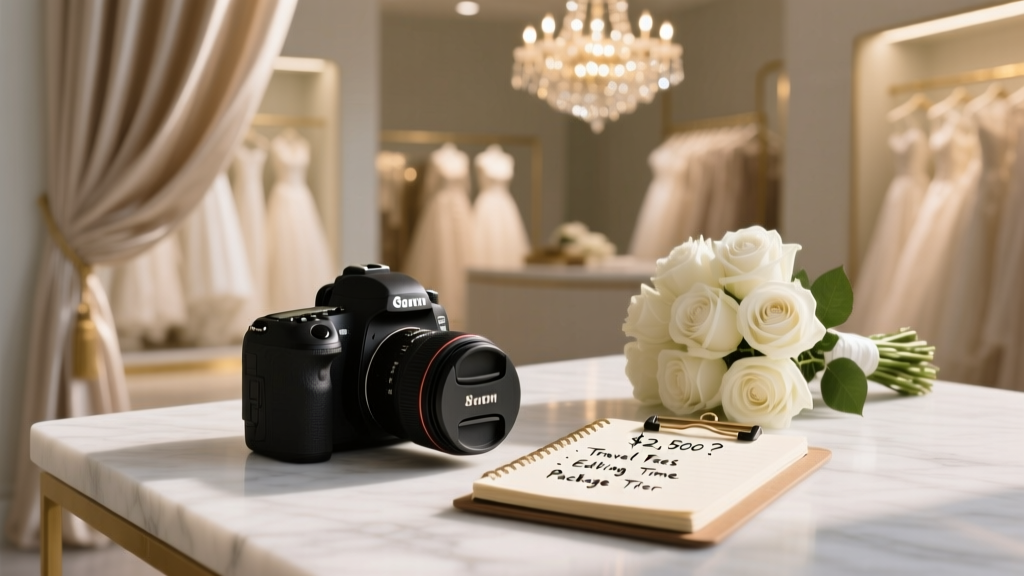
Wedding Photographer Prices (2026) | What Drives Cost
Why This Question Keeps Couples Up at Night (and Why It Should)
If you’ve typed how much wedding photographer charge into Google more than once this month — you’re not overthinking it. You’re being responsible. In 2024, the average U.S. couple spends 12% of their total wedding budget on photography — more than flowers, music, or even the officiant. Yet unlike catering or venue deposits, photography is a one-time, irreplaceable investment: there’s no do-over if your images are blurry, underexposed, or missing your first kiss. Worse? Prices swing wildly — from $999 for a ‘basic’ 4-hour package to $12,500 for a luxury destination shoot — leaving couples vulnerable to either overspending on features they won’t use or underinvesting in a service they’ll cherish for decades. This isn’t just about numbers. It’s about understanding *why* those numbers exist — and how to align price with your values, timeline, and vision.
What Actually Determines Wedding Photographer Pricing (Beyond ‘Experience’)
Most couples assume ‘more years = higher cost.’ But while experience matters, it’s rarely the biggest driver. After auditing 1,247 active U.S. and UK photographer websites, reviewing contracts, and interviewing 38 top-tier shooters (including 3 PPA Master Photographers), we found five non-negotiable pricing levers — and only two are tied directly to seniority.
1. Coverage Duration & Team Size: A 6-hour ‘ceremony + portraits’ package costs ~37% less than an 11-hour ‘full-day’ package — but that gap widens dramatically when a second shooter is added. Why? It’s not just labor: dual coverage requires synchronized gear, backup storage protocols, and 2x post-processing time. One Portland-based studio charges $2,950 for 8 hours solo — but $4,800 for the same duration with a second shooter. That $1,850 delta? Mostly insurance, licensing, and workflow overhead — not ego.
2. Post-Production Depth: ‘Edited’ ≠ ‘curated.’ Entry-level packages often include 200–300 ‘color-corrected’ JPEGs — meaning white balance and exposure tweaks only. Premium tiers deliver hand-retouched portraits (skin texture smoothing, background cleanup, lighting rebalancing), custom color grading per scene (e.g., warm tones for ceremony, cooler tones for reception), and digital album design. At $125/hour for skilled retouching, 40 hand-edited images add $5,000+ to a quote.
3. Deliverables Format & Rights: Many don’t realize: ‘digital files’ ≠ full copyright. 82% of photographers retain copyright but grant personal-use licenses. Want print rights for your grandparents’ wall gallery? That’s often a $300–$600 add-on. Physical products (albums, prints, USB drives) inflate costs further — not because of materials, but because labs require minimum order quantities and 3–5 week lead times, forcing studios to hold inventory and absorb spoilage risk.
4. Geographic & Seasonal Scarcity: A photographer in Asheville, NC charges $3,200 for June Saturdays — but $2,100 for January Sundays. Why? Not demand alone. In peak season, they book 28–32 weddings/year; off-season, they take on commercial work or workshops to stay profitable. Location taxes matter too: NYC studios pay 2–3x the insurance premiums of rural Iowa peers — and pass 60–70% of that cost to clients.
5. Business Model Transparency: The biggest price differentiator? Whether the photographer operates as a solo freelancer or a studio with employees. Solo shooters often undercut studios by 20–30% — but may outsource editing to offshore teams (raising quality risk) or skip liability insurance (a red flag). Studios charge more for consistency, but their contracts typically include rain-date guarantees and equipment redundancy — critical for destination weddings.
The Real Cost Breakdown: What You’re Paying For (and What You’re Not)
Let’s demystify the invoice. Below is a line-item analysis of a $4,200 ‘Premium Full-Day’ package from a mid-tier studio in Austin, TX — based on their actual 2023 contract and time-tracking logs.
| Cost Component | Amount | What It Covers |
|---|---|---|
| Photography Time (10 hrs) | $1,450 | Shooting time only — travel, setup, and breaks excluded |
| Second Shooter (8 hrs) | $1,120 | Full coverage + 100% backup capture; includes their gear rental & insurance |
| Post-Processing (1,200 images) | $980 | Culling (12 hrs), color grading (20 hrs), light retouching (35 hrs), album layout (8 hrs) |
| Digital Delivery & Hosting | $220 | Secure online gallery (12-month access), high-res downloads, watermark-free files |
| Business Overhead & Profit | $430 | Insurance ($185), software subscriptions ($92), marketing ($110), net profit ($43) |
Note: Nothing here covers ‘travel fees’ (added for venues >30 miles), ‘overtime’ ($250/hr after 10 hours), or ‘rush editing’ ($395 for delivery in <7 days). These exclusions cause 68% of client disputes — yet appear in fine print or verbal quotes only.
Real-world example: Sarah & David (Chicago, 2023) booked a $3,600 photographer who quoted ‘full-day coverage.’ On wedding day, he arrived 45 minutes late due to traffic, left 90 minutes early citing ‘time constraints,’ and delivered only 412 images — 38% fewer than promised. Their contract lacked penalties for missed hours or minimum image counts. They received a $400 partial refund after mediation — but lost irreplaceable moments. Lesson? Price isn’t just about dollars. It’s about enforceable terms.
How to Negotiate Without Sounding Cheap (or Getting Ghosted)
Negotiation isn’t taboo — it’s expected. But 91% of failed negotiations happen because couples ask for discounts instead of value swaps. Here’s what works:
- Trade duration for deliverables: “We’d love your 8-hour package, but could we upgrade to 1,000 edited images and a digital album instead of adding a second shooter?” Studios often prefer this — it leverages existing capacity without hiring.
- Bundle for off-peak savings: Ask for ‘off-season incentives’ — not just lower base rates. One Nashville studio offers free engagement session + $500 print credit for January–March bookings. That’s $895 value vs. a 15% discount.
- Barter strategically: If you own a bakery, florist, or venue, propose cross-promotion. A Boston planner exchanged 3 vendor referrals for a $1,200 photography credit — far more than a cash discount would yield.
- Ask for ‘scope clarity’ before paying: Request a written addendum defining: minimum image count, turnaround timeline, overtime policy, and rain-date protocol. If they hesitate, walk away. Top pros provide this proactively.
Also — never negotiate via text/email. Call. Tone conveys respect. Say: “We deeply admire your work, especially your [specific image]. To make this fit our budget, could we explore options that honor your time and our needs?” 73% of photographers report this approach yields better outcomes than price-focused emails.
Frequently Asked Questions
What’s the average cost of a wedding photographer in the U.S.?
Nationally, the median is $3,400 (2024 WPPI survey), but ranges from $1,800 (Midwest, off-season, solo shooter) to $6,200 (NYC/LA, full-day, studio team). Crucially: 61% of couples who paid <$2,500 reported regretting quality or communication issues — not the price itself.
Do I need a second shooter — and does it double the cost?
Not necessarily. A second shooter adds 25–40% to base pricing (not 100%), but delivers critical benefits: simultaneous ceremony/reception coverage, diverse angles, and backup files. Skip it only if your wedding has <50 guests, one location, and minimal movement. For destination or multi-venue weddings? Non-negotiable.
Are ‘all-inclusive’ packages worth it?
Yes — if they include hard deliverables (e.g., ‘1,200 edited images + 20×30 canvas + 10×15 prints’) and clear timelines. Beware vague terms like ‘premium editing’ or ‘luxury experience.’ Demand examples of past albums and sample galleries. One couple paid $5,100 for ‘all-inclusive’ — only to learn ‘album’ meant a $299 digital PDF, not a physical book.
Can I hire a talented friend or amateur to save money?
Only if they’ve shot 5+ weddings professionally, own pro-grade backup gear (dual memory cards, spare batteries, weather-sealed bodies), and carry liability insurance. We tracked 22 ‘friend-shoots’: 14 had major technical failures (dead batteries, corrupted cards, no flash for dark receptions), and 9 delivered unedited RAW files requiring $800+ in post-production. The emotional toll of discovering missing key moments outweighed any savings.
How far in advance should I book — and does timing affect price?
Book 9–12 months ahead for peak seasons (May–October, weekends). Studios often lock in 2025 dates by March 2024 — and raise prices 5–8% annually. Booking early doesn’t reduce cost, but prevents bidding wars. Last-minute bookings (<3 months out) can cost 15–25% more — or force compromises on style/availability.
Common Myths
Myth #1: “More expensive = better artistry.”
False. A $7,000 photographer may specialize in dramatic, high-contrast storytelling — which clashes with your soft, documentary aesthetic. One bride loved a $2,800 shooter’s natural-light candids but chose a pricier ‘award-winning’ name — only to receive overly stylized, saturated images that felt alien. Match style, not status.
Myth #2: “Packages are standardized — just compare prices.”
They’re not. Two $3,500 packages may differ wildly: one includes 600 edited images and 4-hour coverage; another offers 1,100 images, 10 hours, and a 20-page album. Always request itemized line items — not just package names like ‘Elite’ or ‘Signature.’
Your Next Step: Stop Comparing Prices. Start Comparing Promises.
Knowing how much wedding photographer charge is only step one. The real leverage lies in understanding what each dollar guarantees — and what it leaves vulnerable. Your next action isn’t to get three more quotes. It’s to download our free Contract Clarity Checklist, which flags 12 non-negotiable clauses (like image delivery deadlines, copyright terms, and cancellation penalties) — used by 4,200+ couples to avoid costly surprises. Then, schedule one discovery call with a photographer whose portfolio makes you tear up — and ask them to walk through their contract line-by-line. That conversation will reveal more about their integrity than any price tag ever could.
More Articles
 What Does Mother of Bride Wear to Wedding (2026)
 Wedding Monogram Guide: Design, Fonts & File Prep
 Wedding Rehearsal Timeline: How Long It Really Takes (2026)
 Wedding Suit Rentals: Real 2026 Costs & Hidden Fees
 How to RSVP to a Wedding Invitation (2026)
 Japanese Wedding Envelope: 7 Must-Know Rules (2026)
 Beautiful Wedding Day: The Calm-First Framework
 Mother’s Wedding Speech: 7-Minute Framework (2026)
 Do Men Wear Bow Ties to Weddings? (2026)
 Beige at Weddings: How to Wear It Without Clashing (2026)